Kubuqi Desert
Kubuqi Desert
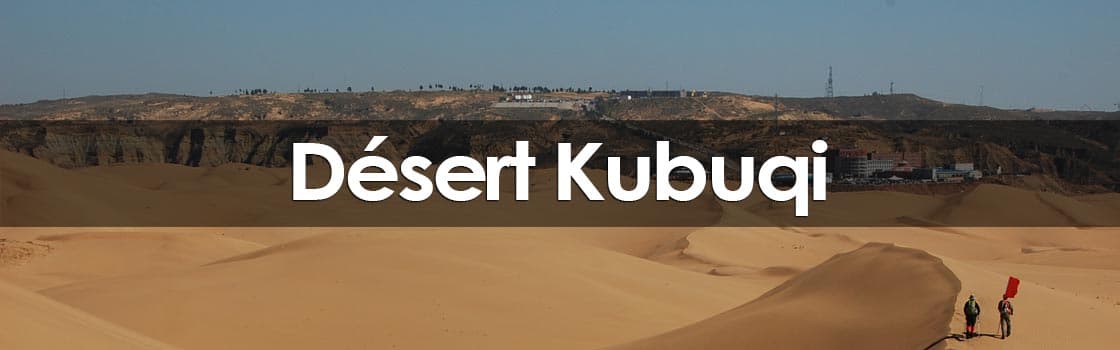
China's seventh-largest desert, Kubuqi sweeps its arc-shaped dunes along the Yellow River and is home to the famous Singing Sands Gorge.
The Kubuqi Desert stretches across the Ordos Plateau in Inner Mongolia, south of the Yellow River. China's seventh-largest desert, it takes its name from the literal translation of Kubuqi, "the Strings of a Bow," referring to the curve the river traces around its dunes. Accessible from Baotou, it combines shifting dune landscapes, oases, and a singular acoustic phenomenon: the singing sands.
Why visit the Kubuqi Desert
Kubuqi stands out for its particular geography: the Yellow River encircles it to the north, west, and east, drawing an arc curve across nearly 400 kilometers in length. Dunes occupy roughly 60% of its surface area, alternating with grasslands, marshes, and an oasis that harbors notable bird species.
- Spectacular geology featuring crescent moon-shaped dunes with slopes reaching up to 45°
- The singing sands phenomenon, a natural echo of wind through the dunes
- A rare mosaic of dunes, oases, and grasslands within the same territory
- A desert relatively close to Beijing and Hohhot, accessible within a few hours' drive
History of the Ordos region
The history of the Kubuqi Desert merges with that of the Ordos Plateau. The region was long occupied by the Xiongnu, a nomadic people in recurring conflict with Chinese empires, before becoming largely depopulated following the 1869 uprising. For several decades, the space remained sparsely inhabited, subject to an arid climate and overgrazing practices that intensified desertification.
During the Cultural Revolution, the territory was administratively divided into two distinct areas: the Kubuqi Desert to the north and the Maowusu Desert to the south. Around the 1990s, these two spaces were reunified under the common designation of the Ordos Desert, though the original names continue to be used locally to refer to each zone.
What to see and do
The Singing Sands Gorge
Located approximately 3 kilometers from the national highway and 44 kilometers from Baotou, to the north of the desert, the Singing Sands Gorge constitutes Kubuqi's most visited sector. Its crescent moon-shaped dunes feature steep slopes, sometimes approaching 45°. The site owes its name to the acoustic phenomenon that occurs there: under the effect of wind and its echo reverberating through sand grains, the dunes emit a deep, continuous sound, audible when atmospheric conditions permit.
Activities on the dunes
The Xiang Shawan sector has been developed to welcome visitors. Activities include:
- Camel riding along the crests
- Dune sledding or sandboarding
- Paragliding and zip-lining
- Archery, echoing local Mongolian culture
Oasis and wildlife
The desert's interior oasis presents a striking contrast with the dunes. It hosts vegetation adapted to arid environments and several wild bird species that benefit from water sources. Restaurants in the tourist zone offer regional Mongolian dishes, featuring lamb and dairy products.
When to visit
Kubuqi experiences a marked continental climate: hot summers, very cold winters, and large daily temperature swings. The most comfortable period spans May through early October, with peak visitation in July-August. Spring can be windy, with sandstorms possible in April. Autumn, more stable, offers particularly clear light on the dunes. Winter is harsh and most activities are suspended.
How to get there
There is no direct public transportation to the desert entrance. Most visitors first travel to Baotou or Ordos by train from Beijing or Hohhot, then continue by private taxi or hired vehicle. Direct taxi connections are also available from Hohhot for travelers wishing to avoid the rail leg.
Practical information
- Desert access: free entry to the desert itself, but each activity (camel, sledding, paragliding) is charged separately
- Opening hours: daily, free access year-round, activities are seasonal
- Recommended visit duration: minimum half day, full day to enjoy multiple activities
- What to bring: sun protection, scarf against sand, closed-toe shoes, ample water
What to see in the region
The Kubuqi Desert integrates naturally into a wider itinerary across Inner Mongolia and northwest China:
- Baotou, the main logistics base for reaching the desert
- The Baigongfang Crafts Museum, for an overview of regional expertise
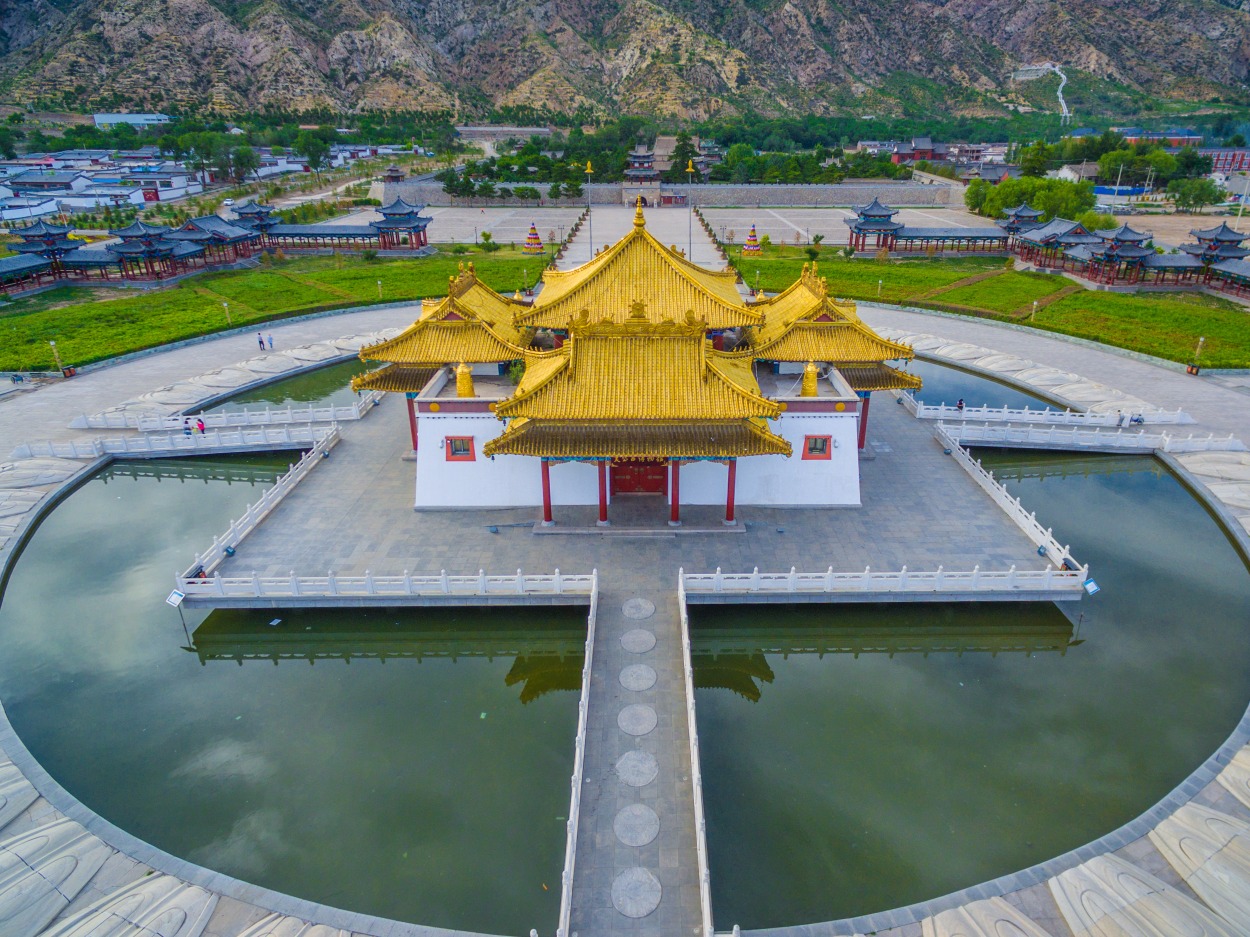
- The Beishan Temple, a spiritual stop in the region
- The Aiding Lake, another remarkable desert site further west
Frequently asked questions
Frequently asked questions
The literal translation of Kubuqi means "the Strings of a Bow," referring to the curve the Yellow River forms around the desert.
May through early October, with a preference for late spring and autumn, which are more stable. Summer is hot but manageable; winter is very harsh.
In the namesake gorge, the combination of wind and its echo bouncing off dune slopes produces a deep, continuous sound, as if the sand were "singing."
The simplest way is to take a train or flight to Baotou or Ordos, then a private taxi to the developed desert entrance.
Desert access is free, but each activity (camel, sledding, paragliding, archery) is charged separately.
Preparing your journey
The Kubuqi Desert fits naturally into a tour of Inner Mongolia, between Baotou, Hohhot, and the Ordos Plateau. To build an itinerary combining desert landscapes, Mongolian culture, and urban stops, consult our suggestions for travel in China.
Interested in this visit?
We can include it in your personalised itinerary.