Jiayuguan Fort (嘉峪关城楼)
Jiayuguan Fort (嘉峪关城楼)
The last fortified pass of the Ming Great Wall, Jiayuguan Fort has watched over the Gobi Desert since the 14th century. Its ramparts, gate towers and Silk Road museum make it a major historical landmark in Gansu.
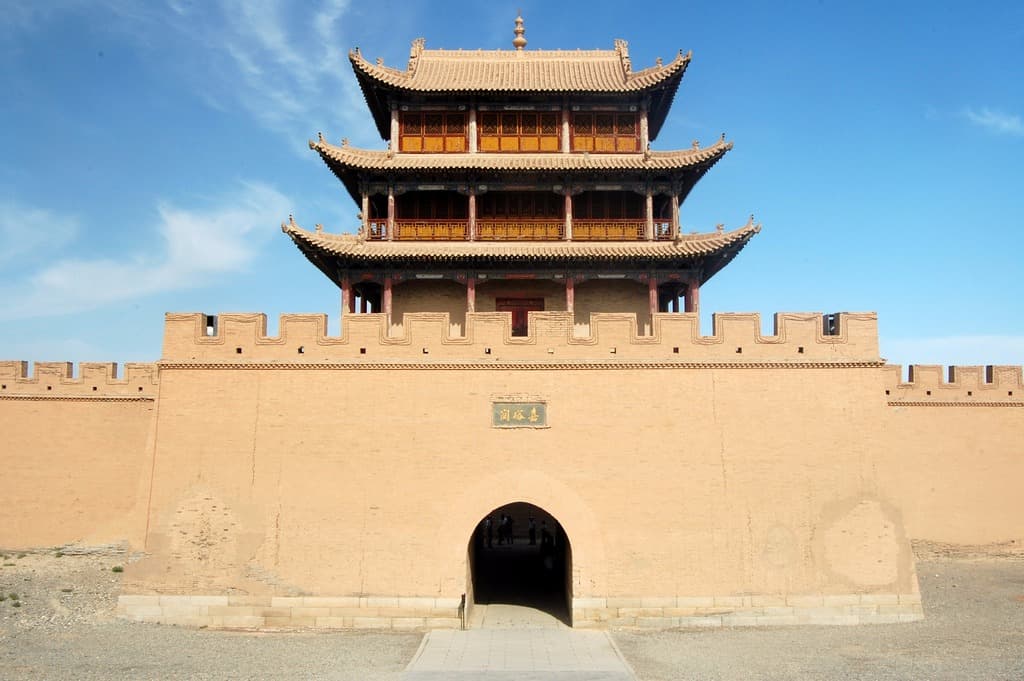
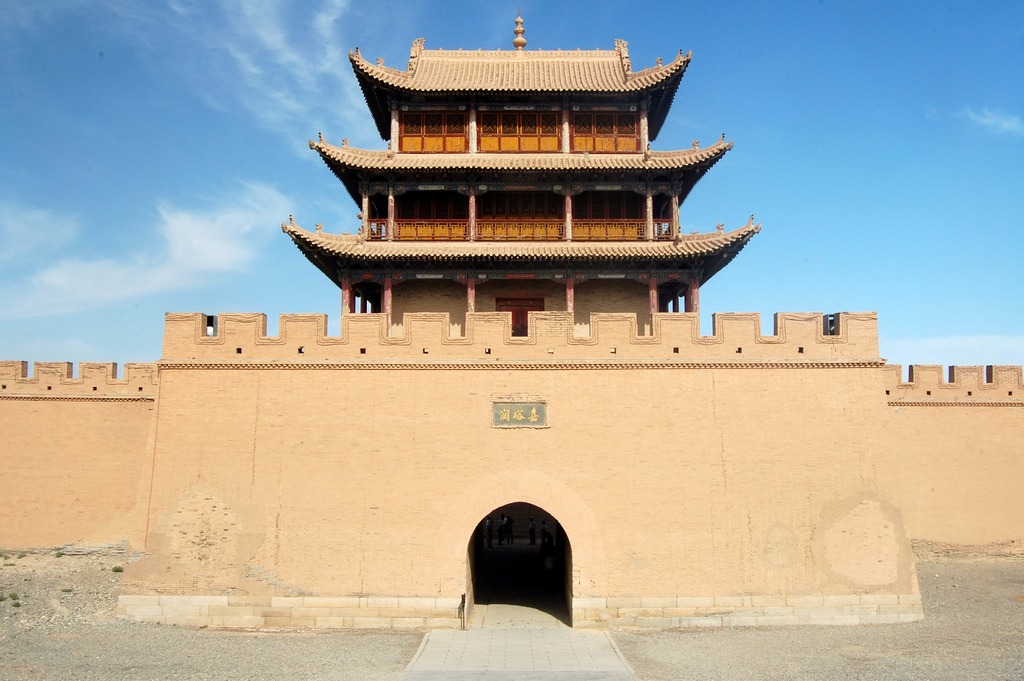
Built at the western extremity of China's Great Wall, Jiayuguan Fort marks the final fortified pass before the desert expanses of Xinjiang. Constructed during the Ming Dynasty in the 14th century, this military complex of rammed earth and fired brick guarded the Silk Road and symbolized the boundary between civilized Chine and the "barbarian" lands. Its silhouette of crenellated towers against the backdrop of the Gobi Desert and snow-capped mountains makes it one of the best-preserved historical sites in northwestern Chine.
Quick Practical Information
- Admission: paid entry (ticket included in the Jiayuguan site pass)
- Recommended duration: 2 to 3 hours for the fort and its ramparts
- What to wear: comfortable shoes are essential — the rampart walkways are sloped and paved
- Access: by taxi or bus from Jiayuguan city center; Jiayuguan high-speed railway station connects to Lanzhou and Urumqi
- Accessibility: limited — tower stairs are steep and not equipped for mobility assistance
What You'll See
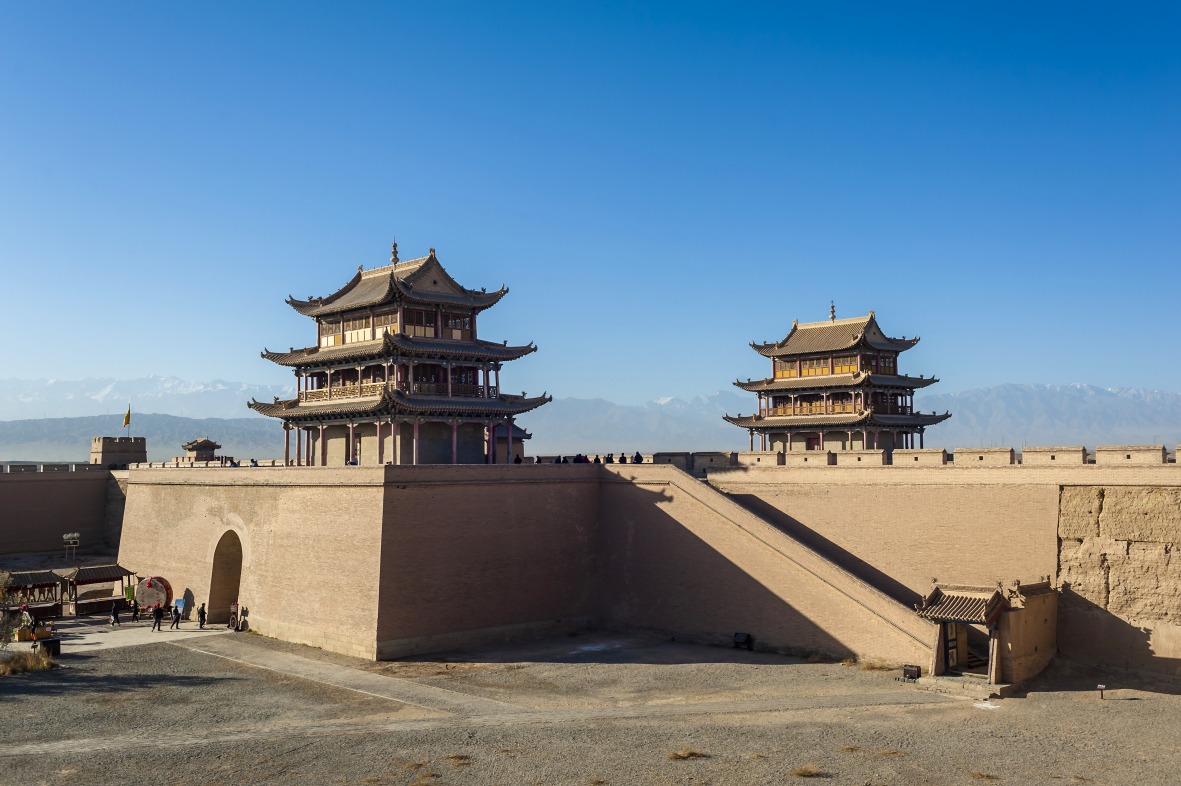
The complex comprises three concentric enclosures: the inner city (neicheng), the outer city (waicheng) and a defensive moat. Two monumental gate towers — the East Tower (Guanghua) and the West Tower (Rouyuan) — frame the main axis. The ramparts extend for several hundred meters and offer direct views of the Gobi Desert to the south and the Qilian foothills to the north.
History and Context
Construction began in 1372 under Emperor Hongwu, the first Ming sovereign. The fort takes its name from the natural pass (jia yu, "valley of excellence pass") that it controls. For two centuries, it served as a customs post, military garrison and departure point for caravans. Exiles and condemned prisoners passed through its western gate with no hope of return, earning it the popular nickname "Gate of Sighs."
Designated as a UNESCO World Heritage site as part of the Great Wall, the site underwent significant restoration in the 20th century while preserving the essential features of its Ming structure.
Highlights of Your Visit
The Gate Towers and Their Pavilions
Each gate tower is topped by a pavilion with a double-tiered roof of green glazed tiles. The interior houses exhibitions on military history and the Silk Road. From the rampart walkway, the perspective of the two towers aligned in succession is particularly striking.
The Adjacent Great Wall Section
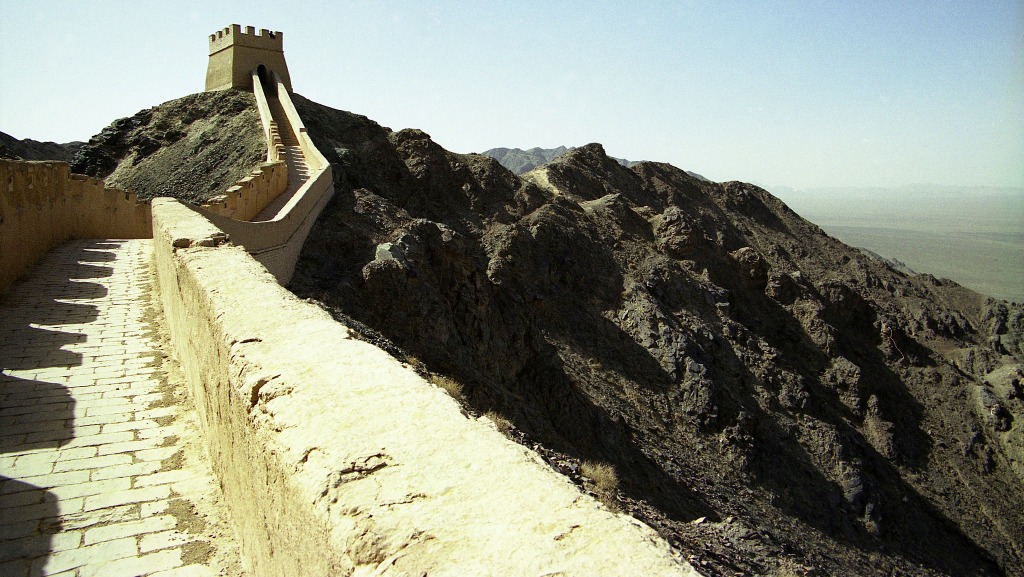
A few kilometers from the fort, two sections of the Ming wall descend toward the desert: one in rammed earth toward the south, the other in the direction of the Qilian. These unrestored sections give a raw sense of the original construction.
The Jiayuguan Great Wall Museum
Located within the site grounds, this museum features models, weapons and cartographic documents tracing the defensive history of the pass. Panels are available in Mandarin and English.
The Heishan Rock Art Cliff
About ten kilometers away, the rock carvings of Heishan (Black Mountain) date from the Bronze Age and Han period. They usefully complement a visit to the fort for those interested in the region's deeper history.
Photography Tips
Morning light (before 9 a.m.) is ideal: the rising sun illuminates the east façade of the Guanghua Tower and casts long shadows across the ramparts. In late afternoon, the golden raking light on the rammed earth walls is highly prized. To include the snow-capped Qilian mountains in your background, position yourself on the north rampart walkway. Photography is permitted throughout the entire site.
Location and Access
The fort is located approximately 6 km southwest of Jiayuguan city center, in Gansu Province. The city is served by the Lanzhou–Urumqi high-speed rail line, making it a natural stop on an east-west rail journey. Taxis and local buses regularly connect the station to the site. Parking is available for private vehicles.
Travelers combining multiple sites can continue to the Mogao Caves in Dunhuang (accessible by train) or the Hexi Corridor toward the east.
Nearby Attractions
- Mogao Caves, Dunhuang — masterpiece of rupestrian Buddhist art, a few hours by train to the west.
- Crescent Moon Lake, Dunhuang — crescent-shaped oasis nestled between the dunes of the Mingsha Desert.
- Zhangye Danxia Geopark — designated multicolored rock formations, to the east along the Hexi Corridor.
- Yangguan Pass — another Ming pass on the Silk Road, south of Dunhuang.
Frequently asked questions
Spring (April-May) and autumn (September-October) offer pleasant temperatures and often clear skies. Summer is hot and sunny but manageable; winter is cold and windy, with temperatures dropping well below freezing.
Plan for 2 to 3 hours for the fort and museum. If you wish to visit the adjacent wall sections or the Heishan carvings, allow a full half-day.
No, the distance is too great for a comfortable single day. It is better to spend one night in Jiayuguan, then take the train to Dunhuang the following morning.
No religious dress code applies — this is a historical military site. However, closed-toe shoes with non-slip soles are strongly recommended for the sloped rampart walkways.
Yes, photography is permitted throughout the entire exterior complex. Some museum rooms may restrict flash photography; check signage at the entrance of each room.
A taxi from the high-speed railway station or main station takes approximately 15 to 20 minutes. Local buses also serve the site; inquire at stops near the station for the line heading to the fort.
Photos
Interested in this visit?
We can include it in your personalised itinerary.