Yuanmingyuan (Old Summer Palace)
Yuanmingyuan (Old Summer Palace)
Imperial gardens burned in 1860, Yuanmingyuan preserves its ruins of European palaces amid lakes and pavilions. A place of memory and nature northwest of Beijing.
Yuanmingyuan — literally "Garden of Perfect Clarity" — is a vast complex of imperial gardens located in the Haidian district, northwest of Beijing. Built and expanded by several Qing emperors between the 18th and 19th centuries, it was burned and looted by Franco-British troops in 1860. Its ruins, preserved in their current state, make it both a memorial site and an exceptional landscaped park.
Practical Information at a Glance
- Admission: paid (park ticket + supplement for European ruins area)
- Access: Metro line 4, Yuanmingyuan station
- Recommended duration: 2 to 3 hours for the ruins and main gardens; half a day for the entire site
- Dress code: no clothing restrictions; wear comfortable shoes (very large site)
- Accessibility: main paths are passable, but terrain is uneven in some areas
What to See
The site comprises three distinct gardens: Yuanmingyuan proper, Wanchunyuan, and Changchunyuan. Visitors discover artificial lakes, islands linked by stone bridges, restored pavilions, and most notably, the famous ruins of European-style palaces commissioned by Emperor Qianlong from Italian and French Jesuits.
These white stone facades — broken columns, collapsed arches, dry basins — contrast with the dense vegetation surrounding them. In summer, lotus flowers cover much of the water, transforming the park into a living tableau.
History and Context
Construction began under Emperor Kangxi in the early 18th century. His successor Yongzheng, and especially Qianlong, made it the premier imperial summer residence, nearly eclipsing the neighboring Summer Palace. Jesuits Giuseppe Castiglione and Michel Benoist designed the Western pavilions of Changchunyuan, an unprecedented blend of European Baroque and Chinese aesthetics.
In October 1860, during the Second Opium War, Franco-British forces looted and then burned the complex over several days. The decision, attributed to British General Lord Elgin, remains a painful episode in Chinese national memory. The government chose not to rebuild the ruins, allowing them to bear witness to this event.
Highlights of Your Visit
The European Palace Ruins
The Changchunyuan zone concentrates the most photographed remains: the Great Fountain (Dashuifa), the Palace of Distant Serenity, and the broken colonnades. These fragments of carved stone evoke Versailles as much as the Forbidden City.
The Gardens and Lakes
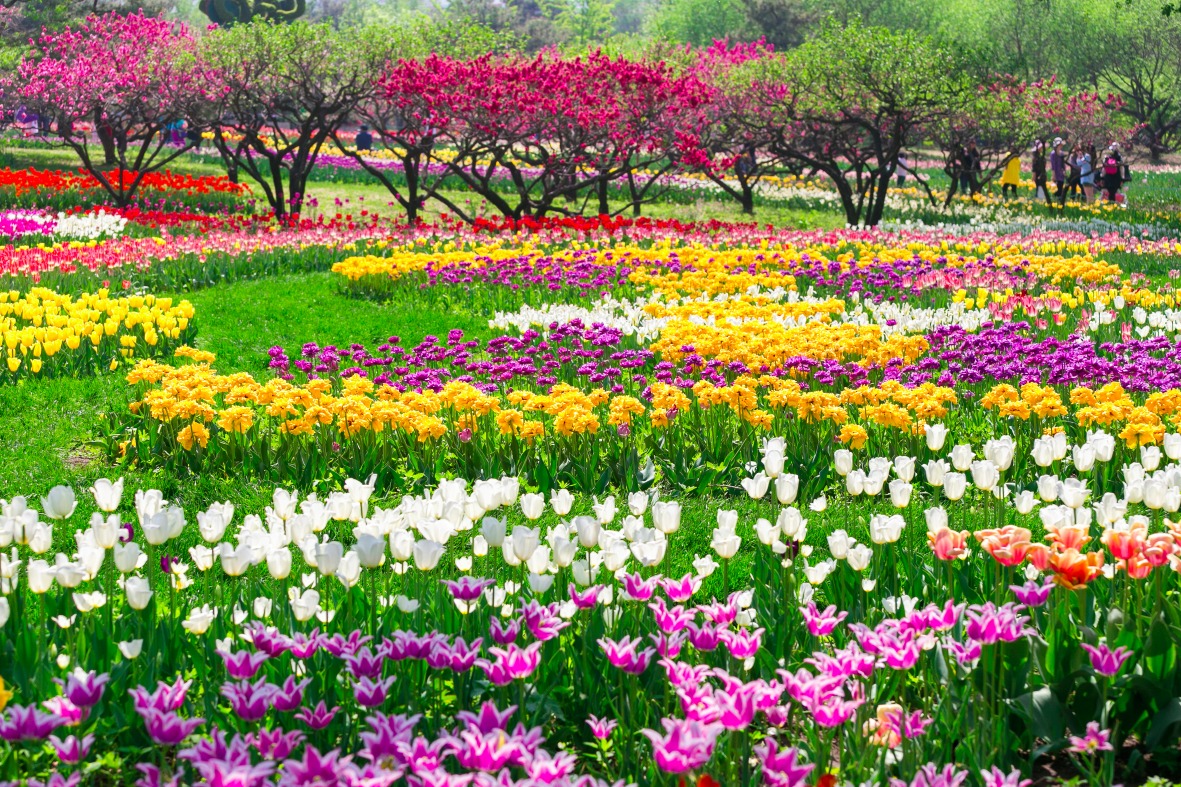
Beyond the ruins, the park unfolds a landscape of waterways, artificial hills, and pavilions. Fuhai Lake, the site's largest, welcomes boats in season. In spring, cherry blossoms and peach trees bloom along the shores.
The Site Museum
A museum space presents models reconstructing the palace's state before 1860, objects found during excavations, and historical documents about the looting. It provides essential context for understanding the scale of what was lost.
Photography Tips
Morning light is ideal on the European ruins: the low angle reveals the relief of sculptures. In summer, arrive early to photograph lotus flowers before mist rises. Reflections in restored basins work well in late afternoon. Photography is permitted throughout the park; no particular restrictions are noted for the ruins.
Location and Access
Yuanmingyuan is located in Haidian district, approximately 15 kilometers northwest of Beijing's historic center. The Yuanmingyuan metro station (line 4) serves the park's east entrance directly. The Summer Palace (Yiheyuan) is accessible on foot in about twenty minutes to the west, or a few minutes by bus.
English-speaking guided tours are offered by local agencies; contact Nomadays to arrange a combined visit with the Summer Palace.
Nearby Attractions
- Summer Palace (Yiheyuan) — The imperial lakeside residence rebuilt in the 19th century, a few minutes' walk west.
- Peking University (Beida) — The historic campus borders the site to the southeast, with its own gardens and Weiming Lake.
- Forbidden City — The imperial palace in central Beijing, approximately 45 minutes by metro.
- Temple of Heaven — Another major imperial complex in Beijing, in the southern part of the city.
Frequently asked questions
Spring (April-May) for flowers and summer (July-August) for lotus are the most spectacular periods. Autumn offers warm colors and fewer crowds. Winter is peaceful but the gardens are bare.
Yes, the two sites are neighbors and easily visited in one day. Start with Yuanmingyuan in the morning, then reach the Summer Palace on foot or by bus in the afternoon.
The main park paths are wheelchair accessible, but the European ruins area features uneven paving and slopes that may complicate circulation.
Yes, access to the Changchunyuan ruins area requires a supplement beyond the general park entrance fee.
Allow at least 2 hours for the ruins and immediate surroundings. To explore all three gardens, half a day is recommended.
Yes, photography is free throughout the park, including in the ruins area. No particular restrictions are noted for cameras or lightweight tripods.
Nearby
Interested in this visit?
We can include it in your personalised itinerary.