Xishuangbanna Tropical Botanical Garden
Xishuangbanna Tropical Botanical Garden
Set on the Menglun peninsula, the Xishuangbanna Tropical Botanical Garden brings together over 13,000 plant species within a humid tropical forest setting, blending scientific research with discovery of Yunnan's rich flora.
Managed by the Chinese Academy of Sciences, the Xishuangbanna Tropical Botanical Garden sprawls across the Menglun peninsula, surrounded by the Luosuo River. Founded in 1959, it houses one of Chine's largest collections of tropical plants, with over 13,000 catalogued species. It functions simultaneously as a scientific research facility and a public destination, nestled in the heart of southern Yunnan.
Practical Information at a Glance
- Admission: paid entry (fees subject to change; verify with your local guide)
- Recommended duration: half a day to a full day, depending on which themed gardens you explore
- Access: from Jinghong (Xishuangbanna's capital), take a long-distance bus to Menglun, then reach the garden on foot or by local tuk-tuk
- Attire: comfortable walking shoes recommended; some areas may be wet or muddy
- Accessibility: main pathways are navigable, though hilly terrain limits access to certain sections
What You'll See
The garden is organized into roughly twenty themed sections. Highlights include preserved humid rainforest, a palm grove, a Dai medicinal plants garden, a carnivorous plant greenhouse, and a collection of giant bamboos. The dense vegetation creates an immersive atmosphere, quite different from temperate botanical gardens.
- Primary rainforest: parcels of ancient vegetation integrated within the garden grounds
- Medicinal plants garden: species used in traditional Dai and Yunnan medicine
- Palm grove: collection of Southeast Asian palms
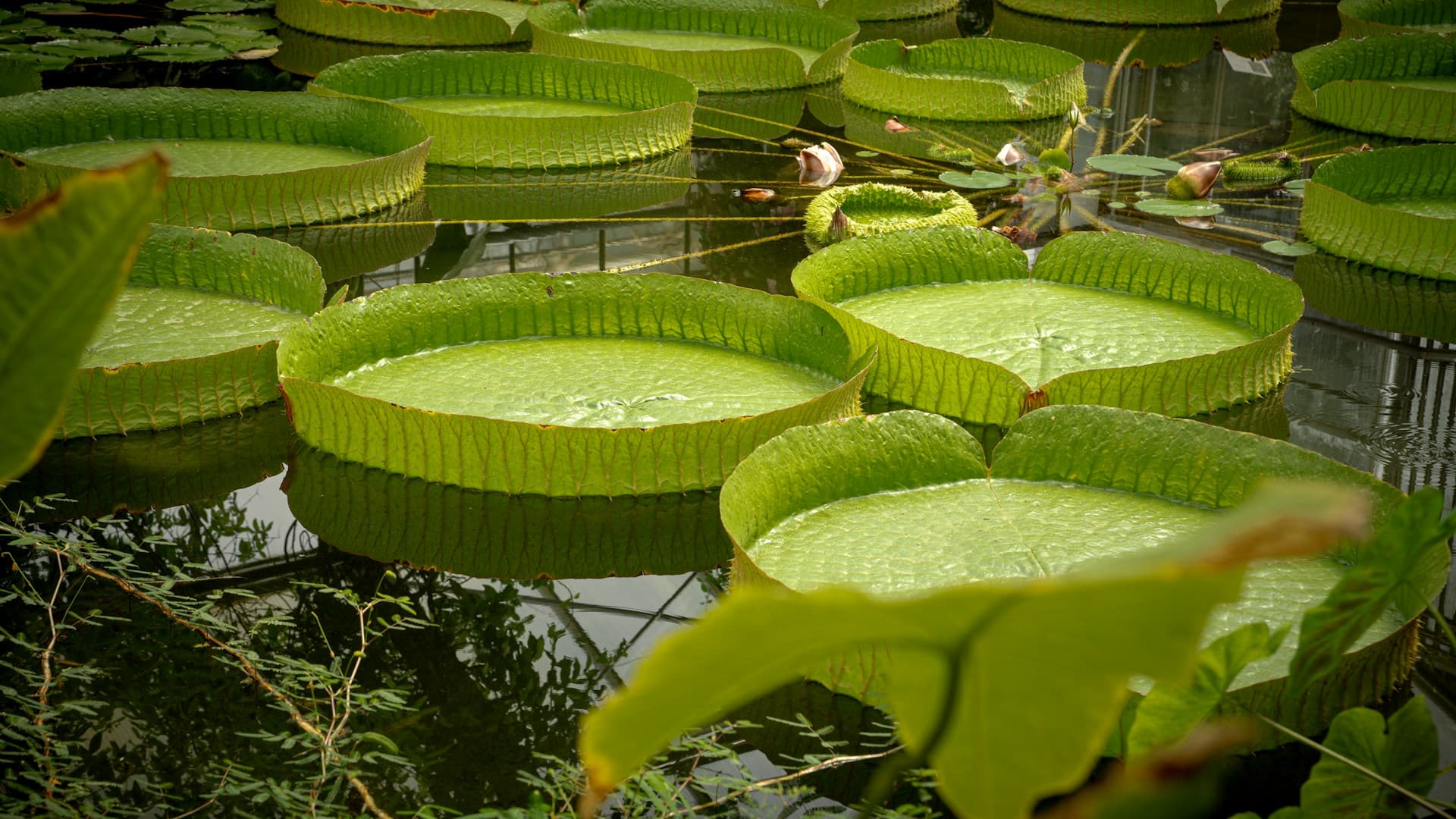
- Aquatic garden: giant water lilies (Victoria amazonica) and wetland plants
- Carnivorous plant greenhouse: nepenthes and other insectivorous species
History and Context
The garden was established in 1959 under botanist Cai Xitao's direction, as part of a national program studying tropical plant resources. Menglun, enclosed within a river loop, offered a stable tropical microclimate rare at this latitude. Today, administered by the Institute of Tropical Botany of the Chinese Academy of Sciences, it remains an active research center on Mekong biodiversity.
Highlights of Your Visit
The Humid Rainforest
Marked trails traverse parcels of ancient forest where strangler figs, lianas, and tree ferns coexist. The soundscape—insects, birds, flowing water—contrasts sharply with the rest of the manicured garden.
The Dai Medicinal Plants Garden
This section documents the botanical knowledge of the Dai people, Xishuangbanna's majority ethnic group. Bilingual panels (Chinese/English) explain the therapeutic uses of each species.
The Giant Water Lilies
The basin housing the Victoria amazonica is particularly spectacular in summer, when leaves reach their maximum size. Night blooming is visible in the evening if the garden organizes evening visits.
Photography Tips
Morning light filters through the canopy between 7 a.m. and 9 a.m., ideal for photographing the humid forest. Aquatic sections are best lit mid-morning. Avoid peak heat hours (noon to 2 p.m.): heat haze reduces sharpness. Carnivorous plants in the greenhouse require manual exposure adjustment due to backlighting.
Location and Access
The garden is located in Menglun, approximately 70 km east of Jinghong, Xishuangbanna's prefectural capital. Regular buses connect Jinghong to Menglun. The peninsula is accessible on foot from the main bus stop. No systematic internal shuttle service is confirmed; rental bicycles are sometimes available at the entrance.
Nearby Attractions
- Jinghong — Xishuangbanna's capital, the gateway to Dai culture and local markets.
- Mengla Nature Reserve — protected rainforest nearby, habitat for gibbons and Asian elephants.
- Dai Villages of Xishuangbanna — stilt-house architecture, Theravada Buddhist temples, and local cuisine.
Frequently asked questions
The dry season (November to April) offers the most comfortable visiting conditions. The rainy season (May to October) makes vegetation more lush, but trails can be slippery.
A half day is sufficient for the main sections. A full day allows you to explore all themed areas without rushing.
Yes. From Jinghong, you can visit the garden in the morning and explore a Dai village or Theravada Buddhist temple in the afternoon. Plan transportation accordingly.
Photography is generally permitted throughout the garden. Certain greenhouses or research areas may have specific restrictions posted on-site.
Main pathways are navigable, but hilly terrain and some forest trails limit full accessibility. Inquire at the entrance about adapted routes.
Interested in this visit?
We can include it in your personalised itinerary.