Ganden Sumtseling Monastery
Ganden Sumtseling Monastery
Founded in the 17th century, Ganden Sumtseling Monastery is the largest Tibetan Buddhist complex in Yunnan. Golden roofs, vibrant prayer halls, and sweeping mountain vistas make it an essential stop on any Shangri-La itinerary.
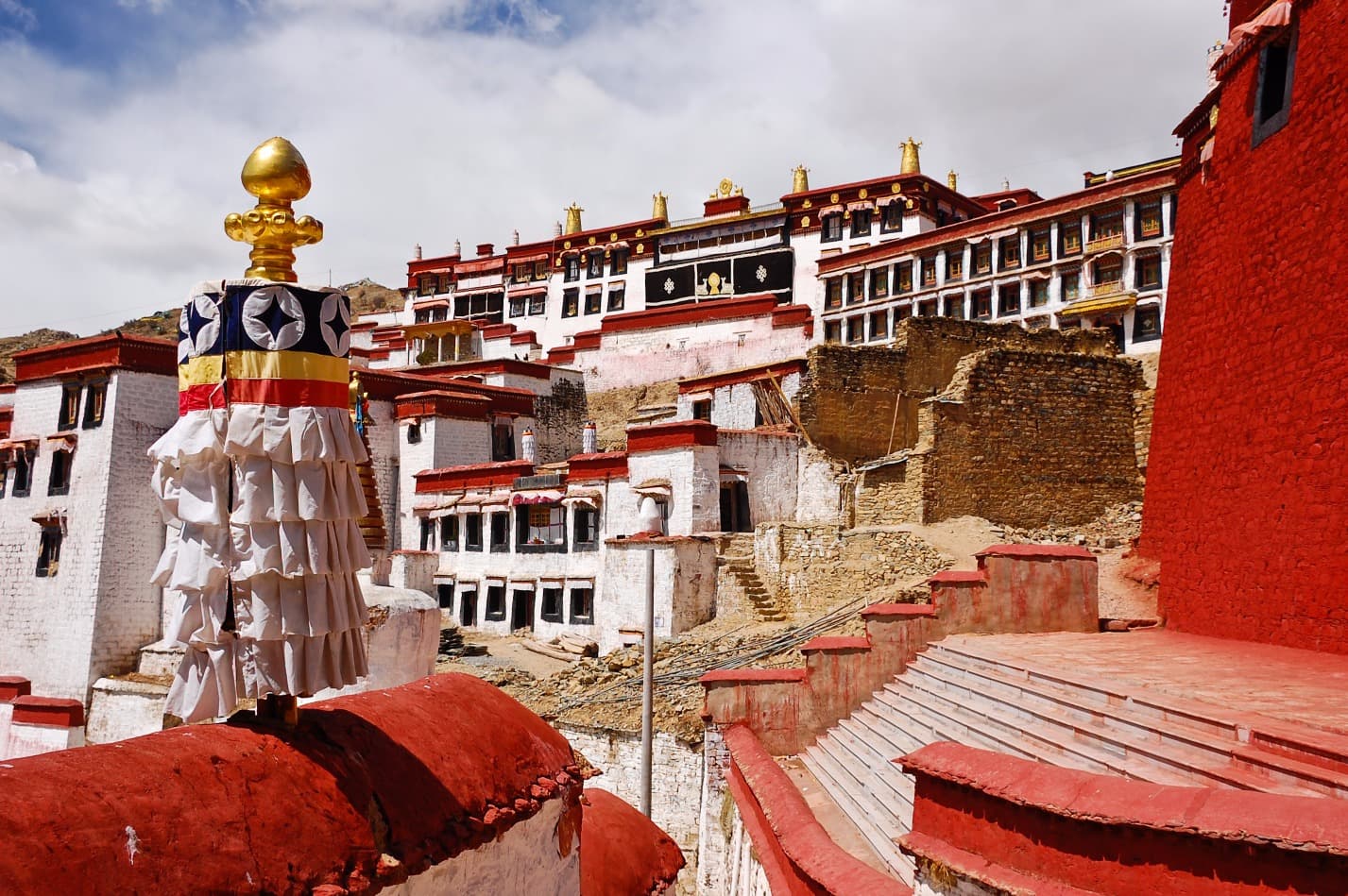
Ganden Sumtseling Monastery has dominated the Shangri-La valley since the 17th century. It is the largest Tibetan Buddhist complex in Yunnan, home to several hundred resident monks. Its gilded roofs, bustling courtyards, and incense-filled prayer halls make it a living spiritual center, not merely a frozen monument. A visit brings together classical Tibetan architecture, daily monastic life, and panoramic views of the surrounding mountains.
Quick Reference Guide
- Entrance: paid admission required
- Suggested duration: 1.5 to 2 hours to explore the courtyards and main halls
- Dress code: shoulders and knees should be covered; respectful behavior required in prayer halls
- Access: a few kilometers north of central Shangri-La, reachable by taxi or local bus from the old town
- Accessibility: the main courtyards are accessible, though stairs to upper buildings may be challenging
What to See
The complex comprises two large main temples surrounded by residential buildings for the monks. The prayer halls house massive gold-covered Buddha statues, thangkas (religious cloth paintings), and rows of yak butter lamps. The gilded copper roofs gleam in the sun and contrast beautifully with the white and ochre walls of the buildings.
The inner courtyards form the living heart of the monastery: here you encounter monks in maroon robes, Tibetan pilgrims turning prayer wheels, and occasionally ceremonies accompanied by cymbals and long ceremonial trumpets.
History and Context
Founded in 1679 under the authority of the 5th Dalai Lama, Ganden Sumtseling belongs to the Gelug school of Tibetan Buddhism — the same school as the current Dalai Lama. The monastery suffered severe damage during the Cultural Revolution in the 1960s and 1970s, then was rebuilt beginning in the 1980s. Today it remains an active religious center, with several hundred resident monks.
Highlights of Your Visit
The Main Prayer Halls
The two central temples house the most impressive statues and richest decorations. The atmosphere is immersive: incense, softly filtered light from butter lamps, whispered prayers. Enter with discretion and avoid photography without explicit permission.
Views from the Rooftops
Ascending to the upper levels of the complex reveals panoramic views across the Shangri-La valley, grasslands, and snow-capped mountains beyond. This is one of the region's finest accessible vantage points without requiring a trek.
Everyday Monastic Life
Outside peak tourist hours, especially in the morning, you'll observe monks going about their daily routines: studying, engaging in philosophical debates in the courtyards, or simply moving between buildings. This living dimension sets Sumtseling apart from purely heritage sites.
Etiquette and Visiting Guidelines
- Cover shoulders and knees before entering prayer halls.
- Remove your shoes before entering certain temples (signs will indicate where).
- Circumambulate stupas and prayer wheels clockwise.
- Do not photograph monks or the interiors of halls without permission.
- Speak softly in worship spaces; avoid phone calls.
- Do not touch statues or ritual objects.
Photography Tips
Early morning light is ideal: the gilded roofs capture the first rays and courtyards are still relatively uncrowded. From the esplanade facing the main entrance, sufficient distance allows you to frame the entire complex with mountains as a backdrop. Photography inside temples is generally prohibited — respect the signage and ask if in doubt.
Location and Access
The monastery sits approximately 5 km north of central Shangri-La (Dukezong, the old town). Taxis and local buses regularly connect the site from the city. The access road passes an artificial lake that mirrors the monastery on calm days — a photo stop worth making on the way.
The main courtyards are accessible to people with reduced mobility, though the higher buildings require climbing stone stairs.
Nearby Attractions
- Dukezong Old Town — the historic Tibetan quarter of Shangri-La, with its paved lanes and traditional architecture.
- Napa Lake — a wetland and nature reserve nearby, particularly beautiful in autumn when migratory cranes arrive.
- Napa Meadow — a vast grassy plateau surrounding the lake, ideal for horseback riding or walking.
- Tiger Leaping Gorge — a spectacular canyon on the Yangtsé River, about two hours' drive away and the starting point of a renowned trek.
Photos
Interested in this visit?
We can include it in your personalised itinerary.