Leifeng Pagoda
Leifeng Pagoda
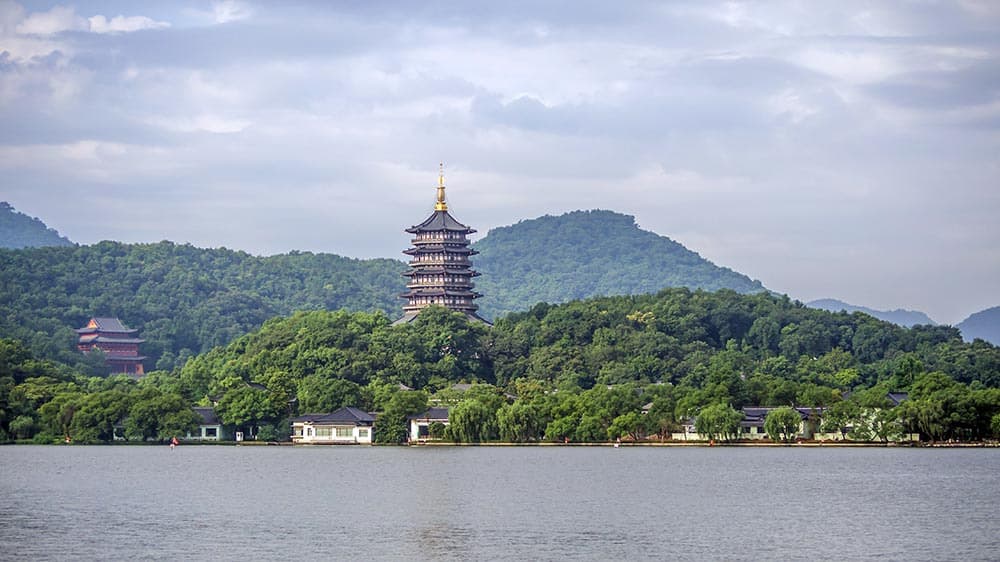
On the southern shore of West Lake in Hangzhou, Leifeng Pagoda brings together traditional architecture, the White Snake legend, and sweeping views across the city.
Perched on a hillside south of West Lake, in Hangzhou, Leifeng Pagoda is instantly recognizable by its octagonal silhouette rising above the water. Reconstructed in the early 2000s on the site of a thousand-year-old edifice, it seamlessly marries traditional Chinese architecture with the legend of the White Snake, one of the nation's most beloved folklore tales.
Why visit Leifeng Pagoda
The pagoda deserves a visit for three compelling reasons. First, its location: from the summit, the panorama sweeps across West Lake, its islands, and the city of Hangzhou. Second, its rich history spanning more than a millennium, from the Five Dynasties era to contemporary reconstruction. Finally, its connection to the White Snake legend, with archaeological artifacts displayed inside. The visit thus combines panoramic views, heritage, and popular culture all in one remarkable site.
History of the pagoda
Leifeng Pagoda was constructed in 975 during the Five Dynasties and Ten Kingdoms period, commissioned by King Qian Chu (852-932) of the Wuyue kingdom. Originally named Huangfei, it was built to honor the pregnancy of the king's favored concubine.
During the Ming Dynasty, Japanese pirates set it ablaze: they destroyed the wooden structures, convinced the building housed weapons. The pagoda retained this bare appearance for centuries, until its collapse in September 1927. This fall resulted from a persistent superstition: locals regularly removed bricks, believed to be sacred, protective against evil spirits, and blessing to couples seeking children.
In 1999, provincial and municipal authorities decided to reconstruct the edifice. Work concluded in 2002, when the pagoda reopened to the public and became one of Hangzhou's premier attractions.
What to see
Architecture bridging tradition and modernity
The reconstructed pagoda spans more than 3,000 m² and rises 71.6 meters across eight stories. It rests on a steel framework weighing 1,400 tons, including 200 tons of copper components. The octagonal form, upturned eaves, wooden balconies, and bronze-tiled roofs imitating terracotta follow classical Chinese architectural principles. Inside, the amenities are decidedly contemporary: air-conditioning, displays, loudspeakers, and escalators serve each level. Two external escalators carry visitors to the pagoda's base, easing the climb up the hillside.
Archaeological finds from the 2001 excavation
In March 2001, excavations beneath the original pagoda's foundation unearthed a gold and silver Buddha statue, approximately 60 ancient objects, bronze coins, cannons, and Buddhist paintings. Many of these artifacts, along with items linked to the White Snake legend, are displayed on the second floor. The upper levels remain intentionally minimal and lead to the summit, where views of the lake open up.
The White Snake legend
The pagoda is inseparable from this legend, among China's most celebrated narratives, performed in the nation's grand opera houses. The tale tells of a snake that transformed into a woman and fell in love with a man. A Buddhist monk, discerning the metamorphosis, trapped her within Leifeng Pagoda. Many visitors, particularly couples, come seeking traces of this story through the displayed objects.
When to visit
The pagoda welcomes visitors year-round. Spring and autumn offer the most pleasant conditions, with mild temperatures and favorable light across the lake. Summer remains viable but brings heat and humidity: visit in the morning. The late afternoon slot, just before closing, is particularly rewarding: final rays illuminate the hills and lake from the pagoda's summit. Weekdays draw significantly fewer crowds than weekends and Chinese public holidays.
Practical information
- Duration of visit: allow 1 to 1.5 hours to tour the stories and enjoy the panorama.
- Admission: moderate entry fee, with reductions for children. Verify current rates on-site or with your guide.
- Hours: the pagoda observes seasonal opening times, extended during peak season. Check updated hours before your visit.
- Accessibility: external escalators and internal escalators facilitate the visit for those with limited mobility.
How to get there
The pagoda sits on the southern shore of West Lake. Numerous bus routes serve the Jingsi Station stop, including lines Y2, 4, Y6, Y9, 31, 51, 52, 87, 287, 291, 315, 334, and 822. From central Hangzhou, a taxi or ride-hailing service is quick. Visitors strolling or cycling along the lake from the north can reach the site via the lakeside promenade in approximately one hour.
Nearby attractions
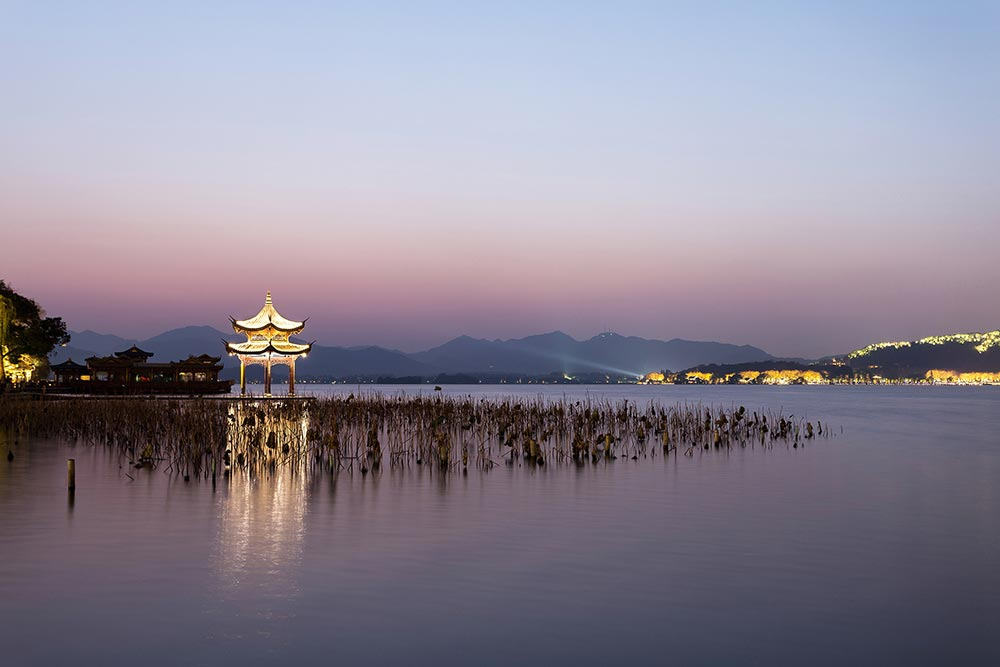
Leifeng Pagoda sits within the panorama of West Lake, a UNESCO World Heritage site. The pavilions, bridges, and gardens surrounding it invite leisurely exploration. You can extend your visit with other temples and hills on the southern shore, then continue exploring Hangzhou. Architecture enthusiasts may compare Leifeng to the Big Wild Goose Pagoda in Xi'an, another emblematic structure in the country.
Frequently asked questions
Frequently asked questions
Plan your trip
Leifeng Pagoda integrates naturally into an itinerary around Hangzhou and West Lake. To craft a bespoke journey incorporating this destination, explore our trips to Chine.
Nearby
Interested in this visit?
We can include it in your personalised itinerary.