Duxiu Feng – Peak of Solitary Beauty
Duxiu Feng – Peak of Solitary Beauty
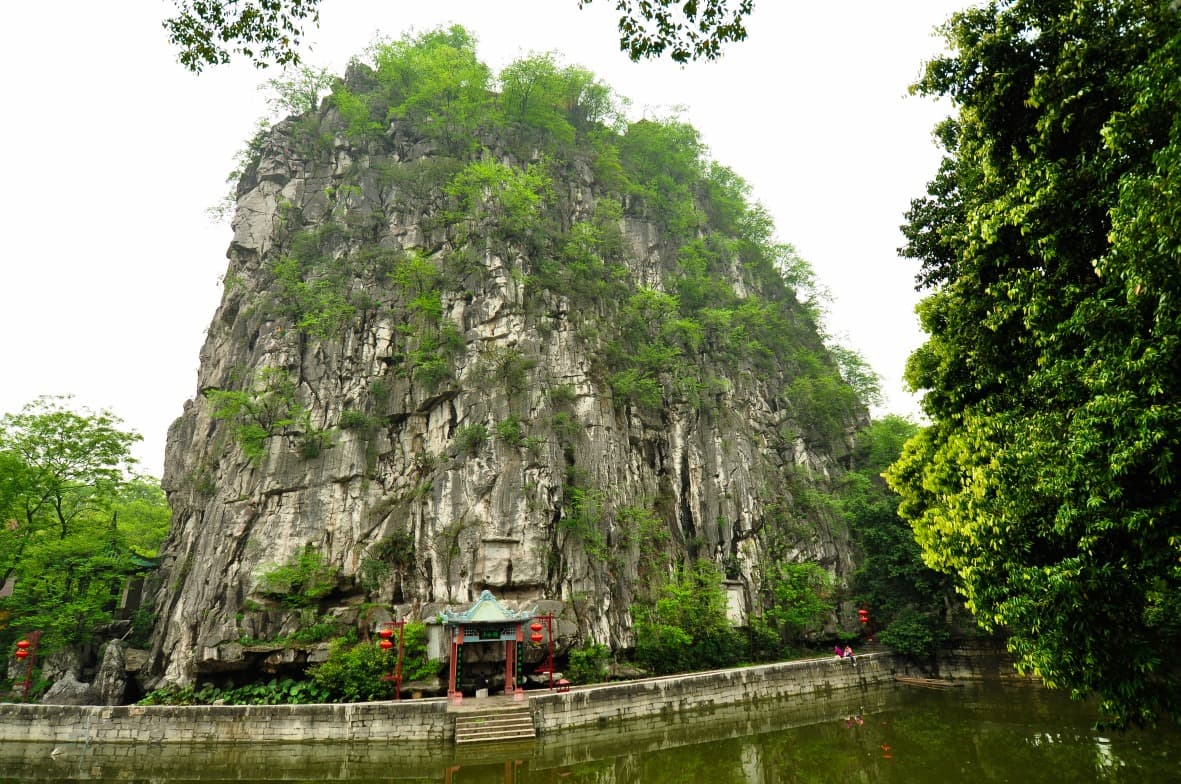
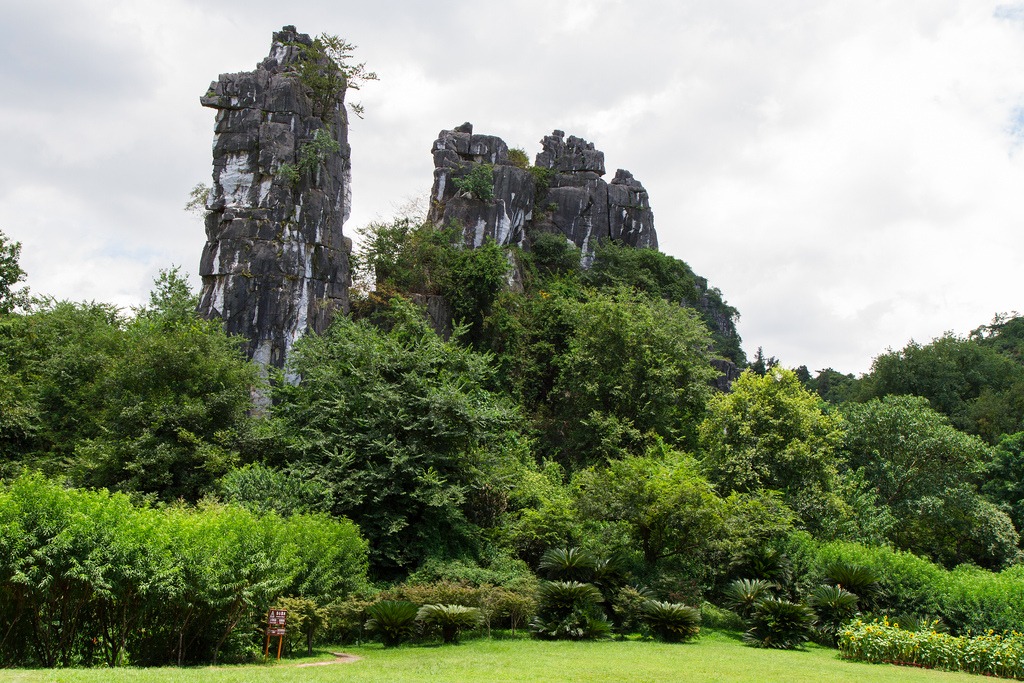
A 152 m limestone pinnacle standing alone in the heart of Guilin, Duxiu Feng brings together karst geology, millennial rock inscriptions, and Ming princely palace remains, with panoramic views over the Li River.
In the heart of Guilin, Duxiu Feng (独秀峰, Dúxiù Fēng) rises 152 metres above the plain, isolated and unbraced. This vertical limestone pinnacle, planted within the grounds of the former Ming princes' palace, concentrates in a single site karst geology, imperial history, and sweeping views over the city's rooftops and waterways.
Quick Essentials
- Access: Located within the Wang Princes' Palace Park (王城), downtown Guilin, a few minutes' walk from the pedestrian Zhongshan Avenue.
- Recommended duration: 1.5 to 2 hours to explore the park and ascend the peak.
- Ascent: Rock-cut stairs, roughly 306 steps; not recommended for those with mobility constraints.
- What to wear: Closed-toe shoes recommended for damp steps.
What You'll See
The peak itself is pierced by a through-cave, the Xuanwu Cave, adorned with stone tablets and inscriptions carved since the Tang period. The Ming palace enclosure holds restored buildings, gardens, and a lotus pond. From the summit, views sweep across the meanders of the Li River, surrounding karst hills, and Guilin's urban fabric.
History and Context
The site has been occupied since the Tang dynasty (7th century), which established a prefecture here. Under the Ming (14th–17th centuries), Prince Jing of Jingjiang commissioned his palace—one of Chine's best-preserved palaces outside Beijing. The Guangxi Normal University campus now occupies part of the grounds, lending the place a vibrant, lived-in character.
Highlights of Your Visit
The Ascent and Summit
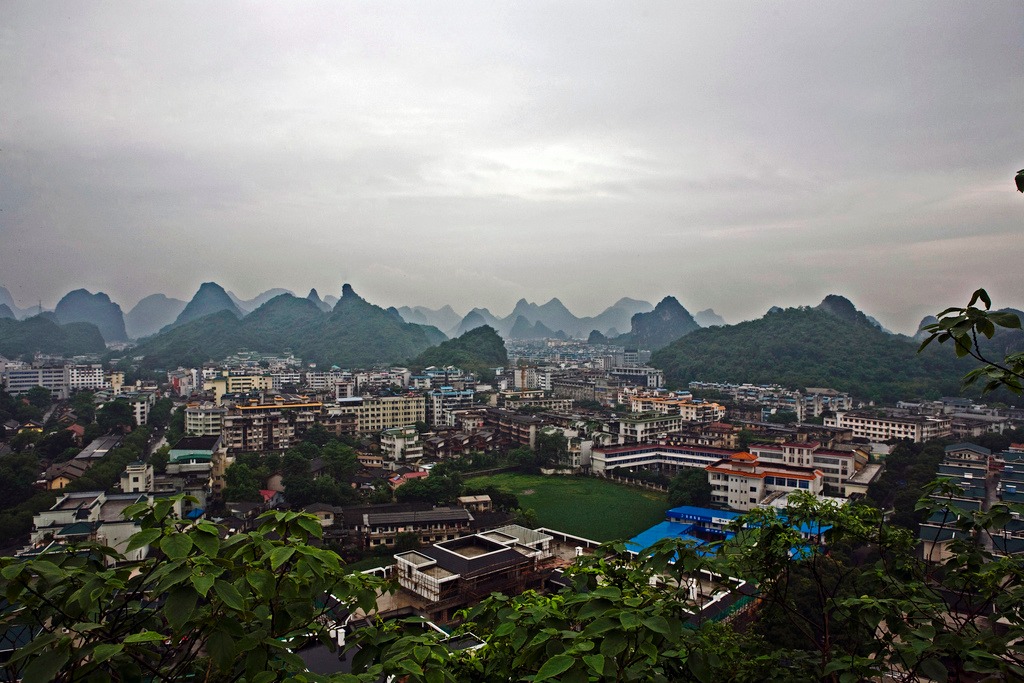
The spiral staircase, carved directly into the limestone, climbs in two sections. At the top, a platform offers a 360° panorama: the Li River to the southeast, Elephant and Fubo hills in the distance, grey-tiled roofs of the old town spreading below.
Rock Inscriptions
More than 100 inscriptions cover the walls of the peak and Xuanwu Cave. Some date to the Tang period, others to the Song and Ming dynasties. They form a rare historical record of scholarly life in Guilin.
The Ming Princes' Palace
The gateways, pavilions, and walls of the Ming enclosure remain remarkably intact. The Chengyun Gate (承运门) and the main hall deserve close attention for their lacquered timber frames.
Photography Tips
Morning light (before 9 a.m.) is gentlest on the grey limestone. From the summit, frame toward the southeast to capture the Li River in your background. Rock inscriptions photograph best in raking light, in late afternoon. Avoid heavy mist days: the panorama loses all its impact.
Location and Access
Duxiu Feng stands in Guilin's historic centre, within the Wang Palace university grounds. It's reached on foot from the Zhongshan Lu shopping street or by taxi from Guilin railway station. Several major attractions are within walking distance of the site.
Nearby
- Elephant Trunk Hill — Guilin's most photographed landmark, at the confluence of the Li and Peach Blossom rivers.
- Fubo Hill — another karst pinnacle with caves and Buddhist inscriptions, on the Li River's edge.
- Reed Flute Cave — vast network of stalactites and stalagmites, a few kilometres northwest of downtown.
- Li River Cruise — descent toward Yangshuo amid karst peaks, departing from Guilin.
Frequently asked questions
Spring (March–May) and autumn (September–November) bring clearer skies and pleasant temperatures. Summer is hot and humid; mist can obscure the summit panorama.
The staircase has roughly 306 steps cut into rock, sometimes slippery in damp conditions. The climb takes 15 to 20 minutes at a leisurely pace. It is not recommended for those with mobility constraints.
Yes. Elephant Trunk Hill and Fubo Hill are reachable on foot or by taxi in under 20 minutes. One day is enough to visit all three sites.
Photography is generally allowed in the park and at the summit. Some Ming palace halls may restrict flash photography; observe signage on location.
The park at the peak's base is accessible, but the summit ascent is not, due to irregular rock steps. Ground-level Ming palace buildings remain visitable.
Interested in this visit?
We can include it in your personalised itinerary.