Muslim Quarter of Xi'an
Muslim Quarter of Xi'an
At the heart of Xi'an, the Hui Quarter brings together a dozen mosques, bustling market lanes and halal cuisine inherited from the Silk Road.
The Muslim Quarter of Xi'an, also known as the Hui Quarter, occupies the historic centre of the city, immediately adjacent to the Bell Tower and the Drum Tower. This district of around a dozen mosques, commercial alleyways and halal food stalls bears witness to over a thousand years of exchange between inland China and the Arab-Persian world, inherited from the Silk Road.
Why visit the Muslim Quarter of Xi'an
The Hui Quarter is one of the rare urban ensembles in China where a Muslim minority has lived, worshipped and traded continuously since imperial times. Today it is home to around 20,000 inhabitants, mostly merchants belonging to the Hui ethnic group, recognisable by their small white caps for men and headscarves for women.
The appeal of a visit lies in three elements: a distinctive Sino-Arab architecture with few equals elsewhere in the country, a very lively street food scene in the evenings, and a central location that makes it easy to combine a stroll with other major sites in Xi'an.
History of the Hui Quarter
Under the Western Han dynasty (from 206 BCE), Xi'an — then called Chang'an — became China's departure point for the ancient Silk Road. The city gradually attracted Arab and Persian merchants as well as students who came to study in China. Over the dynasties, these Muslim communities settled in the city centre, built their places of worship, organised their markets and shaped a quarter that maintained its own customs while integrating into the Chinese urban fabric.
This heritage explains the architectural and cultural diversity visible today in the alleyways, mosques and local gastronomy.
What to see in the Muslim Quarter
The Great Mosque of Xi'an
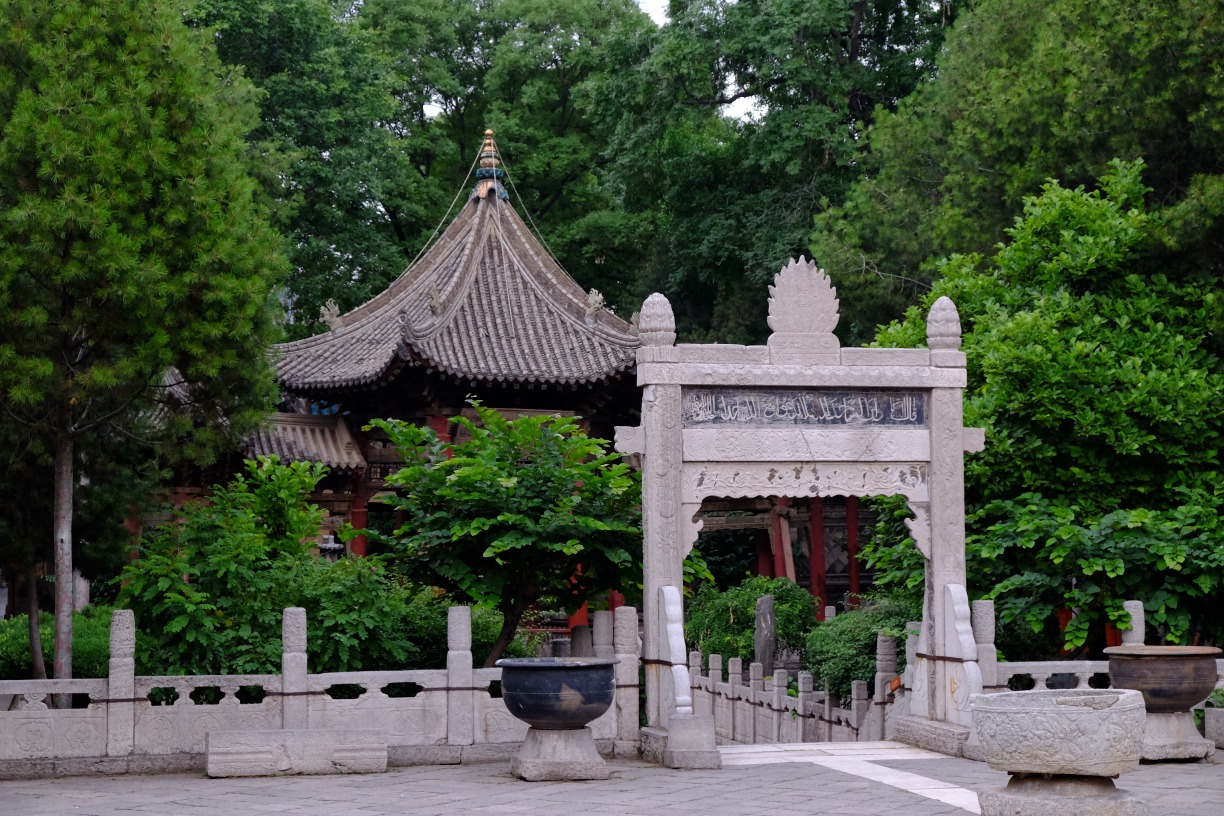
The Great Mosque of Xi'an is the quarter's flagship monument and one of China's four largest ancient mosques. It remarkably illustrates the marriage of styles: the roofs and pavilions are rooted in classical Chinese architecture, while the function and certain structures follow Arab codes. The complex includes a vast prayer hall and a minaret housing a manuscript copy of the Quran produced during the Ming dynasty.
Beiyuanmen Street
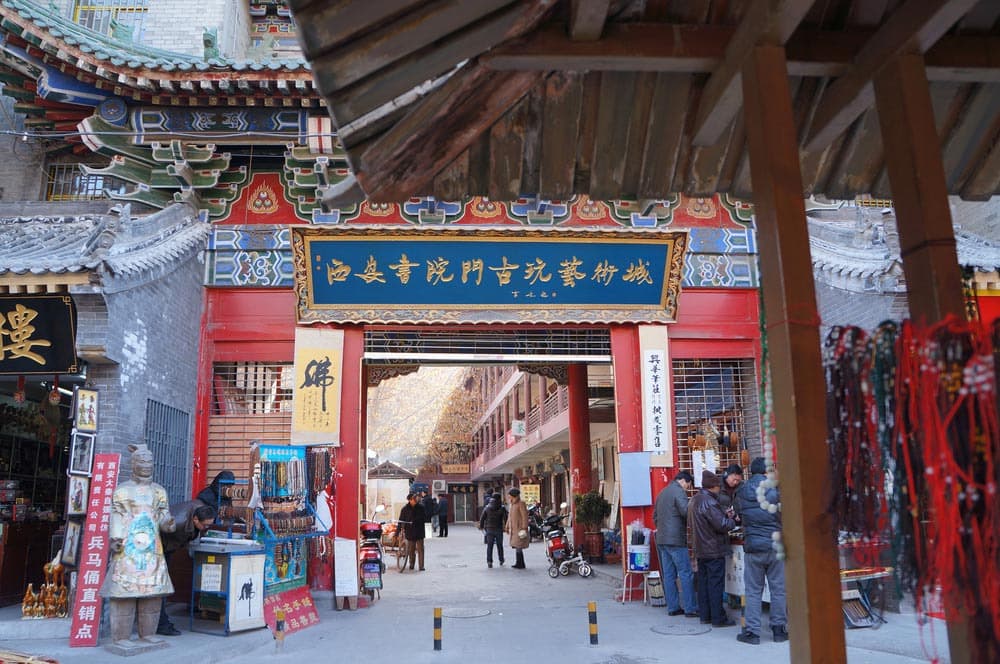
Located north of the Drum Tower, Beiyuanmen Street is the quarter's main artery. This cobbled street, around 500 metres long and lined with large trees, concentrates street food stalls, spice shops, dried fruit vendors and craft outlets. This is where most of the quarter's evening activity takes place.
Other mosques and the Changhuang Temple
The quarter is home to around a dozen mosques of varying sizes, some quite discreet behind their walls. The Changhuang Temple, dedicated to the city's protective deity, is also located within this perimeter and reminds us that the quarter is not exclusively Muslim but truly a place of religious coexistence.
Street food
The quarter is renowned for its halal specialities: spiced lamb skewers, roujiamo (stewed meat sandwich), biang biang mian, crumbled bread soup yangrou paomo, grilled persimmons, date cakes. Tasting local fare on the spot is an integral part of the visit.
When to go
The quarter can be visited year-round. Late afternoon and evening remain the best times: as dusk falls, the lights come on, the braziers heat up and the commercial atmosphere reaches its peak. Spring (April-May) and autumn (September-October) offer the most pleasant temperatures for wandering. Summer is hot and crowded, winter quieter but considerably colder.
Practical information
- Duration of visit: allow 2 to 3 hours for a stroll including tasting. A half-day if you visit the Great Mosque in detail.
- Fees: access to the quarter is free. The Great Mosque has a modest entrance fee.
- Dress code: appropriate dress is recommended inside mosques (shoulders and legs covered).
- Payment: most vendors use Chinese mobile payments; bring cash as a backup.
- Crowds: very busy in the evenings and at weekends, quieter in the morning.
How to get there
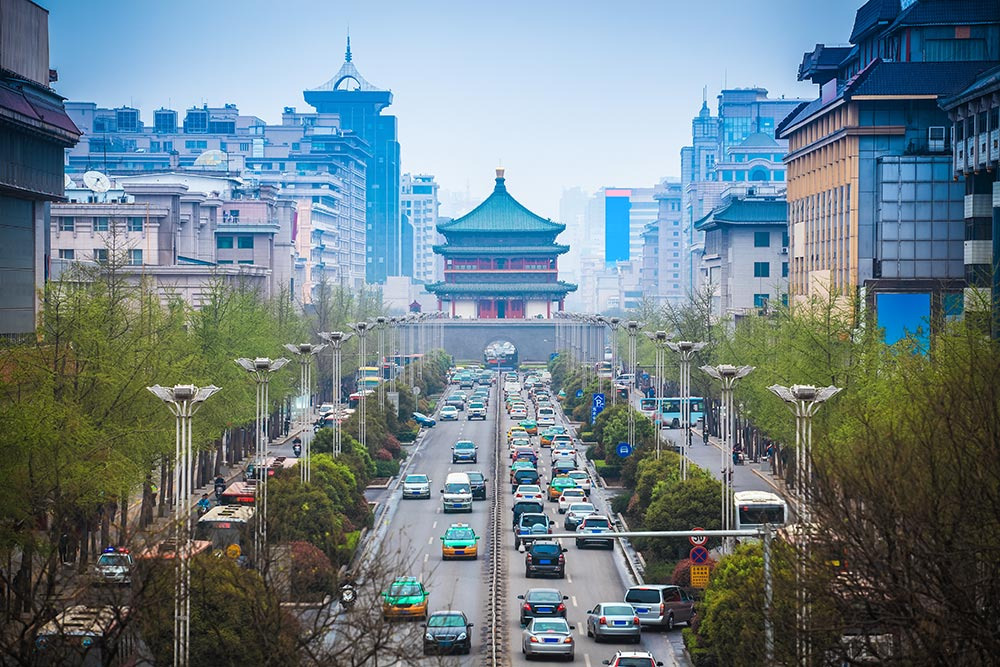
The quarter is located at the heart of Xi'an's old city, within the ramparts. The easiest landmark is the Bell Tower: from this central square, head to the Drum Tower on foot, then take Beiyuanmen Street which starts behind it.
The metro (line 2, Bell Tower/Zhonglou station) is the most convenient way to access it from the station or other quarters. Many bus lines also serve the Bell Tower. By taxi or ride-hailing, ask to be dropped at Zhonglou or Gulou.
To combine nearby
Xi'an and the rest of China offer many natural extensions to this visit:
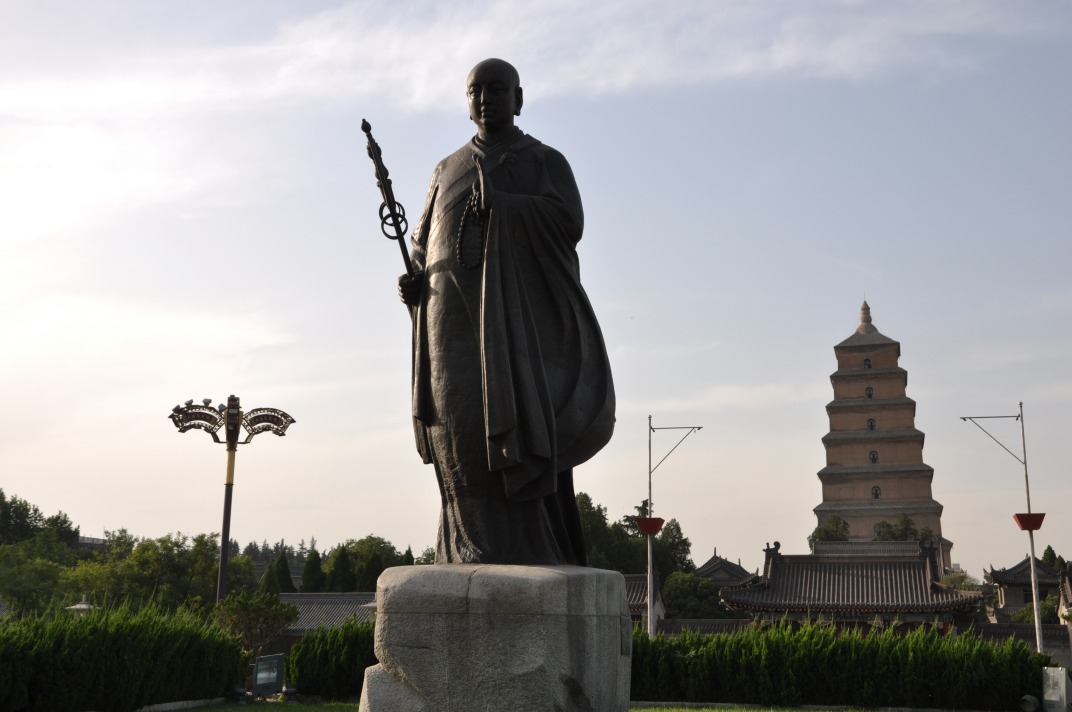
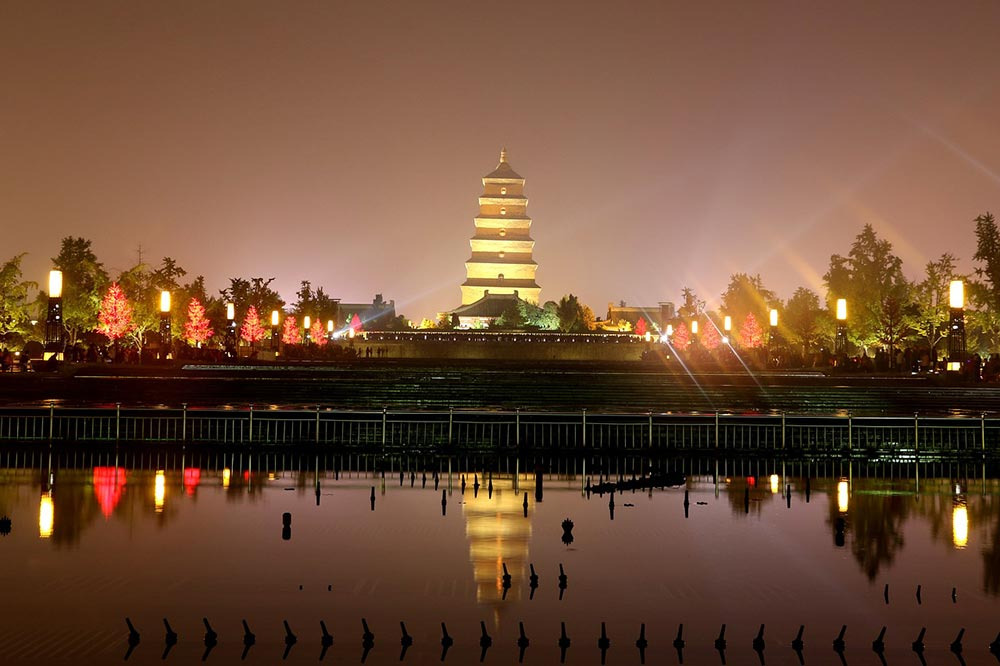
- The Great Pagoda of the Wild Goose, another major Tang dynasty site in Xi'an.
- The Great Wall at Juyongguan, accessible from Beijing on an extended itinerary.
- The Thousand Buddhas caves of Bezeklik, a Buddhist stop on the Silk Road in Xinjiang.
- The Longgong cave, for an escape into the karst landscapes of Guizhou.
Frequently asked questions
Yes. Access to the streets is free and open at all times. Only certain monuments like the Great Mosque require an entrance ticket.
The Great Mosque is open to non-Muslim visitors, with the exception of the main prayer hall. Other mosques in the quarter are generally reserved for worshippers.
Late afternoon and evening are the liveliest, with stalls and barbecues coming to life. Morning is better suited for visiting the Great Mosque in peace.
The Hui form one of China's main ethnic minorities. Sunni Muslims, they speak Mandarin and are partly descended from Arab and Persian merchants who settled in China via the Silk Road.
Yes. Most dishes are based on lamb, beef, noodles and breads, with no pork or alcohol. Try the skewers, roujiamo and yangrou paomo soup, which rank among the local specialities.
Including Xi'an in your trip
The Muslim Quarter naturally integrates into an itinerary combining Xi'an, the Terracotta Army and major stages of the Silk Road. To build a bespoke trip, consult our China travel suggestions.
Nearby
Interested in this visit?
We can include it in your personalised itinerary.