Songpan
Songpan
Perched at 2,850 m in northwestern Sichuan, Songpan blends Ming fortifications, Tibetan culture and Hui community. A historic crossroads and natural gateway to Jiuzhaigou and Huanglong.
Songpan is a mountain town in northwestern Sichuan, situated at approximately 2,850 meters altitude within the Tibetan and Qiang Autonomous Prefecture of Aba. A historic crossroads between Han, Tibetan and Hui worlds, it preserves an old town encircled by Ming ramparts, active mosques and a vibrant bazaar. It also serves as the natural gateway to the Jiuzhaigou and Huanglong nature reserves, making it a strategic stop for any circuit in the region.
Practical information at a glance
- Altitude: approximately 2,850 m — allow a few hours for acclimatization upon arrival.
- Access: buses from Chengdu (Chadianzi bus station); journey of several hours depending on road conditions. No railway station in Songpan.
- Suggested duration: 1 to 2 days for the town and its immediate surroundings.
- Clothing: warm garments even in summer — nights are cool at altitude.
- Currency: Chinese yuan (CNY); carry cash, ATMs are limited.
What to see
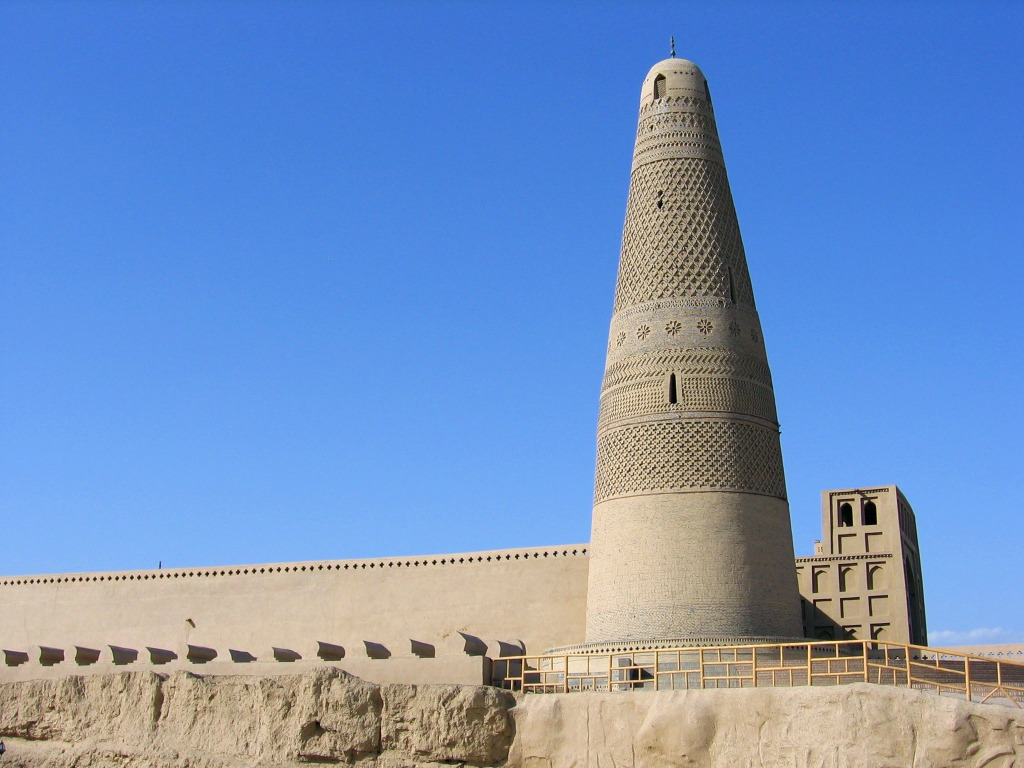
The old town is bounded by stone ramparts dating from the Ming dynasty, largely restored. The main streets blend Tibetan product shops, herbalists and Hui restaurants. The Minjiang River crosses the town, spanned by several wooden covered bridges. The morning market brings together Tibetan herders, Hui merchants and Han farmers — a rare ethnographic tableau.
History and context
Songpan was a strategic frontier post on the Tea and Horse Road (Chamadao) that connected Sichuan to Tibet. The Ming erected fortifications here to control trade and tensions between populations. The town later hosted a significant Hui Muslim community, whose presence is still evident in the mosque architecture. During the Long March (1935), the Red Army passed through the region, leaving some memorial traces.
Highlights of a visit
The Ming ramparts
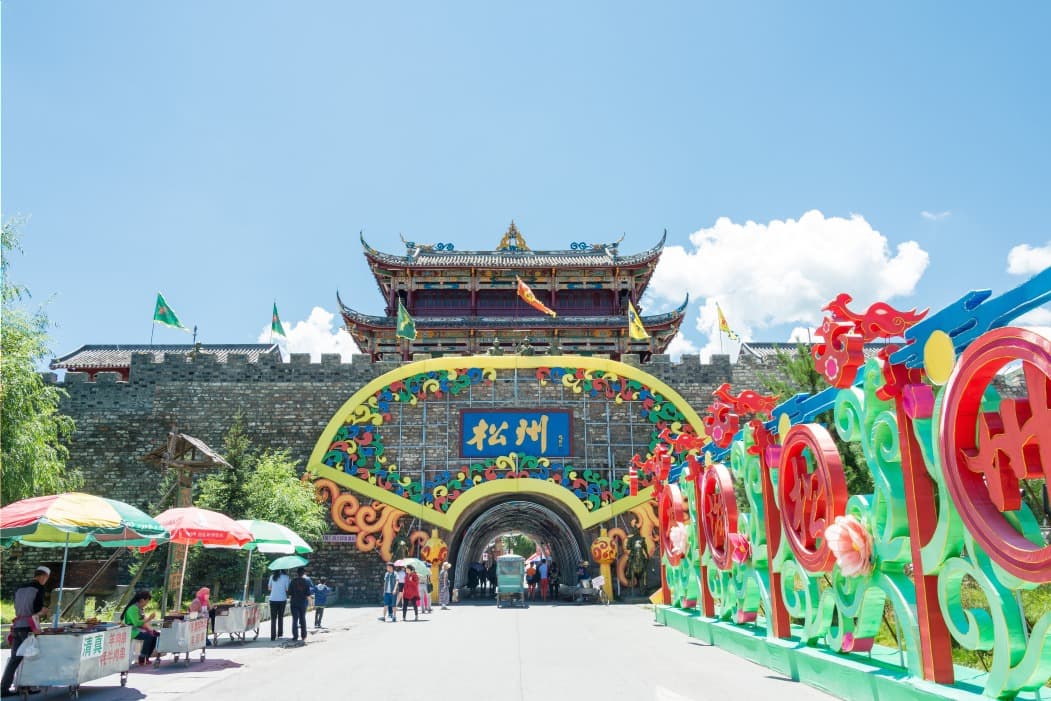
The walls encircle the historic core for several kilometers. Certain sections allow for a walk at height with views over the Minjiang valley and surrounding mountains. The north gate is the best preserved.
The market and bazaar
Early in the morning, the central market brings together vendors of dried mushrooms, cordyceps, hides and yak dairy products. It is one of the rare places in Sichuan where three cultures coexist so visibly in a single commercial space.
Hui mosques
Several active mosques dot the old town. Their architecture blends Chinese and Islamic influences — pagoda roofs, interior courtyards, Arabic calligraphy. The main mosque is located in the Hui quarter, north of the central commercial street.
Horseback riding excursions
Local agencies offer horseback excursions to the gorges and alpine meadows around Songpan. These circuits, often lasting one to several days, allow access to areas unreachable on foot or by vehicle.
Etiquette and visiting guidelines
- In mosques: remove your shoes before entering the prayer hall; women must cover their heads and shoulders.
- Always ask permission before photographing people, particularly at the market.
- Avoid gestures or attire deemed disrespectful near places of worship.
Photography tips
Morning light is ideal on the ramparts and at the market. The wooden covered bridges offer natural framing of the Minjiang River. In late afternoon, raking light enhances the texture of the stone walls. Avoid flash inside mosques.
Location and access
Songpan lies in the Minjiang valley, in northwestern Sichuan. The town is accessible from Chengdu by long-distance bus. It constitutes a logical base for visiting Jiuzhaigou (to the north) and Huanglong (to the east), two UNESCO-listed nature reserves. The nearest airport is Jiuzhaigou-Huanglong, situated at a considerable distance in the mountains.
In the surrounding area
- Jiuzhaigou — Valley of multicolored lakes and waterfalls, inscribed on the UNESCO World Heritage list.
- Huanglong — Site of limestone terraces and colored springs, also UNESCO-listed.
- Munigou — Wild valley with waterfalls and conifer forests, less frequented than its neighbors.
Frequently asked questions
From May to October, the weather is most favorable. Summer (July-August) is peak tourist season. In winter, snow can block certain mountain roads.
At approximately 2,850 m, some travelers experience headaches or fatigue upon arrival. Plan a half-day of rest and stay well-hydrated before setting out on excursions.
Yes, this is the classic itinerary. Songpan fits naturally as a stop between Chengdu and Jiuzhaigou or Huanglong, allowing you to discover local culture without major detours.
Local agencies offer options for all levels, including half-day outings. Inquire directly with operators on site to choose a circuit suited to your ability.
The town of Songpan is accessible without a special permit for foreign nationals holding a valid Chine visa. Certain neighboring Tibetan areas may require an additional permit — verify before departure.
Shoulders and knees covered for everyone. Women must cover their heads. Remove your shoes before entering the prayer hall.
Photos
Attractions in Songpan
Huanglong
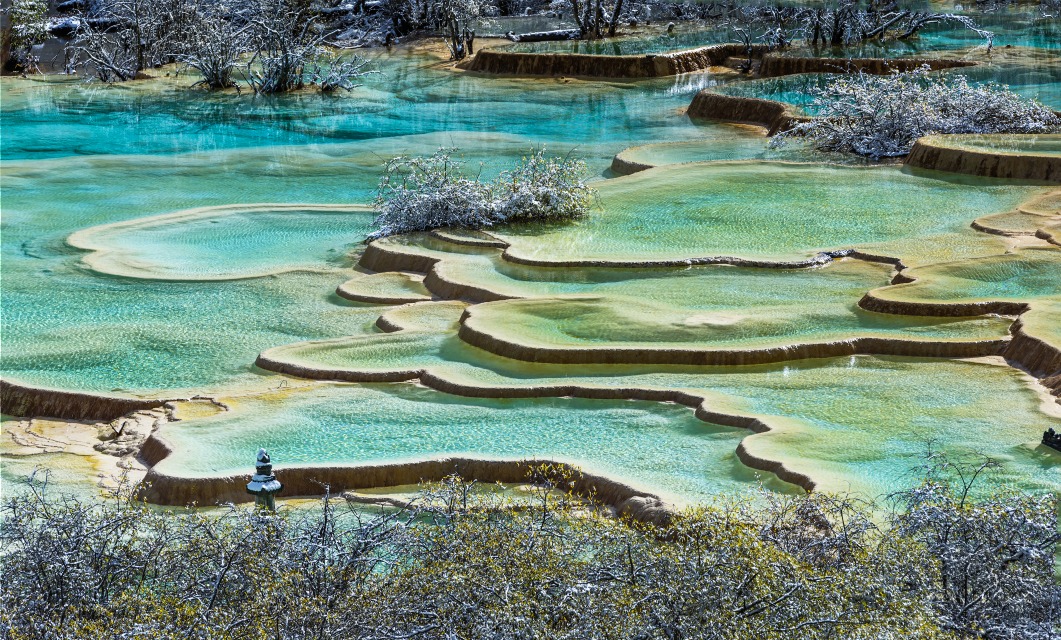
Huanglong, dans le nord du Sichuan, abrite des milliers de bassins de travertin aux teintes turquoise et dorées, à plus de 3 000 m d'altitude. Un site naturel classé UNESCO à combiner avec Jiuzhaigou.
Huanglong (Vallée du Dragon Jaune)
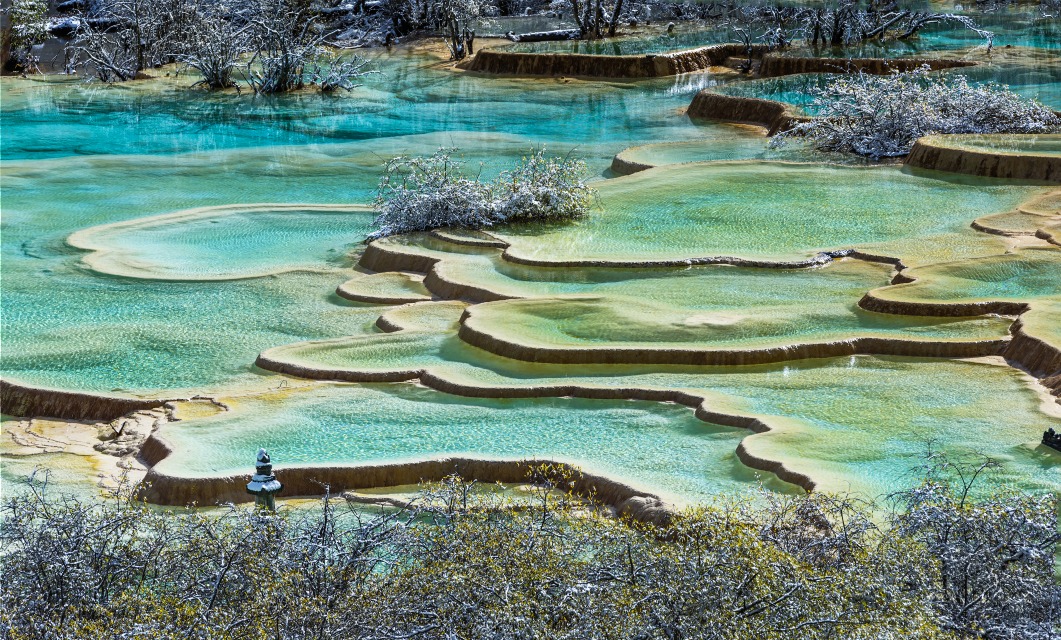
Huanglong déroule au nord du Sichuan plus de 3 000 bassins en terrasses aux teintes turquoise et dorées, classés UNESCO. Un site naturel d'altitude à combiner avec Jiuzhaigou.
Want to discover this destination?
Our local advisors design your tailor-made trip.