Huanglong (Yellow Dragon Valley)
Huanglong (Yellow Dragon Valley)
Huanglong unfolds across northern Sichuan with more than 3,000 terraced mineral pools in shades of turquoise and gold, recognized by UNESCO. A high-altitude natural site best combined with Jiuzhaigou.
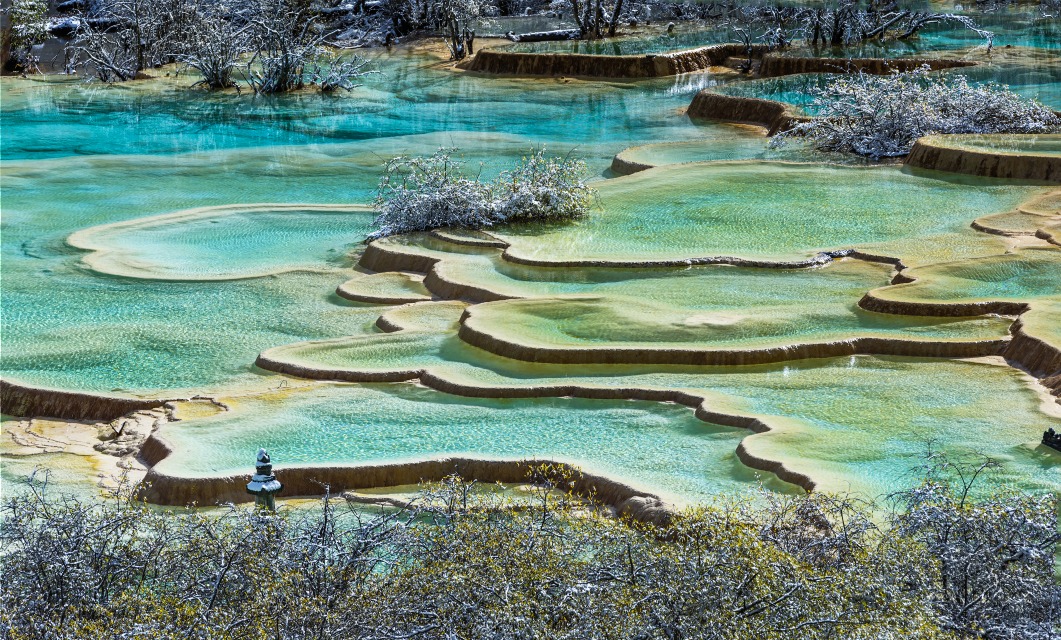
Huanglong is a glacial valley in northern Sichuan, inscribed on the UNESCO World Heritage list since 1992. At altitudes exceeding 3,000 metres, it unfolds over some 7 kilometres with a succession of coloured limestone terraces, geothermal springs and dense forests. The golden hue of calcite deposits coating the cascading pools earned it its name: "Yellow Dragon".
Practical information at a glance
- Admission: paid entry (park ticket required)
- Altitude: between 3,100 m and 3,600 m approximately — allow time for acclimatisation
- Recommended duration: a full day (ascent + descent + pool exploration)
- Access: cable car available for ascent; descent on foot recommended to see all pools
- Clothing: hiking shoes essential, warm layers even in summer
- High altitude: bottled oxygen sold on-site; those with cardiac or respiratory conditions should consult a doctor beforehand
- Seasonal closure: the park generally closes in winter (snow conditions) — verify official dates before departing
What to see
The heart of the site is the succession of more than 3,000 terraced pools, their hues shifting from turquoise to ochre yellow depending on mineral concentration. The Feicui ("Flying Jade") cascades and Zhuoyan Lake rank among the most photographed features. Forests of conifers and birches frame the landscape, ablaze with colour in autumn.
History and context
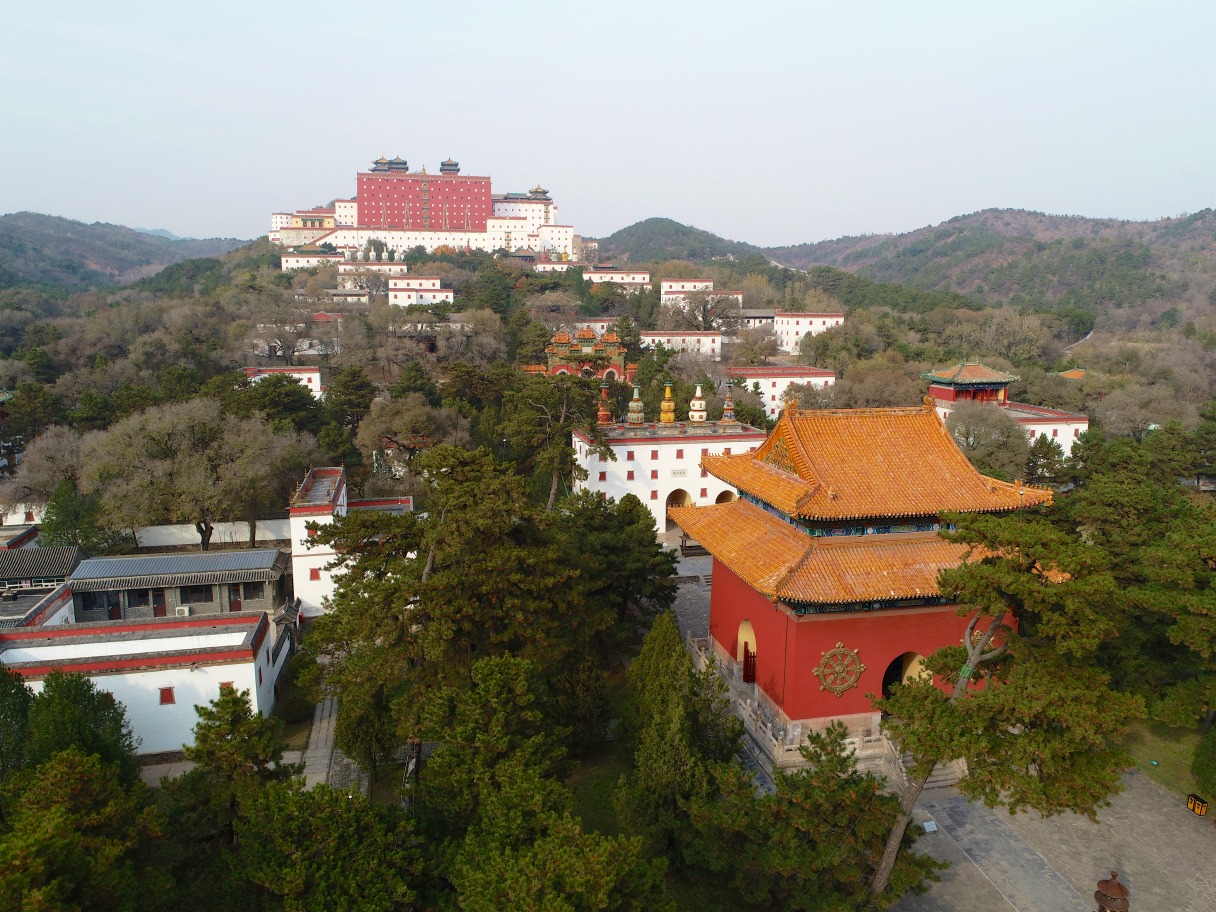
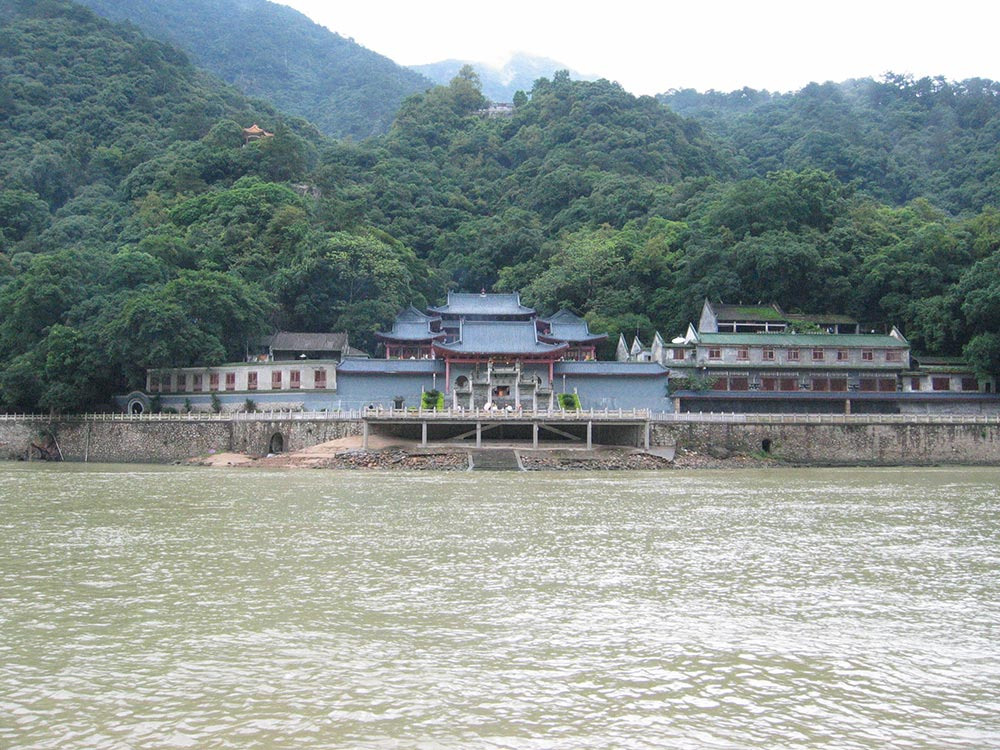
The site takes its name from a Taoist legend: a general named Huanglong (Yellow Dragon) reportedly helped the Great Yu control the Yellow River's floods, then transformed into a dragon to inhabit this valley. A small Taoist temple dedicated to Huanglong still stands at the valley's far end. UNESCO inscription in 1992 recognised the site's exceptional geological and ecological significance.
Highlights of your visit
The coloured pools of Wucai Chi
Wucai Chi ("Five-Colour Pool") marks the climax of the experience. Calcite deposits create shifting reflections according to time of day and season. Late-morning light reveals the most vibrant hues.
Huanglong Temple
Nestled at the valley's upper reaches, this modest Taoist temple hosts an annual festival each September. The atmosphere here is contemplative, contrasting with the bustle of the lower pools.
The forest in autumn
From October through early November, birches and larches turn yellow and orange. Combined with the turquoise pools, the effect is particularly striking during this season.
Photography tips
Mid-morning light (between 9 and 11 a.m.) is ideal for the pools: the sun is high enough to penetrate the water without creating glare. Avoid days of heavy mist, common in spring. A polarising filter greatly enhances colour clarity underwater. The descent on foot offers low-angle shots of cascades that the cable car does not permit.
Location and access
Huanglong lies in Songpan County, northwestern Sichuan, some 150 km from Jiuzhaigou. Jiuzhai Huanglong Airport (JZH) serves the region directly from Chengdu and other major Chinese cities. Tourist buses connect the airport and Jiuzhaigou to the park entrance. The mountain road is winding; motion sickness is common — bring appropriate medication. Wheelchair accessibility is limited due to elevation changes and wooden walkways.
Nearby attractions
- Jiuzhaigou — another UNESCO site in Sichuan, famed for its multicoloured lakes and waterfalls, approximately 150 km away.
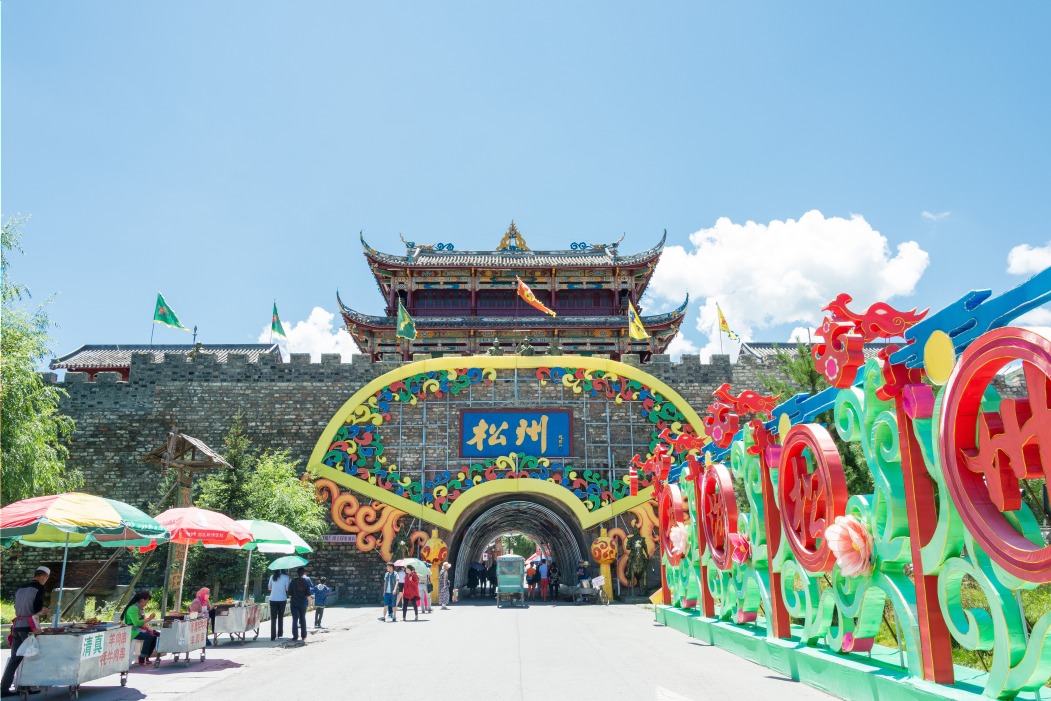
- Songpan Old Town — a Tibetan-Muslim settlement with Ming dynasty walls, a departure point for horseback treks.
- Munigou — a less-frequented valley featuring waterfalls and limestone formations similar to Huanglong.
Frequently asked questions
Autumn (September–October) offers the most spectacular colours: golden foliage alongside turquoise pools. The September Taoist festival draws local pilgrims. Spring is greener but often misty.
Yes. The site exceeds 3,500 m at its highest point. Headaches, breathlessness and fatigue are common. Bottled oxygen is sold on-site. Ascend slowly, stay hydrated and avoid strenuous exertion.
The cable car is recommended for the ascent to conserve energy at altitude. Walking down allows you to pass all the pools in the most logical sequence, from top to bottom.
Yes, this is the classic circuit in northern Sichuan. Allow a minimum of two days for Jiuzhaigou and one day for Huanglong. Jiuzhai Huanglong Airport serves both sites.
Photography is permitted throughout the park. It is forbidden to leave the wooden walkways to approach the pools — observe this rule to protect the delicate calcite deposits.
At altitude, temperatures drop quickly even in July and August. Bring a waterproof jacket, hiking shoes with slip-resistant soles and layered clothing you can adjust.
Photos
Nearby
Interested in this visit?
We can include it in your personalised itinerary.