Ganjia Grasslands
Ganjia Grasslands
Thirty-four kilometers from Xiahe, the Ganjia Grasslands unfold high-altitude pastures, Tibetan semi-nomadic life, a Gelug monastery, and the fortified Han village of Bajiao.
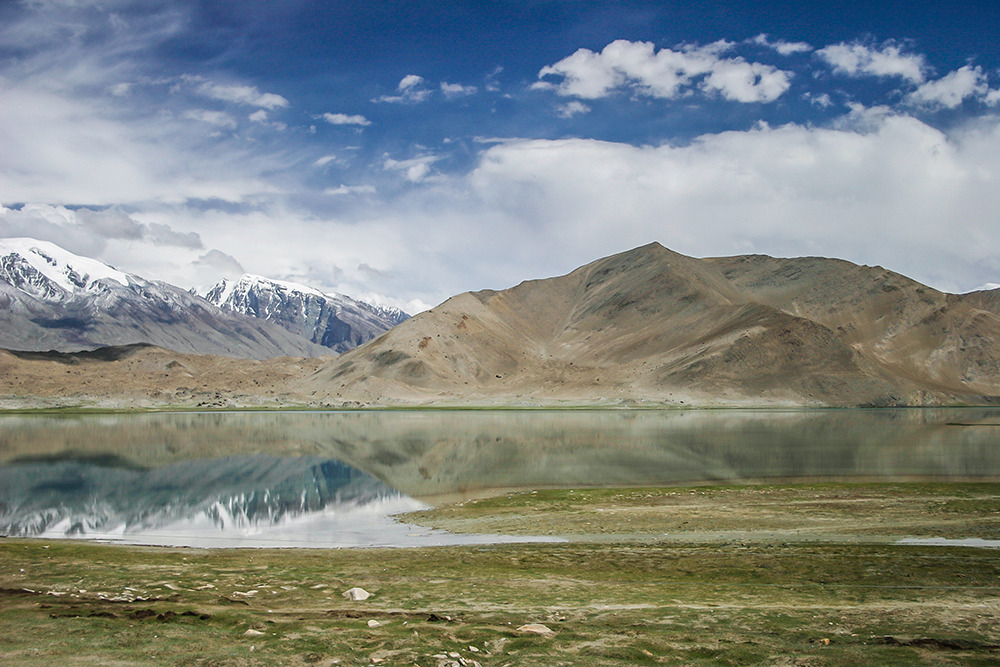
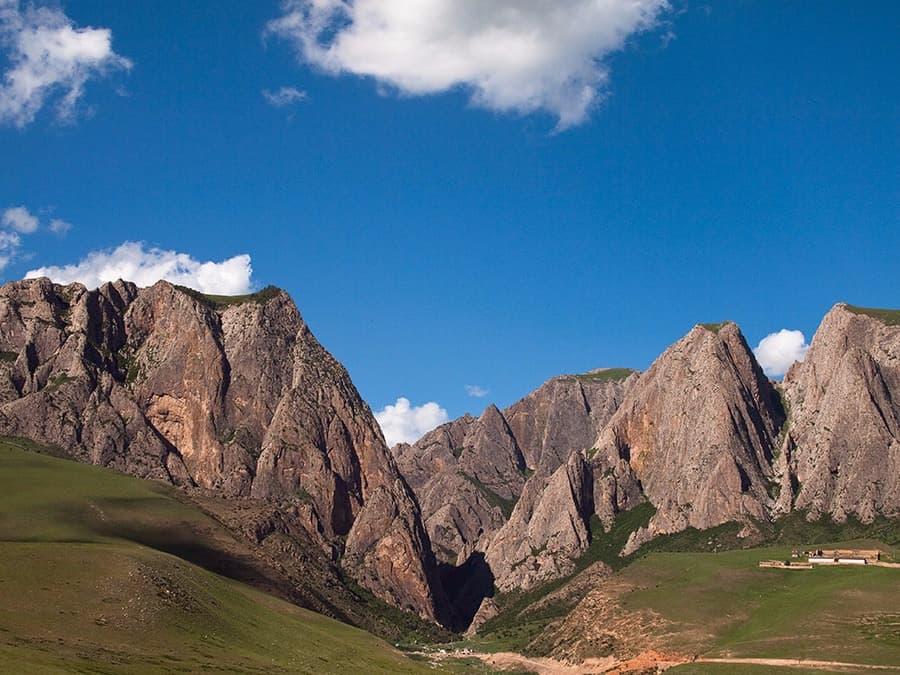
The Ganjia Grasslands stretch across altitudes exceeding 3,500 meters, nestled between the parallel valleys of Xiahe and Tongren, roughly thirty kilometers from Xiahe. High-altitude pastures, yak herds, an active monastery, and a fortified Han village together form a distinctive landscape and cultural ensemble typical of the Tibetan region of Amdo.
Why visit the Ganjia Grasslands
Ganjia offers one of the most direct gateways to the semi-nomadic life of Amdo Tibetans, without the tourist veneer of major sites in Sichuan or Qinghai. The grassland remains a working space for herders, who move their flocks of sheep and yaks according to seasonal rhythms. Visitors encounter mud-brick houses inhabited in winter and black yak-hair tents pitched during the warmer months.
The site combines three compelling interests: high-plateau scenery, an active Gelug monastery, and a rare fortified Han village in this predominantly Tibetan region. Practical activities center on horseback riding (rented through local families) and cycling, particularly well-suited to the grassland trails.
History and religious significance
For Amdo Tibetans, Ganjia is far more than a simple pasture. The grassland is revered as the birthplace of Ngawang Tsondru, the first Jamyang Zhaypa and founder of Labrang Monastery in 1709. This lineage of tulkus belongs to the Gelug school, known as the Yellow Hat order, and long supplied Labrang's most distinguished masters.
This heritage explains the density of religious institutions in the region: monasteries, hermitages, and sacred caves dot the prairie's surroundings. The most renowned, Trakkar Gompa, remains active and hosts a monastic community. The monks, often young, welcome visitors warmly around a cup of yak butter tea accompanied by Tibetan bread.
What to see on site
The grassland itself
The open expanse beyond Naren-Ka Pass forms the heart of the site. In summer, pastures are dotted with black tents and grazing herds. Treks on foot, horseback, or by bicycle allow you to venture beyond the road and glimpse the daily life of herding families—provided you are respectful and accompanied.
Trakkar Gompa monastery
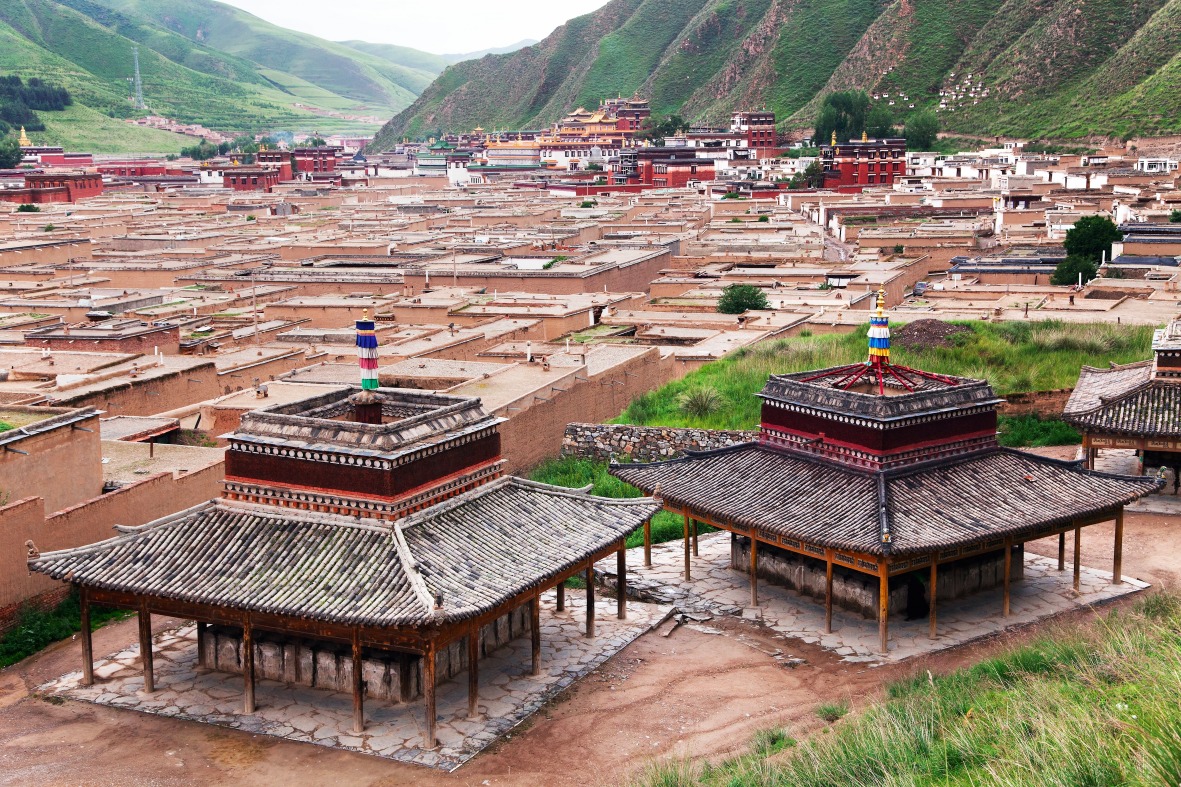
Built against a hillside, this Gelug monastery houses prayer halls, monastic quarters, and stupas. It is one of the few places in the region where exchange with monks remains straightforward and genuine. It is customary to ask permission before photographing temple interiors.
The fortified village of Bajiao
Just minutes' drive away, Bajiao is a Han village encircled by ancient earthen walls. Their age is frequently claimed to be two millennia old, though historians continue to debate this. Regardless, the square perimeter and interior alleyways form an unusual ensemble in this Tibetan zone.
Naren-Ka Pass
The pass separating the Xiahe valley from the grassland offers sweeping views of the high plateaus and often serves as the first photographic stop when approaching from Labrang.
When to visit
Seasonality is pronounced at altitudes above 3,500 meters:
- June to September: verdant grassland, nomadic tents erected, mild daytime temperatures. This is the best period for horseback riding or cycling activities.
- May and October: shoulder seasons with crisp light but cold nights.
- November to April: dry or snow-covered pastures, herders settled in mud-brick houses, access sometimes difficult due to heavy snowfall.
Practical advice
- Altitude: the grassland exceeds 3,500 m. Plan a day of acclimatization in Xiahe before any sustained exertion.
- Gear: windproof jacket, fleece, and sun protection are essential even in summer; day-night temperature swings are significant.
- Guide: an English-speaking guide-driver greatly facilitates interaction with herders and monastery access.
- Etiquette: ask permission before photographing people, circle stupas and mani walls clockwise from the left.
How to get there
The grasslands are accessed from Xiahe, the region's main hub and home to Labrang Monastery. The road heads northwest, crosses Naren-Ka Pass, then descends toward the grassland on the Tongren side. Allow roughly one hour by private vehicle from Xiahe. Public transport being scarce, the most practical option remains a guide-driver for the day, who typically combines Ganjia, Trakkar Gompa, and Bajiao in a loop.
What to combine in the region
Ganjia is almost always visited from Xiahe, where Labrang Monastery alone warrants a two-night stay. The road toward Tongren on the Qinghai side naturally extends the excursion for travelers continuing through Amdo. For other plateau and steppe landscapes in Chine, the Hexigten Geopark in Inner Mongolia offers an interesting counterpoint.
Plan your trip
The Ganjia Grasslands fit into a broader itinerary across Amdo or along the Sichuan-Gansu-Qinghai route. To build a custom circuit, explore our Chine travel ideas.
Interested in this visit?
We can include it in your personalised itinerary.