Nanputuo Temple
Nanputuo Temple
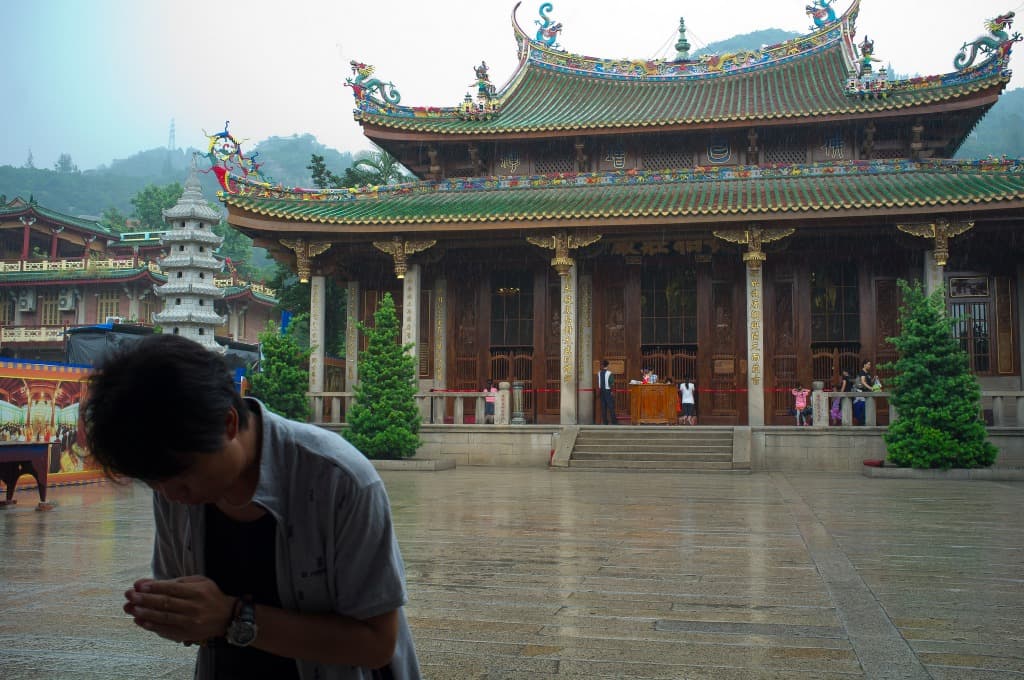
An ancient Buddhist sanctuary perched on a clifftop overlooking the sea, Nanputuo Temple is one of the great places of worship in southeastern Chine.
The Nanputuo Temple is a Buddhist sanctuary located southeast of Xiamen, in Fujian Province. Built into a clifftop facing the sea, it ranks among the most frequented places of worship in southeastern Chine and remains an active monastery, home to monks and devotees who come to burn incense.
Why visit Nanputuo Temple
The site offers three compelling reasons. First, an extensive architectural heritage spread over approximately 30,000 square metres, with multiple halls adorned with remarkable Buddhist statues. Second, a vibrant atmosphere: unlike many temples that have become mere museums, Nanputuo retains an active monastic community and continuously welcomes practitioners. Finally, its setting against Mount Wulao and facing the sea makes it a natural stop when exploring Xiamen, just steps away from the university and waterfront.
History of the temple
Nanputuo was founded over 1,000 years ago, during the Tang Dynasty (618-907). Over the centuries, several rebellions and destructions led to successive reconstructions.
The decisive episode occurred during the reign of Qing Emperor Kangxi (1662-1722): a naval general ordered the sanctuary's reconstruction and gave it its present name, Nanputuo, in reference to Mount Putuo, a sacred site of Guanyin worship. The temple then became one of the major Buddhist centres of Fujian, a status it retains today with its renowned monastic school.
What to see
The visit follows a central axis that passes through several courtyards and buildings aligned from south to north, following the classical layout of China's great temples.
The Hall of the Celestial Kings
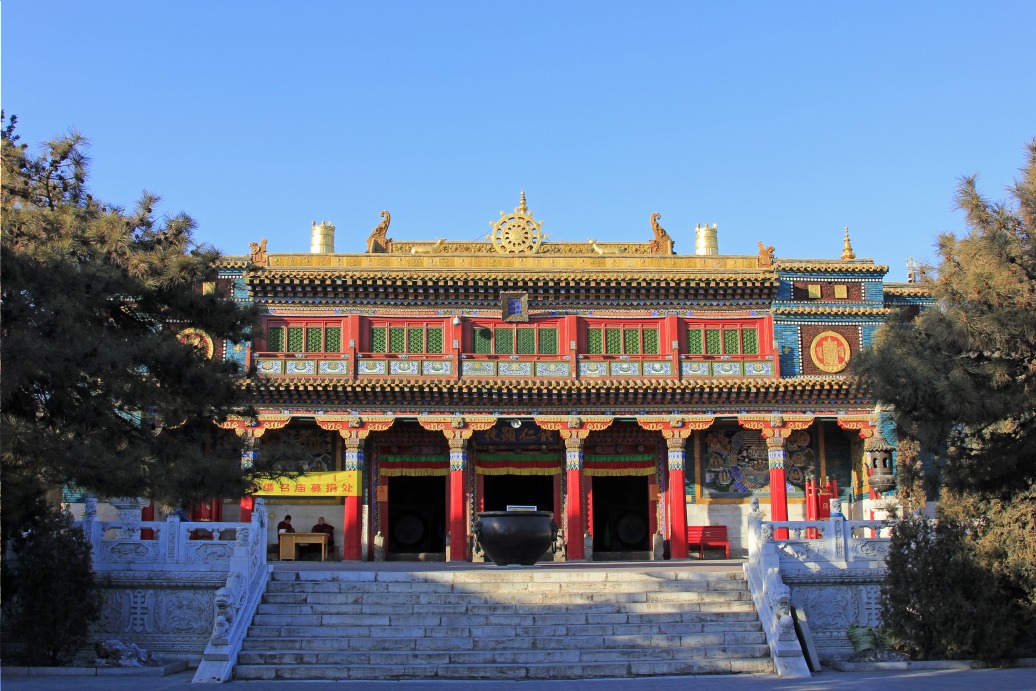
The first hall encountered after the entrance, it houses a statue of Wei Tuo, protector of Buddhist monasteries. His staff points downward, a coded signal indicating that the temple is open to pilgrims and offers them hospitality. At the centre sits the rotund figure of Milefo, the Laughing Buddha, surrounded by the four Celestial Kings guarding the cardinal directions.
The Hall of the Heroic Treasure
Located opposite the next courtyard, this is the main prayer hall. It unites three figures of Buddha representing his past, present, and future lives. The faithful prostrate themselves here and leave offerings and incense sticks.
The Hall of Great Compassion
The central building, set at a higher level, is dedicated to Guanyin, the Goddess of Mercy. It contains four statues of the deity, to whom visitors come to seek guidance on their path. This is one of the most visited spots in the temple, particularly during Buddhist festivals.
The vegetarian restaurant
Within the monastery grounds, a vegetarian restaurant run by the monastic community serves refined Buddhist cuisine based on vegetables, mushrooms, and tofu crafted as imitations of meat dishes. It is a unique culinary experience, affordable and widely appreciated by local visitors.
Several other halls in the complex are not open to the public, but you can move freely through the courtyards and encounter resident monks and devotees at prayer.
Practical information
- Admission: symbolic entry fee, among the lowest in Chine for a site of this scale.
- Opening hours: open during the day, from early morning until early evening. Prefer mornings to avoid crowds and heat.
- Duration of visit: allow 1.5 to 2 hours to tour the main open halls and enjoy a break at the restaurant. Add 1 hour if you climb the heights of Mount Wulao behind the temple.
- Visiting etiquette: wear clothing that covers shoulders and knees, speak softly, photography is permitted in courtyards but should be avoided in front of statues during prayer.
When to visit
The temple is open year-round. The most pleasant months are spring (March-May) and autumn (October-November), when Xiamen's climate remains mild. Summer is hot and humid. Visitor numbers peak during major Buddhist festivals (Guanyin's birthday on the 2nd, 6th and 9th lunar months) and during Chinese holidays (Lunar New Year, May and October Golden Week): these periods offer vibrant atmosphere but should be avoided if you seek tranquility.
How to get there
The temple is located in the Siming district, adjacent to Xiamen University campus.
- From Xiamen Railway Station: Bus No. 1 to Nanputuo Si stop.
- From Zhongshan Street (historic city centre): Bus No. 21.
- By taxi or ride-hailing service, the journey from most city centre hotels takes 15 to 25 minutes depending on traffic.
What to see nearby
The temple is situated in a district rich with interesting sites:
- Xiamen University, an immediate neighbour, whose tree-lined campus is open to visitors (by reservation) and features Sino-Western style buildings.
- Baicheng Beach, just a few minutes' walk away, which overlooks the strait facing Gulangyu Island.
- The pedestrian island of Gulangyu, UNESCO-listed, accessible by ferry from the city centre.
- To further explore Fujian and Chine, see our Xiamen guide.
Frequently asked questions
Frequently asked questions
Planning your trip
Nanputuo Temple naturally fits into an itinerary combining Xiamen, Gulangyu Island, and the Hakka tulou of inland Fujian. To build a tailor-made route including this region, still relatively unexplored by Western travellers, consult our Chine travel ideas.

Interested in this visit?
We can include it in your personalised itinerary.