Wenshu Temple
Wenshu Temple
Founded under the Tang Dynasty and renovated under Kangxi, Wenshu Temple is Chengdu's foremost Buddhist complex, home to 300 statues, 500 paintings and thousands of sutras.
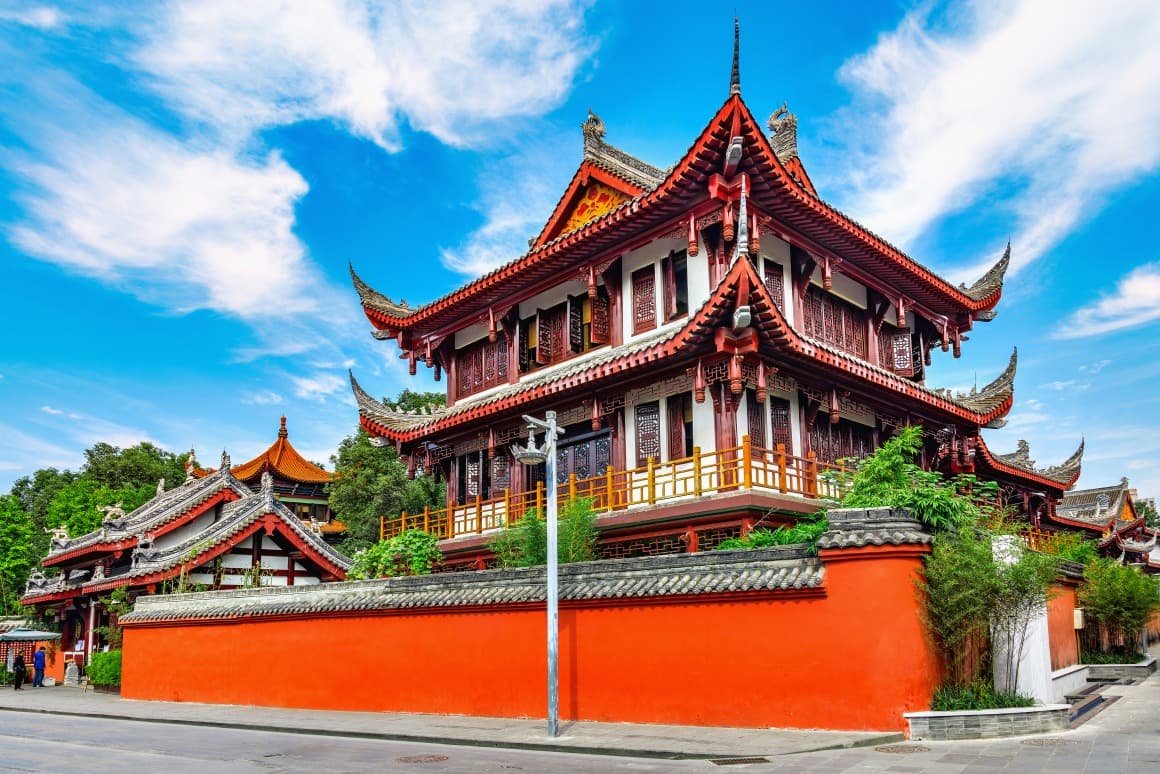
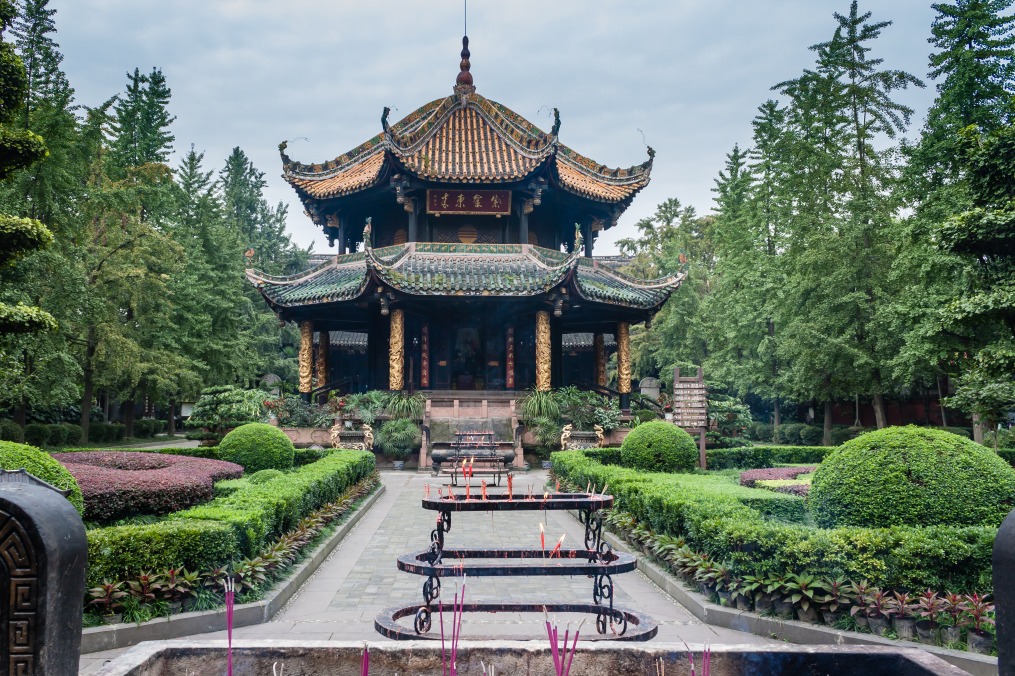
Wenshu Temple is one of the principal Buddhist complexes in Chengdu, in Sichuan province. Founded during the Tang Dynasty and rebuilt in the late 17th century, it now houses an important collection of religious art and hosts the headquarters of the Sichuan Buddhist Association. Its pavilions, courtyards and pedestrian quarter make it both a religious and cultural site, animated by devotees, incense vendors and visitors.
Why visit Wenshu Temple
The temple combines three key attractions. First, a coherent architectural setting: 60,000 m² of pavilions, gardens and inner courtyards organized along a traditional axis. Second, an active religious function: the site remains a place of worship frequented daily, allowing visitors to observe contemporary Buddhist practices. Third, a rare cultural heritage wealth in Chengdu, with several hundred statues, paintings and sutras preserved on site. The pedestrian quarter bordering the entrance extends the experience with its teahouses, ritual object shops and vegetarian restaurants.
Temple History
The temple was built during the Tang Dynasty (618–907) and was originally called Xinjiang Temple. It served as a haven for Buddhist monks of Sichuan until its destruction during the Ming Dynasty (1368–1644).
In 1681, under the reign of Emperor Kangxi (Qing Dynasty, 1644–1911), the Zen master monk Cidu HaiYue settled on the site, built a hermitage and undertook the temple's renovation. A legend recounts that at his cremation, the figure of Buddha Maitreya (Wenshu) appeared in the flames. Witnesses saw this as proof that Cidu was the reincarnation of the Bodhisattva. The temple then assumed its current name, Wenshu.
The site has remained an active place of worship since that time and today hosts the headquarters of the Buddhist Association of Sichuan province.
What to see on site
Pavilions and site layout
The temple extends across 60,000 m² and comprises several pavilions aligned on a north-south axis, separated by planted courtyards. Some house prayer halls, others teahouses, vegetarian restaurants and shops selling religious art objects. On the periphery, incense vendors, masseurs and fortune tellers animate the surrounding streets.
Paintings and calligraphy
The temple preserves more than 500 paintings and calligraphies from the Tang and Song dynasties, as well as more recent works. Several major artists are represented, including Zhang Daqian, Zheng Banqiao and Feng Zikai. Some works are displayed in the Sutra pavilion.
The Cangjing Tower and sutras
Cangjing Tower houses thousands of Buddhist sutras. Among them is a Diamond Sutra whose preservation was authorized by Emperor Kangxi, a testament to the rank the temple held under the Qing.
Buddha statues
The temple houses approximately 300 Buddha statues, executed in iron, bronze, stone, wood and jade, gathered over several dynasties. The most celebrated is a jade Buddha from Myanmar, the flagship of the collection.
The Guanyin hair embroidery
The temple also preserves the memory of a singular technique, Guanyin hair embroidery, celebrated since the Tang Dynasty. This tradition consists of embroidering the image of the Bodhisattva with human hair, a sign of devotion.
Practical Information
- Address: Wenshu Yuan Street, Chengdu, Sichuan province.
- Duration: allow 1.5 to 2.5 hours depending on your interest in the collections, plus time spent in the adjacent pedestrian quarter.
- Entrance fee: modest admission, payable on site.
- Hours: open daily during daytime, morning through late afternoon. Check the day's hours before visiting, especially during Buddhist festivals.
- Dress code: modest clothing recommended, as in any active place of worship.
- Photography: permitted in courtyards, often prohibited inside prayer halls.
How to get there
By metro: Line 1, Wenshu Yuan station. The exit opens directly onto the pedestrian quarter leading to the temple entrance.
By bus: Lines 1, 16, 18, 55, 62, 64 and 75 serve Wenshu Yuan station, a few minutes' walk from the entrance.
By taxi or ride-hailing: tell the driver "Wenshu Yuan." From central Chengdu, the journey typically takes 15 to 25 minutes depending on traffic.
Nearby attractions
The temple fits naturally into a broader exploration of Chengdu and its surroundings. To continue exploring Buddhist sites across Chine, consider the Wild Goose Pagoda in Xi'an and the Bezeklik Thousand Buddha Caves in Xinjiang. Chengdu itself offers other points of interest within easy reach, notably its urban parks and traditional alleyways.
Frequently asked questions
Frequently asked questions
Planning your journey
Wenshu Temple fits naturally into an itinerary through Chengdu and Sichuan, combining Buddhist heritage, spicy cuisine and tea culture. To build a customized journey including this stop, explore our Chine travel suggestions on travel in Chine.
Nearby
Interested in this visit?
We can include it in your personalised itinerary.