Chengkan Historic Village
Chengkan Historic Village
Located 31 km from Tunxi, Chengkan is a Hui village organized according to the eight trigrams of Feng Shui, quieter than Hongcun and Xidi.
The historic village of Chengkan lies approximately 31 km north of Tunxi, in Anhui Province. Less visited than its neighbors Hongcun and Xidi, it preserves well-maintained Hui architecture and an urban layout inspired by the eight trigrams of the Yi Jing, earning it the nickname "Bagua village" or "Feng Shui village."
Why visit Chengkan
Chengkan offers three main attractions for travelers. First, its urban design: alleyways, watercourses, and buildings follow a Bagua-inspired plan, framed by eight mountains oriented in different directions. According to tradition, Yang (Cheng) and Yin (Kan) find balance here, which explains the village's name. Second, its Hui architecture, featuring white walls, black tiles, and fine sculptures in stone, brick, and wood. Finally, its moderate visitor numbers compared to UNESCO-listed villages in the same region, allowing for a more peaceful visit.
History
The site dates back far into the past: its original foundation is believed to trace back over 1,800 years, under the name Longxi. The historic village as it appears today took its current form primarily during the Song and Ming dynasties. At the end of the Tang Dynasty (618–907), the Luo family settled here and renamed the place Chengkan. Devoted to Feng Shui principles, the Luo brothers selected this location to ensure their lineage's prosperity and organized the space according to the eight trigrams.
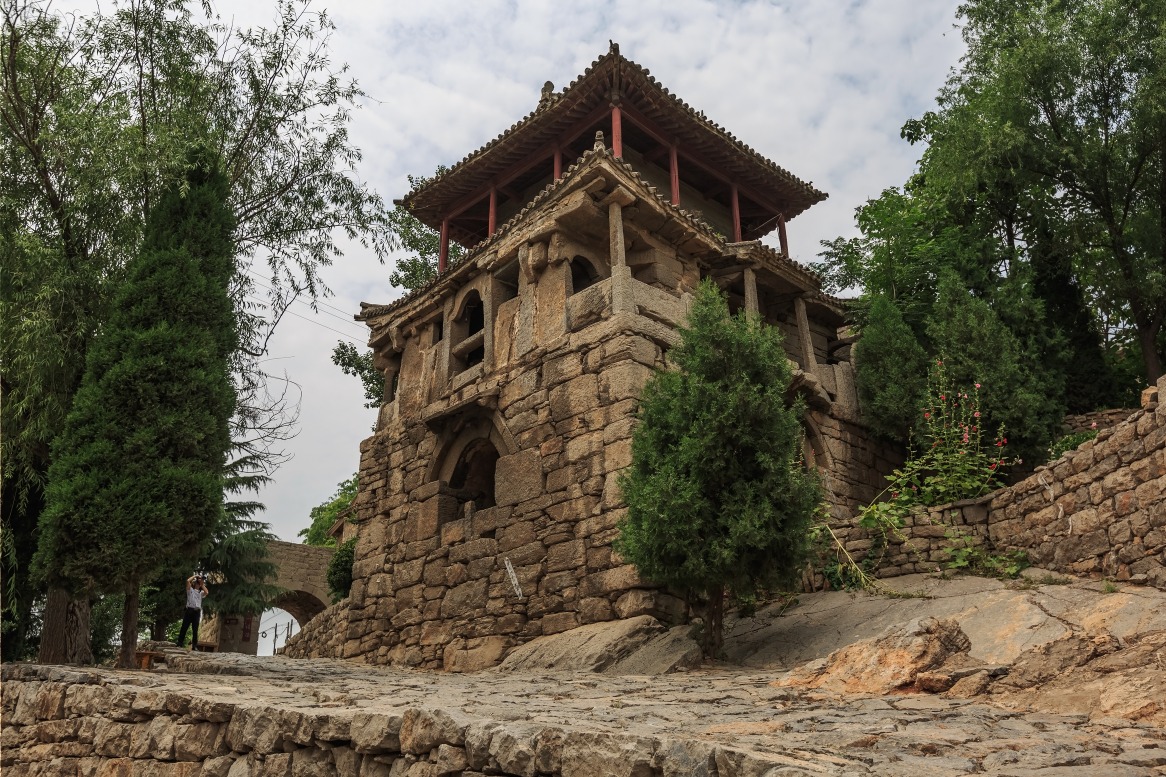
Among its notable buildings, the memorial temple of Luo Dongshu, built in 1539 during the Ming Dynasty, attests to the clan's importance and the care devoted to collective works. The village has endured through the centuries without undergoing heavy modernization, which explains the preservation of its ancient fabric.
What to see and do in Chengkan
Hui architecture
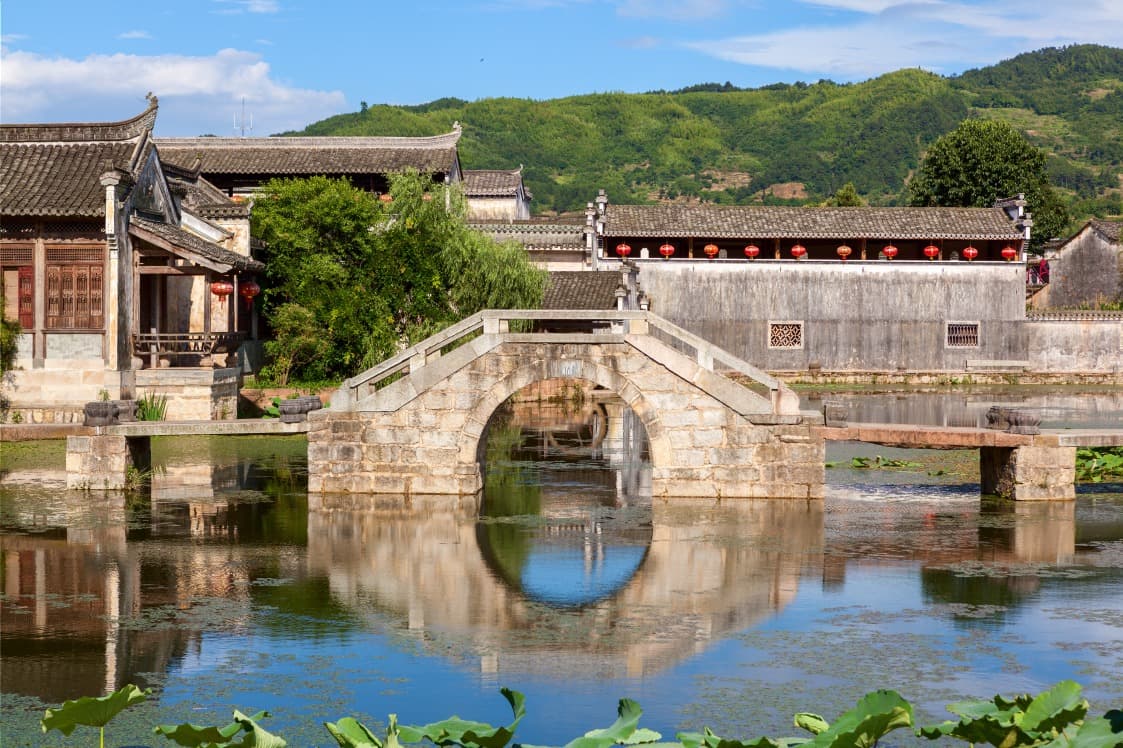
The buildings follow typical Anhui codes: white walls topped with black tiles, simple facades, interiors structured around a courtyard. Walls, beams, doors, and windows are adorned with sculptures depicting clouds, lotus flowers, birds, and lions. The memorial temple of Luo Dongshu is the most visited building.
The village threshold
The word "kan" means both a threshold and hardship in Chinese. Local tradition holds that by crossing the village's entrance threshold, one leaves behind one's troubles. The gesture is still practiced by visitors today.
Zhongying Street
This ancient street runs through the village and concentrates many of its best-preserved buildings. Inscriptions and family mottos carved on certain facades recall the moral and clan dimensions of Hui urbanism.
Yongxing Lake and the "autumn sun"
At the village's entrance, Yongxing Lake becomes covered with lotus flowers in July and August. The nearby square hosts the "autumn sun" (qiu shai) in fall: residents dry rice, corn, pepper, and soybeans there, creating colorful patterns visible from the heights.
Practical information
- Duration of visit: allow 2 to 3 hours to walk through the main alleyways and the Luo Dongshu temple, or a half-day if you take time to stop and look around.
- Admission fee: the village requires an entrance fee at a moderate rate. Check on-site or with your travel agency for current conditions.
- What to bring: comfortable shoes—the alleyways are paved and sometimes uneven.
When to visit
The region has a humid subtropical climate, with an annual average of around 16 °C. Summers are hot and humid, winters cool with temperatures occasionally below freezing in January. The best times to visit are:
- Spring (March–May): mild temperatures, green landscapes.
- Autumn (September–November): clear, cool conditions, opportunity to witness the "autumn sun."
- July–August: lotus flowers bloom on Yongxing Lake, though expect marked heat.
How to reach Chengkan
Chengkan is served by neither train nor plane. The main access point is the city of Huangshan (Tunxi), connected by train and plane to Shanghai, Hangzhou, Shenzhen, and several other major cities in Chine.
- From Tunxi (Huangshan): bus from Tunxi's bus station, approximately 35 km away. Frequencies vary—check on-site. Otherwise, take a taxi or hire a car with driver.
- From Tangkou (Huangshan mountain): bus heading toward Yi County or Huizhou District; get off at the junction marked for Chengkan. About 5 km remains to cover, by motorbike taxi or on foot.
- Car with driver: the most flexible option if you're combining Chengkan with Hongcun, Xidi, or Huangshan mountain in a single day.
What to combine in the region
Chengkan is easily visited in a day from Tunxi, which serves as the logistical hub for exploring southern Anhui. The village pairs well with other Hui villages in the region or with a climb up Huangshan mountain. To broaden your cultural itinerary in Chine, other major historical sites merit a visit, such as the Great Wall at Juyongguan or the Great Wild Goose Pagoda in Xi'an.
Frequently asked questions
Frequently asked questions
Allow 2 to 3 hours for the essentials (alleyways, Luo Dongshu temple, Yongxing Lake). A half-day is comfortable if you linger along Zhongying Street.
Yes, for two reasons: visitor numbers are lower, and its layout based on the eight Feng Shui trigrams provides a different reading of the village compared to Hongcun or Xidi.
Yongxing Lake is covered with lotus flowers in July and August. Be prepared for heat and humidity during this period.
From Tunxi's bus station, buses serve the village (approximately 35 km away). From Tangkou, take a bus toward Yi or Huizhou and get off at the junction, then continue 5 km by motorbike taxi or on foot.
Yes, an entrance fee is required at a moderate rate. Conditions may change—verify on-site or with your travel agency.
Include Chengkan in your trip
Would you like to add Chengkan and the Hui villages to an itinerary in Chine? Consult our suggestions for travel in Chine to build a custom route through southern Anhui and beyond.
Interested in this visit?
We can include it in your personalised itinerary.