Ping'an Village
Ping'an Village
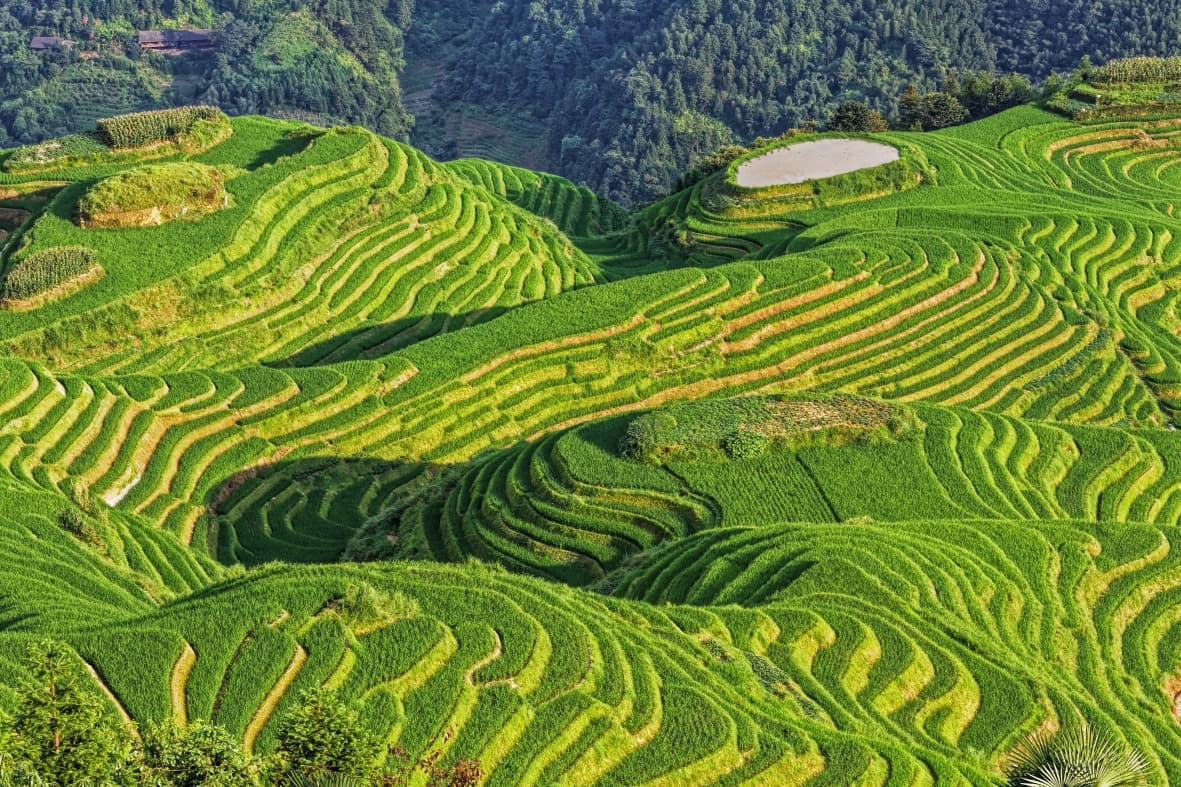
Located 80 km from Guilin, the Zhuang village of Ping'an offers access to the Longji terraced rice fields, developed during the Yuan Dynasty over 400 years ago.
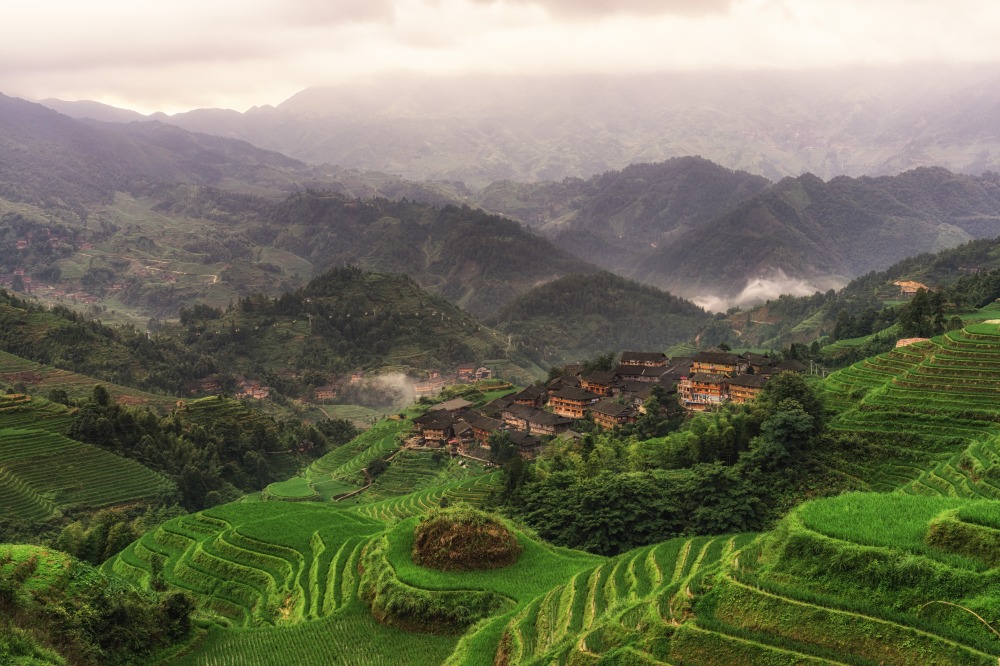
The village of Ping'an, whose name literally means "peace," sits 23 km from Longsheng District and 80 km northwest of Guilin. Inhabited by the Zhuang minority, it serves as the primary gateway to the Longji terraced rice fields, developed over 400 years ago along the mountainside.
Why Visit Ping'an
Ping'an brings together three elements rarely found in a single village of southern Chine: an agricultural landscape of terraces reaching 1,100 meters in altitude, preserved Zhuang wooden architecture, and active village life. Unlike sites designed entirely for tourism, the rice fields remain cultivated and traditional houses still serve as homes or family guesthouses.
The village is also the best vantage point for two iconic Longji landscapes: "Seven Stars Around the Moon" and "Nine Dragons and Five Tigers," both accessible on foot from the town center.
History of the Village and Rice Fields
The rice fields of Ping'an were developed during the Yuan Dynasty (1271-1368) by refugees from the coastal province of Shandong. Terracing work continued for several centuries, eventually covering the entire slopes up to 1,100 meters in altitude.
The village's traditional buildings date primarily from the late Ming Dynasty. These are three-story wooden structures with black roofs and yellow walls, characteristic of northern Guangxi architectural style.
What to See in Ping'an
The Two Signature Panoramas
- "Seven Stars Around the Moon": from the village's second observation point, eight small water-filled peaks come into view. The central peak evokes a moon, with the seven others arranged like stars around it.
- "Nine Dragons and Five Tigers": nine ridge-lines shaped like dragons descend toward the valley, framed by five rocky pillars compared to tigers standing guard.
Village Life
Ping'an is home to approximately 800 residents, predominantly from the Zhuang ethnic group. Women wear blue head scarves daily, their color recalling the coastal region where their ancestors originated. A few families descend from the Yao ethnic group: Yao women in the region are known for their exceptionally long hair, which can exceed 2 meters (the neighboring village of Huangluo has made this its signature feature).
Local Gastronomy
Longji cuisine rests on a few emblematic products: chili peppers, five-color glutinous rice cooked in bamboo tubes, rice alcohol, and local tea. Most guesthouses offer these specialties at dinner.
When to Visit
The optimal period spans April through October, but each month offers a distinctly different landscape:
- April – May: terraces fill with water. The pools reflect the sky, creating the most photographed images of the site.
- June – August: rice transplanting and growth. The terraces take on an intense green hue.
- September – mid-October: maturation and harvest. The slopes turn golden.
- Winter: possible snow may fall on the terraces, but access and visibility are more unpredictable.
Sunrise and sunset remain the two best times to observe the rice fields from the viewpoints, which justifies staying overnight.
Practical Information
- Duration of visit: allow half a day for the two main viewpoints, ideally one night on-site to enjoy morning and evening light.
- Accommodation: Ping'an has several dozen family guesthouses and small hotels housed in traditional wooden buildings.
- Entry ticket: access to the Longji rice fields is via a single entrance ticket covering Ping'an, Jinkeng, and the greater Longji area. Moderate rates, payable at the site entrance.
- What to bring: hiking shoes; the trails between viewpoints climb steeply.
How to Get There
From Guilin's bus station, buses depart daily toward Longsheng (approximately 2 hours). Then proceed to the Longji rice fields ticket counter, where a local shuttle serves Ping'an directly. The complete journey typically takes between 3 and 4 hours.
Arrival is on foot: vehicles stop below the village and luggage is carried to the guesthouses (a service often available for a fee).
Nearby
- Jinkeng (Dazhai): the second major section of Longji rice fields, populated by the Red Yao. More expansive landscapes, accessible via cable car.
- Longji Ancient Village: a Zhuang hamlet situated between Ping'an and the valley, noteworthy for its architecture.
- Longsheng: the gateway city to the massif, a connection point for reaching neighboring minority villages.
Frequently Asked Questions
Frequently asked questions
Include Ping'an in Your Journey
The Longji rice fields naturally pair with a stop in Guilin and a cruise on the Li River. To build a complete itinerary, consult our trips to Chine.
Interested in this visit?
We can include it in your personalised itinerary.