Big Wild Goose Pagoda
Big Wild Goose Pagoda
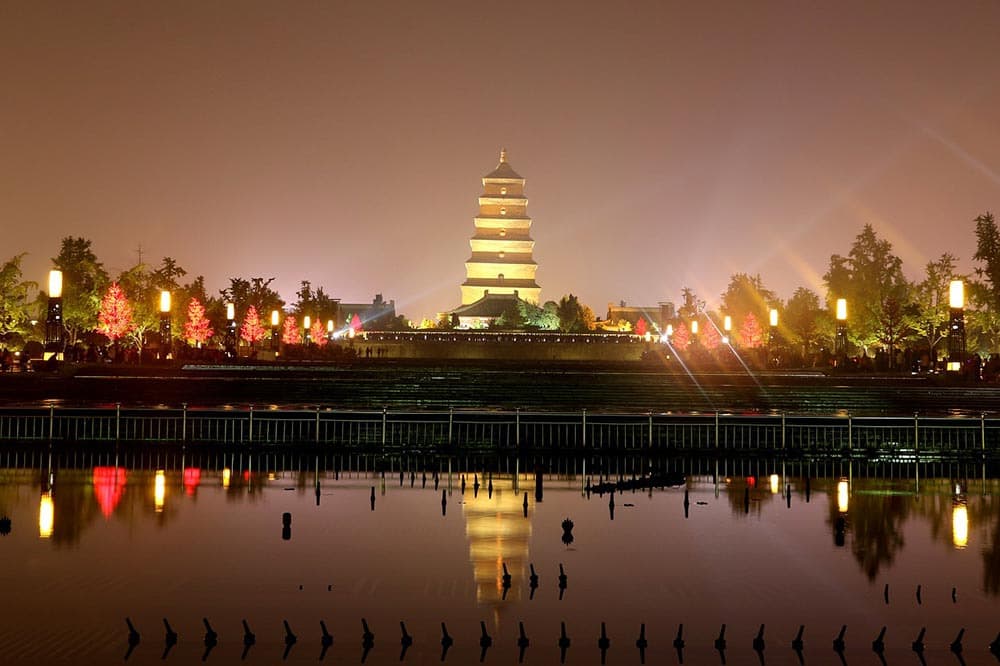
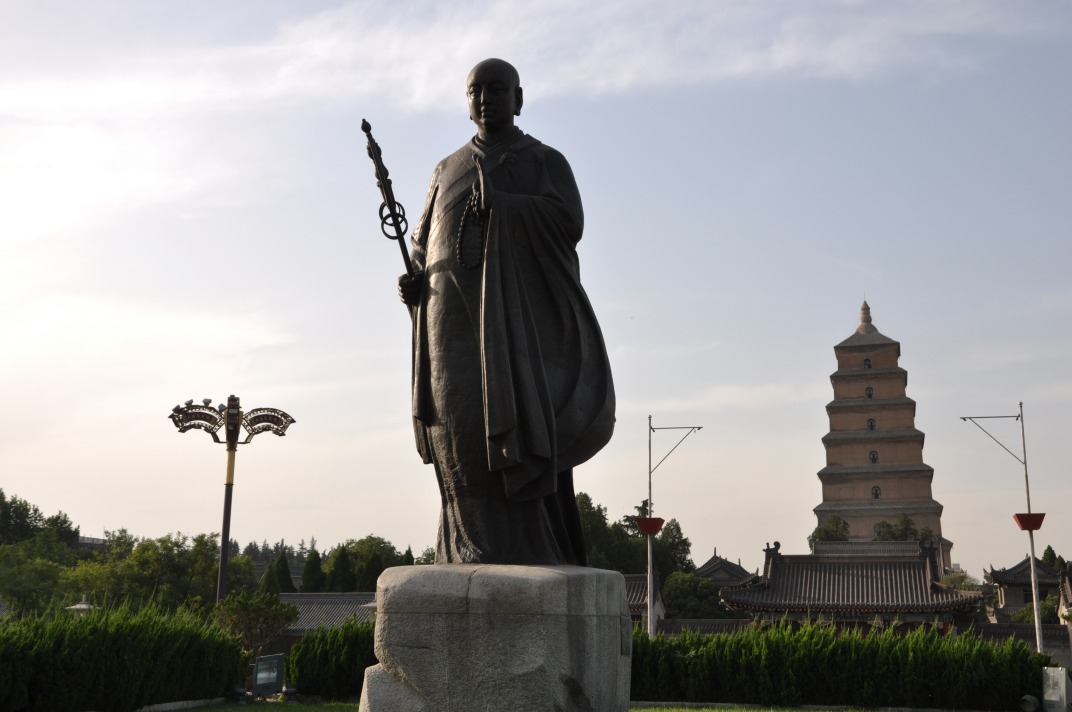
Built in 652 to house the sutras brought back from India by Xuan Zang, the Big Wild Goose Pagoda dominates the south of Xi'an with its 64 meters.
The Big Wild Goose Pagoda (Dayan Ta) stands south of the walls of Xi'an, stretching 64 meters high across 7 stories. Built in the 7th century to house the Buddhist texts brought back from India by the monk Xuan Zang, it remains one of the major testimonies to Tang architecture in Chine.
Why visit the Big Wild Goose Pagoda
Three main reasons warrant a visit:
- A landmark of Chinese Buddhism: the pagoda was constructed to preserve the sutras and relics brought back from India by Xuan Zang, a central figure in the transmission of Buddhism to Chine.
- A panorama over Xi'an: ascending the seven stories offers an expansive view of the modern city and the contours of the historic city.
- A vast walking space: the gardens, courtyards, and musical fountain plaza form an ensemble conducive to several hours of exploration on foot.
A history spanning thirteen centuries
The pagoda is built in 652 under the Tang dynasty, during the reign of Emperor Gaozong. The Buddhist monk Xuan Zang, returning from a long journey to India, petitions the emperor to erect a temple in honor of his mother, the Empress Wende. The building also serves as a sacred library: Xuan Zang preserves the sutras, Buddha figurines, and sacred texts he brought back from the Indian subcontinent.
The original structure does not hold. In 704, after its collapse, the empress Wu Zetian (Wu Tian Ze) orders its reconstruction and raises the pagoda to five stories. The earthquake of 1555 damages the building and causes it to lose several levels. Successive restorations have fixed its present appearance: seven stories, 64 meters, in exposed brick following the Tang model.
What to see on site
The pagoda and its stories
The interior of the tower is accessible. A wooden staircase leads to the summit, passing through rooms displaying carved steles, Buddhist statues, and reproductions of manuscripts. The inscriptions evoke the teachings brought back by Xuan Zang and the site's role in translating Sanskrit texts into Chinese.
The thirteen courtyards and gardens
Around the pagoda, 13 courtyards house Buddha statues, commemorative steles, and monastic funerary structures. The ensemble forms a closed park, quieter than the immediate surroundings of the monument.
The northern musical fountain
At the foot of the pagoda, on the north side, stretches a vast 110,000 m² fountain plaza, locally presented as one of the largest in Asia. Water and light shows are programmed in the late afternoon, typically in the evening. Hours vary by season: inquire on-site on the day itself.
Practical information
- Duration of visit: allow 1.5 to 3 hours for the pagoda, courtyards, and fountain plaza.
- Admission: moderate entry fee for the park, additional fee to reach the summit of the pagoda. Rates vary by season.
- Hours: daytime opening, until early evening. Verify current hours before your visit, especially outside peak season.
- Attire: wear comfortable shoes for climbing the tower (wooden staircase, narrow steps).
When to visit
Xi'an enjoys a continental climate. Spring (April–May) and autumn (September–October) offer the most pleasant conditions for a visit, with mild temperatures and favorable light. Summer is hot and humid; winter is dry and cold, which may limit comfort while strolling the gardens.
For the musical fountain show, favor dusk. Weekend and holiday evenings attract significant crowds.
How to get there
The pagoda is located south of Xi'an's walls, about ten kilometers from the historic center.
- Metro: Line 2, Xiaozhai station, Exit C, then approximately 10 minutes on foot toward the southeast.
- Bus: numerous urban lines serve the "Big Wild Goose Pagoda" stop (Dayanta). Ask your hotel for the most direct lines from your starting point.
- Taxi / rideshare: convenient option from downtown, approximately 20 to 30 minutes depending on traffic.
Nearby attractions
If you extend your journey in Chine, several sites merit a stop:
- Great Buddha of Leshan — monumental sculpture carved into the cliff face, in Sichuan.
- Bifengxia Panda Base — protection center for giant pandas.
- Cangshan — mountain range in Yunnan, suited for hiking.
- Mingyong Glacier — Himalayan glacier accessible from Yunnan.
Frequently asked questions
Frequently asked questions
Plan your journey
The Big Wild Goose Pagoda fits naturally into a stay in Xi'an, between the Ming walls, the Terracotta Army, and the Muslim Quarter. To build a custom itinerary, consult our journeys in Chine.
Nearby
Interested in this visit?
We can include it in your personalised itinerary.