Datong
Datong
At the gates of the Mongol steppes, Datong guards the Yungang Caves, the Hanging Monastery, and Mount Heng — a cultural treasure trove in Shanxi just 1 hour 40 minutes from Beijing.
Name: Datong
Chinese name: 大同
Province: Shanxi
Status: Prefecture-level city
Population: 3,318,054 inhabitants
Area: 14,176 km²
Datong is a city in Shanxi province. Though often dismissed as a ghost city filled with empty skyscrapers awaiting residents, Datong conceals extraordinary artistic treasures and remarkably rich historical sites.
Travelers frequently make a stop in Datong to visit the Yungang Caves, one of China's four most renowned Buddhist art sites.
History
Datong was formerly named Pingcheng. With a history spanning over 2,400 years, Datong is considered one of 24 historical and cultural cities in China.
For nearly 100 years, it served as the capital of the Northern Wei (386–534) before losing this distinction to Luoyang in 494. The city later became the secondary capital of the Liao (916–1125) and Jin (1115–1234) dynasties after acquiring its present name, Datong, in 1048. As a political, economic, and military hub of ancient northern China, the city attracted diverse peoples from various nations engaged in trade and commerce.
This glorious past is reflected in the exceptional historical and cultural relics scattered throughout the region.
Today
Datong is a sprawling city that holds limited intrinsic appeal. Travelers typically spend a day or two here before venturing out to explore the surrounding areas, which brim with attractions.
The old city center of Datong, slightly more lively than the new district, offers pleasant evenings—perfect for unwinding before exploring the region. Nevertheless, tourism development is now a priority for the city, which has undertaken several renovation projects, notably the restoration of the city walls.
While the city itself may not leave indelible memories, the warm hospitality and genuine smiles of locals toward foreigners will warm your heart.
One of the primary reasons to visit Datong is to discover the Yungang Caves. Dating from the 5th century, these caves exemplify Buddhist artistry and contain up to 51,000 ancient statues scattered across 252 grottoes.
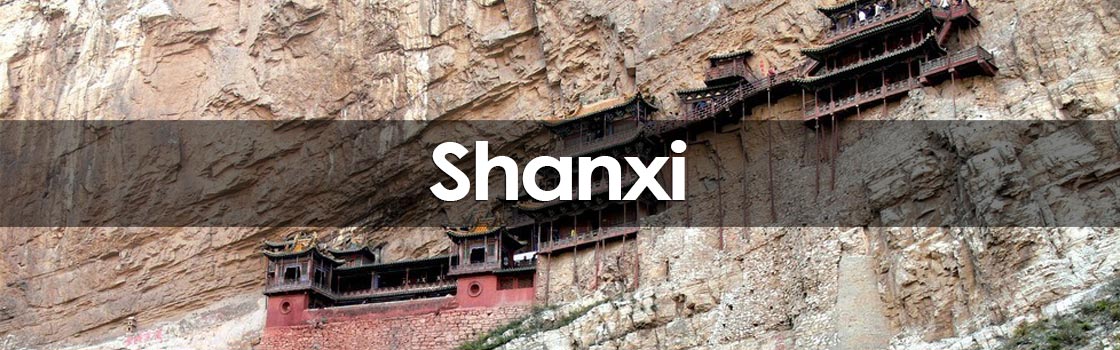
While in Datong, seize the opportunity to explore Hengshan, one of China's five sacred mountains. A hike up Mount Heng will be punctuated by charming temples leading to its summit, rewarding you with spectacular views. After this tranquil nature retreat, do not miss the celebrated Xuankong Monastery, also known as the Hanging Monastery. This structure, carved directly into the mountainside, is nothing short of extraordinary. Its unique architecture truly warrants a visit.
Other landmarks such as the Yingxian Wooden Pagoda and the Nine Dragons Wall populate the Datong region, promising visits full of discoveries.
Climate
Datong features a continental monsoon climate influenced by its geographical proximity to the Mongol steppes. Winters are long, cold, and dry, while summers are intensely hot. The annual average temperature is 7°C.
Precipitation concentrates between June and September.
The best time to visit Datong and its surroundings is May to October.
Train
Datong's railway station connects to most major cities across China, including Beijing, Shanghai, Guangzhou, Xi'an, Taiyuan, Hangzhou, Pingyao, and even Hong Kong.
Long-Distance Buses
Datong has several long-distance bus stations served by buses from neighboring provinces: Shandong, Henan, Hubei, Zhejiang, Hebei, and more.
Buses also depart from cities throughout Shanxi province as well as from Beijing to reach Datong.
The city benefits from an extensive bus network connecting all districts and major regional attractions.
Taxis are also available, starting at 7 RMB. You can negotiate daily rates to visit the main tourist sites.
What to Do in Datong?
- Trace the history of Buddhist art at the Yungang Caves.
- Experience the serenity of Hengshan with a refreshing outdoor hike.
- Marvel at the stunning architecture of the Xuankong Hanging Monastery.
Discover everything there is to do in Datong!
Attractions in Datong
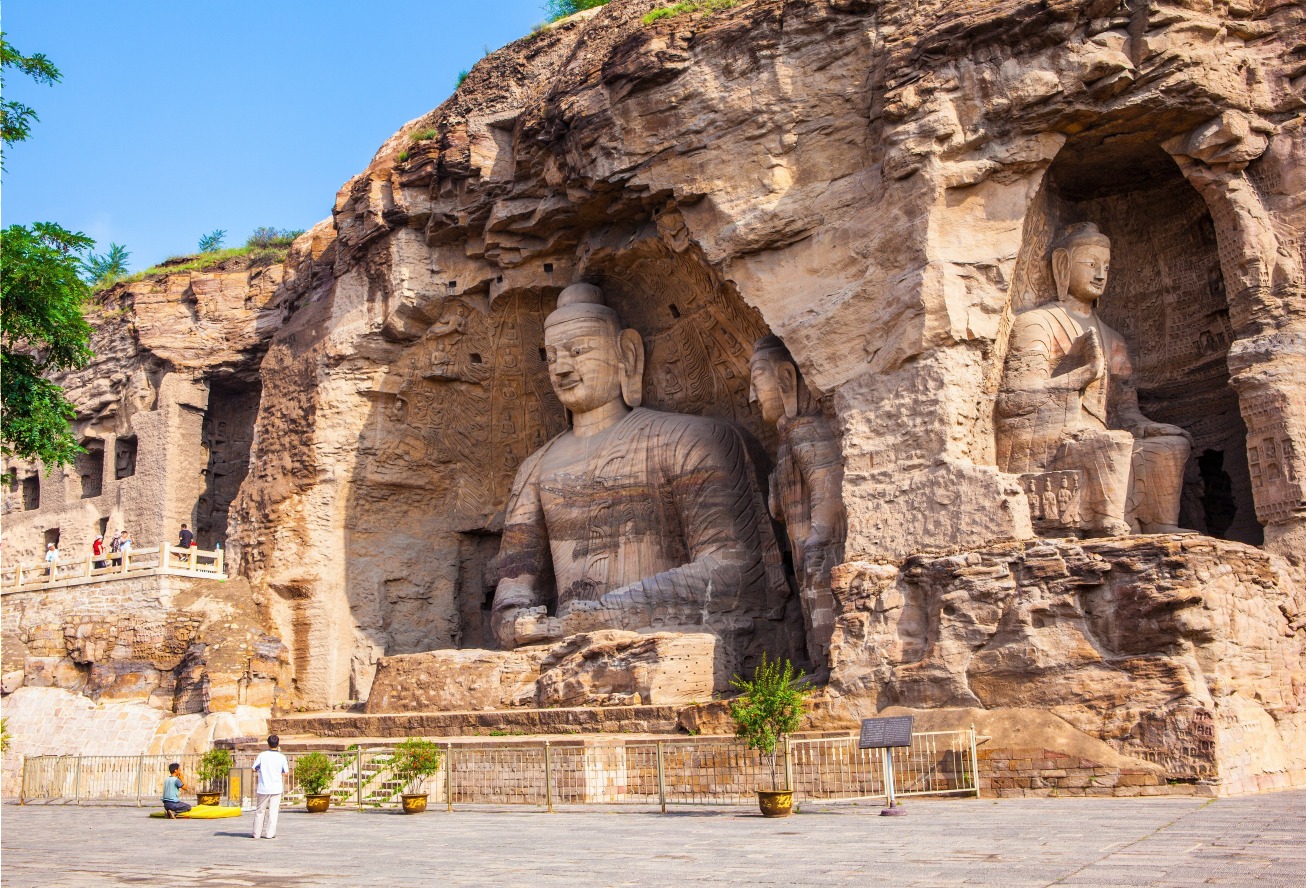
Grottes de Yungang
Près de Datong, les grottes de Yungang abritent 45 cavités et 50 000 sculptures bouddhiques taillées sous les Wei du Nord, classées à l'UNESCO depuis 2001.
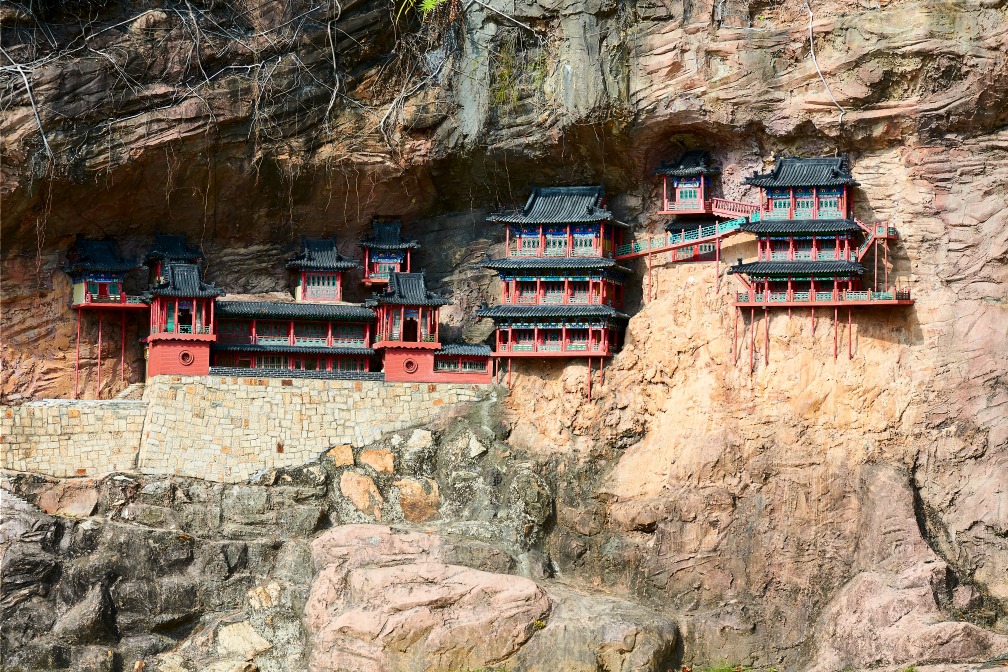
Monastère suspendu Xuankong
Accroché à 50 m au-dessus du canyon Jinlong, près de Datong, le monastère suspendu Xuankong réunit depuis 491 bouddhisme, taoïsme et confucianisme.
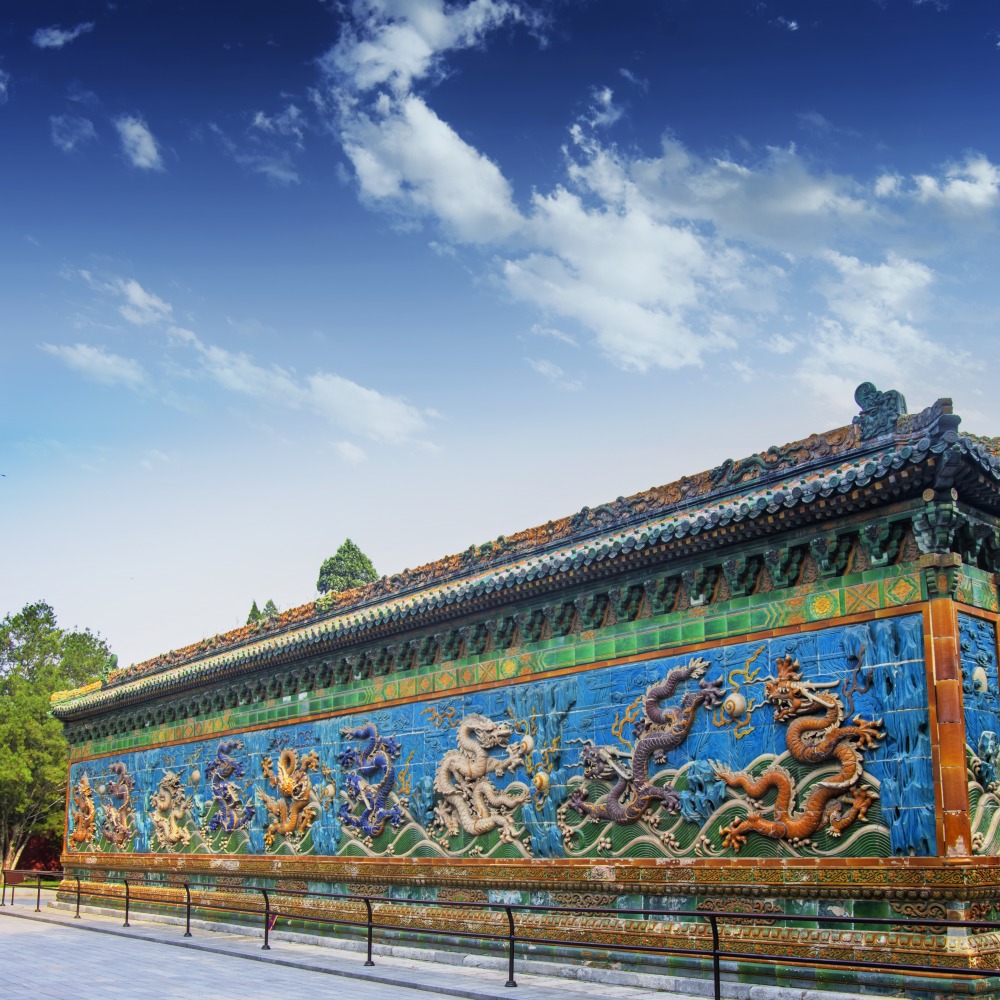
Mur des neuf dragons
À Datong, le mur des neuf dragons en céramique émaillée, érigé sous la dynastie Ming, est le plus ancien et le plus grand de Chine.
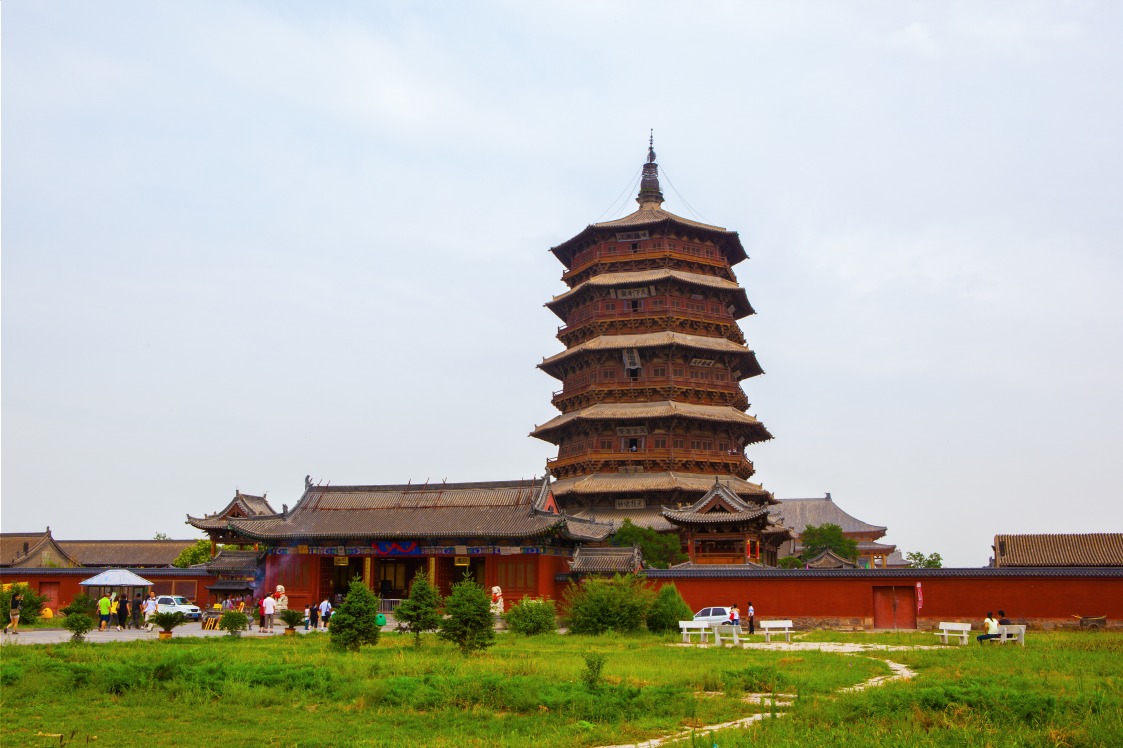
Pagode en bois de Yingxian
À 70 km de Datong, la pagode de Yingxian est la plus ancienne pagode en bois subsistante de Chine. Une prouesse Liao de 67 mètres debout depuis 1056.
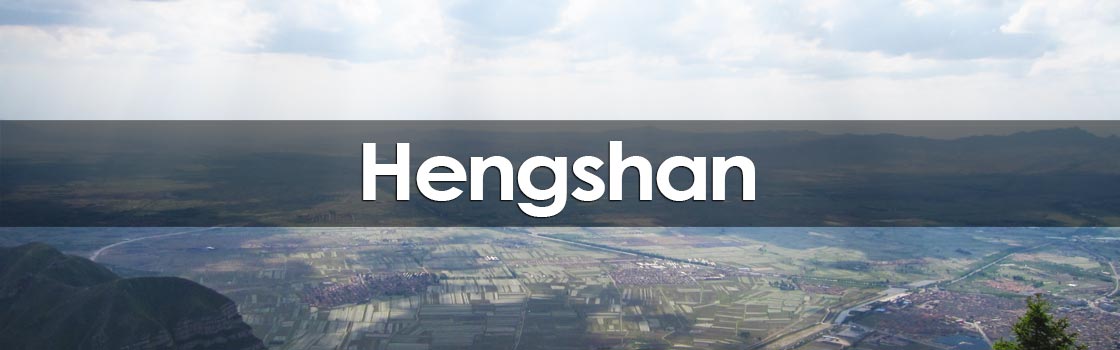
Hengshan (Shanxi)
Versant nord des cinq montagnes sacrées de Chine, le Hengshan abrite le monastère suspendu Xuankong Si et plusieurs temples Ming, à 60 km de Datong.
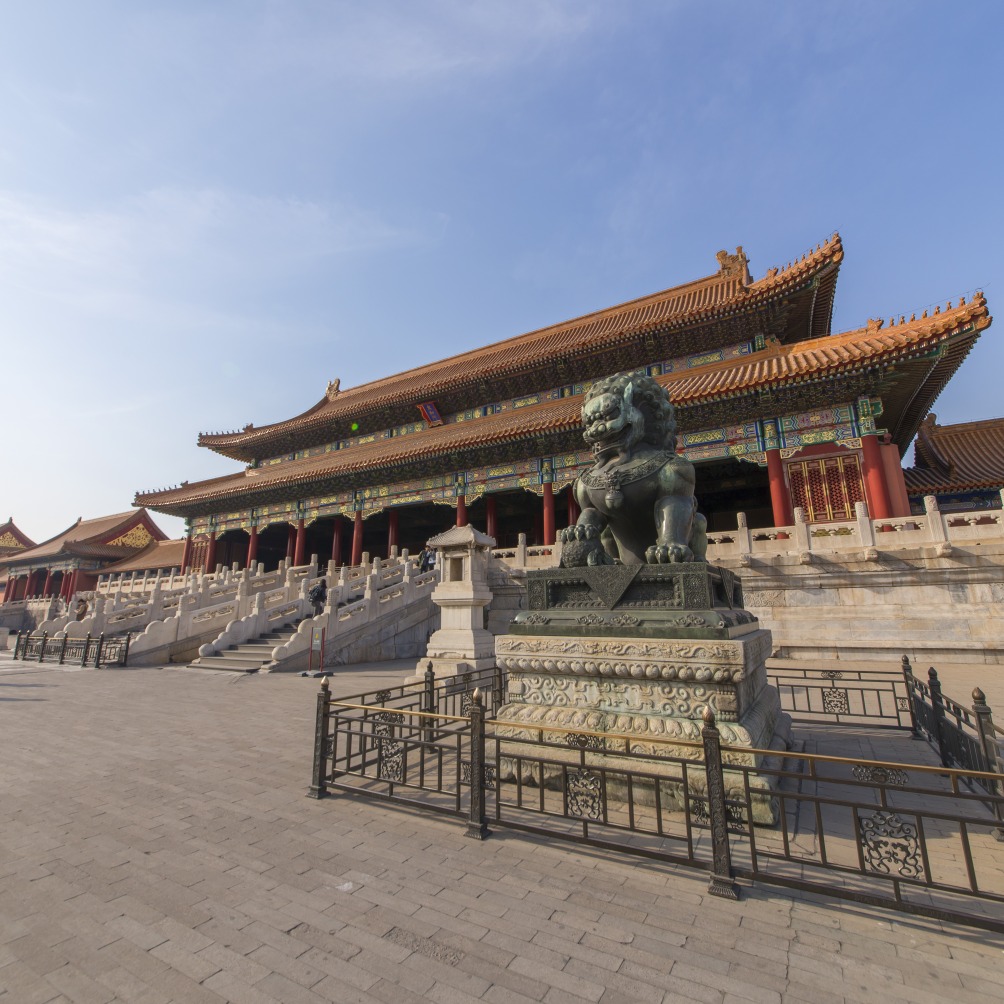
Monastère de Shanhua
Fondé sous les Tang et marqué par l'architecture Liao, le Monastère de Shanhua de Datong réunit salles anciennes, statues monumentales et peintures murales.
Want to discover this destination?
Our local advisors design your tailor-made trip.