Zhangye Red Stone Forest (Danxia)
Zhangye Red Stone Forest (Danxia)
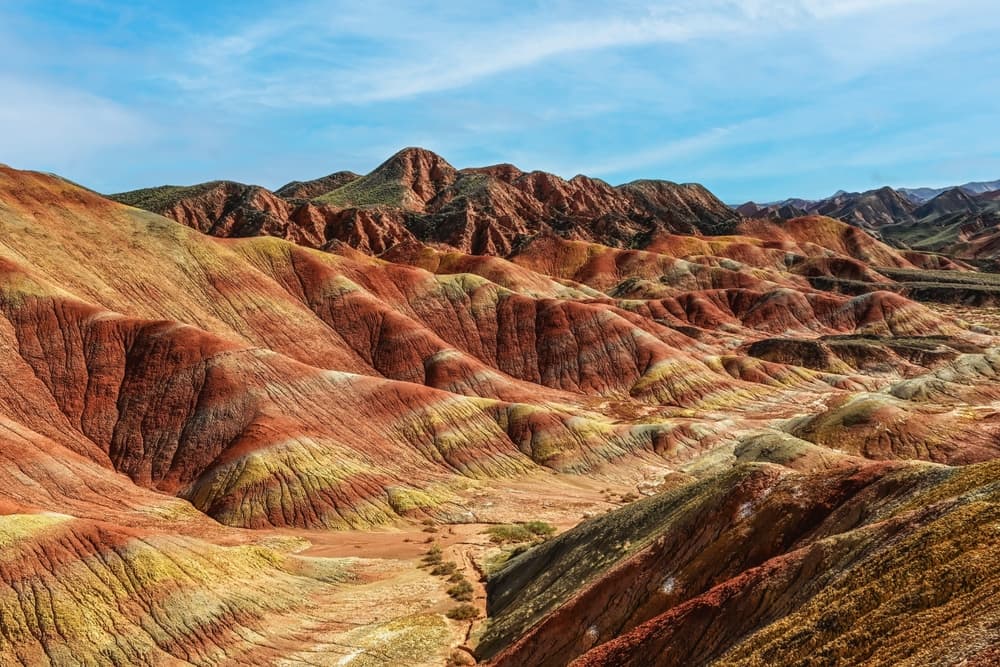
In Gansu, the Zhangye Danxia Geopark displays layered rock strata in shades of red, ochre, and violet, sculpted by millions of years of erosion. A geological landscape recognized by UNESCO, best visited in late afternoon when colors reach their peak intensity.
In the heart of Gansu, the Zhangye Danxia National Geopark showcases rock formations in blood-red, ochre, and violet hues across several dozen square kilometers. These reliefs, sculpted by erosion over millions of years from colored sandstones, rank among China's most spectacular Danxia landscapes, inscribed as a UNESCO World Heritage Site in 2010.
Practical Information at a Glance
- Entry: paid admission (geopark ticket plus internal shuttle included in some packages)
- Recommended duration: half-day to full day depending on the number of viewpoints visited
- Access: from Zhangye by tourist bus or taxi; the city is served by high-speed rail (Lanzhou–Xinjiang line)
- Attire: hiking shoes recommended; hat and sunscreen essential in summer
- Accessibility: internal shuttles and elevated wooden walkways facilitate access to main viewpoints
What to See
The site is explored from several viewpoints connected by elevated wooden walkways. Colors range from brick red to sulfur yellow, olive green to deep violet depending on the time of day and weather. Horizontal strata trace frozen waves through the rock, creating the impression of a hand-painted landscape.
History and Context
Danxia formations result from the accumulation of red sediments during the Cretaceous period, followed by their uplift through tectonic movements linked to the formation of the Tibetan plateau. Wind and water erosion then sculpted these landforms over millions of years. The term "Danxia" designates in Chinese this type of colored sandstone relief, recognized as a distinct geomorphological category.
Highlights of the Visit
Viewpoint #1 — Waves of Color
The first vantage point offers a panorama of the most colorful strata, dominated by red and orange tones. This is the most photographed viewpoint on the site, particularly striking in late afternoon.
Viewpoint #4 — Jagged Ridges
More remote, this viewpoint reveals sharp ridges and deep ravines. The glancing light of evening accentuates contrasts between geological layers.
Golden Light at Sunset
Hues intensify considerably in the hour before sunset. Reds turn to scarlet, yellows to gold. Plan to arrive mid-afternoon to make the most of this lighting window.
Photography Tips
Late afternoon light (two hours before sunset) is ideal: colors are saturated and long shadows emphasize relief. Avoid midday in summer, when overhead light flattens tones. The wooden walkways permit overhead angles of the strata. Photography is permitted throughout the site.
Location and Access
The geopark sits roughly thirty kilometers southeast of the city of Zhangye, in Gansu province. Zhangye is accessible by high-speed rail from Lanzhou (approximately 2 hours) and from Dunhuang via Jiayuguan. Tourist buses and shared taxis regularly connect Zhangye railway station to the geopark. Internal shuttles operate between different viewpoints within the site.
Nearby Attractions
- Zhangye Giant Buddha Temple — houses one of China's largest reclining Buddha statues, crafted in painted earthenware.
- Jiayuguan Pass — Ming fortress marking the western terminus of the Great Wall, approximately two hours' drive away.
- Mogao Caves (Dunhuang) — major Buddhist site on the Silk Road, accessible from Zhangye by train.
Frequently asked questions
Spring (April–May) and autumn (September–October) offer pleasant temperatures and favorable light. Summer is hot and can be rainy, though showers sometimes intensify colors afterward. Winter is cold with short daylight hours.
No. To protect fragile rock, visits take place exclusively from designated walkways and viewpoints. Leaving marked trails is prohibited.
A half-day suffices for the main viewpoints. A full day allows visiting all vantage points at a leisurely pace and enjoying evening light.
Internal shuttles and some walkways are accessible. Certain viewpoints require climbing stairs. It is recommended to inquire at the park entrance based on specific needs.
Yes. The Zhangye Giant Buddha Temple can be visited easily in the morning before heading to the geopark in the afternoon. Jiayuguan Pass and the Mogao Caves in Dunhuang fit into a multi-day Silk Road itinerary.
Yes, photography is permitted throughout the site. Drones, however, are subject to strict regulations in China and require specific authorizations.
Interested in this visit?
We can include it in your personalised itinerary.