Giant Panda Research and Breeding Centre
Giant Panda Research and Breeding Centre
Located 10–15 km from Chengdu, the giant panda research centre is home to over one hundred individuals across 100 hectares. A practical guide to planning your visit.
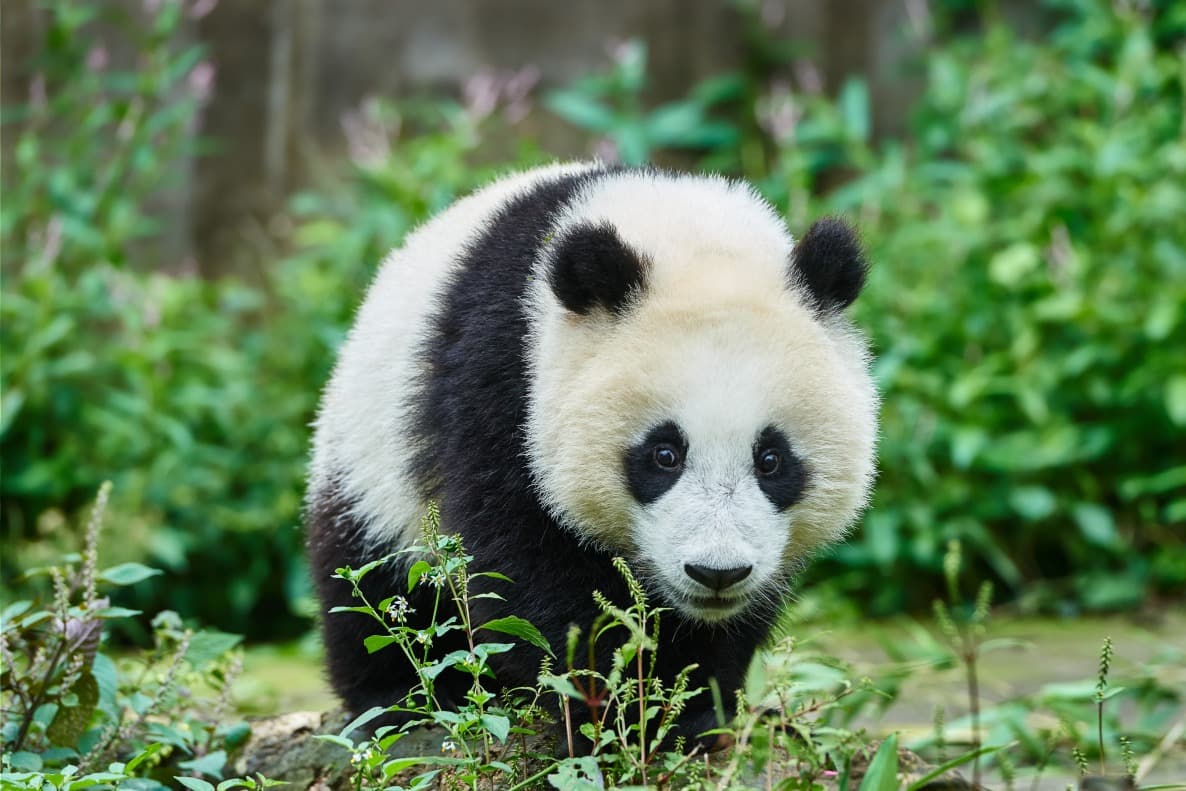
The Centre for Giant Panda Research and Breeding is a non-profit scientific institute dedicated to the study, reproduction and reintroduction of the giant panda. Situated roughly ten kilometres north of Chengdu, in Sichuan, it houses just over 100 giant pandas across a park spanning more than 100 hectares, landscaped to replicate their natural habitat.
Why visit Chengdu's panda centre
The giant panda exists in the wild only in Chengdu, primarily across the mountainous ranges of Sichuan, Shaanxi and Gansu. Chengdu's centre is one of the rare places where you can observe this animal in conditions close to its natural environment, at a comfortable viewing distance and without the crowding typical of a conventional zoo.
The park combines three functions: scientific research into breeding, semi-wild rearing, and public education on conservation. Trails wind through a bamboo forest scattered with reconstructed rivers and caves that recreate the high-altitude biotopes. You will also encounter red pandas, present in several of the park's enclosures.
History of the centre
The centre's origins trace back to 17 January 1953, when a wild panda was discovered at Yutang, near Dujiangyan, and transferred to the Futoushan breeding centre in Chengdu. This facility forms the direct predecessor of today's institution.
The Chengdu Giant Panda Research Centre was officially established in March 1987, with a mission to extend the conservation efforts previously conducted by Chengdu Zoo. The goal: to develop assisted breeding to increase the captive population and ultimately prepare individuals for reintroduction into the wild. A major renovation was undertaken in 2006, modernising the enclosures and visitor facilities.
What to see in the park
Eight enclosure zones
The giant panda space is divided into eight sectors:
- No.14 enclosure: entrance enclosure, the first encountered from the main entrance.
- Giant panda cub enclosure: located at the park's centre, it accommodates young pandas aged 1 to 2 years.
- Adult enclosure: a large enclosure reserved for adult pandas.
- Sub-adult enclosure: zone for sub-adults in transition to adulthood.
- No.1 panda house: in the north-west, houses adults and 2-year-olds.
- No.2 panda house: second pavilion in the north-west sector.
- Sunshine nursery house: central nursery for pregnant females and newborns.
- Moonlight nursery house: second nursery in the north-west, for cubs until weaning.
Museum and shop
A bilingual museum (English/Mandarin) traces the evolution of the giant panda, its biology and conservation programmes. The visit concludes near a shop offering books and objects, with part of the proceeds funding research.
Volunteer programme
For those wishing to deepen their experience, the centre offers volunteer programmes lasting several days. Volunteers participate in enclosure cleaning, meal preparation and habitat maintenance. A certificate is awarded upon completion of the programme. Places are limited and advance booking is required.
When to go
Autumn is the season of births: it is the best time to spot baby pandas at the nursery. Spring also offers pleasant conditions, with bamboo flowering and mild temperatures.
Within a single day, morning is by far the ideal time. Pandas are fed early and are therefore active; after noon, most rest. Plan to arrive at opening time to make the most of the two to three most active hours.
Practical information
- Duration of visit: allow 2 to 3 hours to tour the enclosures and museum at a leisurely pace.
- Admission: moderate entry fee, payable on site. Rates are subject to change; verify before departure.
- Opening hours: open mornings, closing late afternoon, year-round. Last admission approximately one hour before closing.
- Comfort: walking shoes recommended; the park is expansive and hilly. Electric carts available for a surcharge.
- Photography: flash strictly prohibited in nursery areas.
How to get there
The centre is located north-east of Chengdu, approximately 10 to 15 km from the city centre depending on your starting point.
- By metro: Line 3 serves Panda Avenue station (熊猫大道). From there, take shuttles or short-distance taxis to the entrance.
- By taxi or ride-share: the most direct option from the city centre; allow 30 to 45 minutes depending on traffic.
- Organised excursion: most Chengdu hotels and agencies offer group transfers, sometimes combined with other attractions.
What to see nearby
The centre fits naturally into a stay in Chengdu, an ideal base for exploring Sichuan. Travellers extending their itinerary through Chine may consider the Bell and Drum Towers in Xi'an, the Beijing Botanical Garden, or the Baigongfang Craft Museum for a cultural approach to the capital.
Frequently asked questions
Frequently asked questions
As early as possible, ideally at opening. Pandas are fed in the morning and this is when they eat, play and move about. After noon, they mostly rest.
2 to 3 hours are sufficient to visit the main enclosures and museum. Allow a half-day if you wish to take your time and explore the more remote zones.
The paid close-contact programme has been suspended for health reasons. Observation takes place at a respectful distance from designated walkways and platforms.
Autumn for viewing newborns at the nursery. Spring for pleasant weather. Avoid summer, which is hot and humid, and when pandas are less visible.
Metro Line 3 serves Panda Avenue station, your starting point to reach the entrance. Taxi remains the most direct option; organised excursions through hotels are also common.
To incorporate this visit into a comprehensive itinerary across Sichuan and beyond, explore our journeys in Chine and let us build a tailor-made programme for you.
Interested in this visit?
We can include it in your personalised itinerary.