Jiangtouzhou Historic Village
Jiangtouzhou Historic Village
Located 25 km north of Guilin, Jiangtouzhou preserves over 180 Ming and Qing buildings founded by the descendants of philosopher Zhou Dunyi.
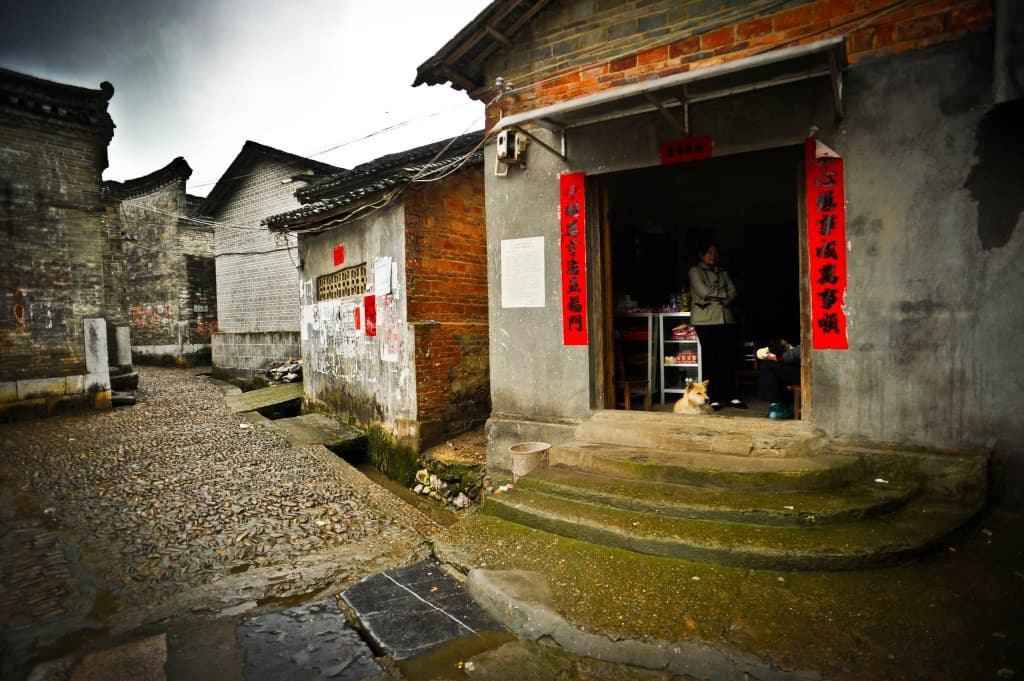
Located 25 km north of Guilin, the Jiangtouzhou historic village houses the largest preserved ensemble of ancient buildings in Guangxi. Over 180 residences and monuments from the Ming and Qing dynasties line cobblestone alleys, testament to a scholarly family history stretching back to the Song dynasty.
Why visit Jiangtouzhou
Jiangtouzhou stands out in the Guilin region for its remarkable architectural heritage: a village where you walk through a coherent architectural ensemble centuries old, without any tourist reconstruction. You will discover:
- More than 150 preserved ancient buildings, including noble residences, an ancestral temple and a Ming-era arched bridge.
- A continuous genealogy: approximately 90% of the current 800 residents are descendants of the Zhou clan, giving the place a unique social coherence.
- A well-preserved rural atmosphere, recognized as a traditional Chinese village by the Ministry of Construction and Culture.
- A manageable day trip from Guilin, away from the major karst circuits.
History of the village and the Zhou clan
The village was founded during the Song dynasty (960-1279) by descendants of Zhou Dunyi (1017-1073), a major Northern Song neo-Confucian philosopher considered one of the founders of neo-Confucianism. This scholarly lineage marked Jiangtouzhou's identity for nearly a thousand years.
During the Ming (1368-1644) and Qing (1644-1911) dynasties, the village distinguished itself in the imperial examinations: nearly 200 of its sons achieved official positions in Guangxi's provincial administration or at court. This sustained academic success explains the quality of the residences built by wealthy families who returned to settle in the village.
Today, the village is home to over 800 residents, the vast majority bearing the Zhou family name, perpetuating their connection to their philosopher ancestor.
What to see in Jiangtouzhou
Ming and Qing residences
The village's architecture follows the codes of southern Chine during the Ming and Qing periods: ornate wooden facades, grey brick load-bearing walls, tiered roofs covered in black tiles. Three ensembles stand out:
- Five Generation County Magistrate: residence of a lineage that produced five successive magistrates.
- Taishidy Mansion: home of a high imperial official.
- Jinshi Mansion: house of a jinshi degree holder, the highest rank in the imperial examinations.
The Ailian ancestral temple
Built in 1882, the Ailian temple is the village's largest building at 1,200 m². Dedicated to the worship of the Zhou clan's ancestors, it centers around a monumental entrance gate, Xingzhong, standing 3 m high, and a main pavilion, Wenyuan, covering 220 m². The building still preserves a library housing documents related to the family's history.
The Fulong bridge and ritual furnace
In front of the Ailian temple, the Fulong bridge, also called Phoenix bridge, spans the Hulong River. This Ming-era arched structure measures 8 m long, 5 m wide and 4 m high.
At its southern end stands a three-tiered furnace standing 8 m high, still used during Lunar New Year. Village students burn their school notebooks and files from the past year there in tribute to their ancestors: a ritual inherited from the Zhou clan expressing gratitude to elders and the transmission of knowledge.
Practical information
- Visit duration: allow 2 to 3 hours to explore the village and its main buildings.
- Admission: access to the village is generally free; a small informal entry fee may be requested by some residents at the entrance to private buildings.
- On-site: few shops or restaurants, bring water and snacks.
- What to wear: comfortable shoes, the cobblestone alleys can be slippery after rain.
How to get there from Guilin
Two options from Guilin's main bus station:
- Direct bus Guilin-Jiuwu, then a few minutes' walk to the village.
- Bus Guilin-Lingchuan, with a connection to Jiuwu, then approximately 10 minutes on foot.
Allow approximately one hour of travel depending on traffic. A taxi or private vehicle remains the most flexible option if you're traveling in a small group.
When to visit Jiangtouzhou
Guangxi's climate is subtropical humid. The months of October to November and March to May offer the most pleasant conditions: mild temperatures, low humidity, and often clear skies. Summer (June-August) is hot with heavy rains, while winter can be cool and misty but bathes the village in particular light.
A visit during Lunar New Year (January or February depending on the year) allows you to observe the ritual furnace ceremony, when it takes place.
Nearby
Jiangtouzhou naturally fits into a stay in Guilin and in Guangxi's karst region. The city serves as a base for exploring the Li River landscape, the Longji rice terraces and the villages of the Yao and Zhuang minorities.
Frequently asked questions
Frequently asked questions
The village is situated approximately 25 km north of Guilin, in Guangxi province, accessible by bus from Guilin's main bus station via Jiuwu.
The village was founded during the Song dynasty, but most of the over 180 preserved buildings date from the Ming (1368-1644) and Qing (1644-1911) dynasties. The Ailian ancestral temple was built in 1882.
2 to 3 hours are sufficient to explore the cobblestone alleys, see the main residences, the Ailian temple and the Fulong bridge. For a round trip from Guilin, allow half a day to a full day.
General access to the village is free. A small contribution may be requested by residents at the entrance to certain private houses open to visitors.
Zhou Dunyi (1017-1073) is a philosopher from the Northern Song dynasty, considered one of the founders of neo-Confucianism. The village's residents claim descent from him, which explains the predominance of the Zhou surname.
Include Jiangtouzhou in your trip to Chine
Jiangtouzhou historic village combines beautifully with Guilin's karst landscapes and the traditional villages of northern Guangxi. To build a tailor-made itinerary incorporating this heritage stop, consult our trips to Chine.
Interested in this visit?
We can include it in your personalised itinerary.