Little Wild Goose Pagoda
Little Wild Goose Pagoda
About 1 km from Xi'an, the Little Wild Goose Pagoda combines an 8th-century Buddhist structure, an active temple, a garden and a museum housing over 130,000 artifacts.
About 1 km south of Xi'an's city center, the Little Wild Goose Pagoda stands within the grounds of the Jianfu Temple. Together with its larger counterpart, the Great Wild Goose Pagoda, it forms one of the two major Buddhist complexes in the city, once serving as centers for translating and preserving sacred texts brought from India.
Why visit the Little Wild Goose Pagoda
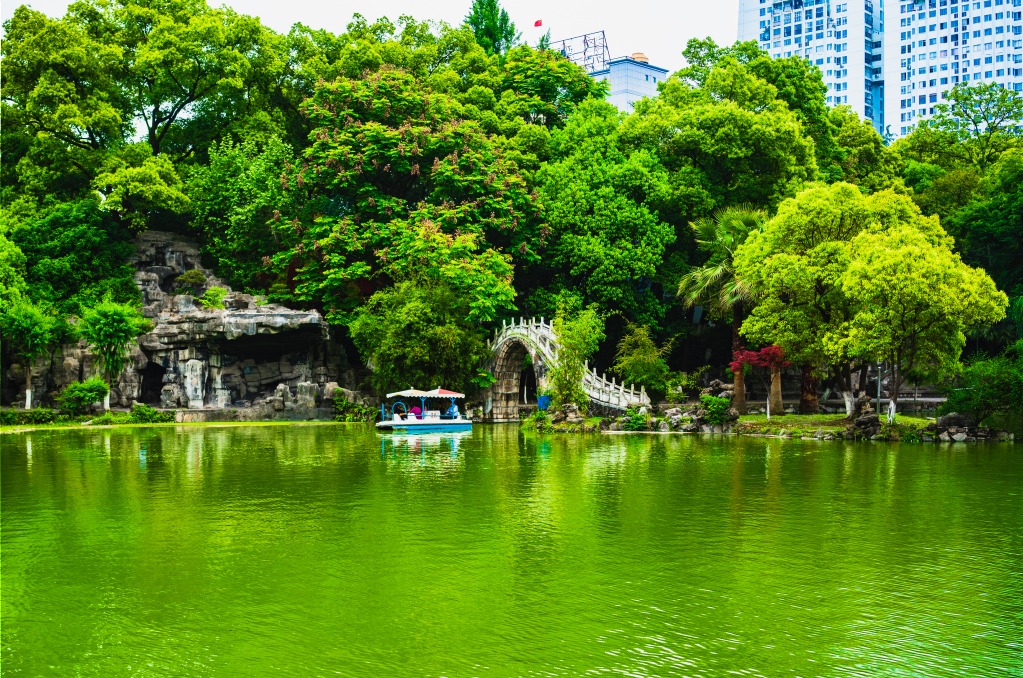
The site brings together in one location an 8th-century Buddhist structure, an active temple, a landscaped garden and a museum rich in archaeological artifacts. Unlike other, more crowded Xi'an monuments, this complex remains peaceful and offers a coherent glimpse into Tang Dynasty Buddhist culture in Chine.
- A brick pagoda over 1,300 years old, marked by the region's seismic history.
- A garden and temple still in active use, punctuated by ritual elements (bell, processional pathway).
- An associated museum housing an important collection of Shaanxi artifacts.
- A public calligraphy school with demonstrations.
Pagoda history
The pagoda was constructed between 707 and 709 under Emperor Zhongzong, within the grounds of the Jianfu Temple founded decades earlier. It was then nicknamed the Jianfu Temple Pagoda. Its original purpose was practical: to house the work of the monk Yi Jing, commissioned by the emperor to translate Buddhist texts brought from the Indian subcontinent, and to preserve the statues and Sanskrit writings that came with them.
Located in a region of significant seismic activity, the pagoda suffered several earthquakes over the centuries. The most destructive, in 1556, caused its two upper stories to collapse. Of its original 15 stories, the structure now has only 13, giving it its characteristic truncated silhouette. Restored several times, it has retained its original brick structure.
What to see on site
The pagoda and its architecture
The pagoda has a square plan and is built of brick, exemplifying the style of Tang Dynasty Buddhist structures. A paved pathway lined with stone statues representing horses, lions and chimeras leads to its entrance. Depending on visiting conditions, it is possible to climb the stories for a viewpoint over the garden and surrounding area.
The Hall of Posthumous Bliss
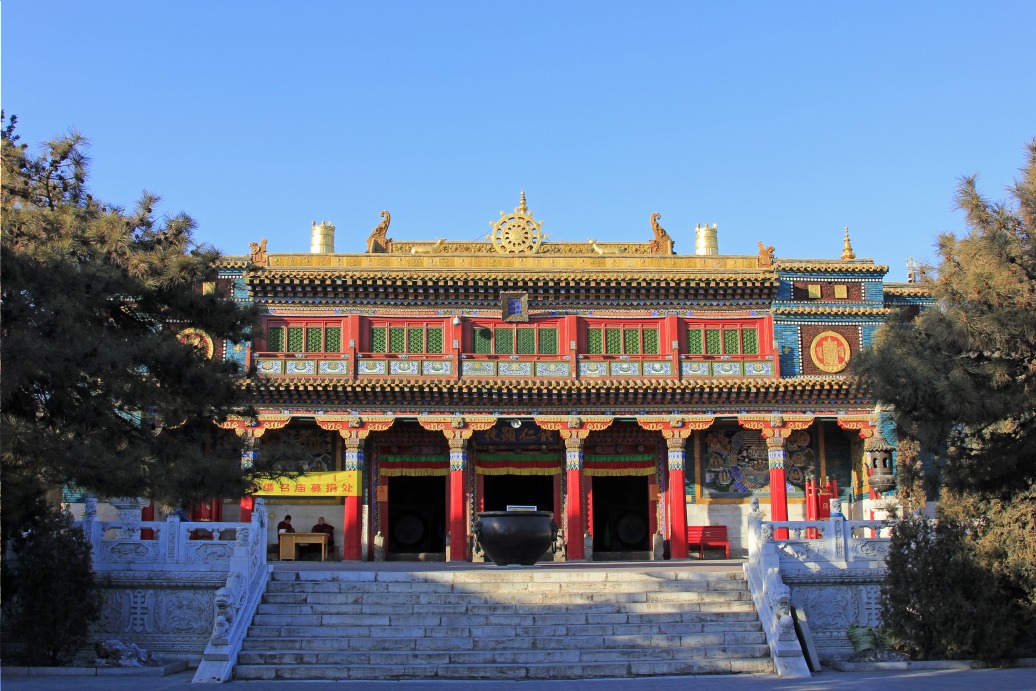
At the back of the garden lies the main entrance to the Hall of Posthumous Bliss, a complex of halls still in active use. Here you can observe the common ritual practices of Chinese Buddhism: incense, prostrations, prayers.
The ritual bell
Suspended in the garden is a large bell struck with a red wooden beam. Tradition associates this action with making a wish. The bell's sound once marked the hours of monastic life.
The museum and collections
The site and its associated museum house over 130,000 relics and objects: ancient seals, jade pieces, Buddhist statues, carved stones, porcelain and calligraphy. It is one of the most comprehensive collections for understanding the material history of Xi'an.
The calligraphy school
The site is home to a Chinese calligraphy school, which opens a demonstration workshop to the public. Depending on the day, you can watch calligraphers at work and sometimes have a brief introduction to character writing.
Practical information
- Duration: allow 1.5 to 2.5 hours for the site and museum.
- Admission: moderate entrance fee, with a supplement if you wish to climb the pagoda or ring the ritual bell.
- Hours: open during daytime hours, with one weekly closing day; verify current hours before your visit.
- Dress code: proper attire recommended, as the temple is an active place of worship.
How to get there
The site is located about 1 km south of Xi'an's city walls, making it easily accessible:
- Metro: the Xiao Yan Ta station (Little Wild Goose Pagoda), on the line serving the southern center, opens directly near the entrance.
- Bus: numerous urban lines and two tourist lines serve the Xiao Yan Ta stop.
- Taxi or ride-sharing: short journey from most hotels in the historic center.
- On foot: from the south gate of the city walls, allow about 20 minutes walk.
When to visit
Xi'an has a continental climate: hot, rainy summers and cold, dry winters. Spring (April-May) and autumn (September-October) offer the most pleasant conditions for exploring the garden and pagoda. The surroundings are also more colorful with flowers in spring. Visiting early in the morning helps you avoid crowds and summer heat.
Nearby attractions
- Great Wild Goose Pagoda: a logical addition to your visit, in the same southern district.
- Maiji Shan Mountain: major Buddhist caves in Shaanxi, accessible from Xi'an.
- Labrang Monastery: major center of Tibetan Buddhism, in neighboring Gansu.
- Longwu Monastery: another Buddhist stop in the region.
Frequently asked questions
Frequently asked questions
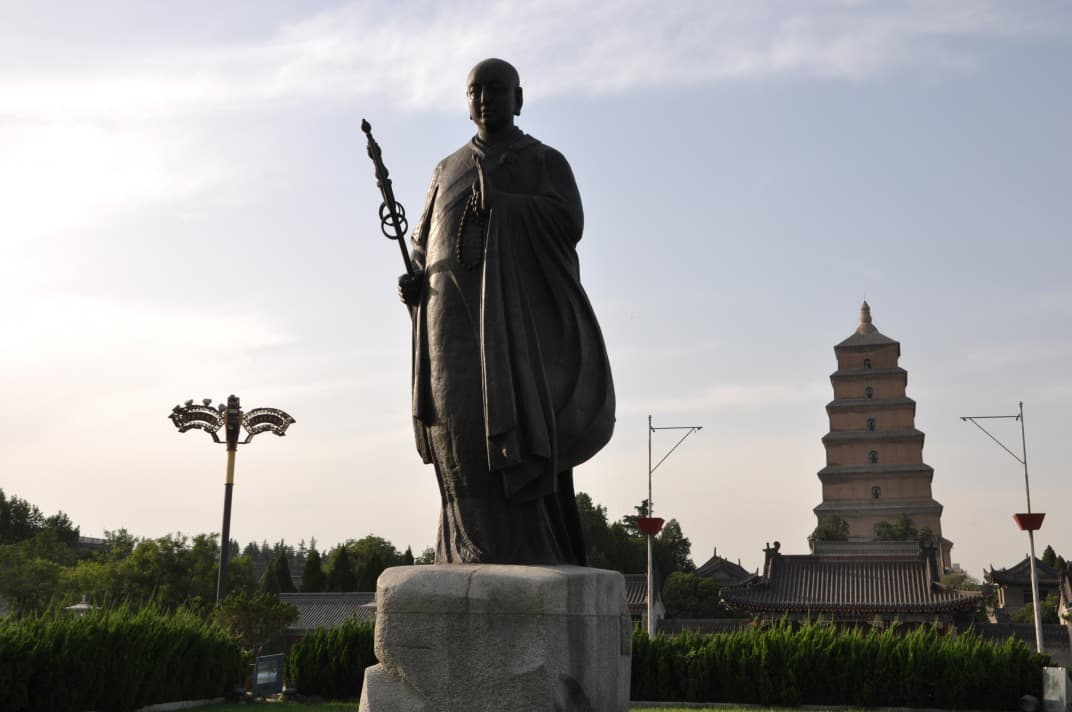
The Great Pagoda, taller and more massive, is linked to the monk Xuanzang and the Da Ci'en Temple. The Little Pagoda, older in its current form, is associated with the monk Yi Jing and the Jianfu Temple. The two sites are distinct but complementary.
Interior access is generally possible for an additional fee, subject to preservation conditions in effect at the time of your visit.
Allow 1.5 to 2.5 hours if you wish to visit the pagoda, temple, garden and spend some time at the associated museum.
Yes, the spacious garden, ritual bell and calligraphy workshop offer points of interest for both children and adults.
The 1556 earthquake caused the two upper stories of the original structure, which had 15, to collapse. It has been preserved in its current state since then.
Include the pagoda in your stay
The Little Wild Goose Pagoda fits naturally into a Xi'an stay, complementing the city walls, Muslim Quarter and Terracotta Army. To build a custom itinerary incorporating this site and the rest of Shaanxi, consult our Chine travel suggestions.

Nearby
Interested in this visit?
We can include it in your personalised itinerary.