Niujie Mosque (牛街礼拜寺)
Niujie Mosque (牛街礼拜寺)
Founded around 996, Niujie Mosque is Beijing's oldest and largest Islamic place of worship. Sino-Islamic architecture, historic courtyard, and a living Hui community make this site distinctive within the capital.
Niujie Mosque is Beijing's oldest and largest Islamic place of worship. Built in the late 10th century, it stands at the heart of the capital's historic Muslim quarter, home primarily to the Hui ethnic group. Its architecture blends Chinese traditions with Islamic influences: glazed tile roofs, an interior courtyard, and a modest minaret. It remains an active place of prayer, welcoming non-Muslim visitors outside prayer times.
Quick Practical Info
- Admission: paid entry (modest fee for non-Muslims)
- Access: Metro Line 7, Caishikou Station, then a 10-minute walk southwest
- Dress code: shoulders and knees covered; women must cover their heads in the prayer hall
- Recommended duration: 45 minutes to 1 hour
- Important rule: non-Muslims cannot enter the prayer hall during prayer times
What You'll See
The mosque is organized around a paved courtyard lined with ancient trees. The main prayer hall, oriented toward Mecca, adopts the form of a Chinese temple with stacked multiple roofs. An astronomical tower (once used to observe the crescent moon) and stelae carved in Arabic and Chinese complete the ensemble. An adjoining cemetery holds the tombs of Arab missionaries from the 11th century.
History and Context
Founded during the Liao dynasty around 996, the mosque was enlarged under the Jin, Yuan, and Ming dynasties. It testifies to the Muslim presence in Beijing for over a thousand years, brought by merchants and diplomats traveling from Central Asia via the Silk Road. The Niujie quarter ("Ox Street") preserves today a living Hui community, with its halal butcher shops and traditional pastry shops.
Highlights of Your Visit
The Main Prayer Hall
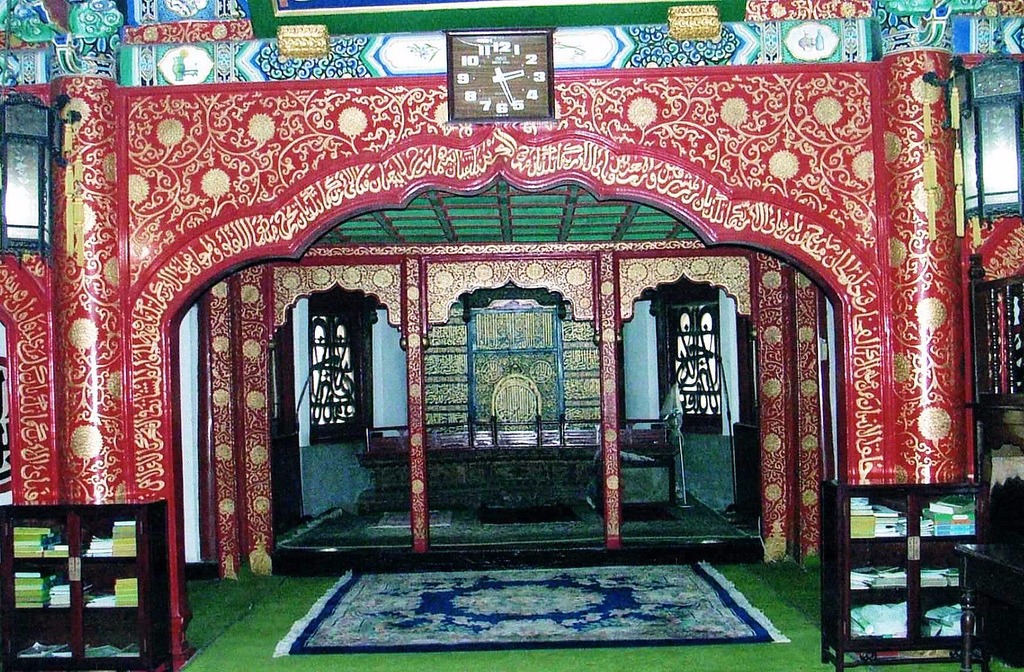
The interior, serene and luminous, combines Arabic calligraphy with sculptured wood décor distinctly Chinese. Red lacquered columns support a ceiling adorned with geometric patterns. The absence of figurative representations contrasts sharply with neighboring Buddhist temples.
The Lunar Observation Tower
This small octagonal tower, a rare example of Islamic astronomy integrated into a Chinese mosque, served to determine the start of Ramadan. It illustrates the synthesis between Islamic science and local architecture.
Stelae and Inscriptions
Several stelae dating from the Ming and Qing dynasties trace the mosque's history in Chinese and Arabic. They constitute a valuable resource for understanding the history of Islam in North China.
Etiquette and Visiting Rules
- Cover shoulders and knees before entering the grounds.
- Women must wear a headscarf in the prayer hall; shawls are sometimes provided at the entrance.
- Remove your shoes before entering the prayer hall.
- Avoid visits during the five daily prayers; Friday noon prayer draws a large crowd.
- Speak quietly and avoid inappropriate gestures in the courtyard.
Photography Tips
Morning light is ideal for photographing the prayer hall's façade, which faces west. The stacked roofs stand out well from the central courtyard. Photography is generally permitted in the courtyard and outdoor spaces; avoid photographing worshippers in prayer without consent. Photography inside the prayer hall is often prohibited.
Location and Access
The mosque is located in Xicheng District on Niujie Street, in a historic residential quarter. The metro is the most practical option: Line 7, Caishikou Station. The quarter is accessible on foot from the Temple of Heaven in about twenty minutes by taxi. Wheelchair access to the main courtyard is possible, though thresholds and paved ground may complicate circulation.
In the Area
- Temple of Heaven — grand Ming-Qing imperial complex dedicated to solstice ceremonies, less than 3 km southeast.
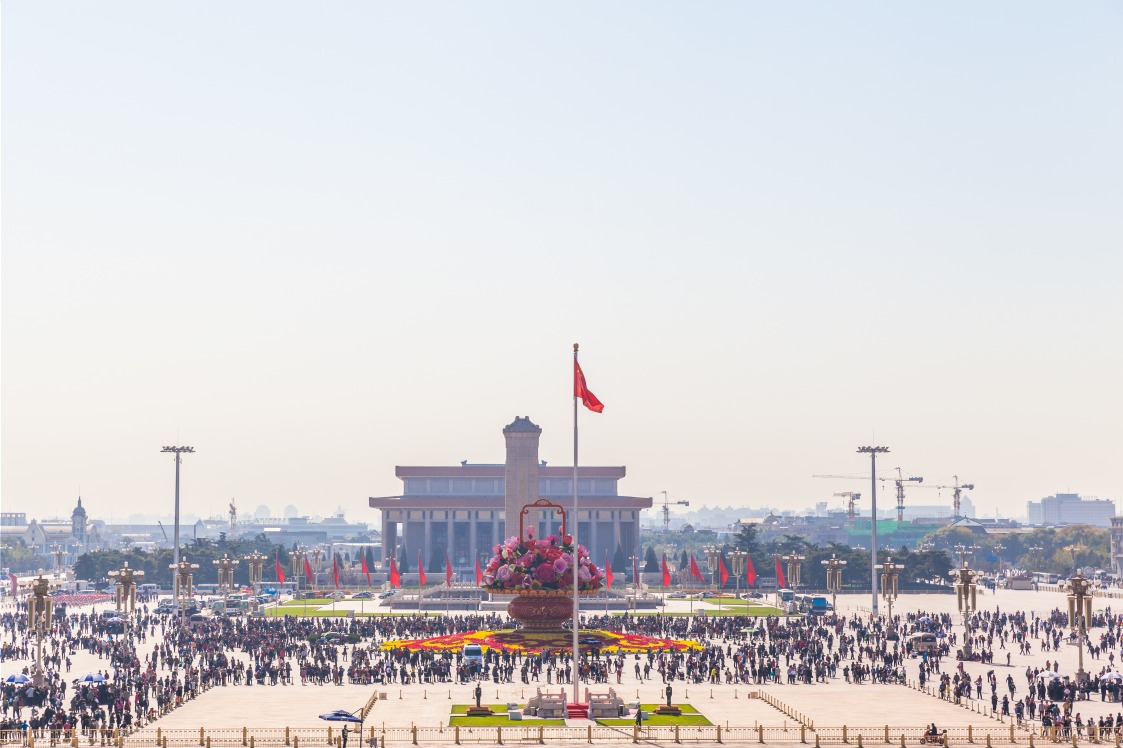
- Tiananmen Square — the symbolic heart of Beijing, accessible by metro from Caishikou.
- Forbidden City — imperial palace of the Ming dynasty, roughly 5 km northeast.
- Beihai Park — former imperial garden with lake and white pagoda, about 3 km north.
Frequently asked questions
Yes, non-Muslims are admitted to the courtyard and outdoor spaces with an entrance ticket. Access to the prayer hall is restricted during prayer times.
Covered shoulders and knees are mandatory. Women must cover their heads in the prayer hall. Bring a headscarf or loose-fitting clothing.
Spring (April–May) and autumn (September–October) offer pleasant weather. Avoid Friday noon if you wish to visit peacefully: Friday prayers attract many worshippers.
Yes. Niujie Street itself is worth exploring for its halal shops and traditional Hui pastry stores. The Temple of Heaven and Beihai Park are accessible by taxi or metro within the same half-day.
Photos are generally permitted in the outdoor courtyard. The interior of the prayer hall is often off-limits to photography; check signage on-site and do not photograph worshippers without consent.
Take Metro Line 7 to Caishikou Station, then walk approximately 10 minutes southwest toward Niujie Street.
Photos
Nearby
Interested in this visit?
We can include it in your personalised itinerary.