Putuo Zongcheng Temple (普陀宗乘之庙)
Putuo Zongcheng Temple (普陀宗乘之庙)
Inspired by the Potala Palace, Putuo Zongcheng Temple is the largest of Chengde's Eight Outer Temples. White facades, golden roofs, and a colossal Guanyin statue compose this UNESCO-listed Qing imperial site.
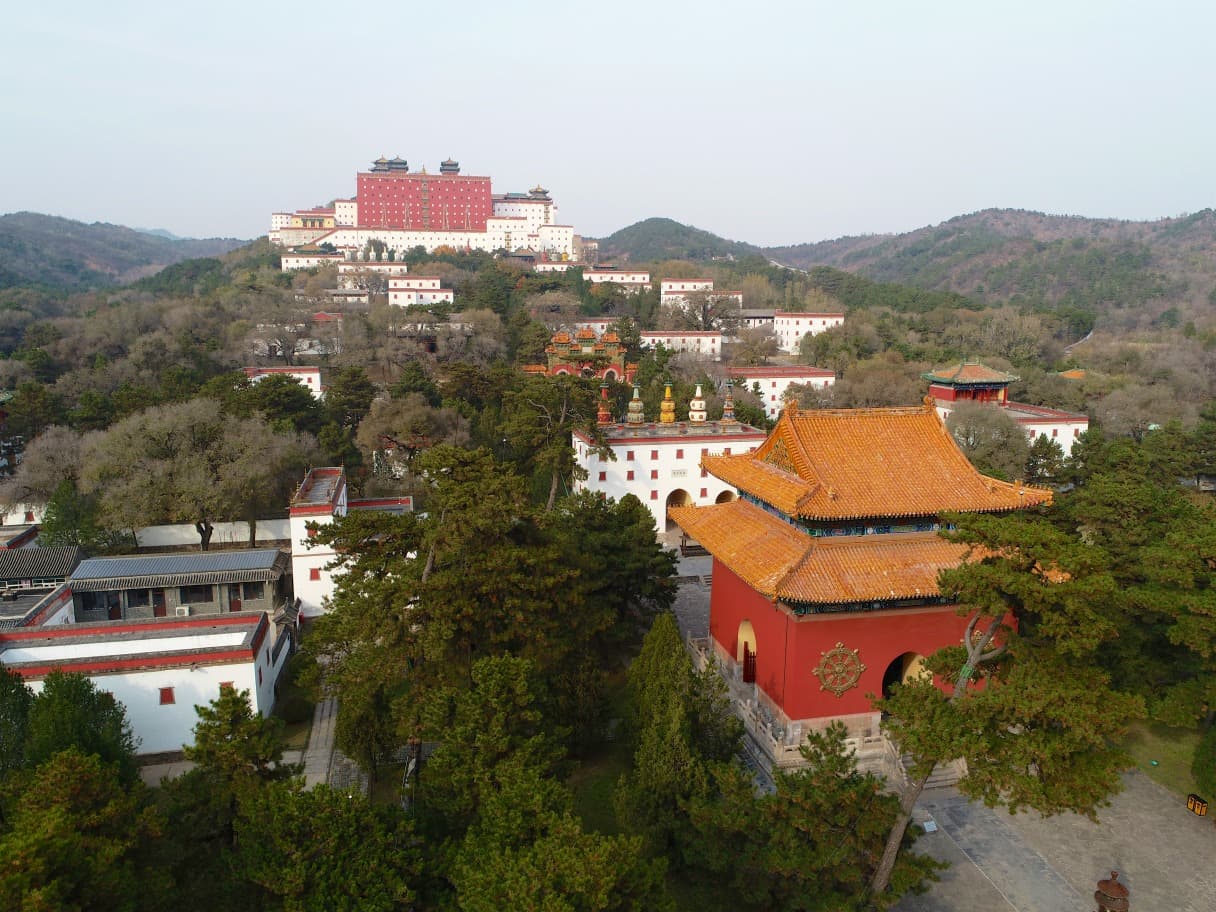
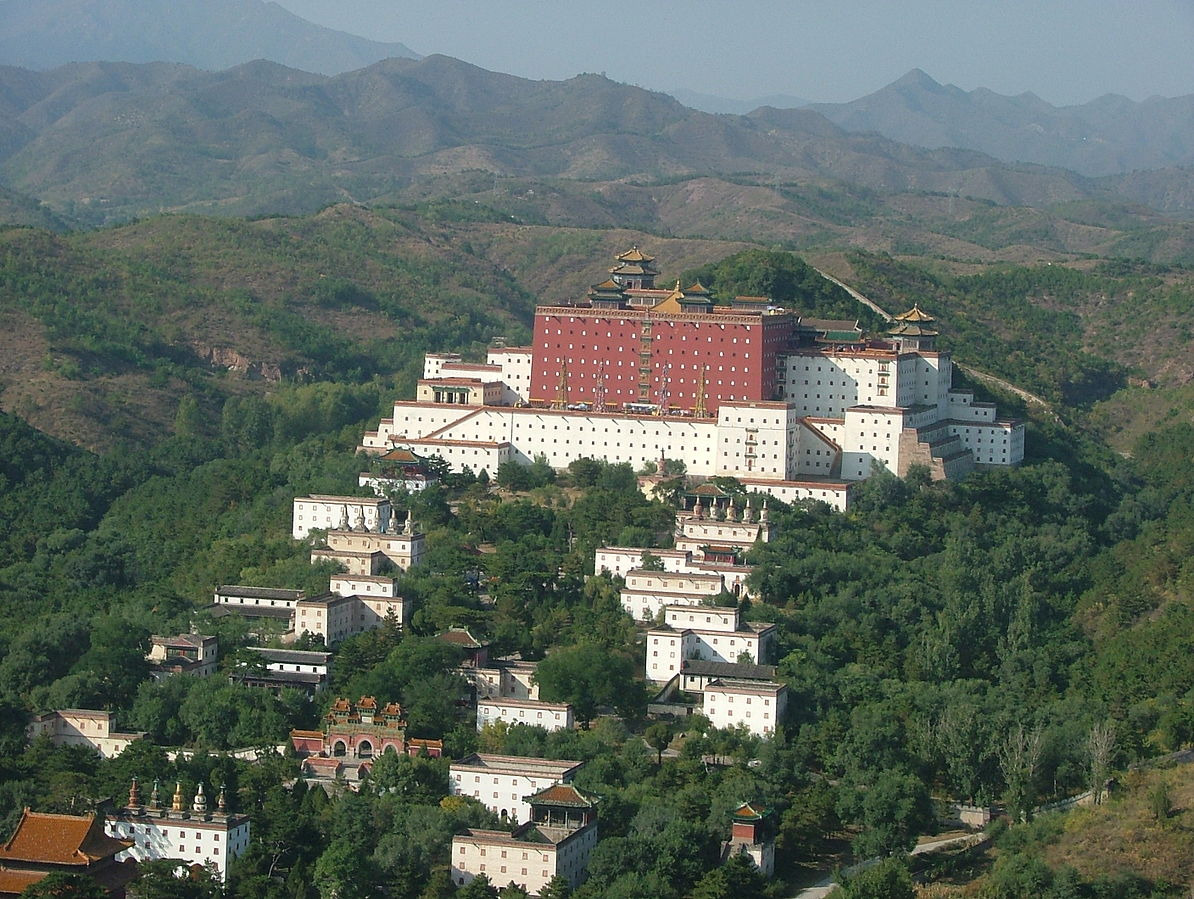
Putuo Zongcheng Temple rises to the north of Chengde, nestled against the hills that border the imperial summer retreat. Built between 1767 and 1771 under Emperor Qianlong, it loosely recreates the Potala Palace of Lhasa. With its white facades, golden roofs, and tiered terraces, it stands as the most expansive of Chengde's Eight Outer Temples — a UNESCO World Heritage complex.
Practical information at a glance
- Admission : paid entry (separate ticket from other outer temples)
- Recommended duration : 1.5 to 2 hours to explore the entire site
- Dress code : respectful attire recommended; covered shoulders and knees appreciated in worship halls
- Access : urban buses from central Chengde; the site lies several kilometers north of the imperial retreat
- Accessibility : upper terraces accessible only by steep stairs; lower courtyards are manageable
What to see
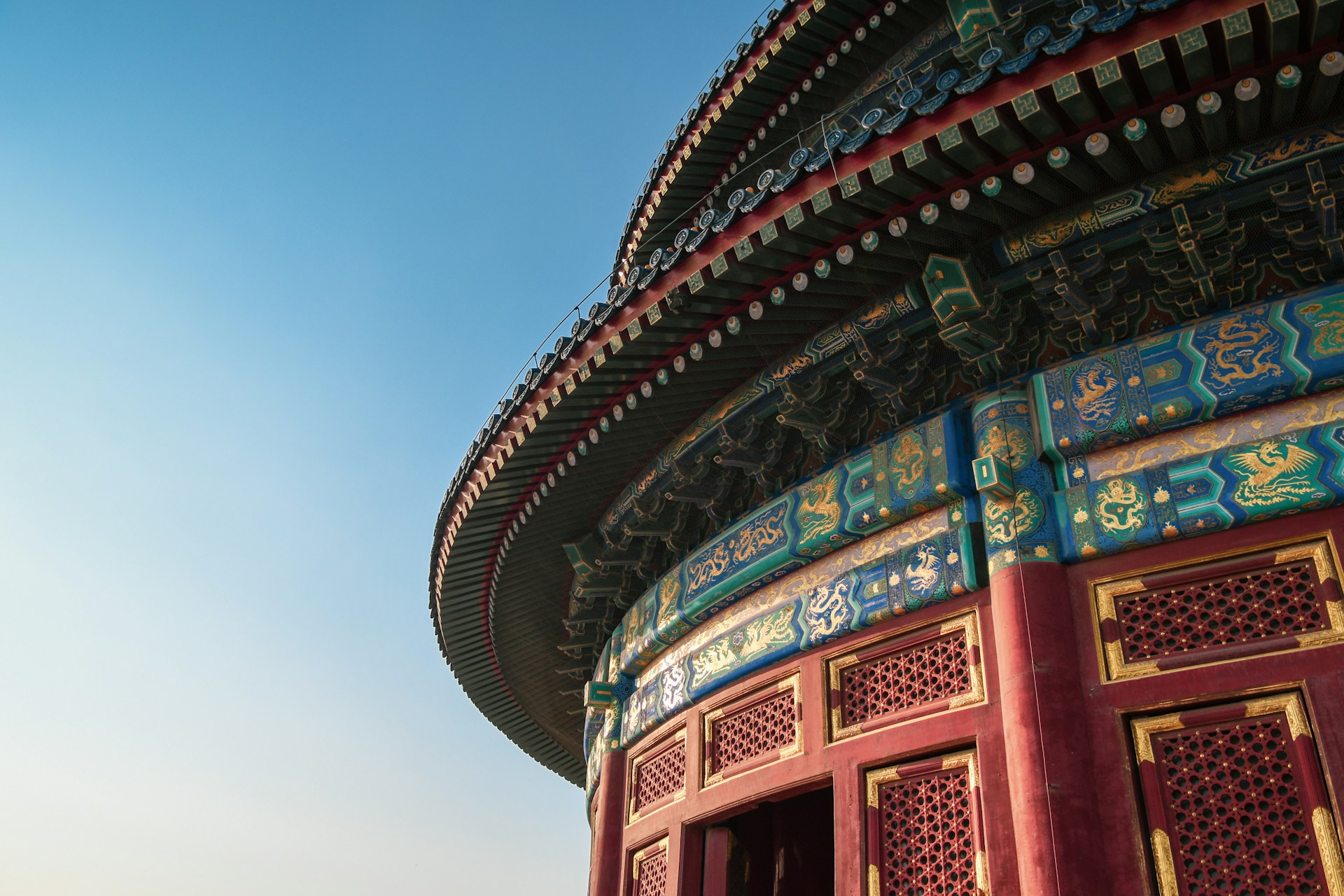
The temple unfolds across more than twenty hectares along a north-south axis. The lower section, in Han style, features gateways, pavilions, and commemorative steles. The upper section, with Tibetan influences, displays white masonry masses pierced by red-painted blind windows. At the summit, the main pavilion — the Great Red Hall — houses an eighteen-armed Guanyin statue, several meters tall, crafted in lacquered and gilded wood.
History and context
Qianlong commissioned this temple to host Mongol and Tibetan chieftains gathered to celebrate his sixtieth birthday in 1771. The hybrid architecture — the Potala Palace reimagined by Han artisans — was as much a political statement as an act of devotion: to assert imperial authority over the Buddhist peoples of the empire's periphery. The inscriptions on the entrance steles are rendered in four languages: Manchu, Chinese, Mongolian, and Tibetan.
Highlights of the visit
The Great Red Hall (Dacheng Lou)
This golden-roofed pavilion dominates the entire site. Inside, the eighteen-armed Guanyin statue ranks among China's largest wooden Buddhist sculptures. Light filtered through the high windows creates a contemplative atmosphere.
The white terraces
The white masonry walls, punctuated by niches and red-painted blind windows, directly evoke the Potala. From the intermediate terraces, the vista of surrounding hills and golden roofs is striking.
The imperial steles
Three pavilions at the temple entrance house steles inscribed by Qianlong himself. They recount the temple's construction and exemplify the Qing court's policy of "harmony among peoples."
The lower courtyards and pavilions
The temple's lower section, quieter and often less crowded, showcases classical Han architecture: double-eaved roofs, paved courtyards, stone guardian lions. A marked contrast to the Tibetan mass looming above.
Etiquette and visiting guidelines
- Remove your shoes before entering active worship halls.
- Photography is generally permitted in courtyards; check signage at the entrances to interior halls.
- Speak quietly in devotional spaces; monks may be conducting services.
- Do not touch statues or ritual objects.
Photography tips
Morning light (before 9 a.m.) is ideal: it strikes the white facades head-on and sets the golden roofs gleaming without backlighting. From the upper terraces, a wide-angle lens captures both the white masses and the forested hills. In autumn, the russet foliage of surrounding trees contrasts beautifully with the white walls — a particularly photogenic season.
Location and access
Putuo Zongcheng Temple stands north of Chengde, in close proximity to the Xumifushou Temple and several kilometers from the imperial summer retreat (Bishu Shanzhuang). Urban buses connect the city center to the site. A taxi or bicycle taxi remains the most convenient option for visiting multiple outer temples in a single day. The site is not wheelchair accessible beyond the lower courtyards.
Nearby attractions
- Xumifushou Temple — immediate neighbor, inspired by the Tashilhunpo Monastery in Tibet, dedicated to the Panchen Lama.
- Imperial summer retreat (Bishu Shanzhuang) — vast Qing imperial park and natural starting point for visiting the outer temples.
- Puning Temple — home to the world's largest standing wooden Guanyin statue, not to be missed.
- Club-shaped rock (Bangchui Shan) — iconic rock formation visible from several vantage points on the site.
Photos
Nearby
Interested in this visit?
We can include it in your personalised itinerary.
