Three Gorges Museum
Three Gorges Museum
Facing Chongqing's People's Assembly, the Three Gorges Museum traces 3,000 years of local history, from Ba Shu civilization to the landscapes of the Yangtze.
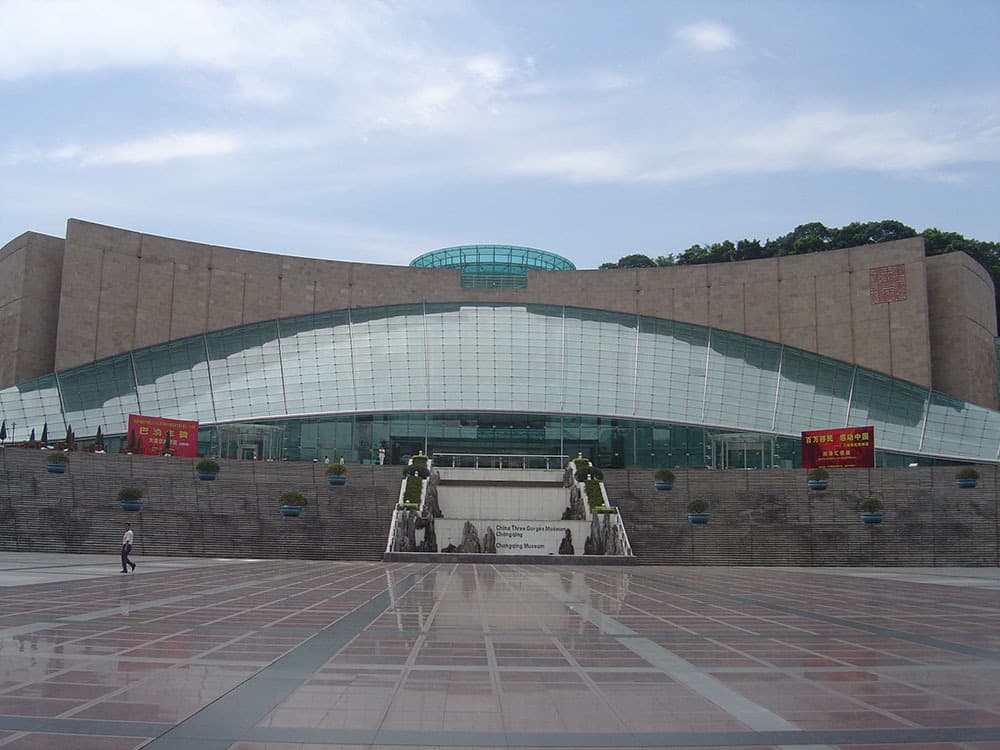
The Three Gorges Museum occupies a vast modern building in the heart of Chongqing, facing the city's People's Assembly. Inaugurated in late 2004 to replace the former municipal museum from 1951, it houses approximately 170,000 objects documenting the history of the megacity and the Three Gorges region, from Ba Shu civilization through World War II.
Why visit the Three Gorges Museum
This museum serves as the most comprehensive entry point to understanding the deep history of the Yangtze basin at Chongqing. It combines four complementary perspectives: the archaeology of Ba Shu civilization (over 3,000 years), the landscape heritage of the Three Gorges before dam construction, Chongqing's urban development, and the memory of Japanese bombing during the Sino-Japanese War.
Three elements distinguish it: the scope of collections inherited from the 1951 museum, a particularly representative Ba Shu collection, and a museographic approach that blends artifacts, archival footage, and immersive 360° projection. Admission is free, making it a logical stop during a day exploring Chongqing.
History and architecture
Museum construction was approved in October 2002 by China's State Council General Office as part of Chongqing's cultural modernization following its designation as a directly administered municipality. The institution inherited collections from the former Chongqing Museum, founded in 1951, and opened to the public at year's end in 2004.
The building unfolds across three floors. The entrance is marked by a glass dome, while the central roof adopts a funnel shape evoking the cutting of Yangtze gorges by water. This silhouette has become a visual landmark facing the People's Assembly building.
Notable donations include one from Tamara Weiss, a German journalist and granddaughter of Fritz Weiss, the last German consul in Chongqing. Her family gifted the museum artworks preserved since the Qing dynasty, along with a collection of folk songs, including 30 traditional chants of Yangtze river workers. Collector Li Chuli further enriched the collection with Han-era calligraphies, paintings, sculptures, and folk art objects.
What to see in the museum
The collections are organized into four permanent exhibitions, complemented by temporary displays.
Splendors of the Three Gorges
This section documents the Yangtze landscape before the dam's impoundment. Centerpiece: a 22-minute aerial film co-produced by CCTV and Central Newsreel, which captures the vanished panoramas and explains the dam's construction. It is one of the rare opportunities to see the gorges as they existed before 2003.
Ba Shu Civilization
Over 3,000 years of local history unfold through figurines and stone and bronze sculptures, as well as funerary portraits of Han Sichuan. The hall illuminates the ethnological importance of the Chongqing basin, long on the periphery of great imperial centers.
Chongqing's Urban Development
The exhibition traces Chongqing's transformation from river port to giant municipality status, through scale models, photographs, and everyday objects.
Anti-Japanese Days
Chongqing served as the wartime capital of the Republic of China between 1938 and 1945. The hall documents the Japanese bombing suffered by the city, with a 360° cinema that reconstructs these episodes. It is a demanding but essential step in understanding local memory.
Workshops and temporary exhibitions
Educational workshops are regularly offered in calligraphy, painting, clay pottery, and porcelain. The temporary galleries host thematic exhibitions and national and international cultural events.
Practical information
- Address: 236 People's Street (Renmin Lu), Chongqing, facing the Chongqing People's Assembly building.
- Admission: free entry. Audio guide and guided tours available for a modest fee (to be paid on-site).
- Hours: open Tuesday to Sunday during daytime; closed Mondays. Please verify exact hours before your visit.
- Capacity: daily access is capped to preserve collections; arrive early in the day for better access.
- Duration: allow 2 to 3 hours to explore the four permanent exhibitions.
How to get there
The museum is located in Chongqing's administrative center, in Yuzhong District. Numerous bus lines serve the Da Li Tang (大礼堂) stop, located in front of the museum. Metro and taxi from downtown are simple alternatives; provide the destination in Chinese characters to the driver.
What to see nearby
The museum fits naturally into a broader Chinese cultural itinerary:
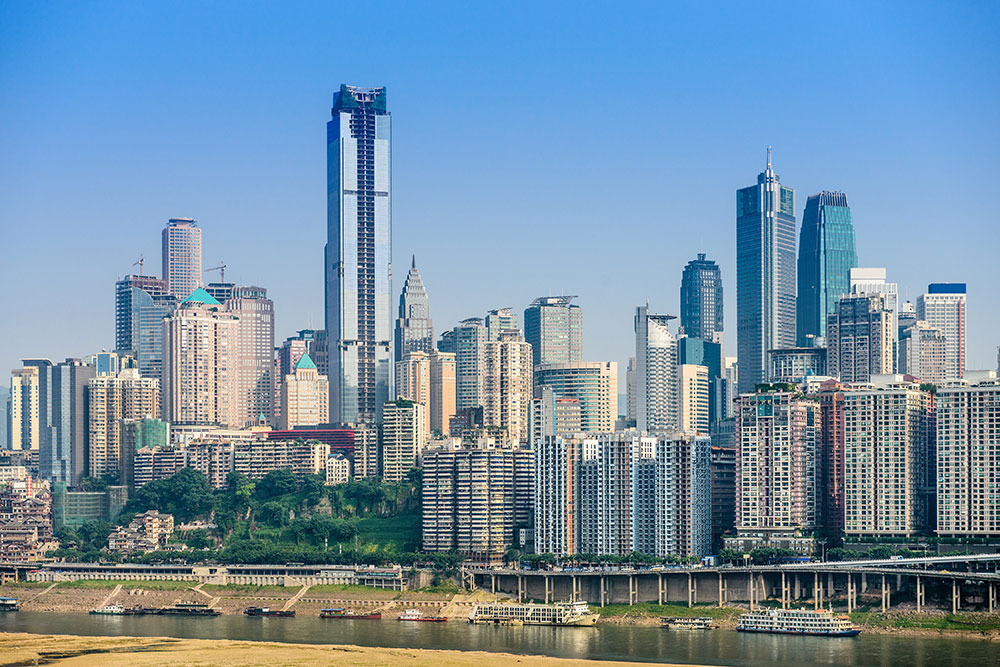
- Chongqing: the vertical megacity of the Yangtze, to explore after your visit.
- Giant Wild Goose Pagoda in Xi'an, another major historical stop.
- Bezeklik Thousand Buddha Grottoes to extend your archaeological exploration.
- Longgong Grotto, a remarkable natural site in China's southwest.
Include the museum in your trip
The Three Gorges Museum naturally fits into an itinerary combining Chongqing, a Yangtze River cruise, and historical sites in Sichuan. To design a tailor-made itinerary, explore our China travel experiences.
Interested in this visit?
We can include it in your personalised itinerary.