Yuelu Mountain
Yuelu Mountain
On the western bank of the Xiangjiang River facing Changsha, Yuelu Mountain brings together an academy founded in 976, a Buddhist temple and the Aiwan Pavilion.
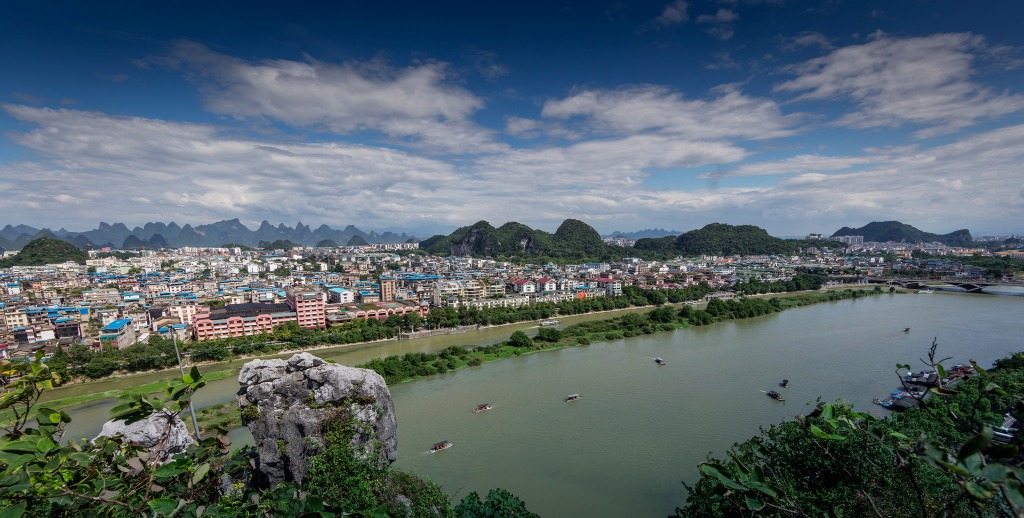
Yuelu Mountain dominates the western bank of the Xiangjiang River, facing the city of Changsha, capital of Hunan. Counted among the 76 peaks of the Southern Heng Mountains, it rises to approximately 300 metres and concentrates, on its wooded slopes, nearly a millennium of Chinese cultural, religious and political history.
Why visit Yuelu Mountain
Yuelu Mountain is not a mere panoramic hill: it is a site where a thousand-year-old academy, a Buddhist temple founded under the Jin dynasty, imperial pavilions and the tombs of Chinese revolutionary figures coexist. The presence of Buddhism, Taoism and Confucianism on the same slope makes it a rare case of religious syncretism still visible today in the architecture of the buildings.
The site thus combines three main interests:
- a forest walk accessible from central Changsha;
- a route through historic buildings spanning the 10th to 19th centuries;
- a memorial landmark for understanding the transition between imperial China and modern China.
History of the site
Yuelu Mountain's identity owes less to its topography than to the institutions established there over successive dynasties.
Yuelu Academy, a thousand years of learning
The Yuelu superior school was erected in 976 at the eastern foot of the mountain, during the Song dynasty (960-1279). It quickly became one of China's major Confucian academies. In 1926, the institution was renamed the University of Hunan, which still occupies part of the site. Its history reflects nearly a thousand years of evolution in Chinese higher education in one location.
Lushan Temple and Buddhist influence
Halfway up the slope, Lushan Temple was built during the Jin dynasty (265-420). It is considered one of the oldest Buddhist temples in Hunan and symbolises the lasting establishment of Buddhism in the province.
Aiwan Pavilion
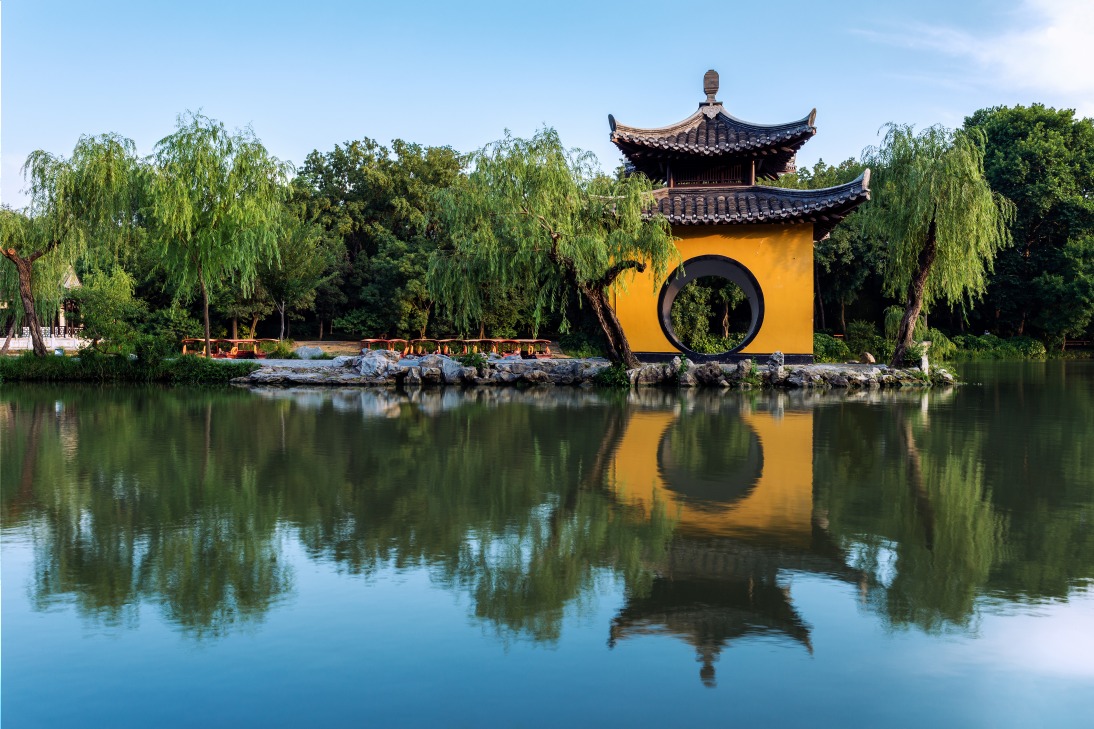
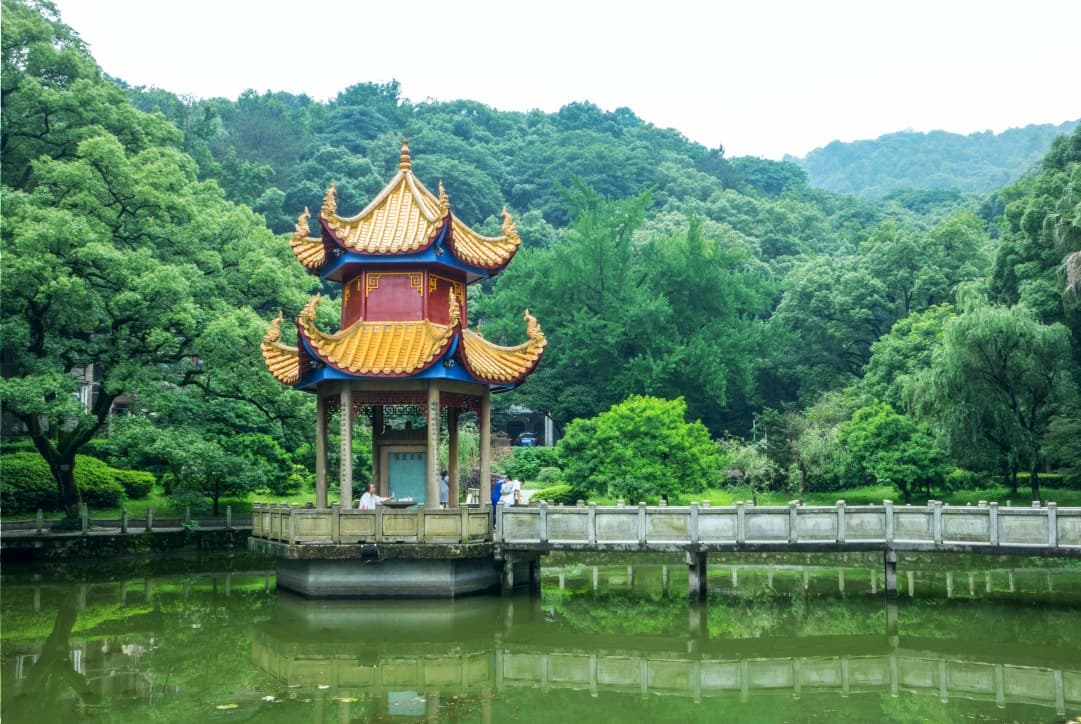
Built during the Qing dynasty (1644-1911), the Aiwan Pavilion was originally named the Hongye Pavilion ("pavilion of red leaves"), a reference to the maples that turn red in autumn. It was subsequently renamed and restored several times following various deteriorations. According to local tradition, young Mao Zedong, a student in Changsha, is said to have held meetings with his political colleagues there.
Revolutionary memory
Several nationalist figures from the end of the Empire and the beginning of the Chinese Republic were buried on the mountain, including Huang Xing, Cai E and Jiang Yiwu. Their tombs dot the visiting route.
What to see on Yuelu Mountain
The site is explored on foot, following the marked paths that connect the main buildings:
- Yuelu Academy: traditional buildings, inner courtyards, Confucian stelae and historical library.
- Lushan Temple: Buddhist complex with prayer halls and ancient statuary.
- Aiwan Pavilion: wooden pavilion surrounded by maples, a classic stopping point for walkers.
- Sarira Tower and Yunlu Palace: buildings linked to Buddhist and Taoist practice on the mountain.
- Tombs of nationalist figures: graves of Huang Xing, Cai E and Jiang Yiwu.
- Scenic areas: Tianma, Taohualing, Shijialing and, downslope towards the river, Juzizhoutou Island, renowned for its views over Changsha.
When to visit Yuelu Mountain
The mountain can be visited year-round, though each season offers a different setting:
- Spring (March-May): flowering, mild temperatures, moderate crowds on weekdays.
- Summer (June-August): lush vegetation and relative coolness under the trees, but hot and humid climate in Changsha.
- Autumn (October-November): the most emblematic period, when the maples around Aiwan Pavilion turn red.
- Winter: quieter visits, clear light, cool temperatures.
If possible, avoid weekends and Chinese national holidays, when the site is heavily frequented by local visitors.
Practical information
- Duration of visit: allow 2 to 4 hours to explore the main buildings; half a day if you include the academy and a climb to the summit.
- Admission: park access is generally free; certain interior buildings (academy, museums) charge a modest entrance fee.
- Level: family-friendly walk, gradually sloping paths, stairs in places.
- What to bring: comfortable shoes, water, clothes suited to the season.
How to get there
Yuelu Mountain is located on the western bank of the Xiangjiang River, opposite the historic centre of Changsha. Several options allow access:
- Metro: Changsha's line 4 serves the University of Hunan area, immediately adjacent to the eastern entrance.
- City buses: several routes (notably 132, 202, 305, subject to network updates) reach the northern and southern entrances to the park.
- Taxi or ride-hailing: journey of approximately 20 to 30 minutes from central Changsha.
Nearby
A visit to Yuelu Mountain combines easily with other sites in the region:
- the city of Changsha and its riverfront, in particular Juzizhoutou Island;
- the University of Hunan, which naturally extends the Yuelu Academy route;
- the provincial museums of Hunan, accessible on the eastern side of the river.
To extend your itinerary, other major sites in Chine, such as the Wild Goose Pagoda in Xi'an or the Great Wall at Juyongguan, complement a journey focused on imperial and religious history.
Frequently asked questions
Frequently asked questions
Park access is generally free. Some buildings such as Yuelu Academy or museum spaces may charge a modest entrance fee.
Allow 2 to 4 hours for the main buildings, and half a day if you wish to climb to the summit and explore the academy in detail.
Autumn, in October and November, is particularly renowned for the maple foliage around Aiwan Pavilion. Spring also offers a pleasant setting.
The metro line serving the University of Hunan is the simplest option. Several city buses also reach the park entrances, and a taxi takes approximately twenty minutes from the centre.
Yes. The paths are well-maintained and the slope remains gradual. Stairs do punctuate certain sections however.
Plan your trip
Yuelu Mountain integrates naturally into a circuit dedicated to Hunan or into a broader journey through the major cultural stages of Chine. To build a tailor-made itinerary, consult our Chine travel suggestions.
Interested in this visit?
We can include it in your personalised itinerary.