Chinese Currency
Name: Yuan or Renminbi Chinese name: 人民币 ISO standard abbreviation: CNY or RMB Symbol: ¥
With the exception of Taiwan, Hong Kong, and Macao, which each have their own currency, Chine uses the Yuan or Renminbi as its national currency. The Chinese currency is issued by the People's Bank of Chine. It is called Yuan for the unit of account and Renminbi, which literally means "the people's money," for the actual currency. That said, it's worth knowing that in Chine, the word Kuai (pronounced "Kwai") is very commonly used, so don't be surprised if you hear it.
Since 1989, the Yuan has followed the international ISO 4217 standard.
The Face of Chinese Currency
The Yuan comes in two forms: coins and banknotes.
Coins generally represent smaller units such as the "jiao" and "fen." One Yuan coin is divided into 10 Jiao or 100 Fen. In Chine, coins in circulation include 1 RMB, 5 RMB, and 1 jiao, 5, and 1 fen pieces, which are distinctive for the hole in their center.
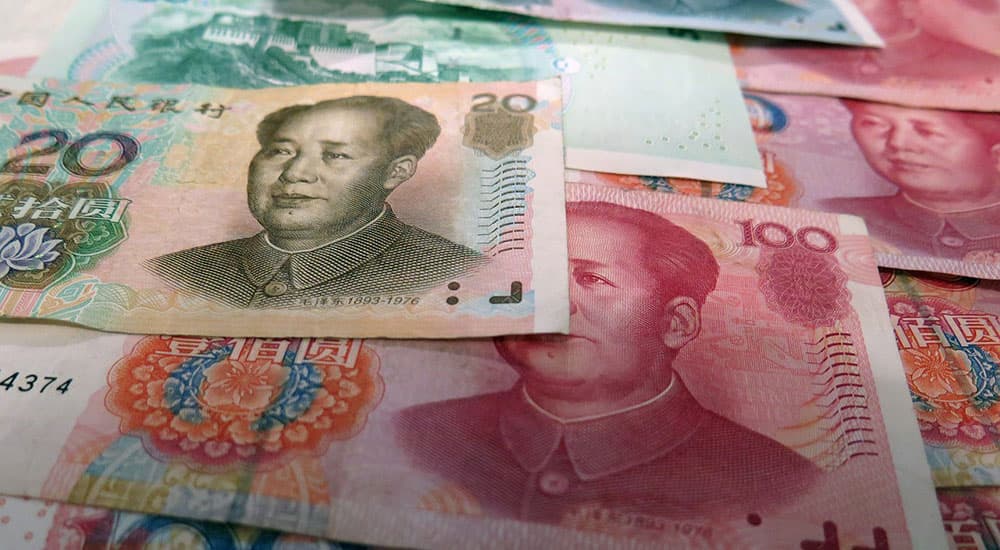
Chinese banknotes are mostly denominated and named in Chinese characters. They come in denominations of 100, 50, 20, 10, 5, 2, and 1 RMB. You can also find banknotes in 5, 2, and 1 Jiao, which are generally smaller than RMB notes.
According to their value and size, each Yuan—whether coin or banknote—bears the portrait of Mao Zedong or other notable Chinese figures, as well as historically and culturally significant locations throughout Chine.
For Banknotes
- The 1 Jiao note features the portrait of a Taiwanese aboriginal and a Manchurian.
- The 2 Jiao note displays the face of a Korean woman and a Buyei woman.
- The 5 Jiao note shows a Hmong person and a Zhuang person.
- The 1 RMB note comes in two versions: the most common is the green note with Mao Zedong's portrait on the obverse and the West Lake on the reverse. The other is purple, featuring portraits of Dong and Yao on the obverse and the Great Wall on the reverse.
- The 2 RMB note is rarely seen. It presents two female faces on the obverse—one Uyghur and one from the Yi ethnic group.
- The 5 RMB note features Mao Zedong's portrait and the Tian Shan mountains.
- The 10 RMB note, identical in size to the 5 RMB, displays the Three Gorges and, once again, Mao Zedong.
- The 20 RMB note showcases the stunning landscapes of Yangshuo.
- The 50 RMB note reveals the famous Tibetan Potala Palace.
- The 100 RMB note, the highest denomination, displays Mao Zedong's portrait—like all other notes—alongside the Great Hall of the People.
Exchange Rates
1 CNY or RMB = 0.14 EUR
1 CNY or RMB = 0.15 USD
1 CNY or RMB = 0.12 GBP
1 EUR = 7 CNY
These figures are rounded and approximate. Consult a currency converter for exact rates.
The Bank of Chine is the most well-known and widely established bank across Chine. Open daily, including Sundays, from 9 a.m. to 5 p.m., its branches are present in all major cities. You can exchange euros or dollars for Renminbi with an average commission of 0.75%.
With ATMs, it's very simple to withdraw cash using an international payment card such as Visa or MasterCard. Do check that Visa and MasterCard logos are clearly displayed on the machine. ATMs naturally offer transaction options in English and even French at certain banks.
Currency exchange offices are rare in Chine but offer commissions lower than what banks typically charge. You'll generally find this option at certain airports. Of course, many 4- or 5-star hotels often provide a currency exchange service like this within their establishments for their guests.
For security and payment convenience, it's advisable to exchange your foreign currency for small-denomination Yuan notes. This way, without worrying about finding change, you can easily pay for transportation, tourist site admission fees, and various purchases.
It's wise to keep receipts from currency exchanges or bank withdrawals. This will make it easier when you leave to exchange any remaining Chinese banknotes.
Payment
The cost of living in Chine depends on the Yuan exchange rate and follows the country's development slowly, even in major cities like Beijing or Shanghai. However, it remains lower than in France.
Payment by card is an option available to foreigners only in luxury hotels, restaurants, and boutiques. We therefore advise you to withdraw cash once you arrive.
Certain remote regions or small villages may not have ATMs. Plan ahead and bring cash for such destinations.
Be sure never to exchange money outside authorized exchange offices or licensed institutions. While counterfeiting does exist in Chine, the trend is diminishing.