Jilin, at the Gates of Korea
A province in northeast China, Jilin has experienced a turbulent history marked by the dominance of Korean and Chinese dynasties, followed by Japanese occupation during World War II
A province in northeast China, Jilin has experienced a turbulent history marked by the dominance of Korean and Chinese dynasties, followed by Japanese occupation during World War II. Today, it is a primarily industrial province with an extensive border with North Korea.
Jilin, 吉林, Jílín, abbreviation: 吉 Jí
Capital: Changchun (known as the "Eternal Spring")
Total area: 187,400 km²
Population: 28 million inhabitants
Did you know?
There is also a city called Jilin 吉林 about a hundred kilometers east of the provincial capital, Changchun.
In antiquity, Jilin was called the "Land of Sushen" and today the "Forest of Happiness".
The provinces of Jilin, Heilongjiang and Liaoning are part of the historic Manchuria in northeast China.
Overview
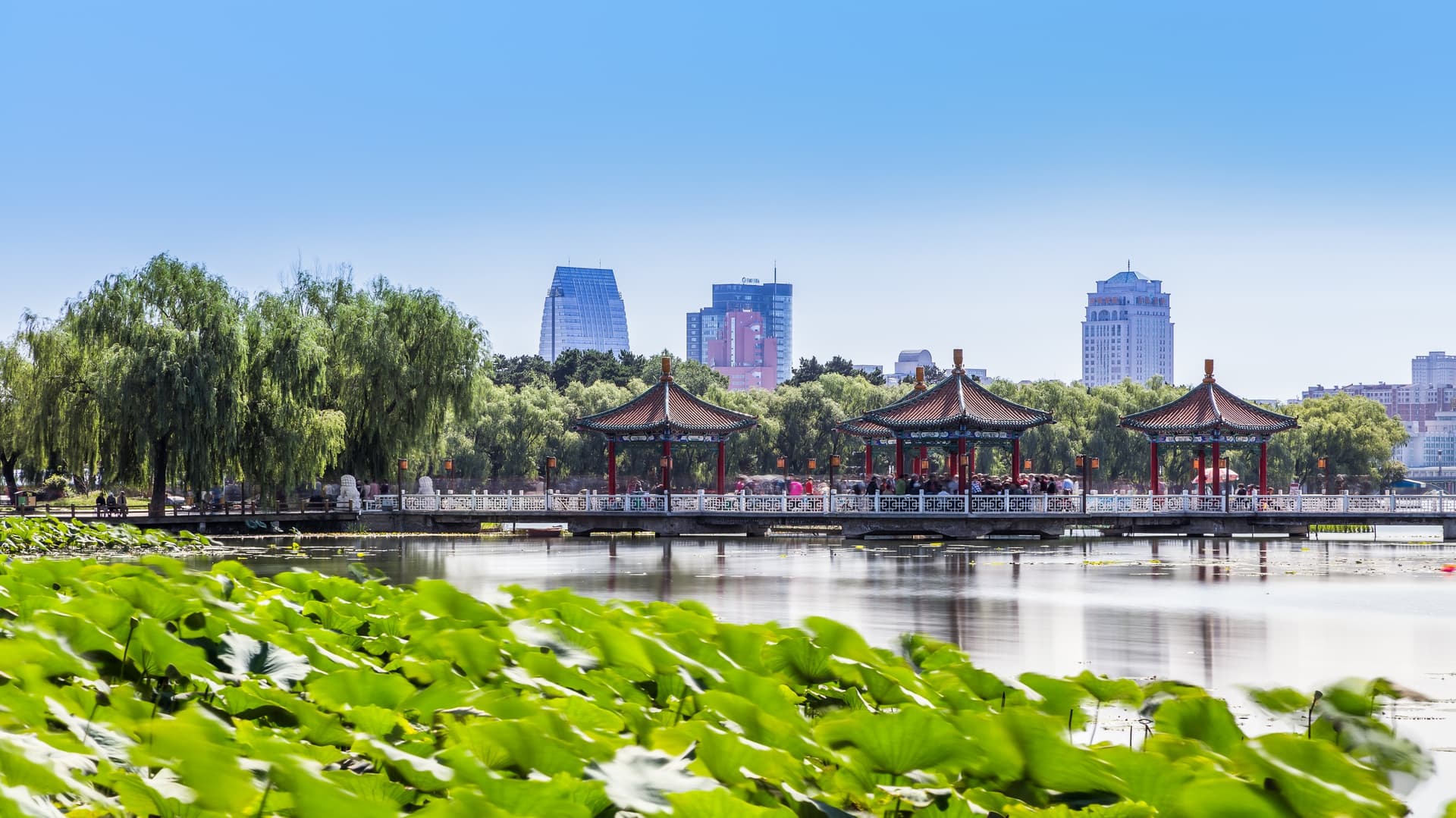
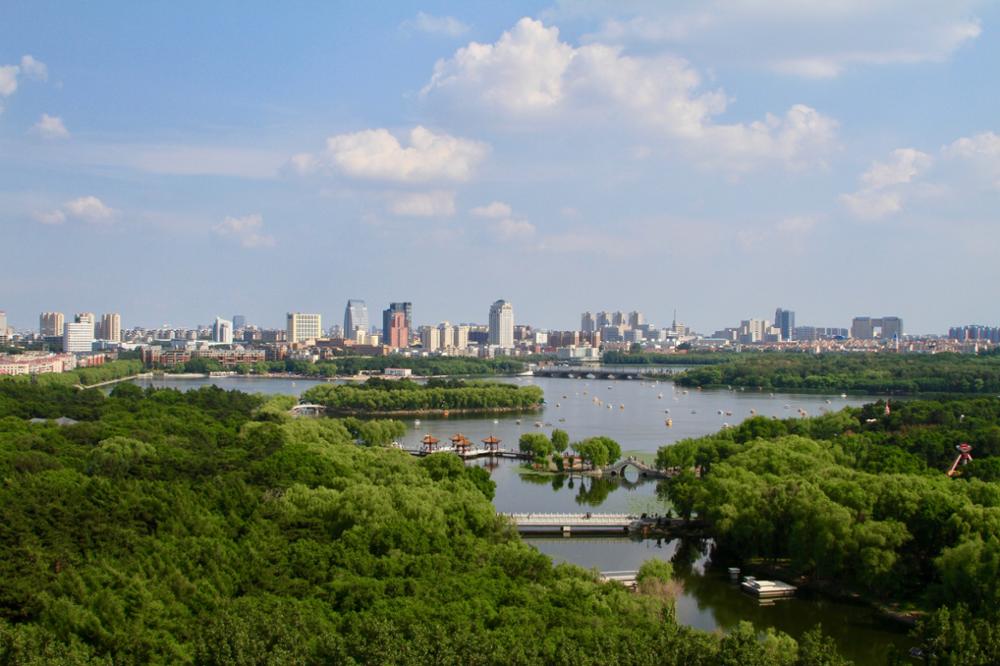
In northeast China, bordered to the east by Russia and primarily North Korea, Jilin features high mountain ranges (the highest peak, Baiyun, stands at 2,691 meters), a fertile plain that is part of the Manchurian Plain, and a massif of low hills.
The province administers the sub-provincial city of Changchun (长春市, Chángchūn Shì), seven prefecture-level cities: Baicheng (白城市, Báichéng Shì), Baishan (白山市, Báishān Shì), Jilin (吉林市, Jílín Shì), Liaoyuan (辽源市, Liáoyuán Shì), Siping (四平市, Sìpíng Shì), Songyuan (松原市, Sōngyuán Shì) and Tonghua (通化市, Tōnghuà Shì), as well as the autonomous prefecture of Yanbian (延边朝鲜族自治州, Yánbiān Cháoxianzú Zìzhìzhōu).
The latter is home to the largest Korean community in China and its border position with Russia and North Korea gives it considerable geopolitical significance.
A Korean Region That Became Chinese
Before becoming part of the Kingdom of Goguryeo (37 BC to 668 AD), one of the "Three Kingdoms" that dominated Korea in the first millennium alongside Baekje (18 BC to 660 AD) and Silla (57 BC to 935 AD), Jilin province was inhabited by several ethnic groups such as the Mohe (an ancient people of Manchuria) and the Waha (勿吉).
Later, the multi-ethnic kingdom of Balhae (698–926), which occupied southern Manchuria, the southern part of what is now Russia's Primorsky Krai and northern present-day North Korea, governed the province until the Liao dynasty (907–1125), founded by the nomadic Khitan people, reclaimed the territory in 926.
Jilin would then pass under the authority of different dynasties through successive conquests. The Jin dynasty (1115–1234) displaced the Khitan empire of the Liao dynasty to control northern China. But history repeated itself with the Mongol Yuan dynasty (1271–1368), which held imperial power between 1271 and 1368.
In turn, the Ming dynasty (1368–1644) governed the country following the Chinese population's rejection of foreign rule. Under the Qing dynasty (1644–1912), authorities strengthened security to counter Russian intrusions in the region. With this goal in mind, a naval division and shipyard were constructed to establish a presence on the Sea of Japan.
The Impact of Japanese Invasion
After the cession of present-day Primorsky Krai to Russia, Qing authorities opened the province to Han immigration. In the early twentieth century, the Han became the dominant ethnic group ahead of Manchurians, Mongols, and Koreans.
During the Japanese occupation between 1931 and 1945, the region was an integral part of the puppet state of Manchukuo. Pu Yi (1906–1967), the last emperor of the Qing dynasty, was chosen as a figurehead sovereign under Japanese control. Japanese occupiers established the capital of this new state at Xinjin, present-day Changchun. On August 15, 1945, with Japan's surrender, Puyi abdicated and the phantom empire vanished.
Following Japan's defeat, Jilin and northern China were handed over to the Communists by the Soviet Union. Manchuria then became the original base for the Communist conquest of the country.
The province's current borders were delimited in the 1950s.
Today, Jilin is a "poor" province to such an extent that Beijing has launched a campaign titled "Revitalizing the North" to boost the province's economy and that of the entire region.
Culture and TraditionHistoryTourism
Frequently asked questions
Jilin is a province in northeast China, historically linked to Manchuria. It is bordered to the east by Russia and North Korea, and shares a long geopolitical border with both countries. Its capital is Changchun, nicknamed the "Eternal Spring".
The capital of Jilin province is Changchun (长春), whose name means "Eternal Spring". During the Japanese occupation (1931–1945), the city was called Xinjin and served as the capital of the puppet state of Manchukuo.
Before being integrated into China, Jilin province was part of the Korean Kingdom of Goguryeo (37 BC to 668 AD), one of the Three Kingdoms of Korea. Today, the autonomous prefecture of Yanbian is home to the largest Korean community in China, a testament to these profound historical ties.
Manchukuo was a puppet state created by Japan in 1931 during the occupation of Manchuria. Its capital was established at Xinjin, present-day Changchun, the capital of Jilin. The last Qing emperor, Pu Yi, was its figurehead sovereign until Japan's surrender on August 15, 1945.
Jilin offers different experiences depending on the season. Winter (December–February) is ideal for witnessing the famous frost phenomenon on trees in Jilin city. Summer (June–August) allows you to enjoy the lush mountain landscapes. Spring and autumn offer milder temperatures for exploring the province.
Jilin province holds several remarkable sites: Tianchi Lake at the summit of Changbaishan volcano, the frost forest of Jilin city in winter, the Korean autonomous prefecture of Yanbian with its unique culture, the museums of Changchun tracing the Manchukuo era, and the fertile Manchurian plains.