Macao
Our stay in Hong Kong was anything but restful, and it's in that same spirit that we arrive in Macao after a 1-hour maritime journey.
Our stay in Hong Kong was anything but restful, and it's in that same spirit that we arrive in Macao after a 1-hour maritime journey.
Portugal in China
Macao is, like Hong Kong, a special administrative region independent from China, particularly on an economic level. It was occupied by Portugal for over 400 years and was only reunited with the People's Republic of China in 1999. We'll see later that this Portuguese influence is found not only in the gastronomy but also in the architecture, which blends baroque and modernity.
Macao, at last
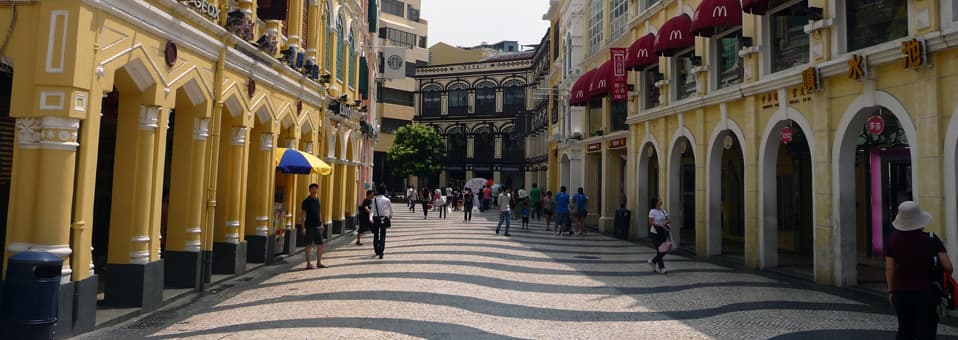
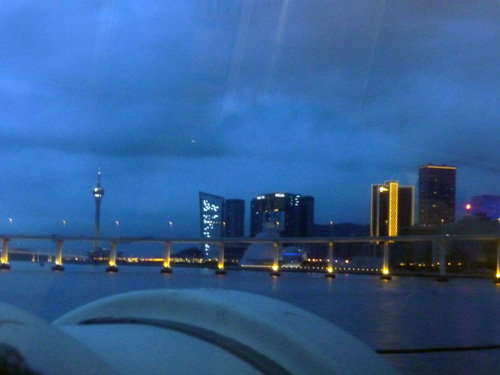
The sun had already set when we arrived. We made our way to the center by bus from the port, and immediately discovered the peninsula's most famous square: Largo do Senado. It was still bustling despite the late hour, and is near several major sites, such as the Saint-Dominique Church.
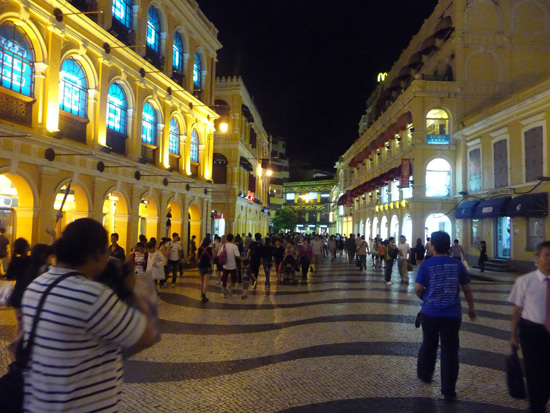
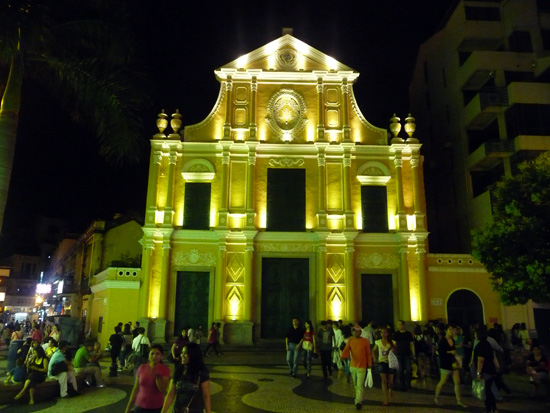
A heavy downpour dampened our motivation to continue exploring, and we set out in search of an affordable hotel. We eventually found what we were looking for at the Macau Masters Hotel after more than an hour of searching, but the price was steep: 600 MOP (Macau Patacas), roughly 55€ for a double room. It hurt our budget, but with the rain continuing to fall outside, we gave up. At that price, the room was generously sized, but we would only stay one night!
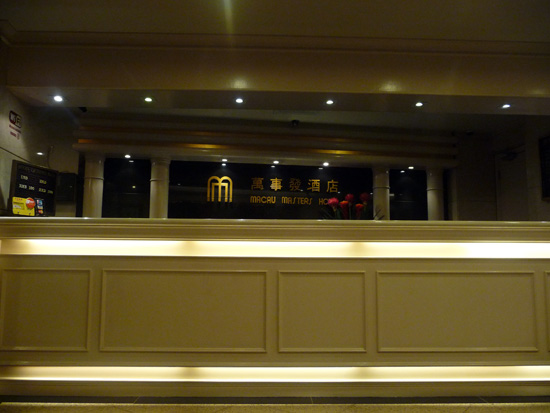
Macau Masters Hotel
It's worth noting that you can pay in Hong Kong dollars in Macao, but don't be surprised if shopkeepers give you change in patacas. The next day promised to be packed with sights to explore. Starting with the famous Street of Joy: Rua da Felicidade, which was once the red-light district in Macao. Today nearly deserted, traces of its past still remain, such as the shuttered red terraces.
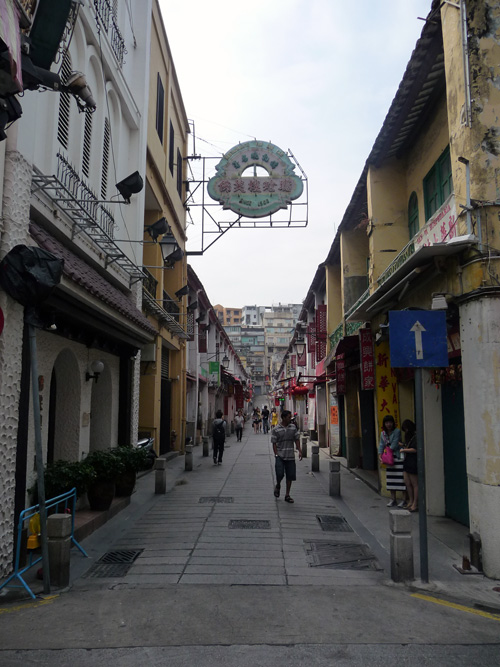

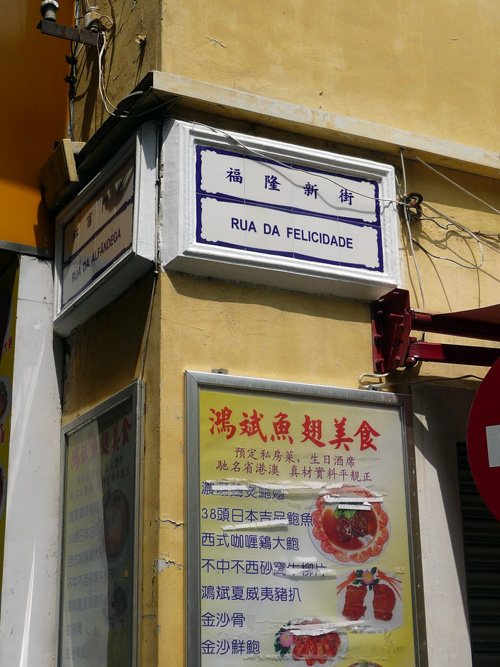
You can see that street names are written in both Chinese and Portuguese, a symbol of a strong colonial heritage.
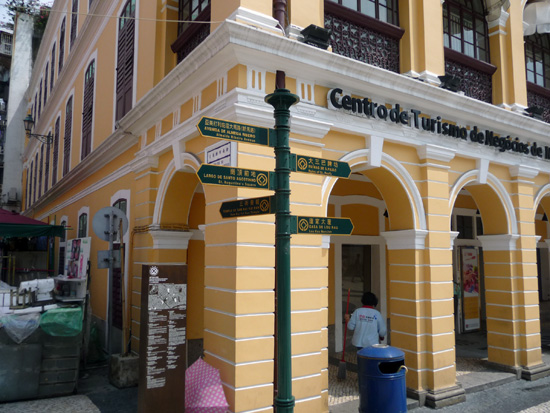
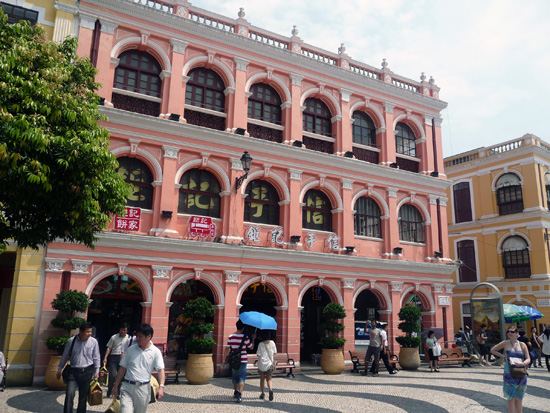
Back to Largo do Senado, equally pleasant in daylight.
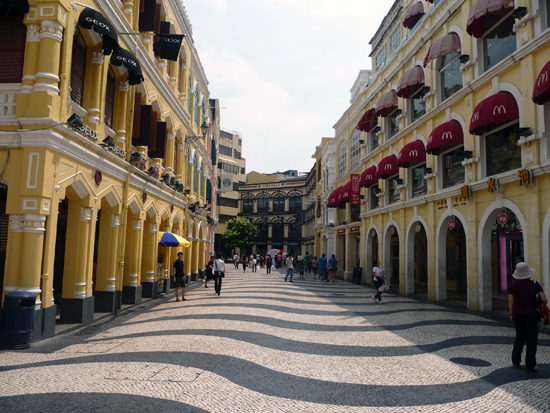
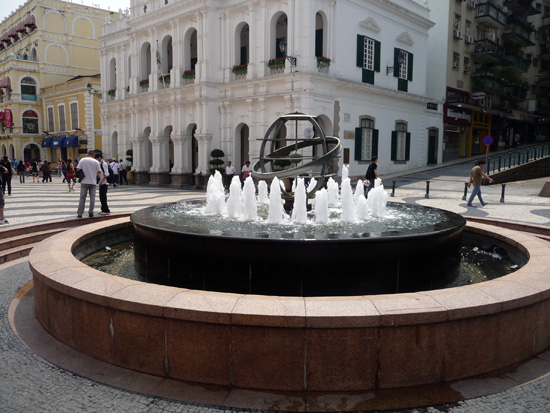
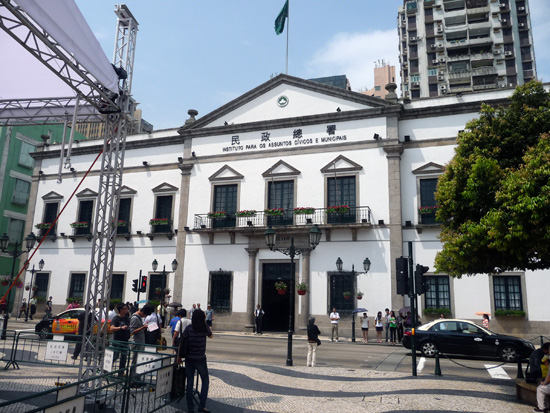
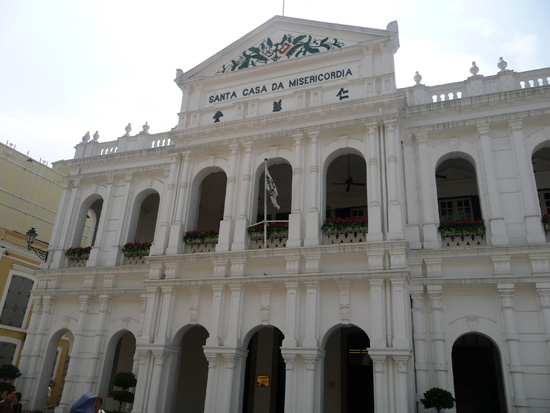
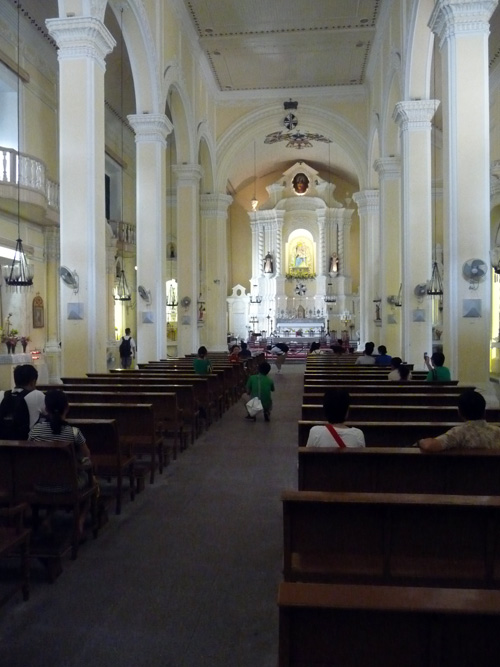
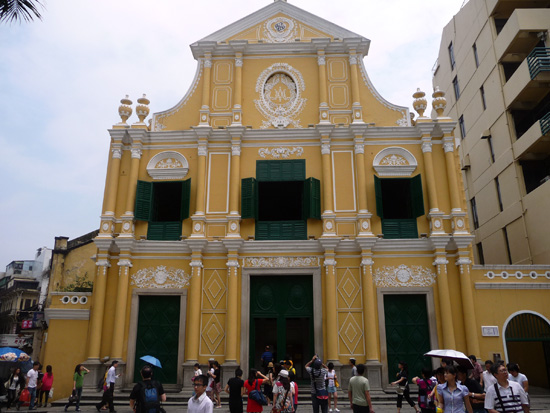
Nearby you'll find the Leal Senado, which houses the city hall, the Santa Casa da Misericórdia, and also the Saint-Dominique Church we had glimpsed the day before. Time to visit it...
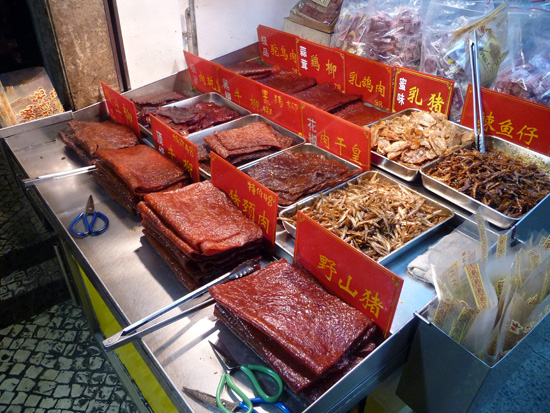
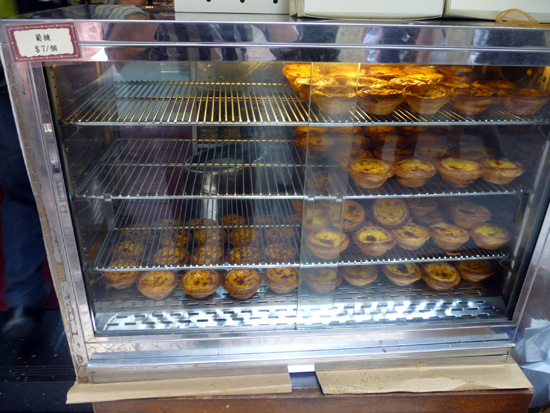
Wandering through the alleyways allows us to appreciate the many specialties of Macao, among which you'll find displays of dried meat (Bakkwa in Chinese), egg tarts (pasteis de nata), and many other pastries with European influence...
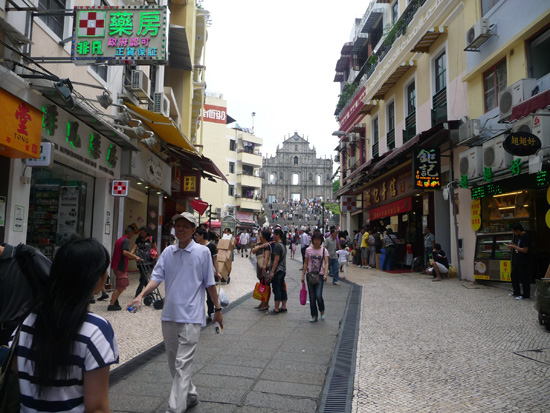
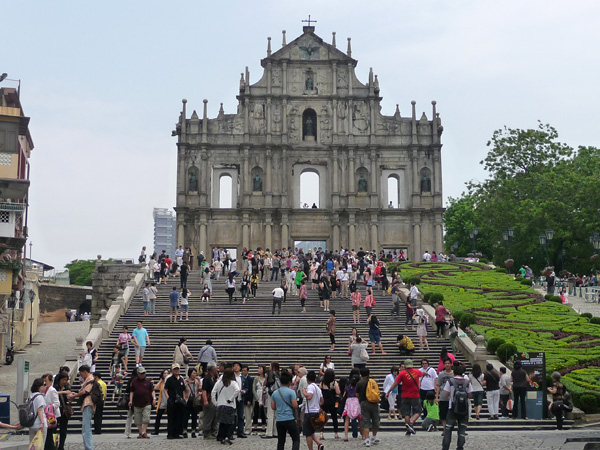
We arrive at the foot of the Ruins of Saint-Paul Church (Ruínas de São Paulo), built at the end of the 16th century and ravaged by fire in 1835. All that remains today is the façade and an imposing staircase where tourists gather.
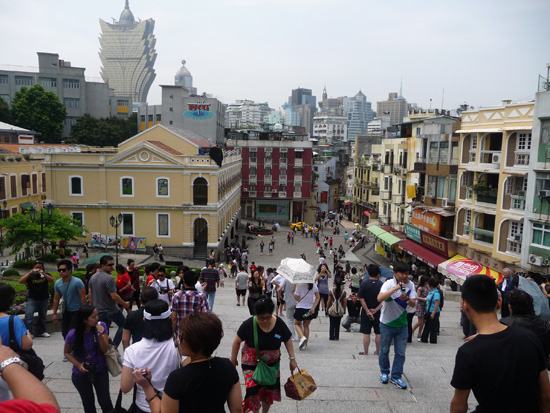
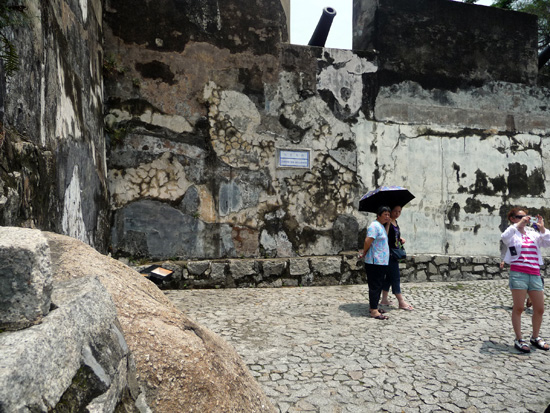
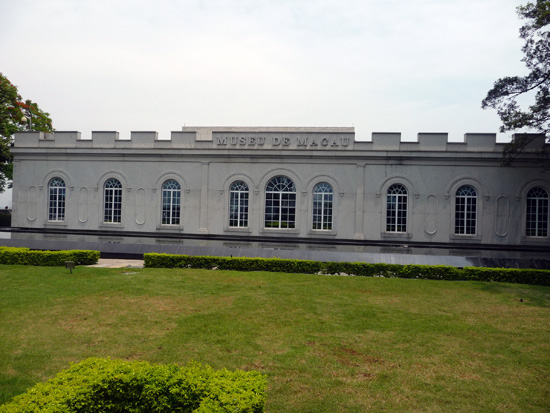
In the distance, we can make out Monte Fort (the Fortaleza do Monte), which will be our next stop... This represents the historic military heart and offers a breathtaking panoramic view over the city of Macao. The fort also houses the famous Macao Museum, reputed to be one of Asia's finest, but unfortunately closed on this Monday...
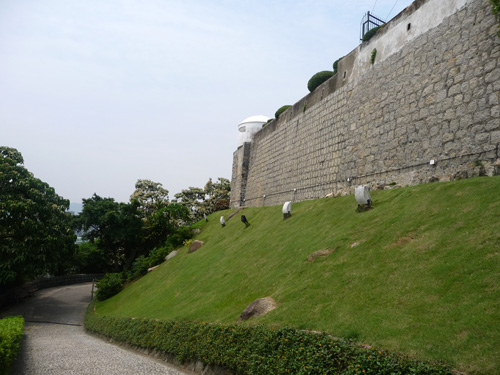
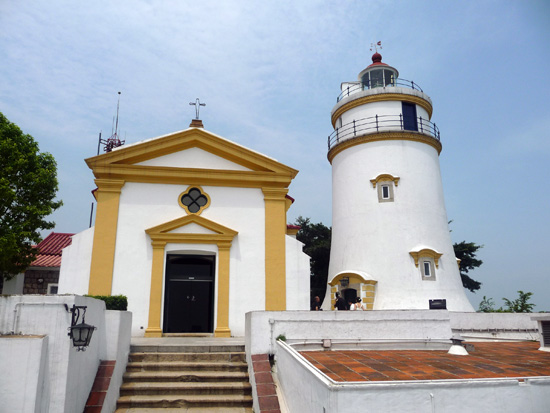
The rest of the afternoon will lead us to another historic complex located north of Macao: Guia Fortress, built on Guia hill and accessible after a long climb. We'll be delighted to encounter young newlyweds at the lighthouse and Guia chapel, taking advantage of the location's authenticity to capture the moment.

The Vegas of the Orient
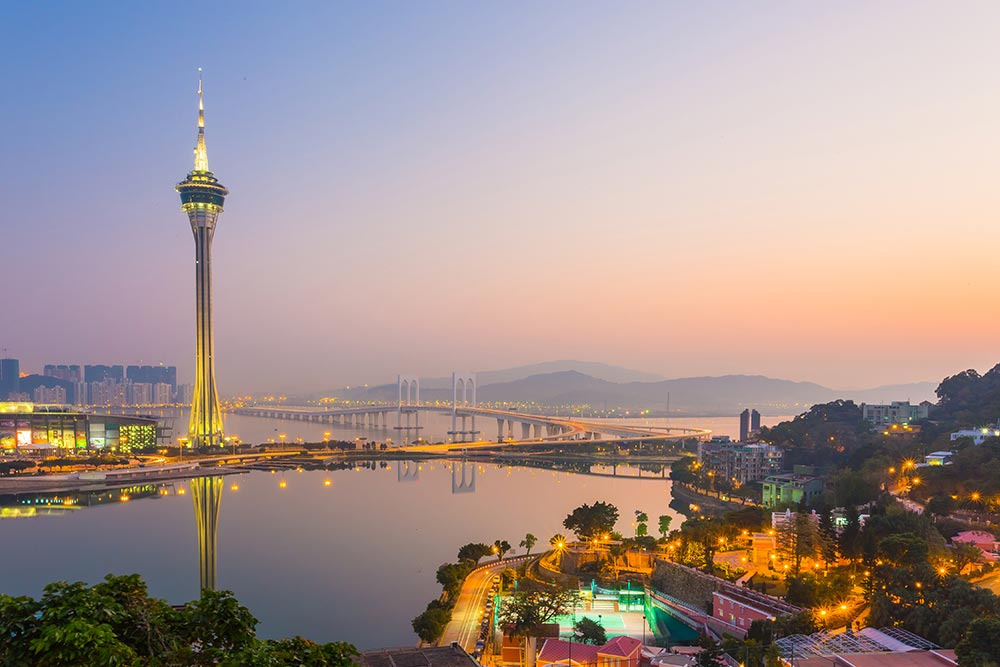
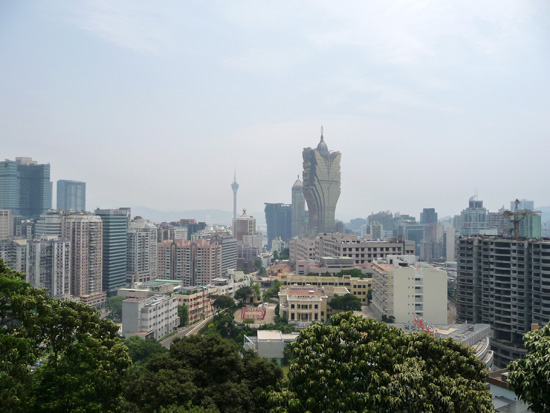
The charm and apparent tranquility of Macao cannot hide a genuine frenzy around gambling. The city is indeed renowned for its numerous casinos, and the gaming industry accounts for nearly 40% of local GDP! Players flock from around the world to try their luck at roulette, baccarat, or slot machines... We noticed it immediately upon arrival—the Grand Lisboa looms over the city and reaches 261 meters in height. It's a massive hotel doubling as a casino, containing over a thousand gaming tables and machines.
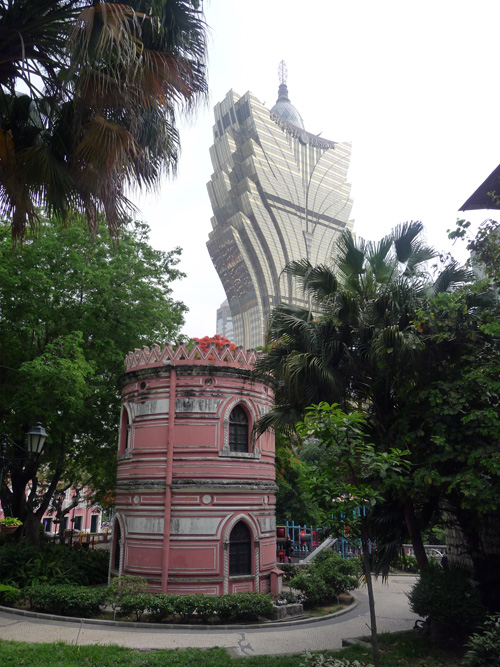
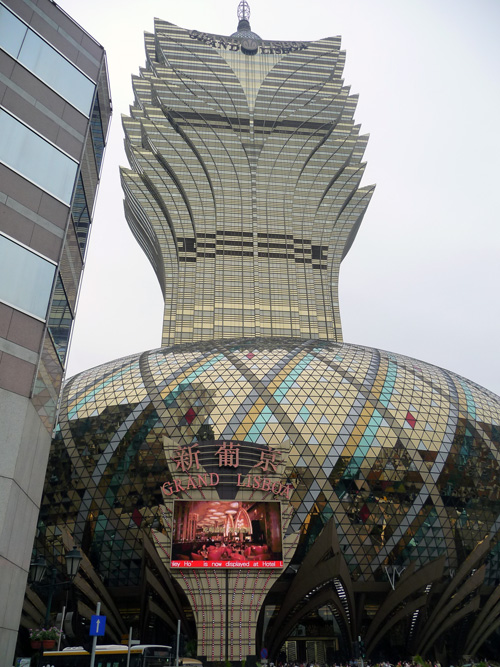
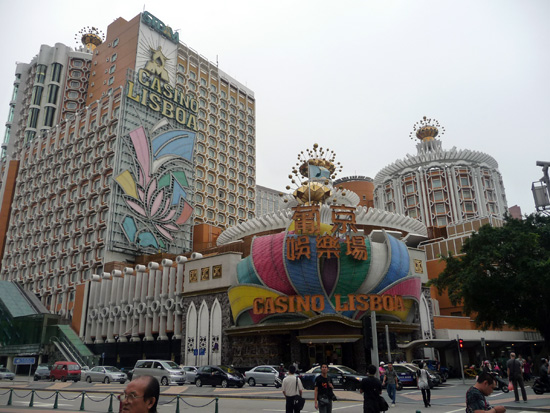
We were obviously forbidden from taking photos inside, but the overall experience is truly impressive and continuously animated by cabaret shows. Across the way stands the original Casino Lisboa, built in the 1960s and still considered today one of Macao's premier casinos. Also worth mentioning are the Wynn and the Sands, which add to the already lengthy list of gaming paradises.
Ultimately, the city is much smaller than we had imagined, and it's time for us to leave. Of course we didn't see everything, but we believe we've covered the essentials. Next stop: the border crossing to re-enter Chinese territory, but things won't go quite as planned...

The border crossing
To view our photos, visit the Macao gallery.
Frequently asked questions
Macao is accessible from Hong Kong in approximately 1 hour by ferry. Regular services operate from the terminals at Tsim Sha Tsui and Sheung Wan in Hong Kong. Since the opening of the Hong Kong–Zhuhai–Macao Bridge in 2018, it's also possible to reach Macao by bus. Check schedules and book in advance during peak season.
The official currency of Macao is the pataca (MOP). Good news: Hong Kong dollars (HKD) are also accepted in virtually all shops in Macao. Be aware, however: change will be given to you in patacas, which are not accepted in Hong Kong.
Must-see sites in Macao include: the Ruins of Saint-Paul Church (São Paulo), Largo do Senado and its Portuguese colonial buildings, Monte Fortress and its museum, Guia Fortress and lighthouse, and Saint-Dominique Church. The entire historic center of Macao has been a UNESCO World Heritage Site since 2005.
Macao's gastronomy is a unique blend of Chinese and Portuguese cuisine. Don't miss the pasteis de nata (egg tarts with Portuguese influence), bakkwa (sweet-savory dried meat), Portuguese cod or other European pastries found throughout the historic city center's alleyways.
Macao is often called the 'Vegas of the Orient': the gaming industry accounts for about 40% of local GDP. Establishments like the Grand Lisboa (261 meters tall), Casino Lisboa, the Wynn, and the Sands welcome millions of visitors every year. However, Macao is also worth a visit for its historic heritage and unique gastronomy, beyond just the casinos.
Macao is a relatively small destination that can be visited in 1 to 2 days. With good planning, it's possible to see the main historic sites (Largo do Senado, São Paulo Ruins, Monte Fortress, Guia Fortress) and enjoy local gastronomy in a day. Two days allows for a more leisurely exploration, including the Cotai district and various casinos.