Meeting the Li Minority of Hainan
It is in Hainan, China's largest island excluding Taiwan, that the 1.1 million Li people (pinyin Lì) are concentrated. Most of them inhabit Tongze, the capital of the Li-Miao autonomous prefecture.
It is in Hainan, China's largest island excluding Taiwan, that the 1.1 million Li people (pinyin Lì) are concentrated. Most of them inhabit Tongze, the capital of the Li-Miao autonomous prefecture of Hainan, or in its surroundings, in Baoting, Ledong, Dongfang and other districts under its jurisdiction. Other members of this ethnicity live throughout the island among the Han and Hui peoples.
The Li ethnic group of China inhabits most of the nine cities and counties in the central and southern parts of Hainan: the cities of Sanya, Tongza and Dongfang, the autonomous counties of Li in Baisha, Lingshui, Ledong, Changjiang, and the Li and Miao autonomous counties of Qiongzhong and Baoting. Others are scattered across more than 12 cities and suburbs alongside other ethnic groups in the cities and counties of Danzhou, Wanning, Qionghai and Tunchang. The area inhabited by the Li ethnic group spans 18,700 km², approximately 55% of the province's total.
The word "Li" is an expression used by others to refer to the ethnic group, which is also known as "ha", "Qi", "run", "Sai" and "Meifu", though the ethnic group refers to itself as "Sai" in their dealings with the outside world.
The Li have no written script of their own, and their language belongs to the Sino-Tibetan language family. Today, many Li people speak Mandarin Chinese. In 1957, the government helped create a romanized writing system for the Li ethnicity.
The Li ethnic group is among the earliest inhabitants to arrive on the island of Hainan. References to them can be found in the Shanhaijing, also known as the Classic of Mountains and Seas, compiled during the period (475-221 BC).
In the Beginning, They Were Farmers and Hunters
The Li group was initially called Zhan'er. The word Li was first used as a name for the group during the Tang Dynasty and became standard during the Song Dynasty (950-1279). Many special local products are produced in Li-inhabited sectors—items such as pearls, five-colored cane and others—which were presented to feudal courts as tributes or merchandise and sold in central China. The Han emigrated south in large numbers to escape frequent wars and rebellions. Most of them settled in coastal sectors, mixing with the Li group. Before World War II, the Chinese who had lived along the island's coasts had no conflict with those who lived in the interior.
However, when Japan invaded Hainan in 1939, the Chinese fled inland, where they encountered Li resistance. This led to a bloody uprising in 1943.
Li Roots
Most of the Li are settled in the valleys of the rivers and mountains of Hainan, where they practice agriculture and shifting cultivation. They also raise buffalo and cattle, and hunt. There are many Li in and around the city of Tongze, located in the Li-Miao autonomous region. Other Li communities can also be found in the Wuzhi Mountains.
Each Li tribe has its own tradition, which is expressed through its textiles and weaving.
Wonderful Fabrics and the Art of Colorful Clothing
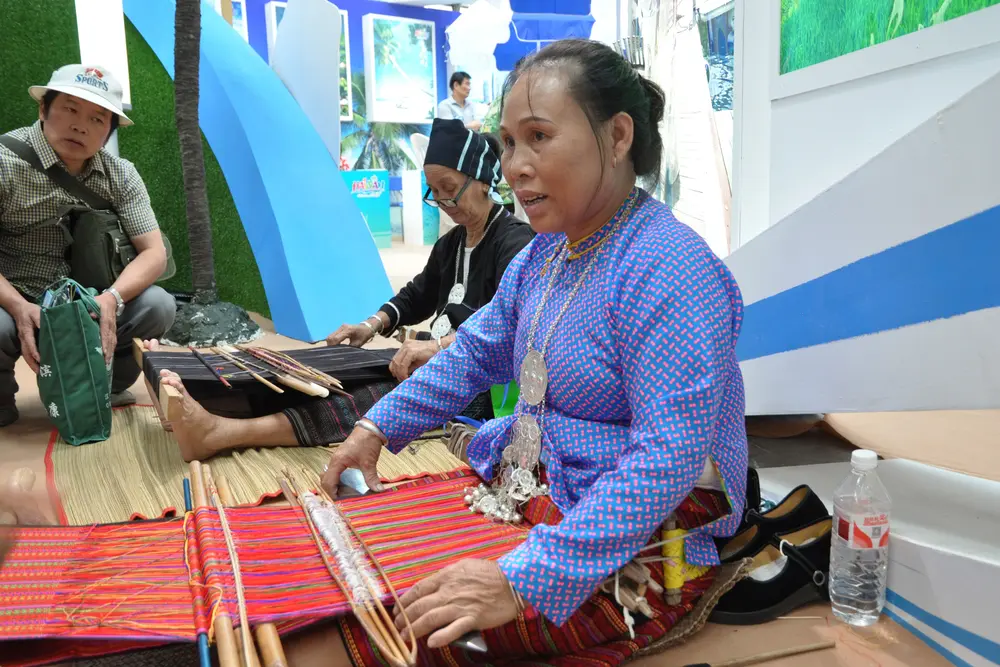
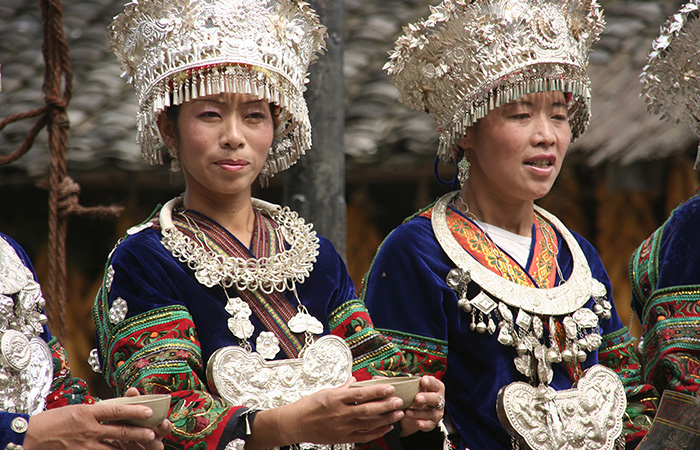
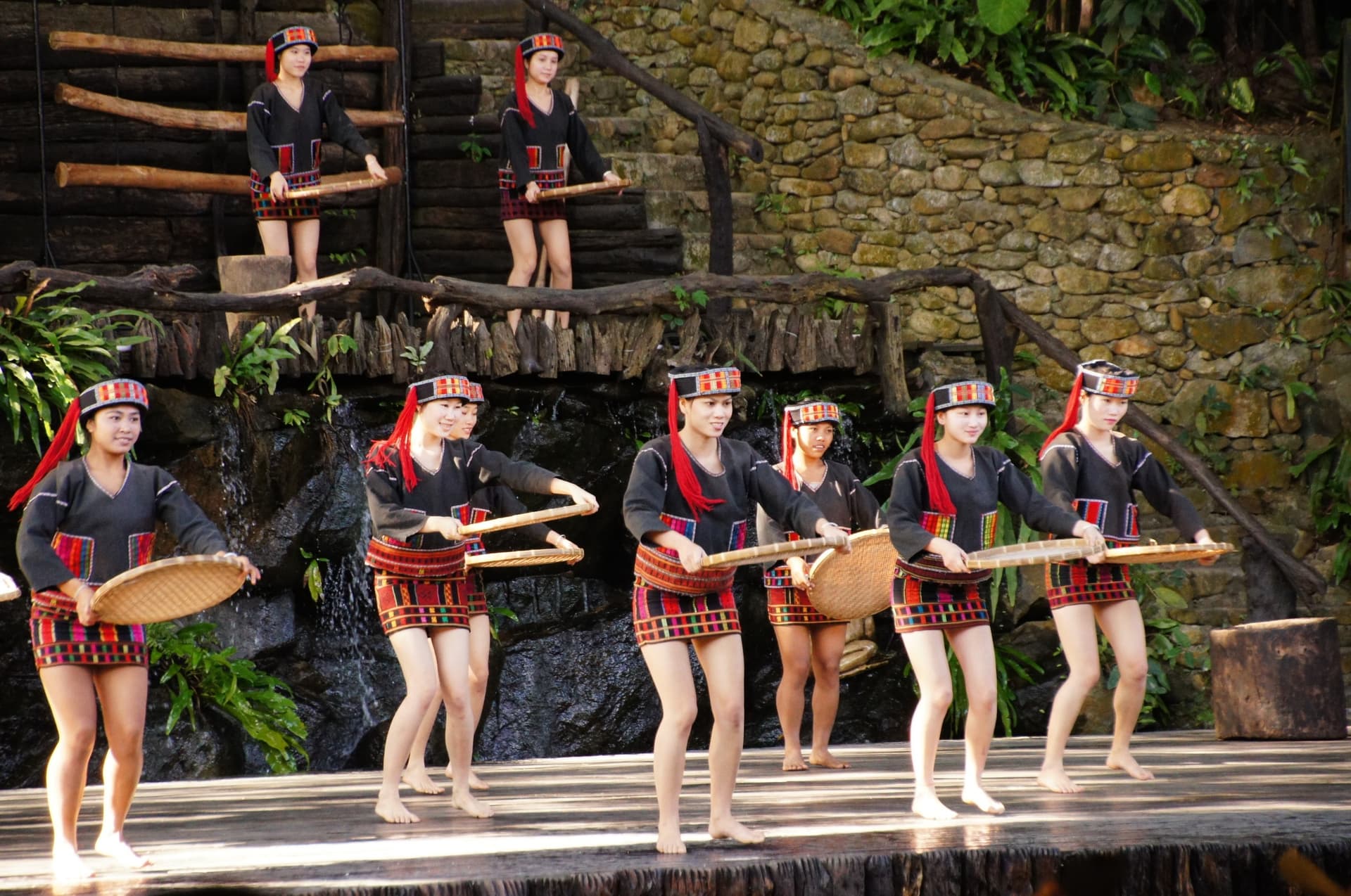
The Li are well known for their fabrics. Weaving is part of Li traditions. Li women are excellent weavers. Their art is highly appreciated, and the creation of intricate patterns is entirely possible. This is a technique that has contributed significantly to the development of textiles in China.
Li Hair and Ear Styles
Women of Luohuo wear tattoos and earrings, typically three dozen pairs, which can weigh up to one or two kilograms.
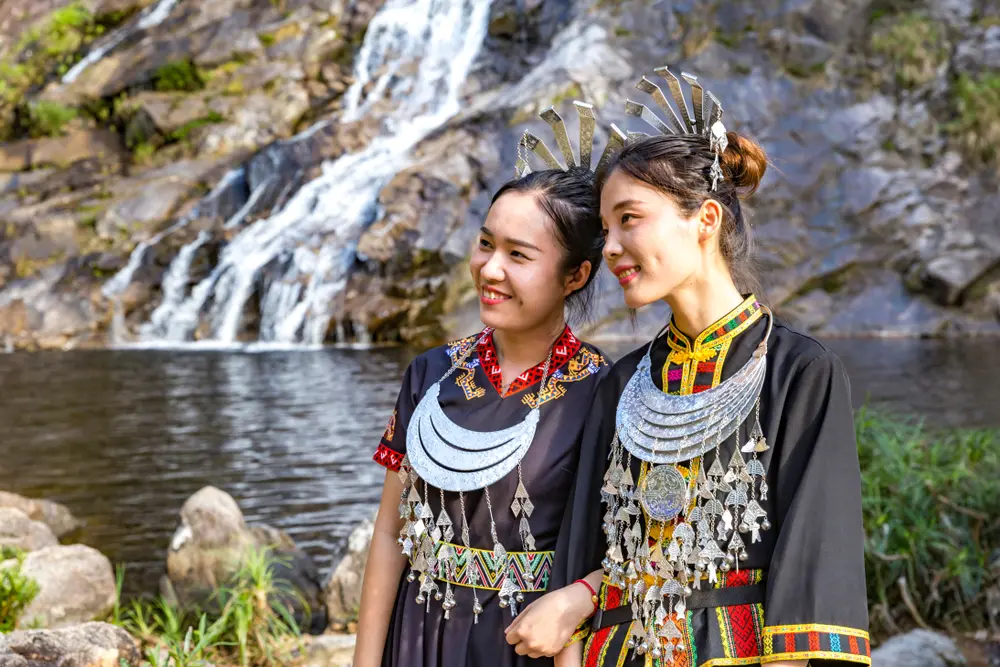
Each Li group has a different clothing style.
As in every other culture, marriage is a significant event for the Li. The bride wears a special hat that covers her face.
The masterpieces of Li jewelry are hairpins, which they produce and use.
Li Traditions
Traditionally, the Li woman performs hard work in rice paddies, in forests or in raising children. But she also takes care of traditions.
The Li cook rice in hollow bamboo, which gives the rice a fragrant flavor. Their homemade wine is also very special. The Li love singing, dancing and sports. Hospitality and honesty are their traditions. Li society is patrilineal, meaning descent is traced through the male line. Each village contains several blood-related families living together. Girls live independently from their families in a room called Liao until they reach puberty and until they marry.
Divination, Amulets and Symbols
The Li believe in a primitive religion that involves the worship of nature and ancestors. They believe that everything has its own soul and that the soul is immortal. Their religion has elements of magic and totem worship. Among the Han and in areas co-inhabited by Han and Li peoples, Taoism, Buddhism and Christianity are practiced. In their religion, the concept of a god has not yet been separated from their imagined objects, and ancestor worship has permeated various aspects of their daily life. The ancestral ghost is the most powerful, and no one will speak in its name.
Another Li tradition is that of divination.
Peoples and EthnicitiesTourism
Frequently asked questions
The Li are primarily concentrated in the central and southern parts of Hainan, notably in the cities of Sanya, Tongza and Dongfang, as well as in the autonomous counties of Baisha, Lingshui, Ledong and Changjiang. The Li-Miao autonomous prefecture is the heart of their territory, covering approximately 55% of the province's area.
The Li language belongs to the Sino-Tibetan language family. Long without its own writing system, a romanized script was developed in 1957 with government assistance. Today, many Li people also speak Mandarin Chinese.
Li women are recognized as excellent weavers. Their weaving techniques, passed down through generations, allow them to create highly complex patterns in vibrant colors. This art has greatly contributed to the development of textile culture in China and is considered a major element of Li ethnic heritage.
The Li traditionally practice an animistic religion based on the worship of nature and ancestor veneration. They believe that everything possesses an immortal soul, and their religion incorporates elements of magic and totemism. In areas where they coexist with Han peoples, Taoism, Buddhism and Christianity are also present.
Marriage is an important event in Li culture. The bride traditionally wears a special hat covering her face during the ceremony. Li society is patrilineal, and young girls live semi-independently in a room called 'Liao' until their marriage.
To discover Li culture, it is recommended to visit the Tongza region (Li-Miao autonomous prefecture) or the Wuzhi Mountains. Cultural parks dedicated to Li and Miao minorities are accessible from Sanya. Local guides can facilitate encounters with authentic communities and the purchase of local crafts.