Peranakans: The Chinese of the Straits
A highly powerful and influential community for centuries, the Peranakans ruled Southeast Asia. They are the ancestors of Chinese immigrants who settled in Malaysia, Indonesia
A highly powerful and influential community for centuries, the Peranakans ruled Southeast Asia. They are the ancestors of Chinese immigrants who settled in Malaysia, Indonesia and the Strait of Johor in the 15th and 16th centuries, capitalizing on the colonial era.
The Conquest of Southeast Asia
In the early 15th century, China faced economic difficulties that triggered several waves of Chinese migration to the Indonesian peninsula. Most of these emigrants were educated and brought with them a part of their ancestral culture. They quickly established themselves and developed in the peninsula by integrating into commerce and adapting to local customs, while preserving their roots.
At this time, the British and Dutch were present in large numbers in the Malacca Strait and wanted to trade with local merchants. For many, they turned to numerous Peranakans.
The latter thus became commercial intermediaries between Europeans and Asians. They were highly appreciated by the former for their devotion, which was more pronounced than towards the Chinese.
From there emerged a community considered an elite due to their education and wealth. Having the habit of choosing women from the places where they worked, these merchants married Malays or Indonesians, thus creating an ethnic blend.
A Culture of Many Facets
The term Peranakan means "descendant" with an ethnic connotation in Malay and Indonesian, so one should say Cina Peranakans to differentiate individuals of Chinese origin. In Malaysia, however, this group is called "Baba-Nyonya". Borrowed from Chinese, Baba means "Father" while Nyonya means "Lady" in Portuguese.
Peranakans have always been renowned for their linguistic abilities, which they maintained over the centuries by speaking on average two languages: Chinese and Malay, while their links with Westerners allowed them to add English or Dutch. From this a creole language used among members of the community was created, mixing Hokkien (a Chinese dialect), Malay and English.
Over time and the many geopolitical changes in Malaysia, Indonesia and Singapore, Peranakan communities eventually differentiated by each adopting the language of their adopted country, while maintaining the use of creole and basic English and Chinese.
The spiritual beliefs of the Peranakans are modeled on Chinese beliefs: Buddhism, Taoism or even Confucianism, while their close relations with Westerners often led them to convert to Christianity.
Their group has always been synonymous with wealth thanks to their commercial success and allowed them to be part of the affluent classes. But their culture was above all the foundation of their renown.
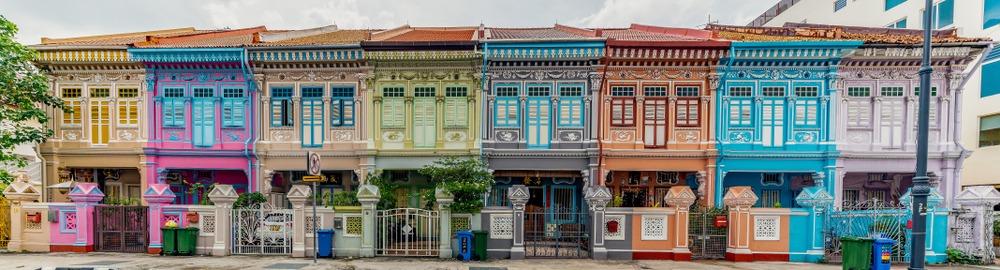
It is characterized in their costumes by numerous colorful floral representations. Clothing styles are often borrowed from those of local customs such as in Malaysia but differ in their cut or the number of ornaments placed.
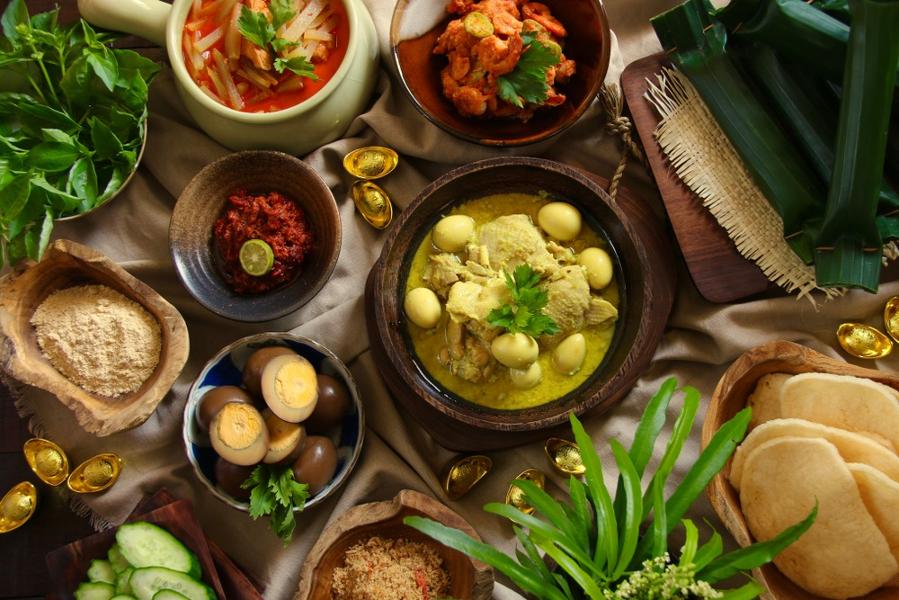
Their cuisine was also enriched by Sino-Malay blends that gave birth to specialties such as "Nyonya Laksa" very popular in Singapore or "Kueh Lapis" a kind of multi-layered cake, served during Chinese New Year and symbolizing wealth.
An Identity Destined to Fade
Nowadays Peranakans are less and less represented but their culture remains visible. Many descendants of this community became very influential figures such as Lee Kwan Yew, the former Prime Minister of Singapore, or Tan Cheng Lock, the first President of the Chinese community in Malaysia.
We can no longer speak of a community today as they have immersed and diluted themselves in their respective adopted countries, even though their culture remains a reference. Their former glory is gradually fading and is now assimilated into Chinese culture, while their creole language is no longer used by the new generation.
Some resist this trend and try to preserve their heritage by organizing festivals, but their roots have become folkloric by force of circumstance. Gradually, this group is destined to be completely absorbed, but it will leave to posterity the idea of an ethnic and cultural blend that exalted the very concept of community.
Frequently asked questions
The Peranakans, also called 'Baba-Nyonya', are the descendants of Chinese immigrants who settled in Malaysia, Indonesia and Singapore from the 15th century onwards. They created a unique culture by blending Chinese traditions with local Malay customs and European influences.
The term 'Baba-Nyonya' is used in Malaysia to designate the Peranakan community. 'Baba', borrowed from Chinese, means 'Father' and refers to the men, while 'Nyonya', of Portuguese origin, means 'Lady' and refers to the women of the community.
Peranakans were renowned for their linguistic talents. They spoke notably Chinese, Malay and often English or Dutch. They also developed a unique creole mixing Hokkien (a Chinese dialect), Malay and English, called 'Baba Malay'.
Peranakan culture is still very much present in Singapore, Penang and Malacca in Malaysia. The Peranakan Museum in Singapore and the Pinang Peranakan Mansion in Penang are must-sees. Festivals are also organized to preserve this cultural heritage.
Peranakan cuisine, often called 'Nyonya' cuisine, is a blend of Chinese and Malay flavors. Among the most well-known specialties are 'Nyonya Laksa', a very popular noodle soup in Singapore, and 'Kueh Lapis', a layered cake consumed during Chinese New Year.
The Peranakan community is increasingly less visible today, as its members have gradually integrated into their respective adopted countries (Malaysia, Singapore, Indonesia). Their culture survives nevertheless through festivals, museums and a few families who perpetuate culinary and craft traditions.