Why Do Chinese People Eat with Chopsticks?
Second episode of our series "Why do the Chinese/China…"! Today, culinary enthusiasts will be delighted, as we explore the fascinating legend of chopsticks!
Second episode of our series "Why do the Chinese/China…"! Today, culinary enthusiasts will be delighted, as we explore the fascinating legend of chopsticks! It is said in China: "One cannot eat without chopsticks."; Our utensils, often considered too dangerous, are therefore replaced in Asia by these famous chopsticks, which are often very difficult to handle for us Westerners. Although these instruments are a typical characteristic of China, what about their origins? We will attempt to answer this question by looking back in time.
1- "We sit at the table to eat, not to butcher beasts"
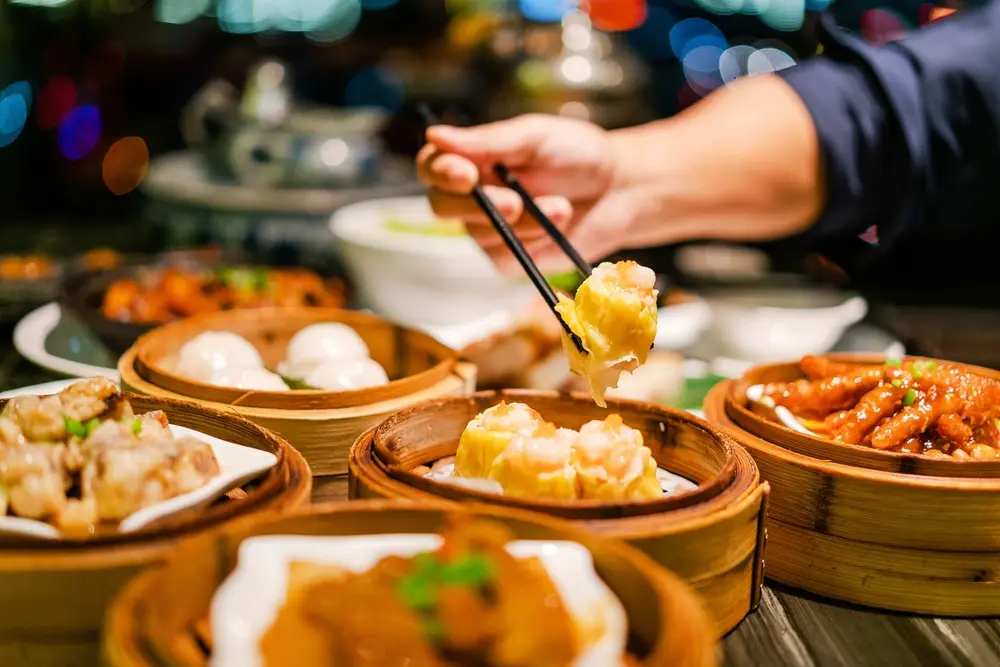
A Chinese proverb says: "We sit at the table to eat, not to butcher beasts." This perfectly sums up an Oriental philosophy that advocates cutting food before serving it. Presenting an uncut carcass of meat would be seen as barbaric and highly impolite in the eyes of the Chinese. Chopsticks are therefore believed to have been born from this philosophy, for their practicality in grasping food that has been previously diced.
2- An emperor fearful of assassination bans forks and knives
It is said that the Chinese once used knives and forks to eat, but that the emperor of that time, fearing assassination, prohibited these utensils. Unable to resign themselves to eating with their bare hands, the Chinese invented chopsticks using two bamboo sticks.
3- To avoid burning themselves while cooking
In antiquity, Chinese cooks used a broken bamboo branch cut in two to pick up food still boiling, without risking burning themselves. The bamboo sticks later evolved in shape and material to gain in efficiency and convenience.
4- Legends
Many legends exist about the history of Chinese chopsticks. One of them claims that Chinese chopsticks originated in the time of King Zhou. His bad temper had ended the lives of several cooks. That is why one of his favorite concubines, Daiji, took the initiative to taste each dish before serving. But one day, the king was served hot Chinese soup before Daiji could taste it. To avoid any reproach, the concubine had the idea of removing two chopsticks from her hair to use them to remove the food from the soup and make it cool more quickly. The king so appreciated this initiative that Daiji had two jade chopsticks made and continued to serve him. From then on, chopsticks became a tradition throughout the country. Another legend tells a story from 500 years ago. Yu, an employee of the king of that time, had been entrusted with a very important mission: to dry out the region that had suffered great flooding. One day, having just prepared himself a bowl of hot Chinese meat soup, he did not want to wait for it to cool and had the idea of using two small bamboo branches to eat faster. Seeing that this technique was very effective and to not waste time, he repeated it every day and was subsequently imitated by other Chinese people.
5- Chopsticks as symbols of fertility and mobility
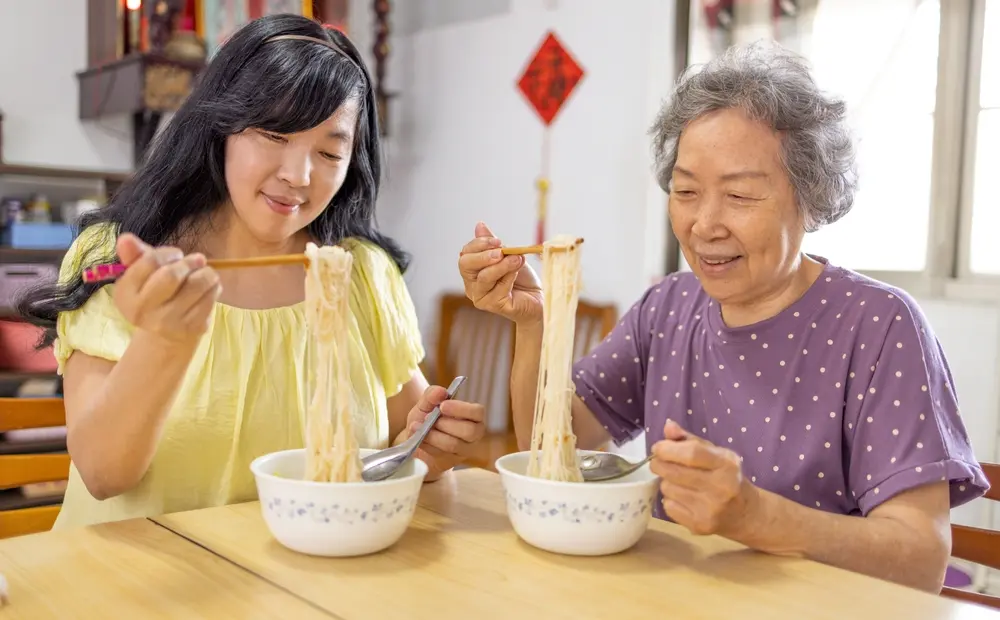
The use of chopsticks is said to have medical benefits. They would promote the mobility of the limbs by engaging more than 30 joints and 50 muscles in the hands and arms. Furthermore, during weddings, tradition dictates that Chinese people throw chopsticks out of the bedroom window to promote fertility and wealth.
6- A tax on iron
In the past, Chinese and other Asian people were required to pay a tax on iron used in cooking. To avoid paying too much tax, families had only a wok and a knife. All other utensils were made of bamboo and porcelain. Chopsticks were their only means to eat cleanly and without burning themselves.
7- Chinese chopsticks older and less dangerous than knife and fork
The Chinese invented chopsticks approximately 3000 years before the Christian era, long before forks and spoons were created in Europe. With the creation of forks and knives, the famous philosopher Confucius is said to have advised keeping chopsticks to maintain this image of non-violence, tradition, and morality, in contrast to our utensils perceived as deadly accessories.
There are therefore many explanations regarding the origin of Chinese chopsticks, and each person is free to choose the reason that suits them best. Let us nevertheless remember that chopsticks are very well suited to Chinese gastronomy and the way food is presented in small pieces. Let us also not forget that in China or Asia, it is preferable to use chopsticks or at least make the effort to try in order not to appear impolite or disrespectful. With a little practice, handling chopsticks will seem very simple and sometimes even more practical than a fork!
Frequently asked questions
Chinese people use chopsticks for several reasons: a culinary philosophy that advocates serving food that has been pre-cut, a long historical tradition dating back approximately 3000 years before our era, and an imperial edict that once prohibited knives and forks. Chopsticks are also perfectly suited to Chinese gastronomy, where food is served in small pieces that are easy to grasp.
The origin of Chinese chopsticks dates back approximately 3000 years before the Christian era. Several theories coexist: their use for handling boiling food during cooking, the prohibition of knives by an emperor fearful of assassination, or even the philosophy of Confucius promoting non-violence at the table. Legends also attribute their invention to Daiji, the concubine of King Zhou, or to Yu, a royal employee.
Yes, the use of chopsticks is said to have health benefits. It engages more than 30 joints and 50 muscles in the hands and arms, thereby promoting mobility and dexterity. Some studies suggest that their regular use contributes to the development of fine motor skills, particularly in children.
In China, several etiquette rules surround the use of chopsticks: it is impolite to plant them vertically in a bowl of rice (a gesture associated with funeral offerings), to point them at someone, or to suck on them. It is also frowned upon to use them to make noise. For a traveler, making the effort to use chopsticks is perceived as a sign of respect for the local culture.
Yes, there are notable differences. Chinese chopsticks are generally longer, thicker, and have a flattened end. Japanese chopsticks are shorter, pointed, and often made of lacquered wood. Korean chopsticks, on the other hand, are made of metal (stainless steel) and flat. These differences reflect the dining habits specific to each culture.