Chinese Writing
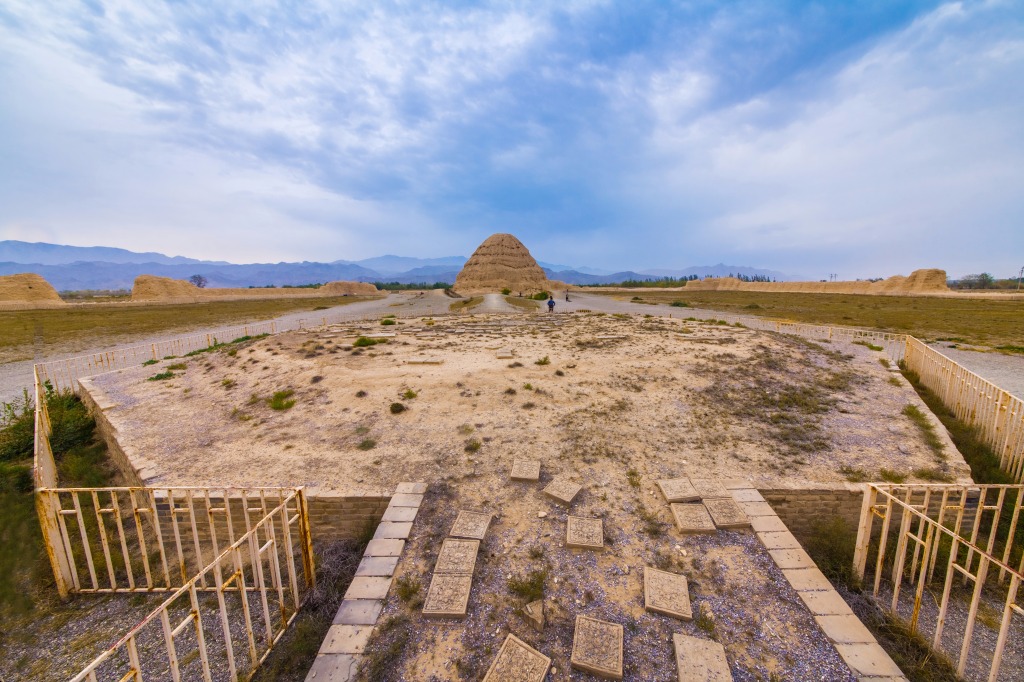
Chinese writing is one of the oldest writing systems in the world. It is the only writing system of its kind still in use today. The discovery in 2003 of inscriptions on bone and turtle shells dating back to the Shang dynasty confirms that its origins trace back more than 6,000 years.
Through calligraphy and ancient inscriptions, it embodies the very essence of the beauty of the Chinese language. This is why learning it is often regarded by foreigners as a complex and fascinating art.
Thanks to the unification of Han script launched by the first emperor, Shi Huangdi, mainland Chine uses identical Chinese characters throughout its territory.
Throughout its history, Chinese writing has undergone numerous transformations, including the simplification of characters and phonetic transcription, or romanization. It encompasses two variants: traditional or classical writing and simplified writing.
Classical Chinese Writing
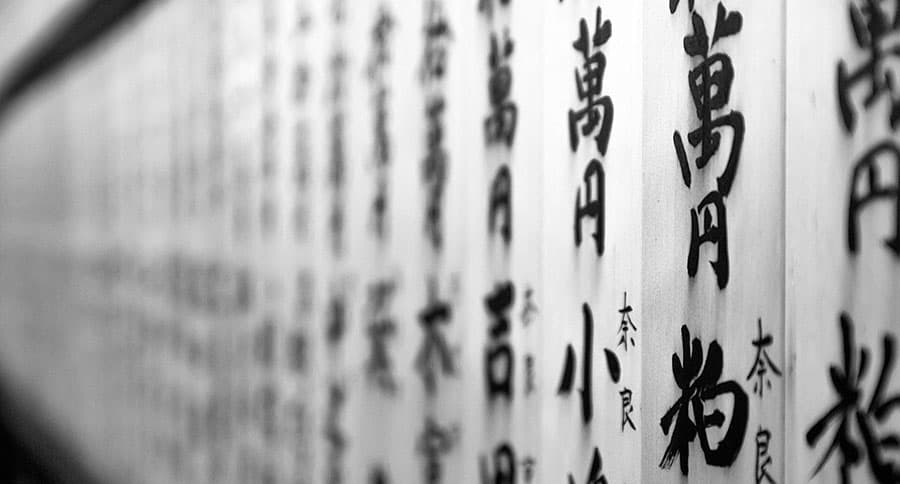
Chinese is traditionally written vertically, read from top to bottom and right to left. This ancient style remains in use on the island of Taiwan, in Hong Kong, Macao, Singapore, and in certain Chinese communities outside Chine.
Classical Chinese writing comprises approximately 60,000 characters, of which around 6,000 are in common use. There are three categories of Mandarin characters.
- Pictographs reflect the image of things such as the sun (日), the mountain (山), and the tree (木).
- Ideograms are the equivalent of compound words in English. To form an ideogram, it is possible to combine pictographs together. The association of two or three tree characters (木) signifies forest (林) or a great forest (森).
- Ideo-phonograms are characters formed by combining two characters, one providing the semantic meaning and the other suggesting pronunciation. For example, the character for mother (妈) is expressed with the character for woman (女) on the left, which carries the meaning, and the character for horse (马) pronounced "ma" in Mandarin on the right, which symbolizes the pronunciation.
Simplified Chinese Writing
Adopted in 1956, simplified Chinese has been used since the People's Republic of Chine. During a legislative session in 1955, the National People's Assembly of the local government decided to simplify Chinese characters to promote literacy.
Simplified Chinese writing consists of reducing the number of strokes needed to write a character in order to make it easier to learn. As a result, it became quicker to write and easier to memorize.
Unlike traditional writing, modern Chinese writing is written from left to right and read from top to bottom, like Latin and Roman scripts. It is based solely on traditional characters. Mainland Chine maintains to this day more than 2,000 simplified characters.
Pinyin
Pinyin, which literally means "spell the sounds," is another system for simplifying Chinese writing. It is an official project for romanizing Mandarin through phonetic transcription. To transcribe Chinese characters, it translates phonetic pronunciations using 25 of the 26 Latin alphabets. Only the letter "v" is excluded.
Pinyin transcribes Mandarin according to three diacritical tones: the high tone, the rising tone expressed as an acute accent in pinyin, and the falling tone or grave accent.
This new method was officially promoted by the People's Republic of Chine and later by the Republic of Chine in Taiwan. Bearing the ISO 7098 standard, it was adopted in 1979 by the International Organization for Standardization as the system for phonetic transcription of Mandarin.
Today, it is the most widespread system for transcribing the Chinese language in modern works. Simpler to master, it is also the most widely used system for input software.
Writing Chinese
During your trip to Chine, you may try to memorize a few characters, which will allow you to navigate more easily and read certain signs, for example. Indeed, it is necessary to understand and fully discover the various ancient ancestral cultures such as painting, calligraphy, and inscriptions.
Chinese writing is an art in itself known as calligraphy. During your stay, you may attend a calligraphy class or observe in parks certain individuals practicing calligraphy on the ground with large wet brushes.

There is no easy method for writing; the best solution remains to memorize the characters by heart, which explains the entire complexity of this art.