West Lake
West Lake
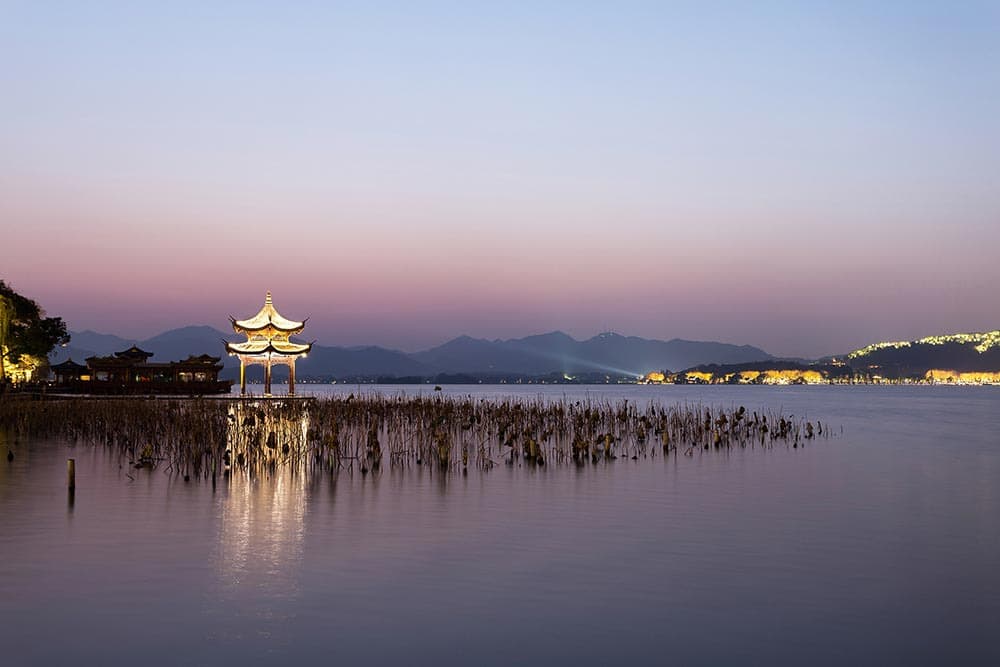
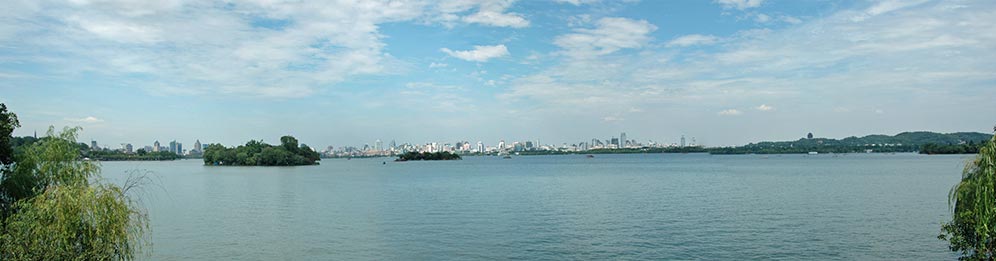
In Hangzhou, West Lake (Xihu) has been a UNESCO World Heritage site since 2011. Causeways, pagodas and islands compose the celebrated Ten Scenes codified under the Song dynasty.
West Lake, or Xihu in Chinese, occupies the historic heart of Hangzhou, capital of Zhejiang Province. Inscribed on the UNESCO World Heritage List since 2011, it is celebrated for its cultural landscape shaped by centuries of poetry, painting and landscape design.
Why visit West Lake
Xihu is not remarkable for its size—its circumference reaches roughly 15 km and average depth does not exceed 2.27 m—but for the density of its heritage. Causeways, bridges, pagodas, pavilions, Buddhist temples and artificial islands compose an entirely man-made landscape since the Song dynasty. It is this cultural landscape, codified as the "Ten Scenes of West Lake," that justified its UNESCO listing.
The site is free and open year-round; only certain peripheral pavilions, temples and pagodas charge admission. Allow 2 to 4 hours to circuit on foot or by bike, a half-day if you include a boat crossing and visit to a few pavilions.
History and legend
Originally a simple shallow pond, West Lake was gradually transformed into a managed water feature under the Song dynasty (960–1279), notably under the impetus of poet and official Su Dongpo, who directed the construction of the Su Causeway, 2.8 km long and punctuated by six bridges.
In the late 13th century, Marco Polo stayed in Hangzhou and described it as "the noblest of cities, the city of paradise." The lake's landscape park was declared a national park on November 8, 1982, before its UNESCO listing in 2011.
A popular legend recounts the mythic origin of the lake, repeated in a song: "West Lake is a dazzling pearl fallen from heaven, the flying dragon and dancing phoenix at its side forever." According to this tale, a jade dragon and a golden phoenix living in the Milky Way carved a pearl from a precious stone. The Queen of the Celestial Kingdom, jealous, tried to steal it; during the struggle, the pearl fell to earth and became the lake. The dragon and phoenix joined it and transformed into hills to watch over it—hence the names of the Jade Dragon and Phoenix hills that border the site.
What to see
Islands and causeways
At the lake's center, Gushan Island ("Solitary Mountain") is the main island. It is connected to shore by two ancient bridges and houses the Pavilion of Melting Snow, the Broken Bridge, the Zhejiang Provincial Museum and the tomb of Qiu Jin, a Chinese revolutionary and feminist executed in 1907.
Further south, Xiaoying Island, artificial, was formed from sand extracted from the lake bed. It is organized around small basins, bridges and traditional pavilions, and features the three hollow stone pagodas with five circular openings that give their name to the scene of "Three Stupas Reflecting the Moon." The island is accessible only by boat.
Two causeways structure the lake: the Su Causeway, already mentioned, and the Bai Causeway, dividing it into five communicating water bodies.
The Ten Scenes of West Lake
Codified from the Song dynasty onward, the Ten Scenes (Xihu Shijing) designate ten seasonal viewpoints, each bearing a poetic name:
- Sudichunxiao — spring dawn on the Su Causeway, lined with peach and willow blossoms;
- Quyuanfenghe — lotus fragrance in the Quyuan courtyard, an ancient wine cellar perfumed with flowers under the Song;
- Pinghuqiuyue — autumn moon over the tranquil lake, observed from the garden west of the Bai Causeway;
- Duanqiao Canxue — traces of snow on the Broken Bridge in winter, when part of the deck emerges from the white veil;
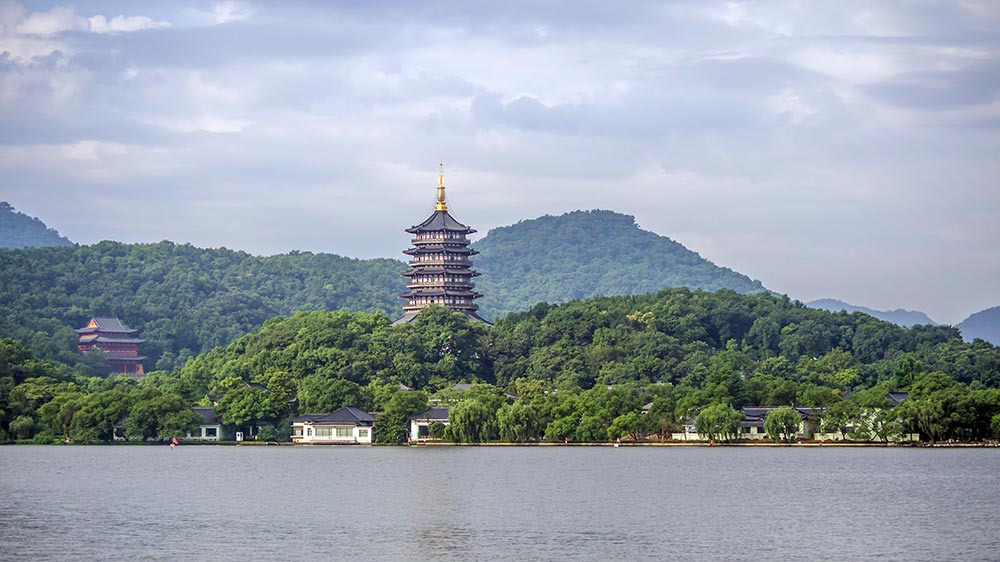
- Leifengxizhao — sunset over the Leifeng Pagoda;
- Shuangfeng Chayun — the Two Peaks piercing the clouds, separated by roughly 5 km north of the lake;
- Song of orioles in the willow forest, former imperial garden of the Song;
- Fish and lotus in flowering marshes at the southern end of the Su Causeway, with a pond of some 1,000 koi carp;
- Moon's reflection in the three pools on Xiaoying Island: at mid-autumn, candles are lit inside the stone pagodas, their glow mingling with moonlight;
- Sound of the bell at Jingxi Temple, rung at dusk from Nanping Mountain.
When to visit
West Lake suits a visit year-round, but each season has its emblematic scene:
- Spring (March–May): peach and willow blossoms on the Su Causeway; most photographed but also most crowded season.
- Summer (June–August): lotus blooms in the Quyuan courtyard; hot and humid.
- Autumn (September–November): mid-autumn full moon, ideal for the moon-on-water scene and Three Stupas.
- Winter (December–February): if snow falls, the Broken Bridge takes on the aspect evoked by the Duanqiao Canxue scene; much reduced crowds.
Dusk remains the best time of day to capture reflections on the water and the bell of Jingxi Temple.
Practical information
- Access to lake and park: free and year-round.
- Peripheral pavilions, pagodas and temples (Leifeng Pagoda, Three Pools, Chenghuang Pavilion, Lingyin Temple, Feilai Feng): admission charged at moderate rates. Hours vary by season; check ahead.
- Lake circuit: 2 to 4 hours on foot or by bike depending on pace.
- Boat: regular cruises and private boats serve Xiaoying Island and main shores.
- Bicycles: public bike system (rechargeable card available at metro stations) and private rentals on deposit. Electric carts circling the lake with free stops.
How to get there
The lake borders Hangzhou's center, minutes on foot from major commercial streets.
- Metro: Line 1, Longxiangqiao station (northeast shore, toward Broken Bridge) or Ding'an Road (southeast shore, toward Wushan Hill).
- Bus: numerous lines serve riverside stops from the railway station, East Station, Wulin Plaza or Huanglong Sports Palace.
- Free tourist bus between the lake (departure from Leifeng Pagoda) and the Xixi Wetlands mid-day.
Nearby attractions
- Leifeng Pagoda: on the south shore, accessible on foot from the Su Causeway.
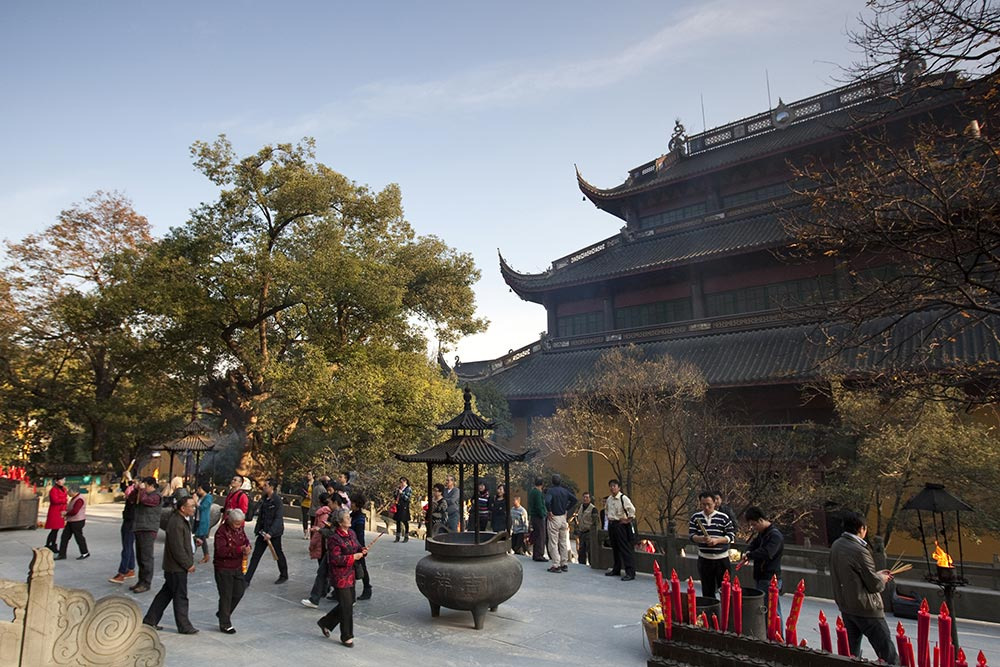
- Lingyin Temple and Feilai Feng: major Buddhist complex west of the lake, roughly 15–20 minutes by bus.
- Xixi Wetlands: protected wetland area west of town, connected to the lake by free tourist bus.
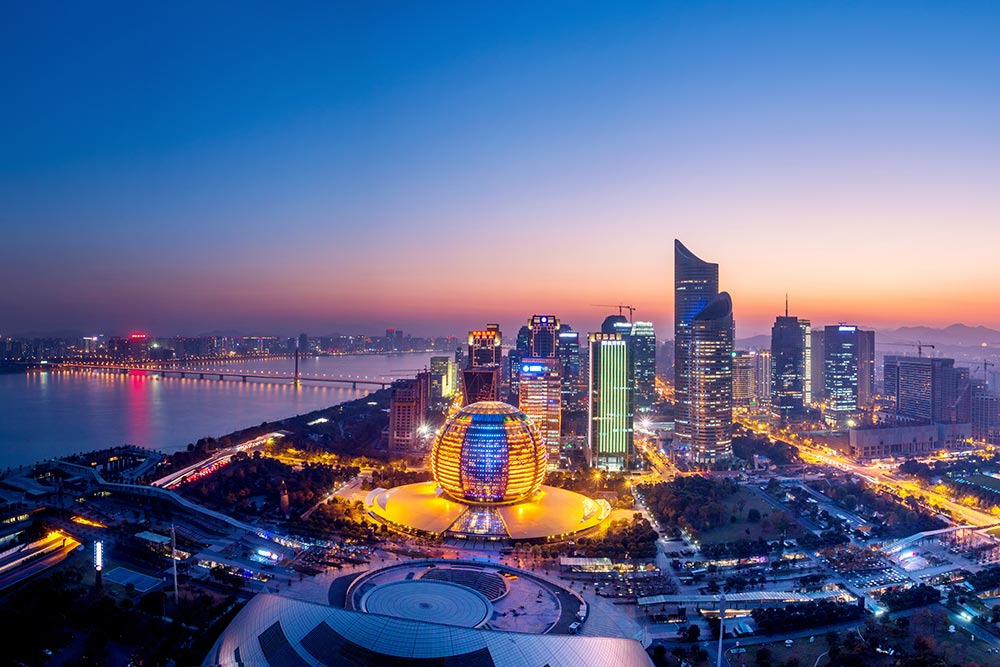
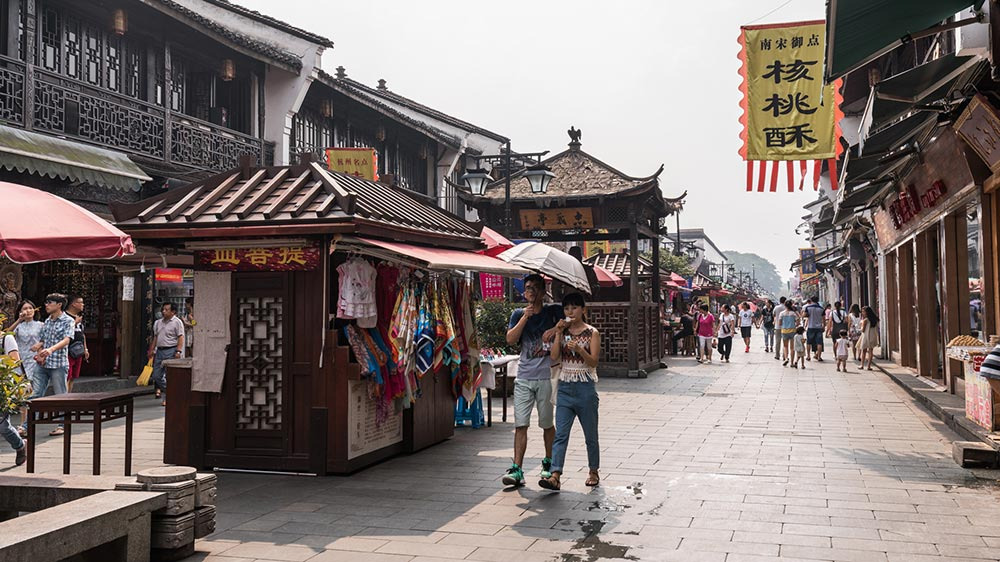
- Hangzhou: downtown, its shopping lanes and teahouses extend the visit. See the Hangzhou guide.
Frequently asked questions
No. The park and lake shores are freely accessible with no closing hours. Only certain peripheral monuments (Leifeng Pagoda, Three Pools Reflecting the Moon, Lingyin Temple, isolated pavilions) require admission at modest rates.
Allow 2 to 4 hours to circuit the lake on foot or by bike. A half-day to full day is more comfortable if you wish to add a boat crossing to Xiaoying Island and visit one or two temples.
Spring (blooming Su Causeway) and autumn (moon over lake, lotus still present) are the most sought-after seasons. In winter, if snow falls, it highlights the Broken Bridge. Each season corresponds to one of the Ten Scenes codified under the Song.
Yes. Hangzhou has a public bike system (rechargeable card available at metro stations, notably at Longxiangqiao) and private rental shops around the lake, with a deposit.
The island is only accessible by boat. Cruises depart regularly from several piers on the north and east shores and typically include a stop at Xiaoying.
Extend your visit
West Lake is the key cultural stop on any lower Yangtze itinerary. To include it in a broader itinerary, consult our China travel ideas or other classic sites in the region.
Photos
Nearby
Interested in this visit?
We can include it in your personalised itinerary.