Baoguo Temple
Baoguo Temple
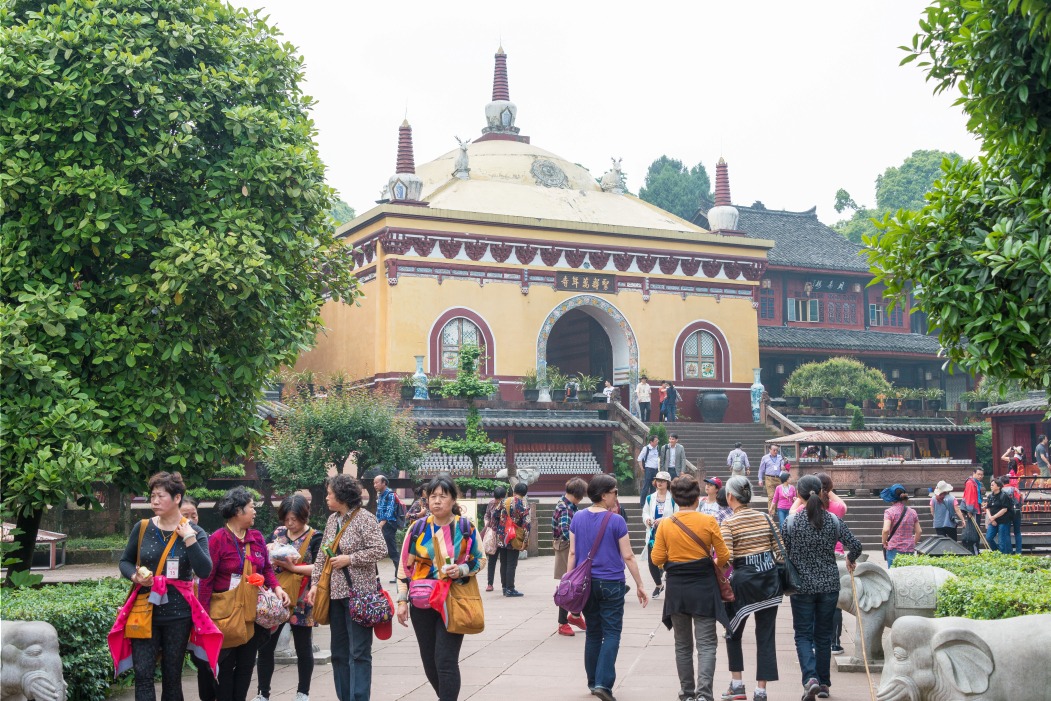
At the foot of Mount Emei in Sichuan, Baoguo Temple, founded during the Eastern Han dynasty, serves as a monastic threshold to the ascent of the sacred mountain.
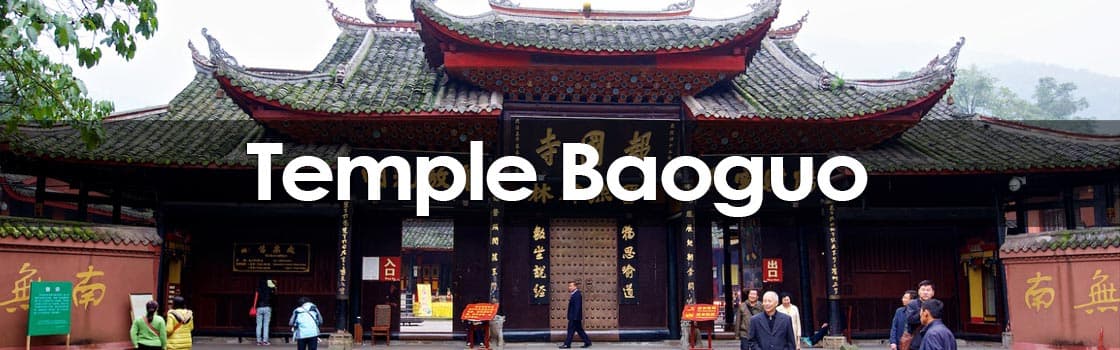
At the foot of the Mount Emei, in Sichuan province, Baoguo Temple marks the traditional entrance to the sacred Buddhist mountain. Founded during the Eastern Han dynasty (25-220) and rebuilt several times, it now serves as a departure point for pilgrims and hikers preparing to ascend towards the summit.
Why visit Baoguo Temple
- It is the largest monastic complex at the foot of Mount Emei and the natural threshold of the ascent.
- Its wooden architecture preserves ancient elements, including the so-called "beam-free hall," the oldest building on the site.
- The 17 halls open to visitors display statues, liturgical objects and heritage pieces, including a bronze bell weighing over 10 tonnes dating from the Ming dynasty.
- The gardens, planted with magnolias and bamboo, offer a peaceful transition before climbing towards the heights of Mount Emei.
History
The temple was built during the Eastern Han dynasty (25-220) under the name Lishan Temple. Originally, it consisted of a single structure: the "Great Hero" hall, nicknamed the beam-free hall because of its wooden framework assembled without an exposed ridge beam.
In 845, the Huichang era edict, promulgated under Emperor Wuzong of the Tang dynasty, ordered the destruction of Buddhist temples throughout the empire. Lishan Temple was among the first targeted. Reconstruction took place in 880, during the Guangming era under Emperor Xizong of the Tang dynasty: the complex was enlarged and renamed Baoguo Temple, the name it has borne ever since.
Over the following centuries, the site suffered several fires, notably in 1615 and around 1900. Each reconstruction preserved the original framework while adding buildings, which explains the juxtaposition of architectural styles from different periods that can be observed today.
What to see on the site
The beam-free hall
Built in wood, it is the oldest building in the temple. Its framework, assembled by tenons and mortises, illustrates a Chinese carpentry technique that dispenses with a visible transverse beam. It houses the large statue known as the "Great Hero," the traditional name for Buddha Shakyamuni in Chinese monasteries.
Statues and ritual objects
The 17 halls open to the public display statues of Guanyin (Kwanyin), bodhisattva of compassion, as well as bronzes, murals and ritual objects. A bronze bell weighing over 10 tonnes, cast during the Ming dynasty, is suspended within the compound; its ring once carried to the neighbouring village of Baoguo.
The great porcelain Buddha statue
One of the most striking pieces is a porcelain Buddha statue seated on lotus leaves, approximately 24 metres high. Its fabrication in glazed ceramic at this scale is a rare case in Chinese Buddhist statuary.
The natural setting
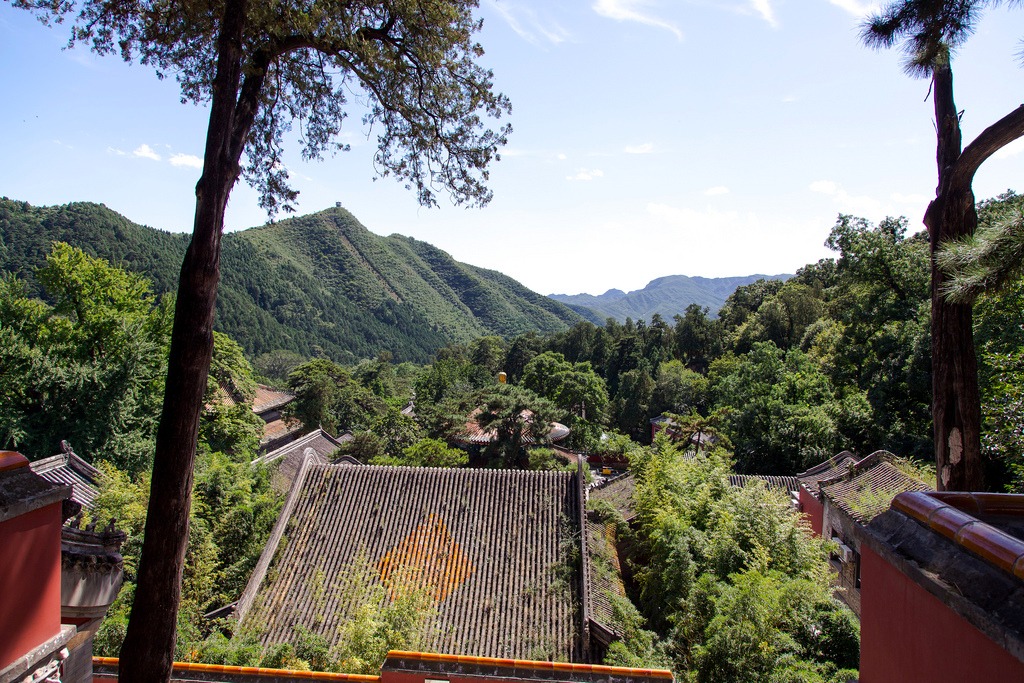
The temple is surrounded by cedars and bamboo, with the silhouette of Mount Emei in the background. Paths allow visitors to extend their visit with a walk towards the foothills of the mountain.
Practical information
- Visit duration: allow 1 to 2 hours to explore all the halls.
- Opening hours: open daily during daytime; hours vary by season, check with your guide or at the entrance.
- Admission: modest entrance fee, separate from the Mount Emei park ticket.
- Dress code: appropriate attire recommended, as the site remains an active place of worship.
How to get there
From the town of Emeishan, bus number 5 goes directly to the temple entrance in about ten minutes. The site is approximately 7 km from the city centre and is the natural terminus before access to the Mount Emei park. From Leshan, expect about 30 to 40 km by road.
When to visit
The temple can be visited year-round, but spring (April-May) and autumn (September-October) offer the most stable conditions for combining a visit with an ascent of Mount Emei. Summer is more humid and hot, winter can be misty and cold at altitude, but the temple itself, situated at low elevation, remains accessible.
Nearby attractions
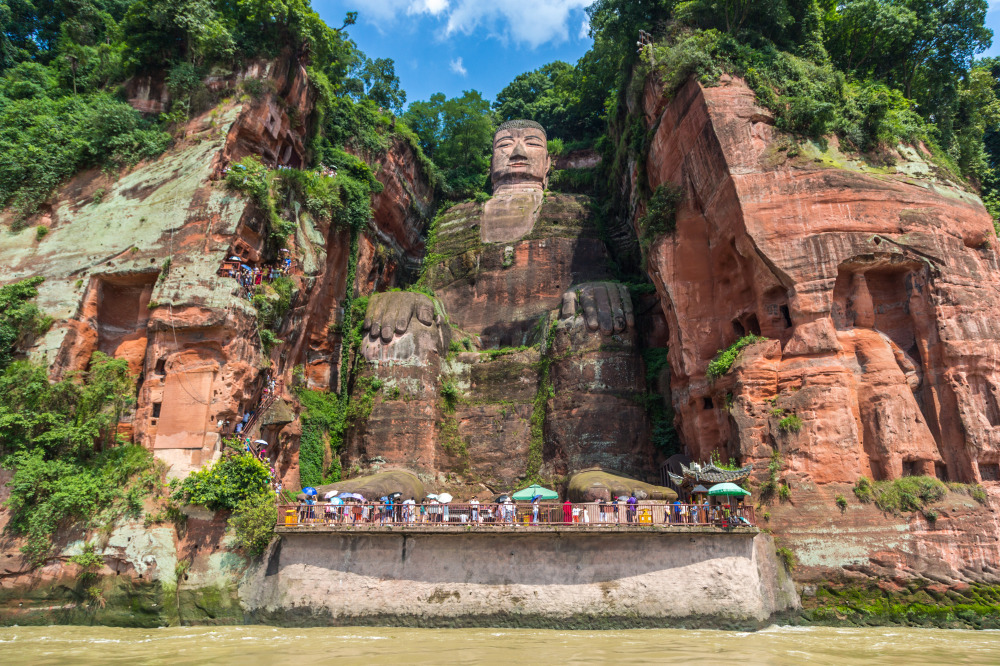
- The Great Buddha of Leshan, a 71-metre rock-carved statue hewn into the cliff at the confluence of three rivers, approximately one hour's drive away.
- The summit of Mount Emei (Jinding) and its high-altitude monasteries, accessible by several days of hiking from Baoguo.
- Bifengxia Panda Base, further north in Sichuan.
Include Baoguo Temple in your journey
Baoguo Temple fits naturally into an itinerary combining Mount Emei and the Great Buddha of Leshan, two UNESCO World Heritage sites. To build a tailor-made itinerary in Sichuan, explore our trips to Chine.
Interested in this visit?
We can include it in your personalised itinerary.