Luoping Rapeseed Fields
Luoping Rapeseed Fields
Over 200 km² of flowering rapeseed fields from February to March in Luoping (Yunnan). Guide to viewpoints, timing, and access from Kunming.
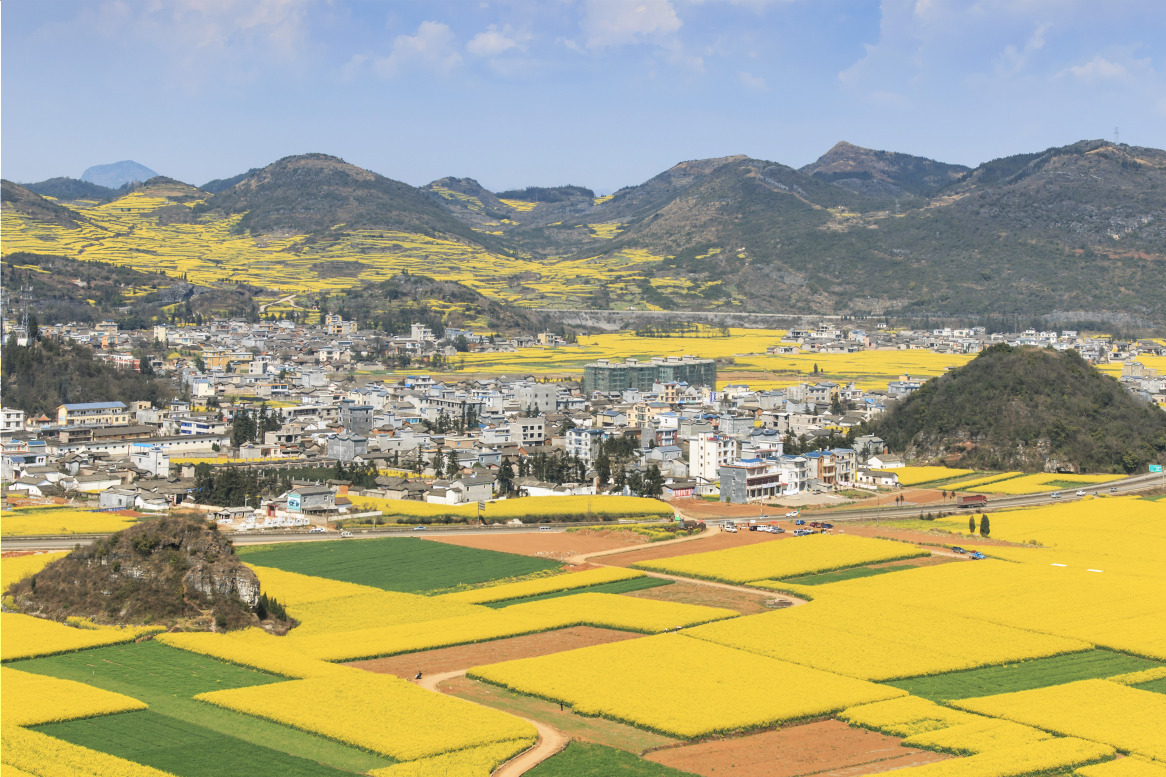
Each year, between February and March, Luoping county in Yunnan province blankets itself in a yellow expanse that the Chinese regard as one of the most beautiful agricultural landscapes in the country. More than 200 km² of rapeseed fields bloom simultaneously, creating geometric patterns across the plains and circular terraces on the hillsides. Luoping is one of China's primary producers of rapeseed oil, and since 1998, the blooming season has been the subject of an annual festival.
Why visit the Luoping rapeseed fields
The site's appeal rests on three elements rarely found together:
- An uncommon agricultural scale: rapeseed cultivation covers most of the county, encompassing more than 200 km² of plantations blooming simultaneously.
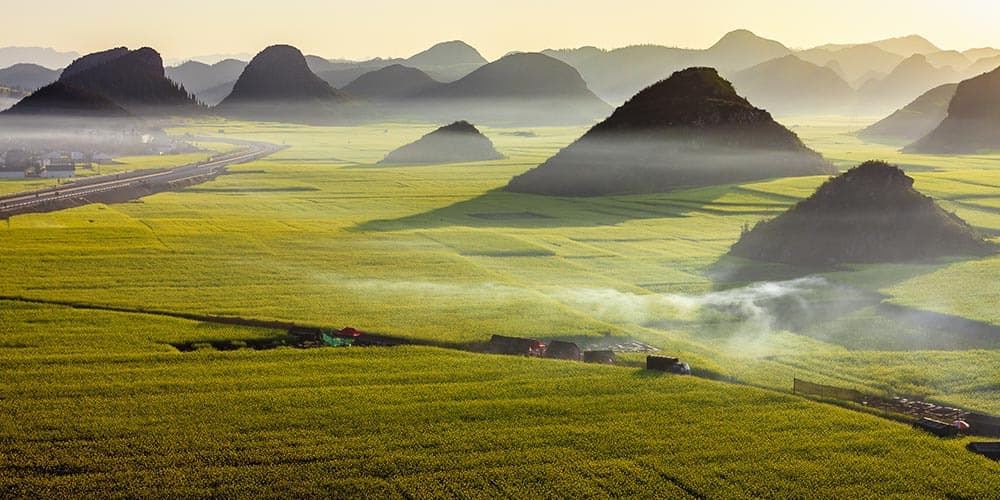
- Distinctive karst topography: the conical peaks characteristic of southwestern China emerge amid the fields, giving the landscape its visual signature.
- A short and precise blooming window: the flowering season lasts only a few weeks, making it a seasonal stop to plan ahead on a Yunnan itinerary.
The site remains largely frequented by Chinese visitors and retains its agricultural character: these are not manicured gardens, but active production plots.
History and rapeseed flower festival
Rapeseed has been cultivated in Luoping for a long time for cooking oil production, but tourism tied to the blooming is recent. In 1998, local authorities launched the rapeseed flower festival, aiming to highlight the agricultural landscapes of the county and attract photographers and visitors.
In its early years, the festival ran from mid-January to early March, spanning more than two months, though the useful observation period remained concentrated around peak blooming. Today, the event shapes Luoping's high season, featuring activities, photography exhibitions, and designated viewpoints.
What to see on site
The landscape changes dramatically depending on altitude and viewing position. Four observation points appear in all itineraries:
Jinji Peaks
These conical hills aligned above the plain offer the most renowned view: a yellow checkerboard dotted with dark spires. It is the privileged vantage point for grasping the site's scale, particularly at dawn or dusk when raking light accentuates the relief.
Niujie Village
On the mountain slopes surrounding this village, the fields take the form of concentric circular terraces, comparable to stepped rice paddies but a uniform yellow during blooming.
Dshui Path
This route winds between the plots and allows walking amid the flowers at eye level. Suited to those seeking a more immersive approach than overhead panoramas.
Jiulong Cascades
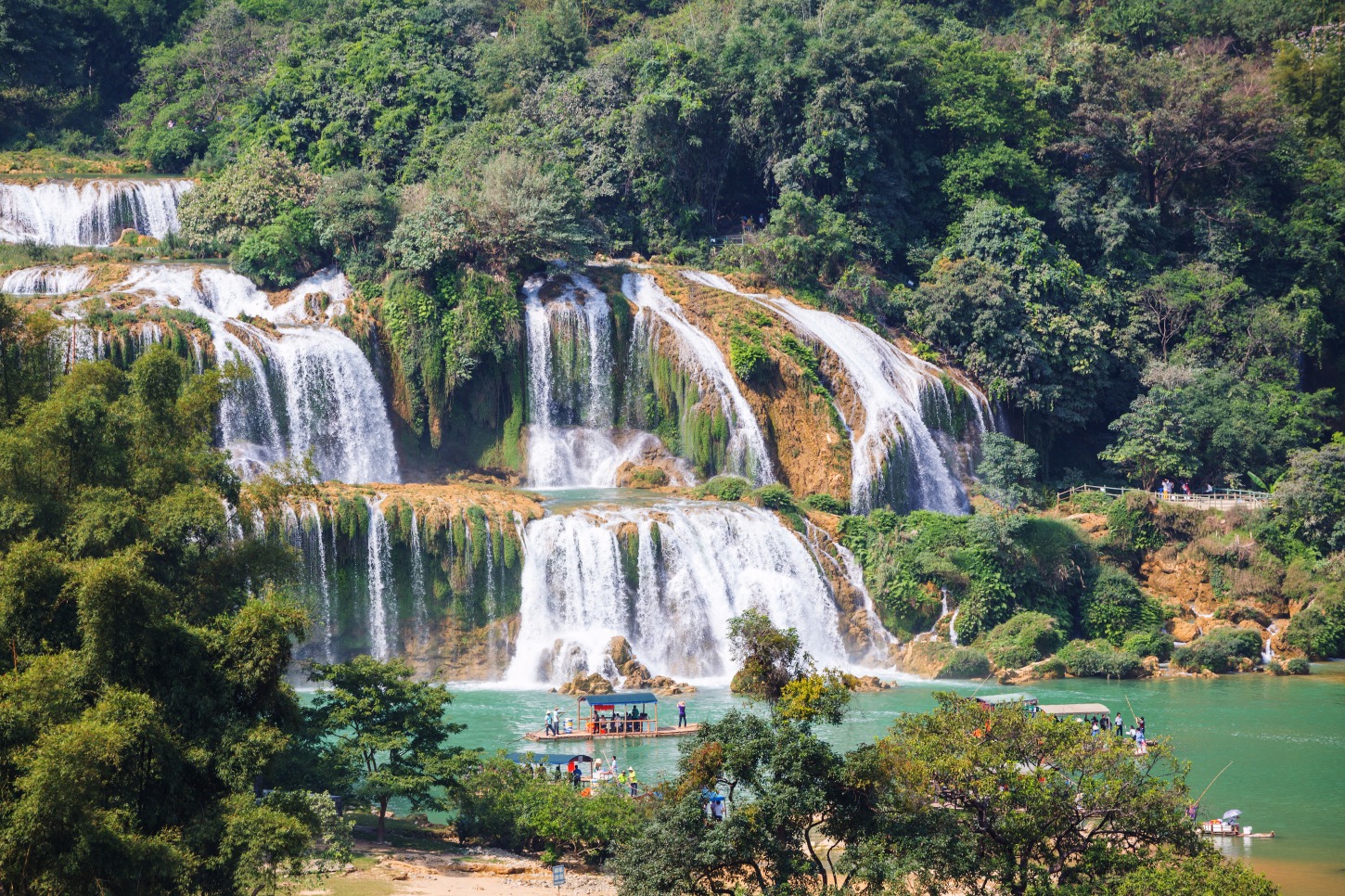
Located nearby, the nine-tiered waterfalls are not part of the fields themselves but constitute a natural extension of the visit, often incorporated into the same day.
When to go
Blooming concentrates between mid-February and mid-March, with a peak generally around the last week of February. The calendar varies each year depending on winter weather: it is useful to verify the flowering progress with local sources before finalizing an itinerary.
Outside this window, the fields are either in preparation or harvested, and the site loses most of its visual appeal. Cultivation technically spans from late winter to early summer, but only a few weeks correspond to full blooming.
Clear-sky days provide the best conditions for photography, with the yellow saturation more pronounced under direct light.
Practical information
- Visit duration: allow a full day to cover two or three viewpoints, two days for an in-depth discovery including Jiulong Cascades.
- Fees: paid access to certain developed viewpoints (notably Jinji peaks), free elsewhere. Rates are modest overall.
- Accommodation: the town of Luoping concentrates the supply, which fills quickly during the festival. Booking recommended several weeks in advance.
- What to bring: hiking shoes, sun protection, water. Late winter temperatures remain cool in the morning.
How to get there
Luoping is connected to Kunming, the capital of Yunnan, by a direct railway line. This route is the simplest solution from the regional hub. Once at Luoping railway station, tourist buses depart from the main bus station and serve the main viewpoints during the blooming season.
For visitors with more flexibility, renting a car with driver from Kunming allows you to combine the different viewpoints in the same day and avoid the time constraints of shuttle services.
Nearby and in the region
Luoping fits naturally into a larger Yunnan circuit. Travelers often extend toward Kunming and its surroundings, where several complementary sites can be found:
- The Beijing Botanical Garden, for those continuing north.
- The Beishan Temple, a cultural stop in the region.
- Aiding Lake, for itineraries combining Yunnan and desert areas of the west.
- The Baigongfang Handicraft Museum, for insight into traditional craftsmanship.
Frequently asked questions
Frequently asked questions
The optimal period spans mid-February to mid-March, with a peak generally around late February. The calendar varies year to year depending on winter conditions.
A full day allows you to cover two to three viewpoints. To include Jiulong Cascades and paths between the plots, two days are preferable.
A direct train connects Kunming to Luoping. From Luoping bus station, tourist buses serve the main viewpoints during festival season.
Jinji peaks for the overall panorama, Niujie village for circular terraces, Dshui path for walking among the fields, and Jiulong Cascades for a natural extension of the visit.
Yes. During the rapeseed flower festival, Luoping's hotel supply fills quickly. Booking several weeks ahead is recommended.
Organize your trip
The Luoping rapeseed fields fit into a larger Yunnan or southwestern China journey. To build an itinerary combining this seasonal stop with other sites in the region, consult our custom China tours.
Interested in this visit?
We can include it in your personalised itinerary.