Dazhao Temple
Dazhao Temple
The oldest Lamaist temple in Inner Mongolia, Hohhot's Dazhao has preserved its Sino-Tibetan architecture since 1580 and a silver statue of Sakyamuni Buddha.
Dazhao Temple is the oldest Lamaist Buddhist temple in Hohhot and throughout Inner Mongolia. Built in the late 16th century in the old town, it retains its original Sino-Tibetan architecture and houses a silver statue of Buddha Sakyamuni renowned throughout the region.
Why visit Dazhao Temple
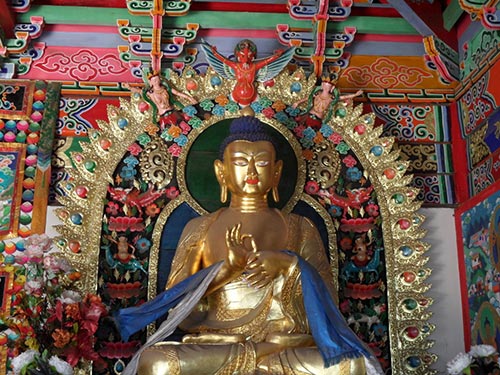
- The oldest Lamaist temple in Hohhot and Inner Mongolia, completed in 1580.
- A 2.5-meter silver statue of Sakyamuni, inaugurated by the third Dalai Lama himself.
- Remarkable Sino-Tibetan architectural heritage remarkably preserved despite the centuries.
- A central location in the old town, ideal for combining with other religious sites and strolling through historic alleyways.
History of the temple
Construction of Dazhao Temple was completed in 1580, during the Ming Dynasty (1368-1644). A renovation was undertaken in 1640, but the essence of the original architecture was preserved, giving the site a rare heritage value in Inner Mongolia today.
The temple owes its fame to the visit of the third Tibetan Dalai Lama in 1586, who came in person to inaugurate the silver statue of the great Buddha. From this event onwards, Hohhot became a major religious center, attracting believers and pilgrims from across the region. Under the early Qing Dynasty (1644-1911), Emperor Kangxi also visited, further reinforcing the sanctuary's prestige.
What to see inside
The silver statue of Sakyamuni
The centerpiece of the temple, the statue depicts Buddha Sakyamuni. Standing 2.5 meters tall and fashioned in silver, it is framed by two golden dragons. This is the work that the third Dalai Lama came to consecrate in 1586, and it remains today the principal object of devotion in the sanctuary.
Paintings and decorations
The interior halls are punctuated by paintings in blue and red tones, typical of Lamaist art. Sculptures, small statues and frescoes line the path and testify to the care taken in decorating the various pavilions.
The musical instrument collection
The temple preserves a collection of period musical instruments in good condition, used during religious ceremonies. This ensemble offers an interesting glimpse into the liturgical practices of Tibetan Buddhism as they spread throughout Mongolia.
Sino-Tibetan architecture
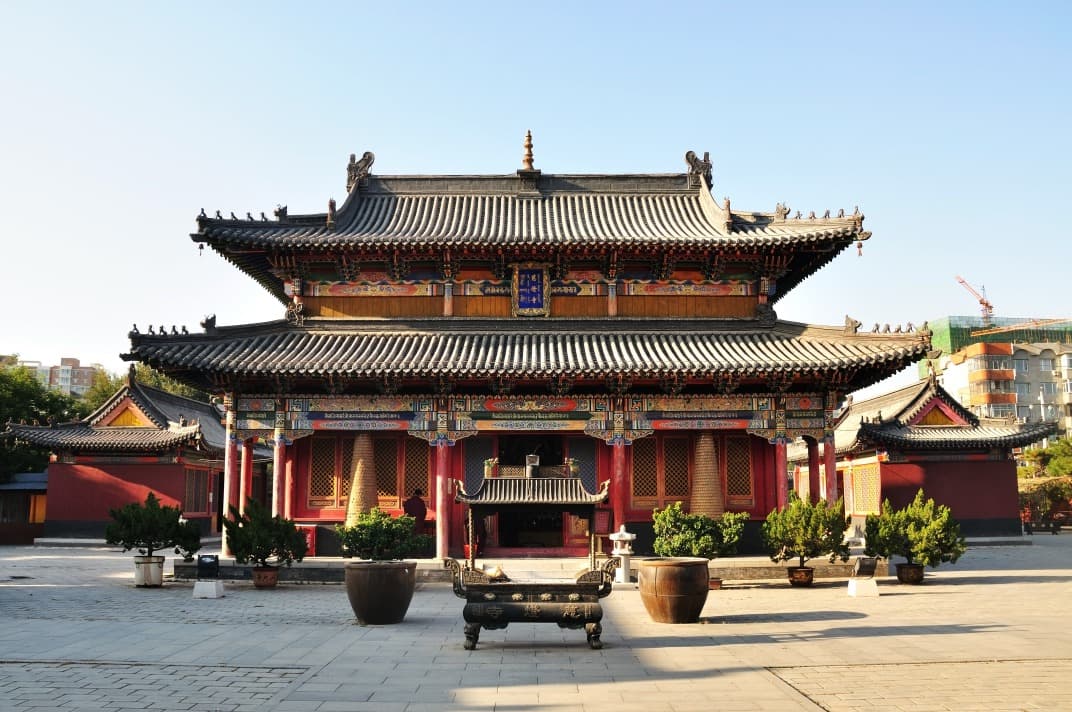
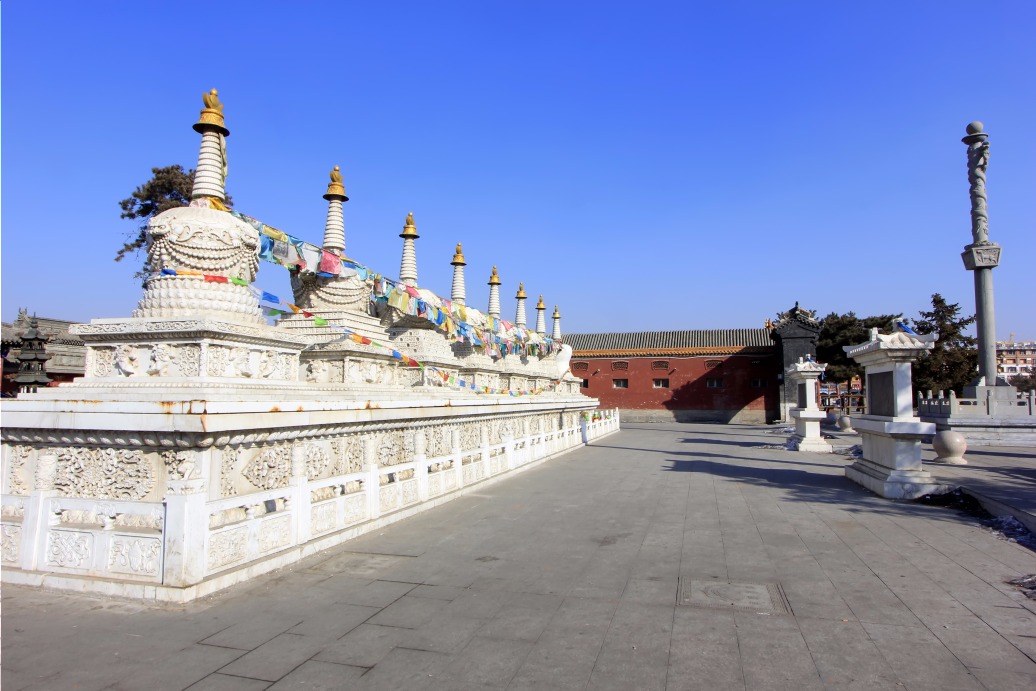
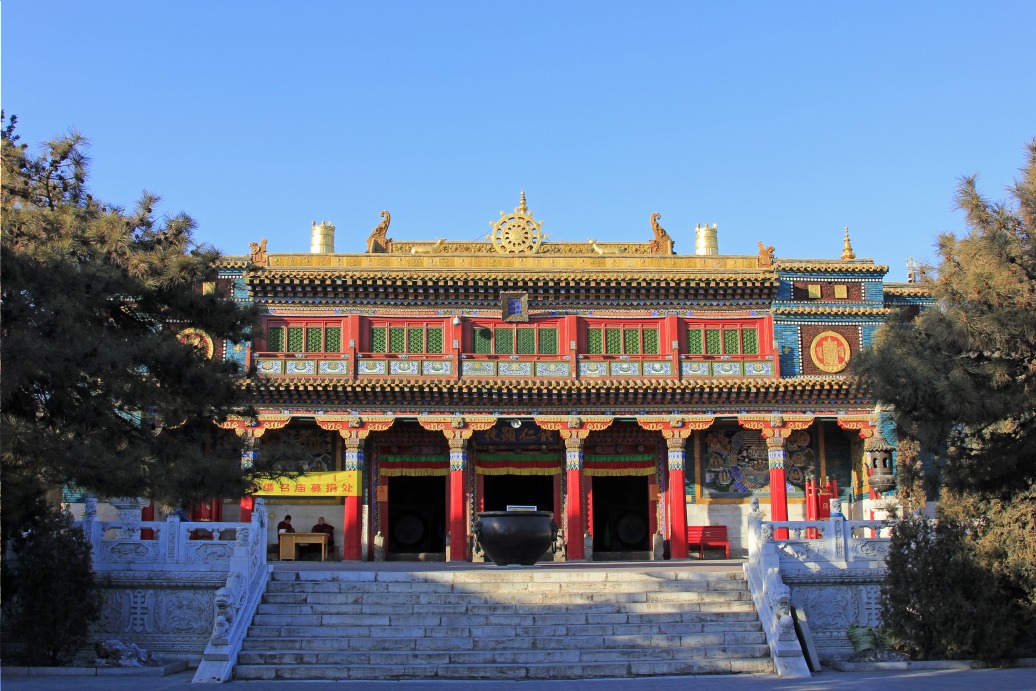
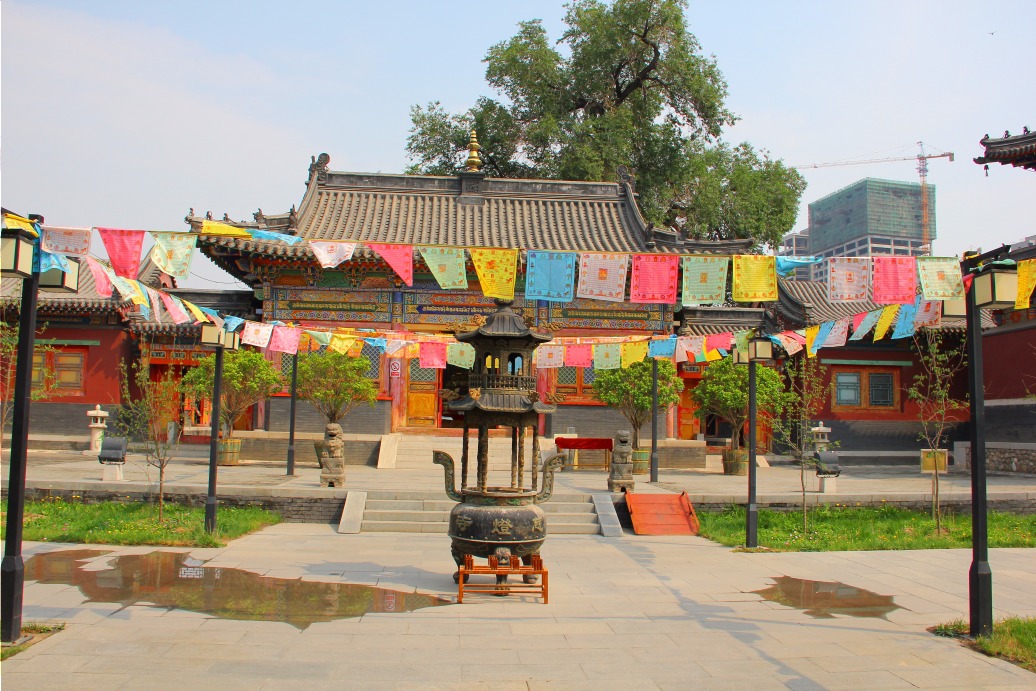
Dazhao exemplifies a distinctive Sino-Tibetan architectural style, blending the inner courtyard layout of Chinese tradition with the roofs and ornaments of Tibetan Buddhism. The entire complex is well-maintained and allows visitors to grasp the coherence of a 16th-century religious complex.
Practical information
- Visit duration: allow approximately one hour, longer if you extend to nearby sites.
- Admission: paid entry at a moderate rate (verify on site, subject to change).
- Hours: open during daytime only; morning visits are preferable to avoid crowds.
- Crowds: the site is very popular, especially during Buddhist festivals.
- Dress code: respectful attire recommended, as in any active place of worship.
How to get there
Dazhao Temple is located in Hohhot's old town, along a pedestrian street. Several urban bus lines serve the Dazhao stop (notably lines 6, 38, 42, 58 and 59), to be verified on site as the network evolves. From central Hohhot, a taxi ride remains quick and affordable.
Nearby attractions
Hohhot's old town concentrates several religious sites within walking distance:
- Xilituzhao Temple, located opposite Dazhao, another major Lamaist monastery in the city, naturally combined with this visit.
- Old town alleyways, where merchants, shops and traditional architecture rub shoulders, perfect for a stroll after visiting the temple.
- Further into Inner Mongolia, Wudangzhao Lamasery complements the discovery of regional Tibetan Buddhism very well.
- In neighboring Shanxi, the Yungang Caves and Hengshan mountain extend the exploration of Buddhist heritage in northern Chine.
When to visit
Hohhot experiences a pronounced continental climate, with very cold, dry winters and hot summers. The most pleasant time to visit Dazhao Temple extends from spring through autumn (May-June and September-October), with mild temperatures and favorable light for photography. Summer allows you to combine your visit with an excursion to nearby steppes.
Frequently asked questions
Frequently asked questions
One hour is sufficient to explore the entire temple. Combined with Xilituzhao Temple directly across and a stroll through the old town, allow a half-day.
Yes, it is an active Lamaist monastery. Monks reside there and ceremonies are held regularly. Respectful attire and discreet behavior are expected.
Dazhao is older (late 16th century) and houses the famous silver statue of Sakyamuni. Xilituzhao, just opposite, is the historic seat of the Living Buddha of Inner Mongolia. Both can be visited in the same half-day.
Exterior photography is generally permitted. Inside prayer halls, it may be restricted around sacred statues: follow the signage on site.
Plan your trip
Dazhao Temple fits naturally into an itinerary through Inner Mongolia and northern Chine, combining Buddhist heritage, steppes and historic cities. To build a customized journey including Hohhot and its surroundings, consult our travel suggestions for Chine.
Photos
Nearby
Interested in this visit?
We can include it in your personalised itinerary.