Ciqikou Old Town
Ciqikou Old Town
A former commercial port on the Jialing River, Ciqikou preserves in Chongqing a Qing-dynasty borough with cobbled alleyways, a Buddhist temple and pottery craftsmanship.
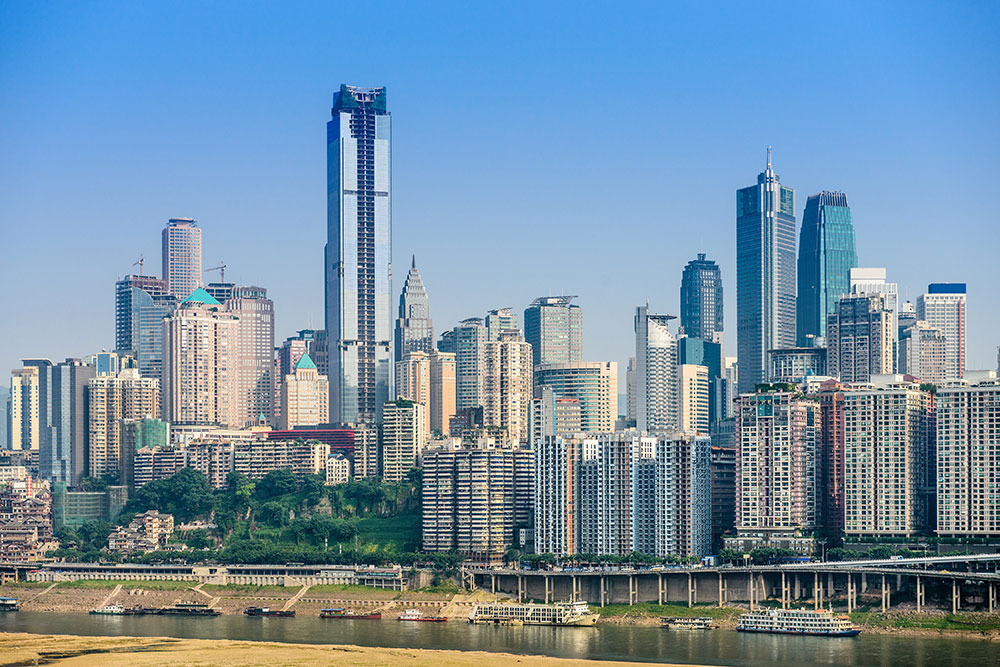
The Ciqikou Old Town sits on a promontory overlooking the Jialing River, in the northeastern Shapingba district of Chongqing, approximately 14 to 17 km from the Liberation Monument. This fortified borough, once an active merchant port during the Ming and Qing dynasties, preserves a network of cobbled alleyways, wooden shops and black-tiled houses that sharply contrast with the skyscrapers of the modern metropolis.
Why Visit Ciqikou
Ciqikou offers one of Chongqing's rare preserved ancient urban ensembles. Most buildings date to the Qing dynasty (1644–1911), with some additions from the Republican period (1912–1949). Visitors come for three main reasons:
- to walk through a traditional merchant borough still inhabited, with its craft shops and teahouses;
- to taste the local specialties of old Sichuan in a vibrant, authentic atmosphere;
- to complement an urban stay in Chongqing with a historic site accessible by metro, just a few stops from the city center.
Allow 2 to 3 hours to tour the main alleyways, longer if you include the temple, garden and a restaurant break.
History of the Borough
The town was built at the foot of Baiyan Mountain during the reign of Song Emperor Zhenzong (960–1279). It was then called Baiyanchang, meaning "white stone field," a reference to the limestone outcrops visible at the site.
Local legend links the place to Ming Emperor Zhu Yunwen (Ming dynasty, 1368–1644). Dethroned by his uncle Zhu Di, he reportedly took refuge at the Baolun Temple to become a monk. This episode gave rise to the nickname "Temple of Hidden Dragon"—a temple where a dragon hides—which subsequently led to the town being named the Borough of Longying. Though this oral tradition is not confirmed by historical sources, it remains very much alive in local memory.
On the bank of the Jialing River, the borough became an important commercial port: cargo ships from neighboring provinces docked at its wharves, and river trade enriched the city. During the Qing dynasty, the site specialized in ceramic production, "Sichuan pottery," and took on its definitive name, Ciqikou, meaning "porcelain region."
What to See in Ciqikou
The Main Street and Alleyways
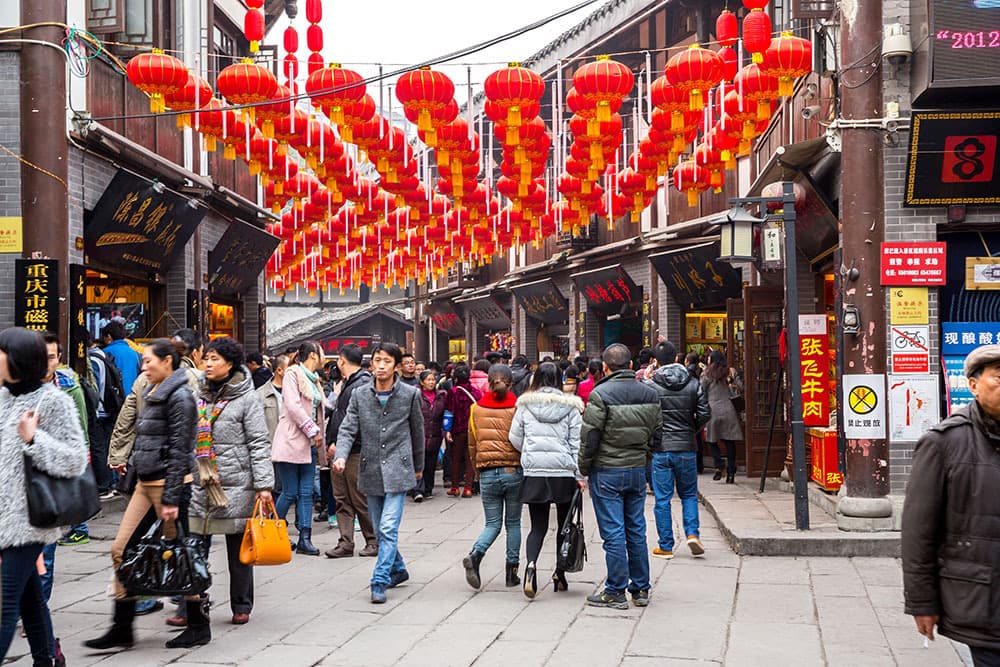
The main street buzzes with activity: craft shops, tea vendors, hand-pulled candy stalls, pottery displays. The wooden buildings with black tile roofs, adorned with red and yellow decorations, showcase the region's traditional architecture. Doors and windows feature relief carvings. Venturing away from the central axis leads to quieter side streets where residential homes still stand.
The Entrance Siheyuan
At the entrance to the main street stands a siheyuan—a traditional square courtyard house—built by Zhong Yunting to impress Dowager Empress Cixi. The building combines architectural elements from northern and southern Chine and serves today as a landmark.
The Hanlinyuan Garden
The Hanlinyuan Garden, once nicknamed the "intellectual Mecca" of Ciqikou for the scholars who gathered there, still houses the Hanlin teahouse. It is an ideal spot to take a break away from the commercial hustle.
The Baolun Temple
Built atop the hill overlooking the town, the Baolun Temple is the site's principal Buddhist monument. Its origins are ancient; local sources trace its founding back over a thousand years. The sound of bells and drums marking monastic services can be heard here.
Local Specialties
Ciqikou is renowned for a few specialties worth tasting on-site:
- roasted and spiced peanuts;
- braised duck, an emblematic dish served in the borough's restaurants;
- the "Three Treasures of the Old Borough" (traditional sweets and snacks).
Practical Information
- Free access to the borough; entry to certain monuments (temple, garden) may require a modest fee.
- Hours: the street is accessible throughout the day and early evening. Most shops close between 7 p.m. and 8 p.m.
- The site is very crowded on weekends and during Chinese national holidays; favor a weekday morning visit for a quieter experience.
How to Get There
- Metro: Line 1, Ciqikou station, then approximately 10 minutes' walk to the borough entrance.
- Bus: Lines 202, 220, 237, 467, 503, 808 and 843, main Ciqikou stop.
- Taxi / Ride-hailing: expect about twenty minutes from central Chongqing, outside rush hours.
Nearby Attractions
Ciqikou fits naturally into a broader visit to Chongqing and inland Chine. To extend your discovery, you can combine this borough with other heritage sites across the country:
- the Great Wild Goose Pagoda in Xi'an, another major center of Chinese Buddhism;
- the Bezeklik Thousand Buddhas Caves in Xinjiang, for Buddhist rock art;
- the Longgong Cave, in the neighboring province of Guizhou.
Frequently Asked Questions
Frequently asked questions
Allow 2 to 3 hours to walk the main street and adjacent alleyways. If you include Baolun Temple, Hanlinyuan Garden and a meal, plan for a half-day.
Access to the borough is free. Only certain monuments inside (temple, garden) may charge a modest entry fee.
A weekday morning offers the quietest visit. Late afternoon is more animated, with a lively commercial atmosphere until shops close between 7 p.m. and 8 p.m.
The easiest way is to take Metro Line 1 to Ciqikou station, followed by approximately 10 minutes on foot. Several bus lines also serve the district.
Ceramics inspired by "Sichuan pottery," hand-pulled candies, spiced peanuts and a few pieces of textile crafts are among the most typical purchases.
Including Ciqikou in a Chine Trip
An accessible and historically rich urban stop, Ciqikou fits naturally into an itinerary combining Chongqing, Sichuan and a Yangtsé River cruise. To build a custom itinerary integrating this site and other iconic locations, consult our suggestions for Chine trips.
Nearby

Interested in this visit?
We can include it in your personalised itinerary.