Guilin
Guilin
Karst peaks, Li River cruise to Yangshuo, caves and Longji rice terraces: everything you need to prepare your trip to Guilin.
Name: Guilin
Chinese name: 桂林
Province: Guangxi
Status: Prefecture-level city
Population: 4,988,397 inhabitants
Area: 551 km²
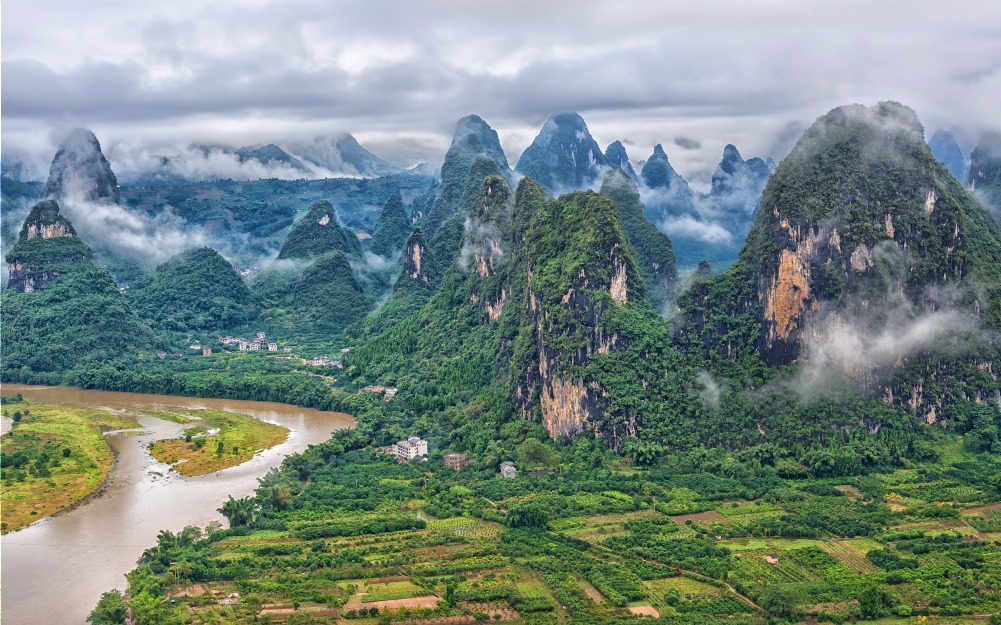
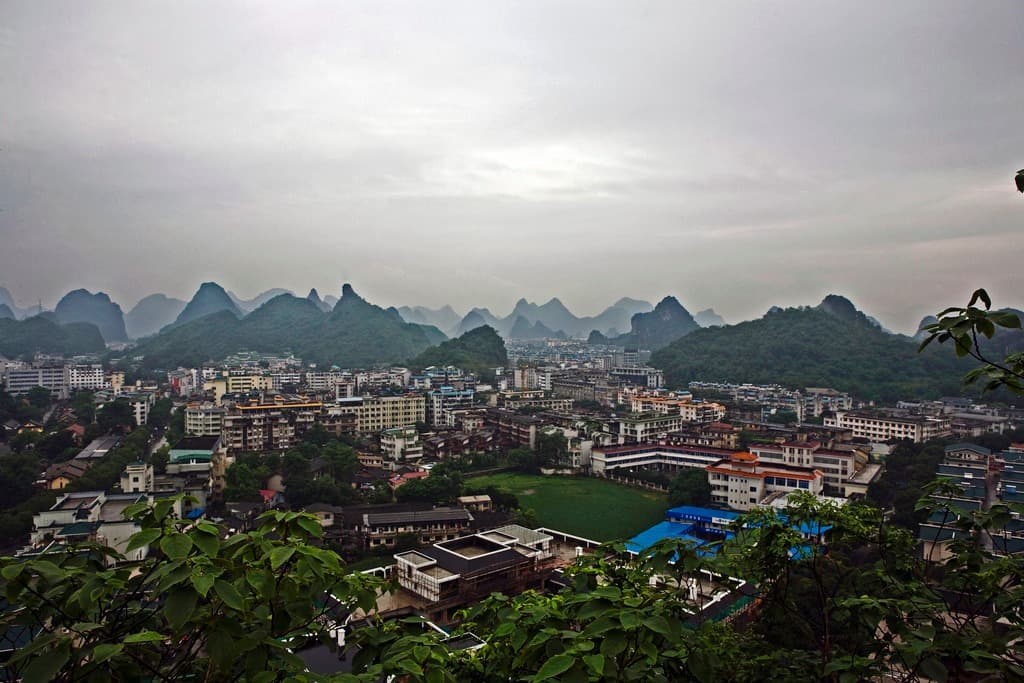
Guilin, situated on the banks of the Lijiang River in the northeast of Guangxi, owes its reputation to its extraordinary karst landscapes. The beauty of its nature has long inspired poets and painters throughout Chine. These idyllic landscapes welcome thousands of tourists each year—both Chinese and foreign—seeking to unwind at the foot of its peaks or on a cruise along the Li River.
History
When mentioning Guilin, one naturally thinks of its picturesque landscapes rather than its history. Yet the history of the city with karst peaks stretches back over 2,000 years.
Guilin was founded during the Qin dynasty when the Ling Canal was constructed in the small town of Xingan, 70 km to the north. This canal allowed the transport of numerous food reserves from neighboring cities and provinces.
Starting as a modest village, Guilin grew gradually and was renamed Guizhou in 507.
During the Ming dynasty, Guilin or Guizhou became the capital of Guangxi due to its strategic importance to the province. It lost its capital status in 1914, replaced by Nanning, but nonetheless retained its significance as the historic and cultural center of the region.
In 1936, Guizhou and its karst peaks served as a refuge for the Chinese army during the Japanese invasion. The city was considered a stronghold of Chinese resistance.
It was not until 1940 that Guizhou became Guilin. In 1944, Guilin fell under Japanese occupation and many of its historical remnants were destroyed. In 1981, the city was inscribed on the State Council's list as one of four cities where the protection of historical and cultural heritage and landscapes should be treated as a priority.
Today
Situated along the Li River, Guilin ranks among the jewels of Chine. As Guangxi's leading tourist hub, Guilin possesses an unparalleled natural beauty that will transport you through a unique and unforgettable journey. Beyond its incredible nature, you can discover the city's precious remaining cultural treasures. Its ethnic diversity, forged over time, gives the city an element of mystery and enhances its renown.
The city and its surroundings can easily be explored by bicycle or scooter, both available for rent locally. Getting lost in pathways surrounded by rice fields, karst peaks and natural parks will only enrich your experience.
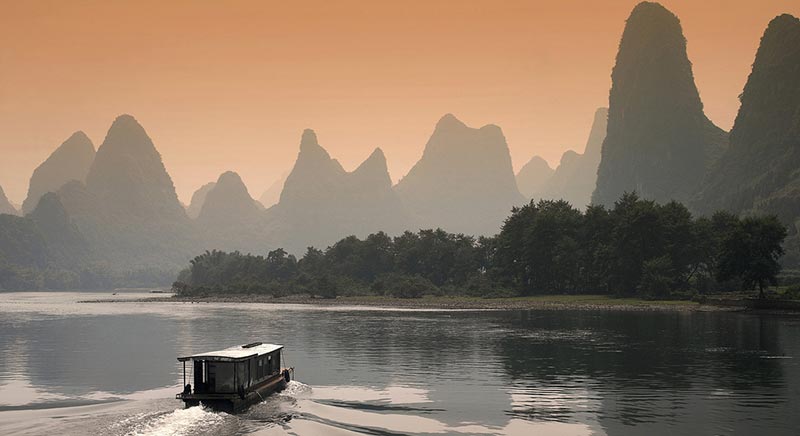
Guilin is fortunate to be located along the Li River, which ranks among Chine's main tourist destinations. It winds through lush mountains and peaks that shimmer in sunlight or moonlight, offering visitors an almost surreal panorama. The cruise connecting Guilin to Yangshuo will be the best way to enjoy the journey and immerse yourself in the very heart of these idyllic landscapes.
To escape the stifling summer heat that can strike Guilin, visitors can venture into one of the caves surrounding the city. The Reed Flute Cave, located 5 km from the city center, is one of the most beautiful caves in the area and is counted among the must-see sites during your stay in Guilin.
Since July 28, 2014, the city has implemented a "72-hour visa-free" policy to facilitate exploration of the city for 72 hours during international transit via Liangjiang Airport.
Unfortunately, there is a downside. Rapid economic growth and the tourism boom can sometimes make Guilin's charms harder to appreciate. Expect slightly higher prices than elsewhere in Chine, whether for attraction entrance fees or hotels and restaurants. Tourists are also frequently solicited by taxi drivers and touts who will attempt to take you to one of the city's hotels in hopes of earning a small commission. Nevertheless, these minor inconveniences will quickly fade once you experience Guilin's discovery, considered one of the most beautiful cities in the world.
Climate
As for climate, the seasons are well-defined with a sunny spring, a heavy and rainy summer, a cool and pleasant autumn, and a rainy and windy winter. Temperatures remain relatively mild throughout the year.
In summer, especially in May and June, humidity is very present and sometimes deposits a thick misty blanket veiling the nearest peaks. This period is not the most conducive to visiting the region. The hottest temperatures are recorded in July, averaging 28°C but feeling much higher due to the stifling humidity.
In January the average temperature is 8°C and rarely drops below 5°C.
The best time to visit Guilin is in spring from late March to April, and in autumn in October. Temperatures are pleasant and days are sunny. Still avoid the first week of October, which is a Chinese holiday week.
Airplane
Guilin's Liangjiang International Airport is located 28 km from the city center. Nearly 50 airlines serve the city with domestic and international flights. Regularly scheduled flights from Japan, South Korea, Malaysia, Singapore and Thailand are established.
Daily flights serve the airport from major Chinese cities such as Beijing, Shanghai, Guangzhou, Chengdu, Hong Kong, etc.
Bus shuttles are scheduled according to flight arrival times. You can easily reach the city center by this very affordable mode of transport. Tickets can be purchased at the ticket office located in the terminal.
Train
Guilin Railway Station (South Station) and North Station are the two main stations in the city. The main trains arrive and depart from these stations. Guilin is a hub on the Hunan-Guangxi railway network and the high-speed train line Guiyang-Guangzhou-Guilin. South Station is more accessible than North Station, which is located in the suburbs.
You can reach Guilin by sleeper train, which is relatively comfortable, but remember to book your tickets in advance.
Long-distance Bus
There are three long-distance bus stations in Guilin: the main bus station, the Chengnan bus station and the Beimen bus station.
The main bus station, located 10 minutes from South Railway Station, is served by most of the long-distance buses coming from cities in Guangxi or neighboring provinces such as Guangdong or Hunan.
Regular buses depart from these same stations to reach cities in surrounding provinces.
Boat
There are two main passenger transport docks in Guilin: the Mopanshan dock, located 28 km from the city center, and the Zhujiang dock, situated 32 km from the center. These docks are perfectly suited and equipped for foreign tourists.
The Zhujiang dock is primarily used for cruises along the Li River. The cruise connects Guilin to Yangshuo via a journey of approximately 54 km.
Many taxis will be happy to take you around the city and bring you to your hotel. However, be careful of scams, as some drivers don't hesitate to inflate prices.
It is easy to rent a bicycle or scooter locally to explore the surroundings at your own pace. Outings will be all the more enjoyable and prices much more affordable.
What to do in Guilin?
- Head to Yangshuo on a Li River cruise and admire the idyllic landscapes that await you.
- Discover the stalactites and stalagmites of the Reed Flute Cave.
- Don't miss the Elephant Trunk Hill on the Li River, Guilin's emblematic and must-visit site.
- Stroll through the paths of Seven Stars Park dotted with limestone peaks and caves.
- Venture into the discovery of the magnificent Longsheng terraced rice fields.
Find all of Guilin's attractions.
Photos
Attractions in Guilin
See all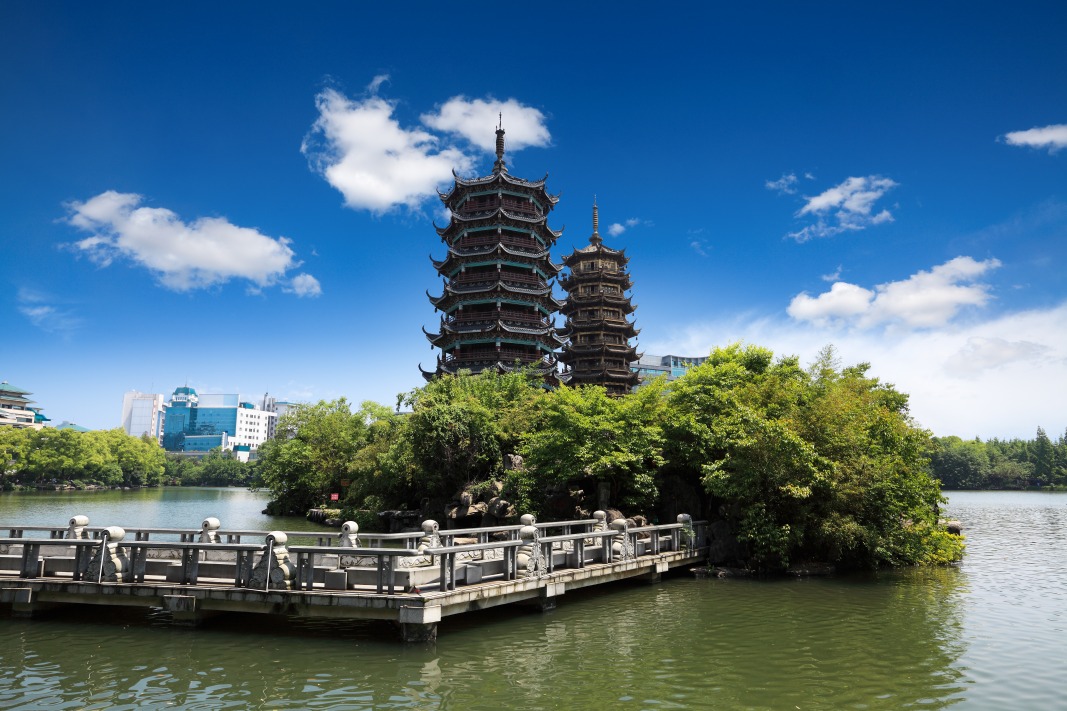
Les pagodes du Soleil et de la Lune
Imaginez deux pagodes élégantes se reflétant dans les eaux calmes d'un lac, l'une dorée comme le soleil, l'autre argentée comme la lune.
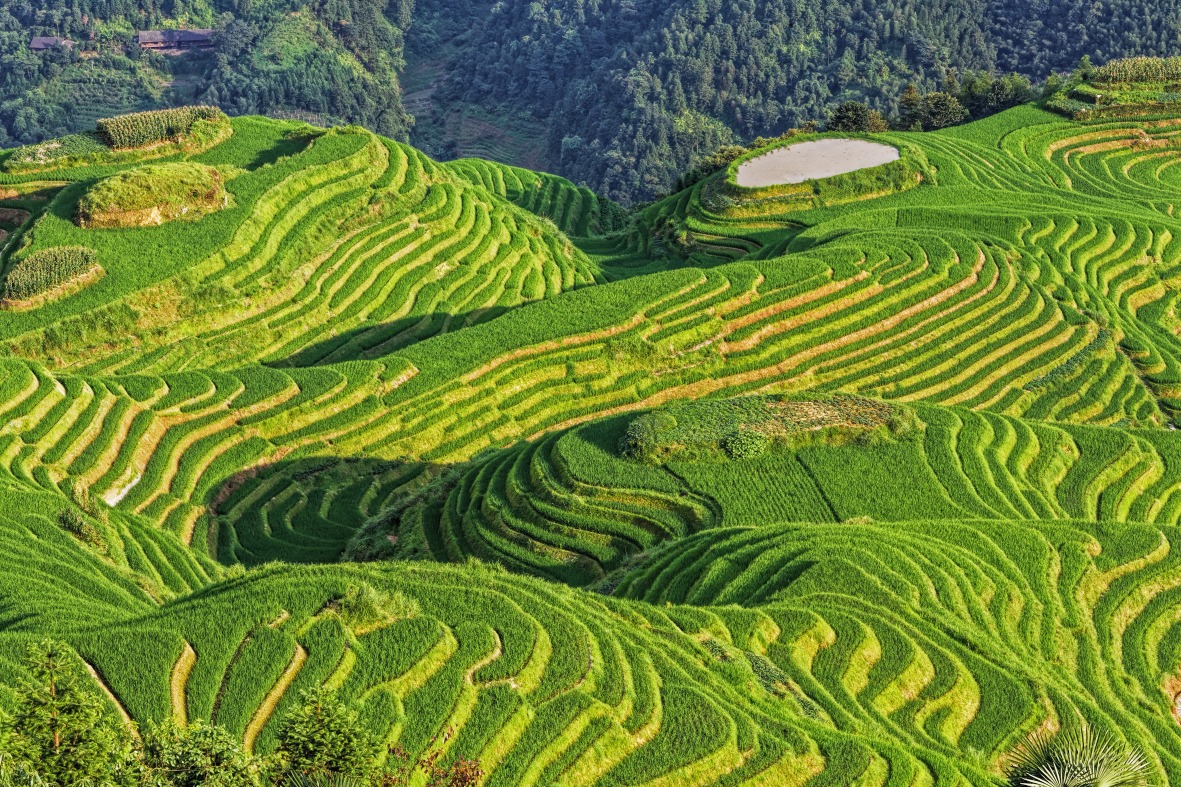
Village Ping'an
À 80 km de Guilin, le village Zhuang de Ping'an ouvre sur les rizières en terrasse de Longji, aménagées sous les Yuan il y a plus de 400 ans.
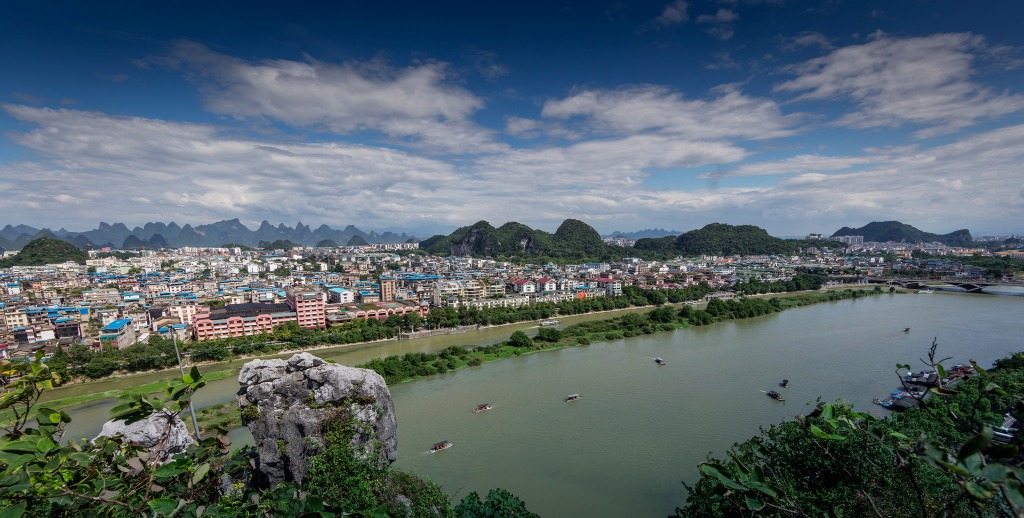
La Colline des vagues endiguées
Piton karstique au bord de la rivière Li à Guilin, la colline Fubo abrite grottes bouddhistes, sculptures Tang et Song, et un belvédère sur la ville.
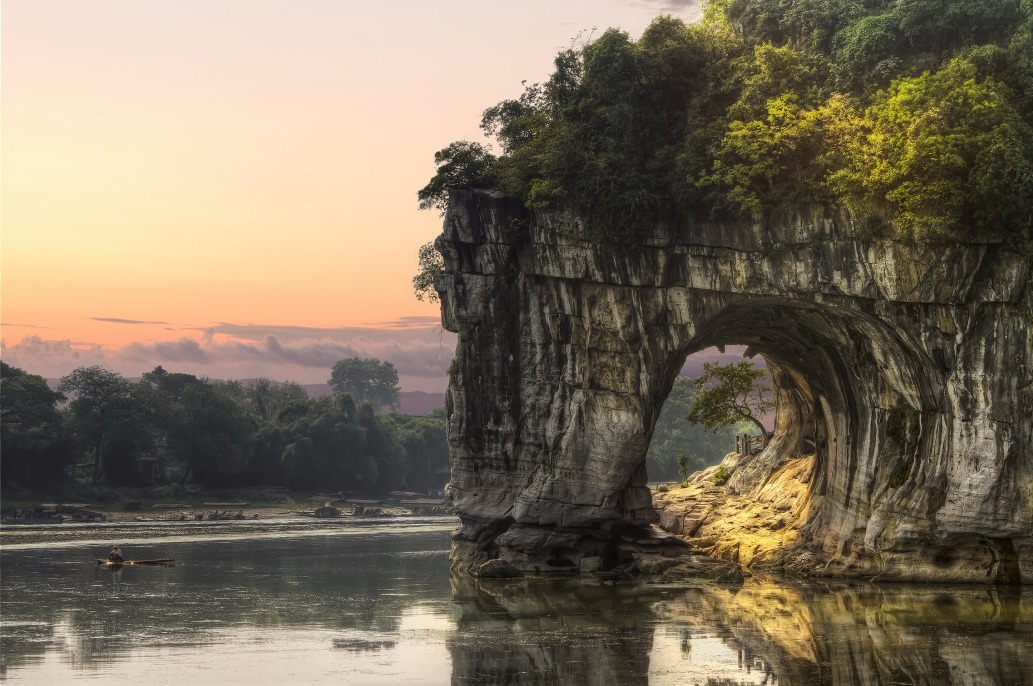
Colline en trompe d'éléphant
Emblème karstique de Guilin, la colline en trompe d'éléphant abrite une grotte traversante, des poésies des Song et une pagode Ming au sommet.
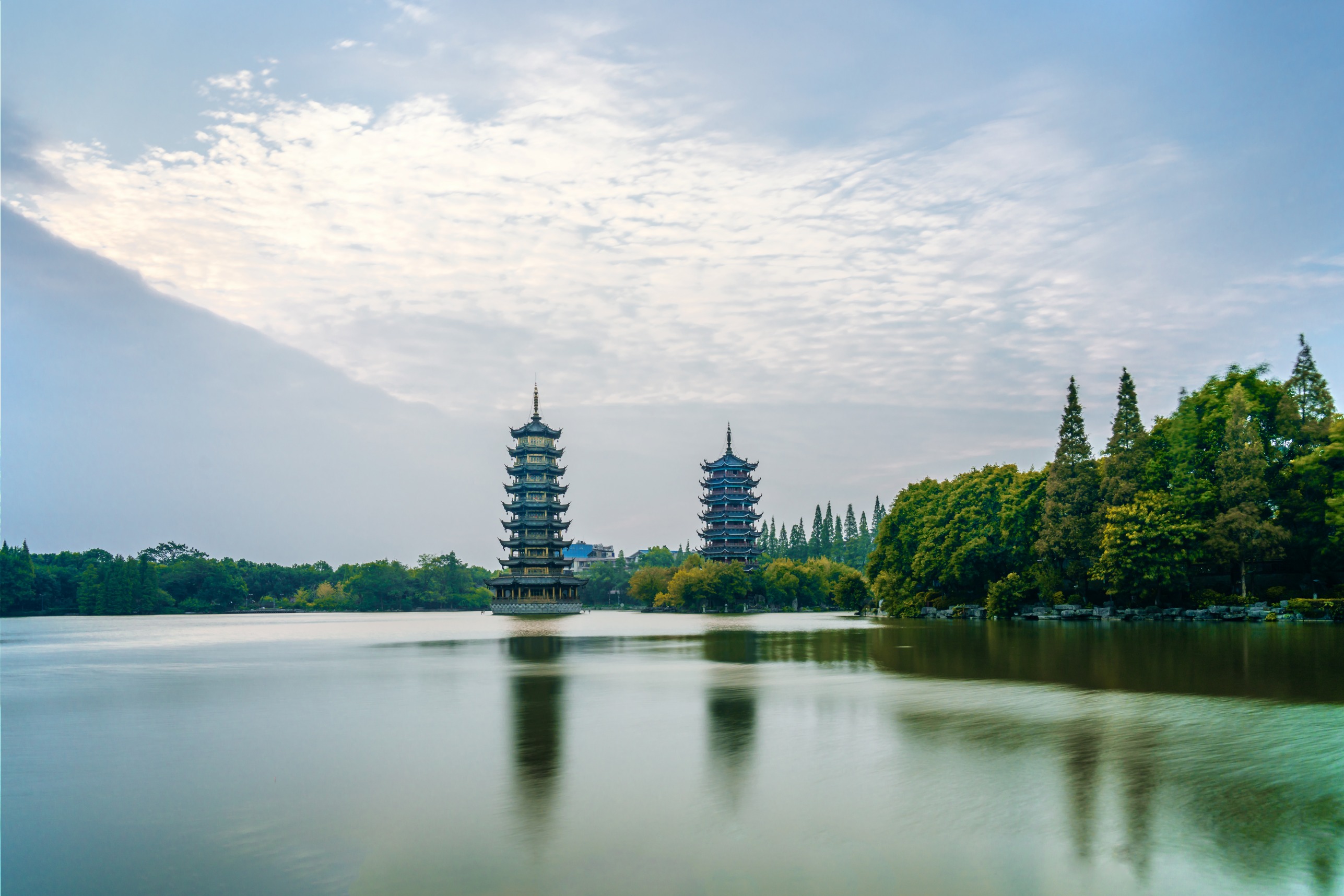
Les deux rivières et les quatre lacs
À Guilin, les Deux rivières et quatre lacs forment une boucle navigable au cœur de la ville, jalonnée de pagodes Ming, de ponts gravés et de berges paysagères.
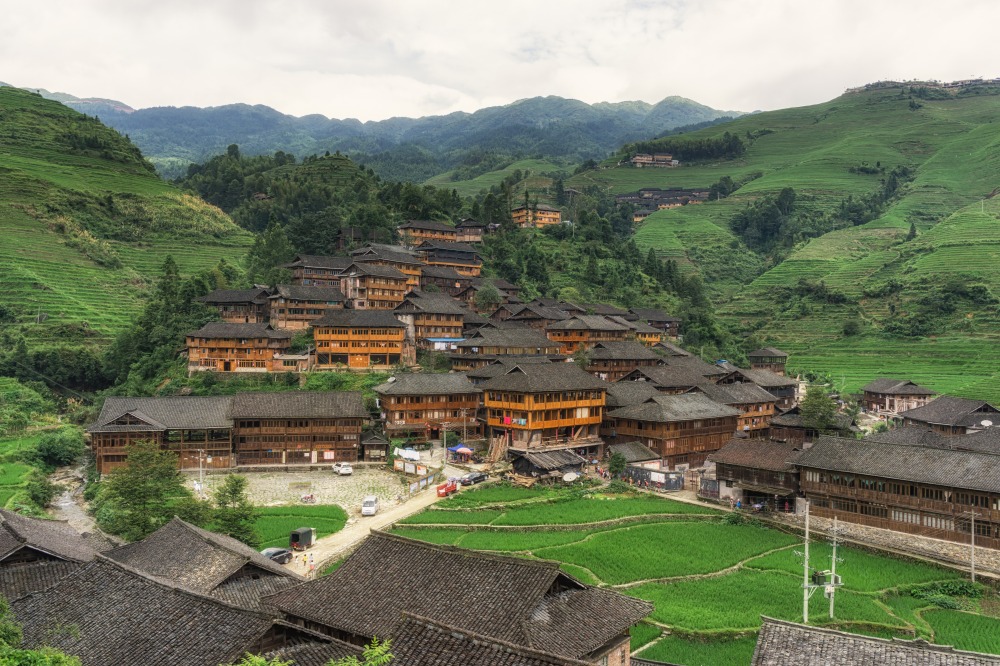
Village Yao de Dazhai
Village de l'ethnie Yao rouge dans le Guangxi, Dazhai donne accès aux rizières en terrasses de Longji-Jinkeng et à plusieurs belvédères panoramiques.
Want to discover this destination?
Our local advisors design your tailor-made trip.