National Museum of China (中国国家博物馆)
National Museum of China (中国国家博物馆)
Facing Tiananmen Square, the National Museum of China traces five thousand years of civilization through ritual bronzes, Han jades and historical documents. Free admission with advance reservation, direct metro access.
Located on Tiananmen Square, opposite the Forbidden City, the National Museum of China ranks among the world's largest museums by floor area. It chronicles five thousand years of Chinese civilization through permanent collections of archaeology, art and modern history. Its position at the symbolic heart of Beijing makes it an essential stop for grasping the historical depth of the country.
Quick reference guide
- Admission: free with mandatory online reservation (passport required)
- Access: metro line 1, Tiananmen East station (天安门东)
- Recommended duration: 3 to 4 hours minimum for the main collections
- Dress code: no particular restrictions
- Accessibility: wheelchair-accessible building, elevators available
What to see
The museum is divided into two major permanent exhibitions. "Ancient History of China" showcases major archaeological pieces: ritual bronzes from the Shang and Zhou dynasties, Tang ceramics, Neolithic jades. "The Road to Rejuvenation" covers modern history from the Opium War to the founding of the People's Republic. Large-scale international temporary exhibitions regularly supplement the permanent displays.
History and context
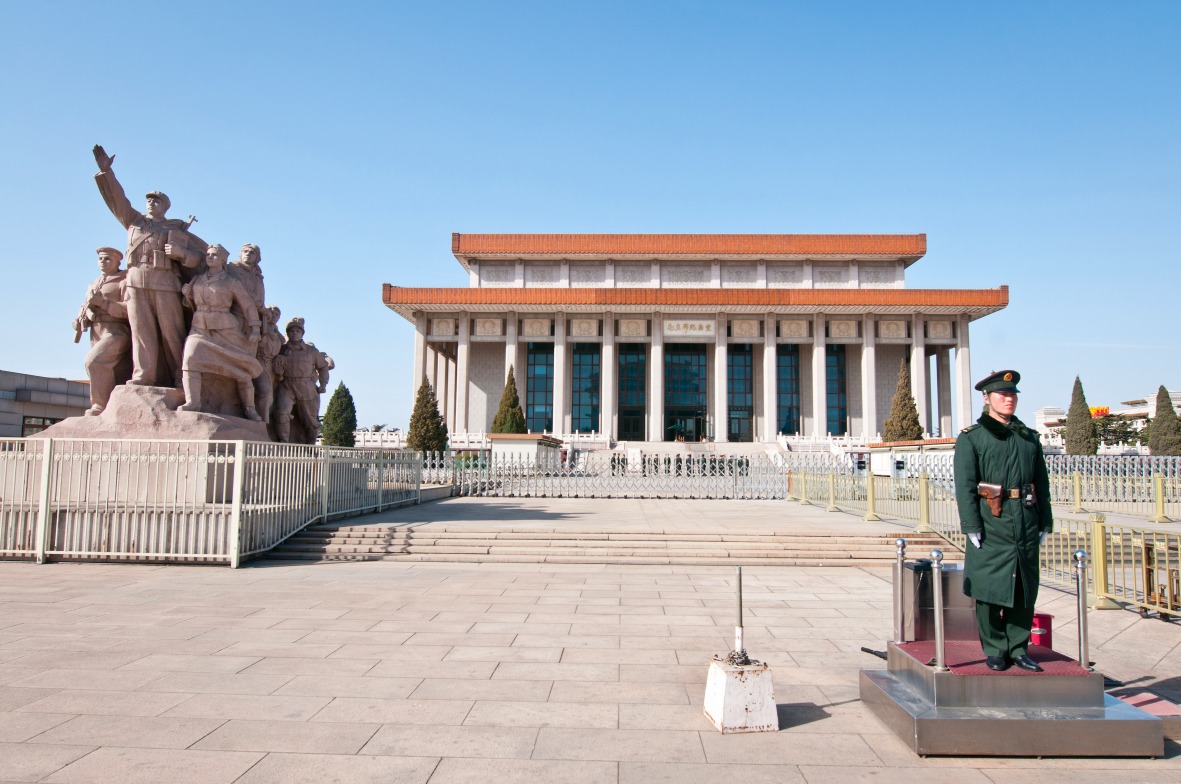
The current building, inaugurated in 2011 following major renovation, resulted from the merger of the Museum of Chinese History and the Museum of the Chinese Revolution, both founded in 1959. Its Soviet-classical façade, stretching hundreds of meters, borders the eastern side of Tiananmen Square. The collection contains over one million objects.
Highlights of the visit
Ancient ritual bronzes
The bronze ding and gui vessels from the Shang (1600–1046 BCE) and Zhou dynasties represent rare pieces of exceptional quality. Their oracle inscriptions rank among the oldest traces of Chinese writing.
The Han jade burial suit
Among the most spectacular objects: funerary jade suits composed of plaques sewn together with gold thread, created for Han dynasty princes. Their fabrication represented years of skilled craftsmanship.
The "Road to Rejuvenation" exhibition
This gallery traces chronologically and through primary sources the two centuries of political and social transformation that shaped contemporary China. Essential for understanding the official narrative of national history.
Photography tips
Photography is permitted in most galleries without flash. The exterior façade, with Tiananmen Square in the background, offers a monumental composition in late afternoon when raking light accentuates the colonnade's relief. Inside, bronzes are often dramatically lit: a compact tripod significantly improves results.
Location and access
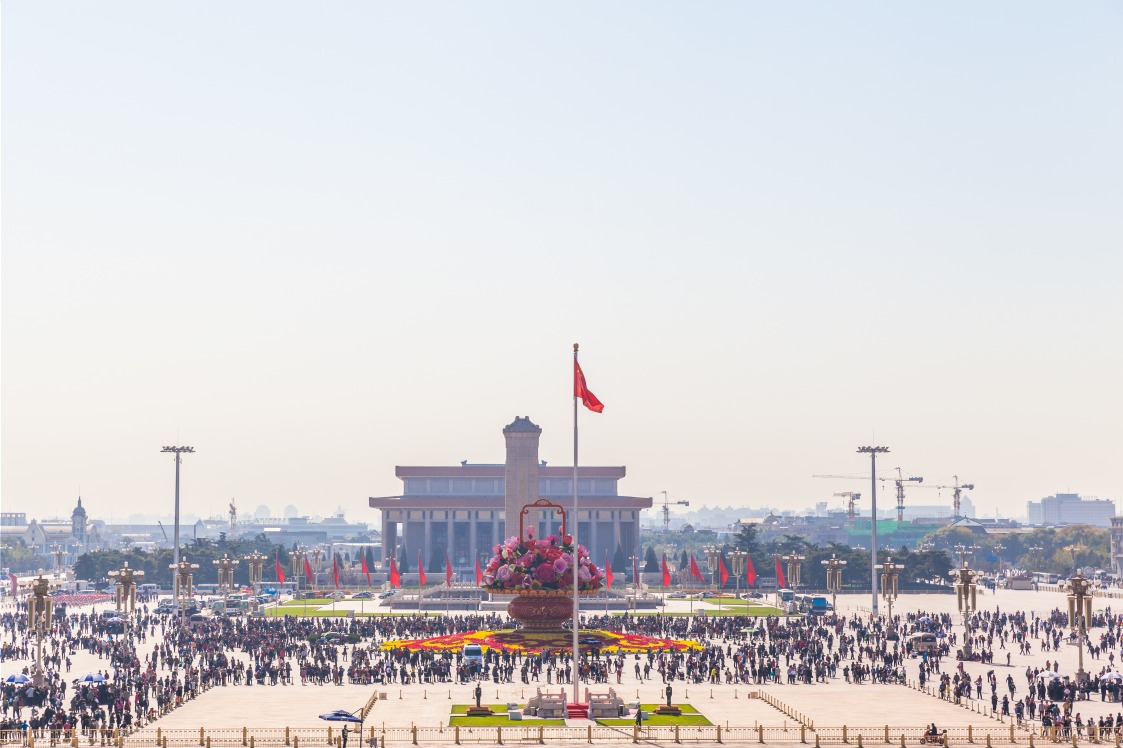
The museum occupies the eastern flank of Tiananmen Square, in Beijing's historic center. Tiananmen East metro station (line 1) is just a few minutes' walk away. The Forbidden City is accessible on foot from the square, to the north. The Great Hall of the People faces the museum on the square's western side.
Nearby attractions
- Forbidden City — The imperial palace of the Ming and Qing dynasties, a ten-minute walk north.
- Tiananmen Square — The world's largest urban square, directly in front of the museum.
- Jingshan Park — Artificial hill north of the Forbidden City, with panoramic views of the imperial roofs.
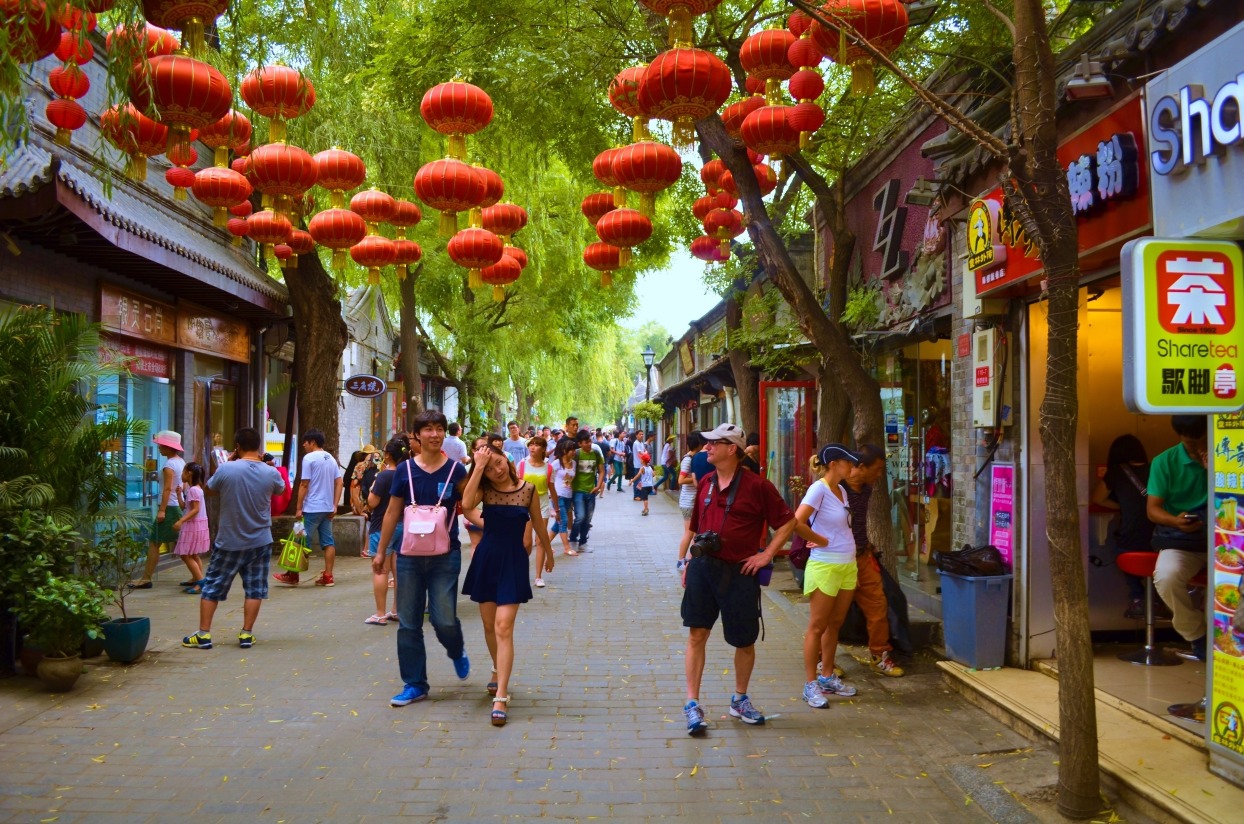
- Beijing Hutongs — Traditional alleyways to explore to the northeast, offering striking contrast with the monumentality of the square.
Frequently asked questions
Yes. Admission is free but online reservation is mandatory. Bring your passport to collect your ticket at the entrance.
Plan at least 3 to 4 hours to cover the two main permanent exhibitions. A full day allows you to explore temporary exhibitions as well.
It's geographically possible, but both sites are very dense. Better to devote a half-day to each, on two separate days.
Photography without flash is generally permitted in the permanent galleries. Some temporary exhibitions may prohibit it: check the signage at the entrance of each gallery.
The museum is open year-round. Avoid Chinese national holidays (particularly October's Golden Week) when crowds are very heavy. Weekday mornings are quietest.
Yes. The building has elevators and wheelchair ramps. Tiananmen Square itself is flat and wheelchair-accessible.
Nearby
Interested in this visit?
We can include it in your personalised itinerary.