Shuzhuang Garden
Shuzhuang Garden
Built in 1913 on Gulangyu island facing Xiamen, Shuzhuang Garden combines marine landscapes, traditional pavilions and a rare piano museum.
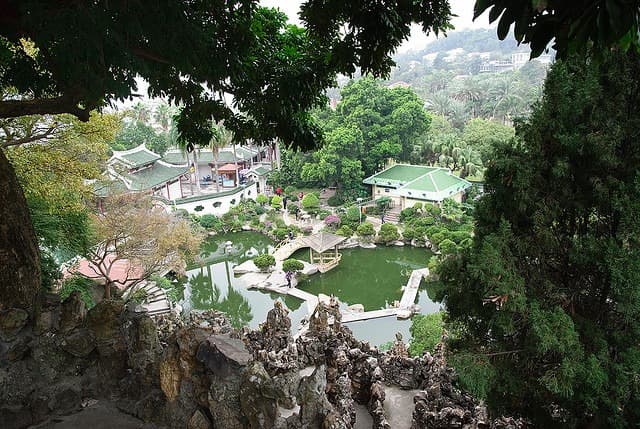
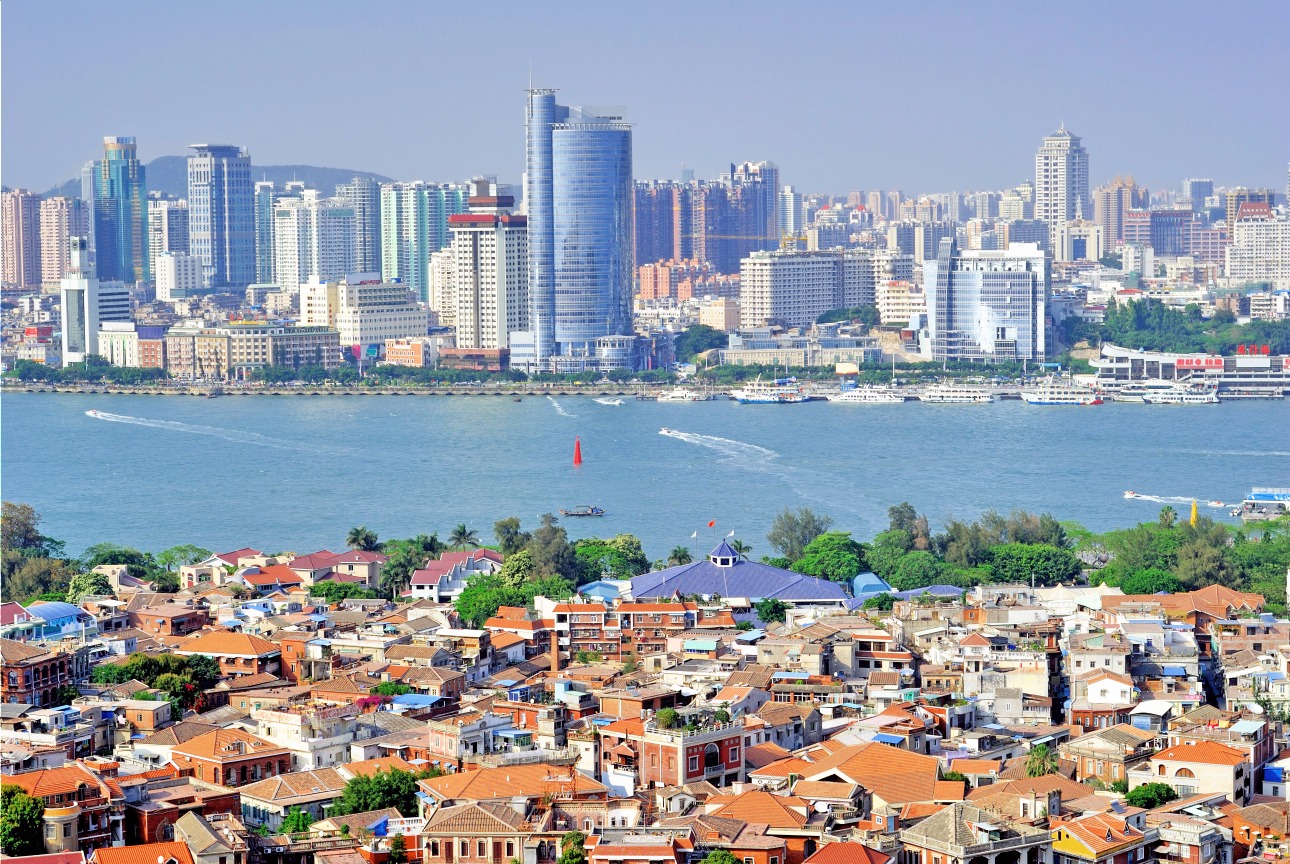
The Shuzhuang Garden stretches along the seafront on the southern edge of Gulangyu island, facing Xiamen, in Fujian province. Developed in 1913 by a Taiwanese businessman, it blends traditional Chinese architecture, coastal scenery and a singular piano museum that echoes the island's musical reputation.
Why visit Shuzhuang Garden
Three elements set this garden apart from other classical gardens in southern Chine:
- Its waterfront location: the sea forms an integral part of the composition, which is rare in the Chinese garden tradition that typically centers on inland ponds.
- The piano museum housed in one of the pavilions, which showcases a rare collection of European and American pianos.
- Its clarity: the three gardening techniques employed (hidden elements, environmental exploitation, alternating perspectives) become visible as you stroll through, making it an excellent introduction to Chinese landscape art.
Allow 1 to 1.5 hours for a visit, longer if you spend time in the museum and taking in the views across the bay.
Garden history
The garden was created in 1913 by Lin Erjia, a notable and businessman settled on Gulangyu. His family had left Taïwan in 1895, following the island's cession to Japan after the First Sino-Japanese War, to establish themselves on Gulangyu. In developing this estate, Lin Erjia paid homage to the Banqiao Villa, his childhood home in Taipei, which inspired the garden's layout.
The garden's name derives from the stylized name of its owner, Lin Shuzang. After 1945 and Taïwan's return to Chinese control, Lin Erjia returned to his native island and donated the property to the local government. The site was converted into an attraction in 1950 and officially opened to the public in 1955.
What to see
Three gardening techniques
The layout rests on three principles visible as you walk through the pathways:
- Hidden elements: the sea remains invisible from the entrance, concealed by a wall and bamboo grove, before being suddenly revealed at a turn in the path.
- Environmental exploitation: the bay's reefs serve as foundations for bridges and pavilions, integrating the natural relief into the composition.
- Movement combination: a network of caves and passages alternates shadow and light, tight spaces and openings onto the sea.
Canghai section (Hidden Sea)
Located closest to the shoreline, this section illustrates the hidden elements technique. It brings together five main features: the Hall of Longevity, the Zhenshuai Pavilion, the Autumn Pavilion, the Zhaoling Pavilion and the 44 Bridge, a privileged observation point over the bay.
Bushan section (Added Hills)
This part oriented toward inland reliefs employs environmental integration. It contains the Paradise of Twelve Caverns, a series of twelve interconnected caves designed as a playful pathway, the Hard Stone House, the Tide Observation Tower, the Love My Own House and the Orchard Pavilion.
The piano museum
Housed in one of the garden's pavilions, the museum displays a collection assembled by Hu Youyi, a Sino-Australian pianist born on Gulangyu. Around thirty instruments are on display, including Steinway pianos from the 19th century, Bechstein, Bösendorfer and Fazioli models. The most singular piece is a quadrilateral piano from the German royal family. The museum extends Gulangyu's reputation, long nicknamed the "island of pianos" because of the concentration of instruments in its colonial homes.
Practical information
- Opening hours: daytime opening, from morning until late afternoon. Verify hours on-site before your visit, as they vary by season.
- Admission: paid entry at a moderate rate. A combined ticket sometimes groups several Gulangyu sites together.
- Recommended duration: 1 to 2 hours including the piano museum.
- Accessibility: the terrain features stairs, narrow caves and sloped passages, poorly suited for strollers and reduced mobility.
When to visit
The garden can be visited year-round, but Gulangyu has a humid subtropical climate. Spring (March–May) and autumn (October–November) offer the most pleasant conditions, with mild temperatures and manageable crowds. Summer is hot, humid and exposed to typhoons between July and September. Winter remains mild but windy at the coast. If possible, avoid Chinese national holidays (May 1st, Golden Week in early October, Lunar New Year), periods of very heavy visitation on the island.
How to get there
The garden is located on Gulangyu island, accessible only by ferry from Xiamen.
- From central Xiamen, several bus lines (2, 3, 4, 10, 11, 12, 25) serve the ferry terminal area on Lujiang Road.
- Ferries to Gulangyu run continuously, from very early morning until about 12:30 a.m.
- Once on the island, the garden is reached on foot: Gulangyu is pedestrian-only, with no motorized vehicles allowed.
Nearby and other sites in Chine
Gulangyu lends itself to a full day of walking among colonial homes, beaches and viewpoints. To extend a Chine itinerary, other sites deserve a detour:
- The Great Wall at Juyongguan, one of the most accessible sections from Beijing.
- The Great Goose Pagoda in Xi'an, a major Buddhist monument from the Tang dynasty.
- Longgong Cave in Guizhou, for lovers of karst landscapes.
- The Bezeklik Thousand Buddha Caves, testimony to Buddhist art along the Silk Road.
Plan your trip
Shuzhuang Garden fits naturally into a stay combining Xiamen, Gulangyu and the coastal Fujian province, rich in Hakka heritage and port cities. To build a custom itinerary including this stop, explore our suggestions for travel to Chine.
Interested in this visit?
We can include it in your personalised itinerary.