Fujian Tulou
Fujian Tulou
Circular earthen fortresses of Hakka clans, 46 Fujian Tulou are listed as UNESCO World Heritage sites. Guide to visiting Hongkeng, Chuxi and Yongding villages.
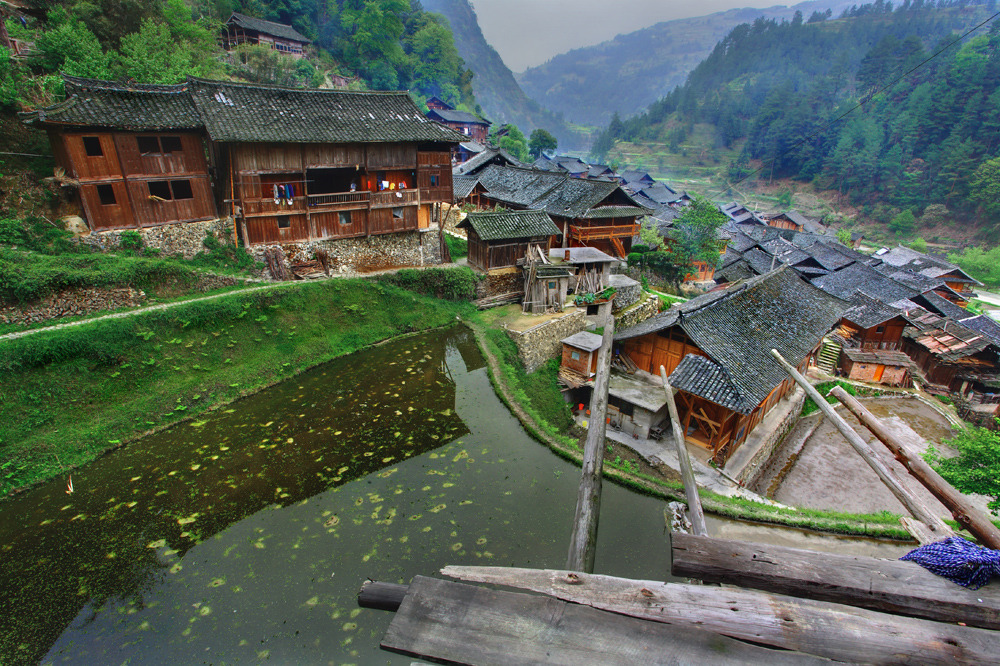
Fujian Tulou are imposing communal Hakka residences built from clay and rammed earth, scattered throughout the rural southwest of Fujian province. In 2008, UNESCO inscribed 46 of these structures on the World Heritage list. Clan fortresses with walls nearly three metres thick, they bear witness to the communal way of life of the Hakka, a Chinese minority who sought refuge in Fujian's valleys over the centuries.
Why visit Fujian Tulou
Tulou are unlike any other domestic architecture in China. Circular, square or oval, they can reach five storeys and shelter hundreds of people behind a blank exterior. Visiting these villages means stepping into buildings still inhabited by Hakka families who cultivate rice paddies, tea, tobacco and cabbages in the surrounding valleys. It is one of the rare opportunities in China to witness living vernacular architecture, listed by UNESCO and set within a preserved rural landscape.
History of Tulou and Hakka migration
The Hakka, whose name means "guest families", are a Han minority who fled wars and persecution in northern China from the 12th century onwards. Settling in the mountainous and remote areas of Fujian, they designed Tulou as clan fortresses capable of protecting an entire lineage from bandits, wild animals and conflicts with local populations.
Built from compacted rammed earth, sometimes reinforced with bamboo, crushed shells or glutinous rice, these defensive structures have endured through the centuries. In 2008, UNESCO inscribed 46 Tulou on the World Heritage list for their architecture, social function and landscape integration.
Architecture and communal life
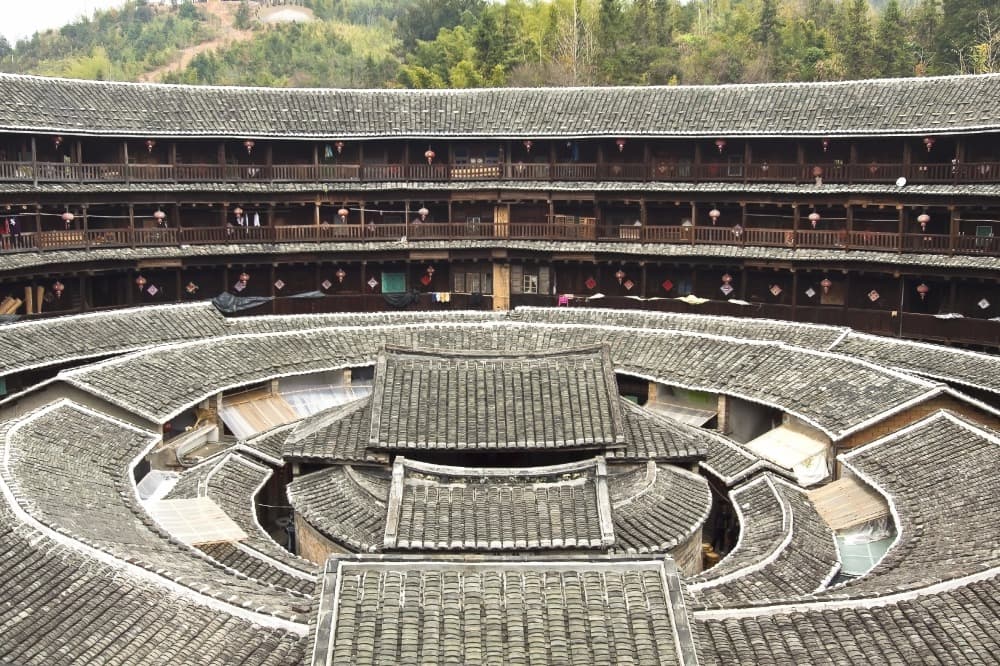
A Tulou rests on a simple principle: an inhabited ring (or square) closed around a central courtyard. The external walls, nearly three metres thick at the base, open hardly at all to the outside. Only a few high windows and a heavy entrance door break the façade.
The interior is organized vertically and functionally:
- Ground floor: kitchens and dining halls, opening onto the courtyard
- First floor: grain stores and storage rooms
- Upper storeys: bedrooms, sometimes up to the fourth or fifth level
- Central courtyard: ancestor temple, gathering place and ceremony venue
The thickness of the walls and internal air circulation maintain a stable temperature, cool in summer and temperate in winter. Each clan family occupies a vertical "slice" rising from ground floor to roof, ensuring all members an equivalent share of space, light and storage.
Which Tulou to visit
Several complexes are open to the public and offer different experiences:
- Hongkeng Tulou (Hukeng village, Yongding district): one of the most visited sites, with several Tulou lined along a river
- Gaobei Tulou: known for Chengqi Lou, nicknamed "the king of Tulou", composed of four concentric rings
- Chuxi Tulou (Xiayang village): more rural complex, less frequented, set in a mountainous landscape
- Nanxi Tulou: valley dotted with dozens of Tulou visible from a panoramic viewpoint
Tulou open to visitors remain partly inhabited. A portion of the entrance fee contributes to the maintenance of these buildings, which are fragile despite their apparent robustness.
Practical information
Allow half a day to a full day to visit a Tulou complex, two days if you wish to explore several sites in Yongding district. Entrance tickets are sold by cluster (Hongkeng, Gaobei, Chuxi…) and grant access to multiple Tulou. Prices remain modest.
On site, wear comfortable shoes: interiors have beaten earth floors and narrow wooden staircases. Respect for residents is essential, as some interiors remain private.
When to visit Fujian Tulou
Fujian's climate is subtropical and humid. The best times to visit are:
- March to May: mild temperatures, flooded rice paddies, verdant landscapes
- September to November: clear autumn, tobacco and tea harvests, low humidity
Summer (June to August) is hot and marked by sometimes intense rainfall; winter remains cool at altitude. Typhoon season on the coast (July-September) may complicate travel from Xiamen.
How to reach the Tulou
The most convenient gateway is Xiamen, a coastal city connected by plane and high-speed rail to major Chinese cities. From Xiamen:
- Long-distance bus: daily services to Yongding and Tulou villages (3 to 4 hours travel)
- Train: line to Longyan or Yongding station, then bus or taxi to the clusters
- Car with driver: the most flexible option for visiting multiple sites over one or two days
Spending a night on site, in a Tulou converted into simple accommodation, allows you to avoid day-trip crowds and enjoy the village at sunrise.
What to see nearby
If you extend your journey through China, several sites complement your discovery of the Tulou:
- The Giant Wild Goose Pagoda in Xi'an, another landmark of classical religious architecture
- The Great Wall at Juyongguan, for further insight into Chinese defensive architecture
- Hexigten Geopark, for lovers of natural landscapes
Frequently asked questions
Frequently asked questions
46 Fujian Tulou were inscribed on the UNESCO World Heritage list in 2008, spread across several sites in Yongding and Nanjing districts.
Yes, many Hakka families still live in the Tulou, including those open to visitors. This is what sets these sites apart from a frozen museum.
For a first visit, the Hongkeng complex (in Hukeng) offers the greatest diversity. Travellers seeking a more rural setting prefer Chuxi, in Xiayang.
Allow one day for a cluster, two days to visit multiple complexes comfortably, ideally with a night in a Tulou guesthouse.
Daily long-distance buses connect Xiamen to villages in Yongding district in 3 to 4 hours. Train to Longyan or Yongding station, followed by local transfer, is another option.
Plan your trip
Fujian Tulou fit naturally into an itinerary linking China's southeast coast with inland regions. To build a bespoke journey including Xiamen, Hakka country and other regions, explore our China travel packages.
Interested in this visit?
We can include it in your personalised itinerary.