Wuhou Memorial Temple
Wuhou Memorial Temple
In Chengdu, the Wuhou Memorial Temple honors Zhuge Liang and Emperor Liu Bei. Three Kingdoms history, Tang stele, and gardens spanning 37,000 m².
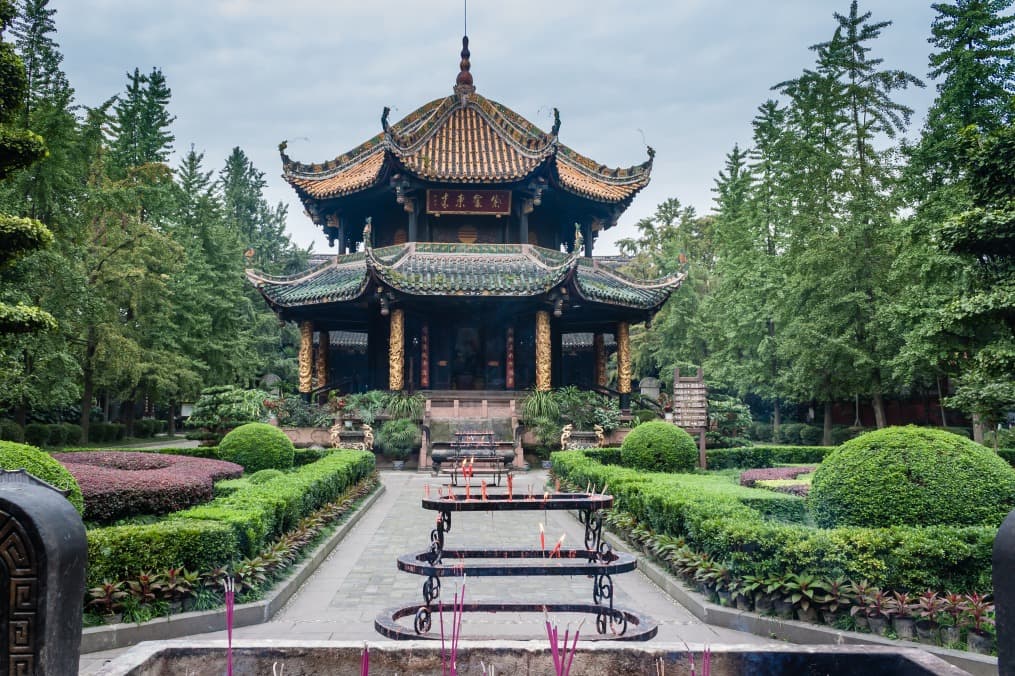
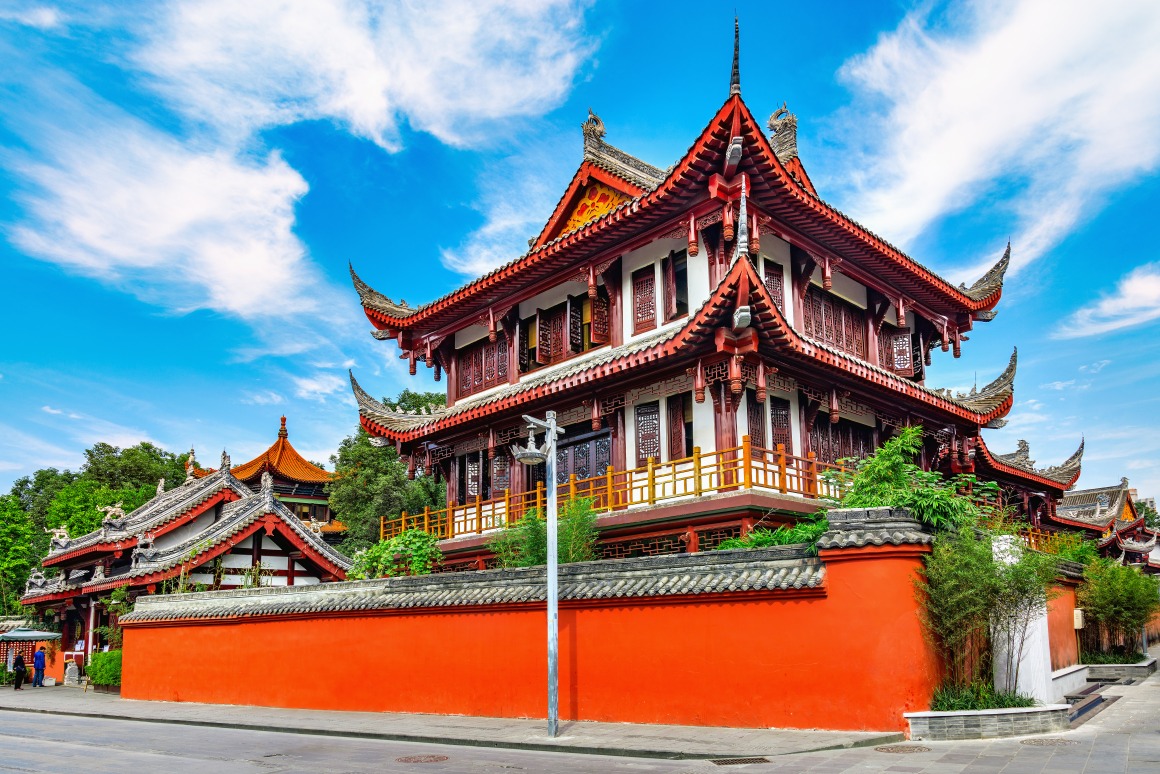
The Wuhou Memorial Temple, located in the southern suburbs of Chengdu, pays tribute to Zhuge Liang, strategist of the Shu kingdom during the Three Kingdoms period. Across 37,000 m², the complex combines sanctuaries, imperial tombs, gardens and a lake, and preserves one of the most remarkable stelae from the Tang era.
Why visit Wuhou Temple


This site holds a singular place in Chinese historical memory: it is the only temple in Chine that unites sovereign and minister within the same enclosure—Emperor Liu Bei and his adviser Zhuge Liang. For those interested in the Three Kingdoms period (220-265), one of the most mythologized chapters of Chinese history, Wuhou offers a tangible understanding of this epoch through its architecture, statues, and inscriptions. The complex also serves as an urban landmark in Chengdu: it adjoins Jinli Street, one of the city's busiest pedestrian thoroughfares.
Temple history
The original structure dates back to 223, during the Shu kingdom. At that time, Chine was divided among three rival entities—Shu, Wei, and Wu—competing for territorial dominance. The Chengdu region fell under Shu, governed by Liu Bei and administered by his military adviser Zhuge Liang.
The period ended in 265, when the Sima clan overthrew Wei and founded the Jin dynasty, having already absorbed Shu. The Wu kingdom collapsed shortly after, bringing an end to half a century of fragmentation.
The temple, already standing, was gradually converted into a memorial dedicated to Zhuge Liang and the figures of the Three Kingdoms. Its name derives from the posthumous title of the strategist, Wuhouxiang, meaning "Marquis of Wu."
What to see on site
The complex unfolds along a north-south axis connecting several distinct sections.
- Halls of Shu Heroes: galleries of statues representing the civil and military officers who served Liu Bei. Each figure is accompanied by biographical information.
- Liu Bei's Mausoleum (Huiling): the tomb of Shu's first emperor, located within the enclosure beneath a circular mound planted with ancient trees.
- Zhuge Liang Sanctuary: the memorial's main pavilion, dedicated to the strategist, with his central statue and several adjacent halls devoted to his descendants.
- Stele of Three Excellences: erected in 809, it stands 367 cm tall and 95 cm wide. The text, composed by Tang minister Pei Du and calligraphed by Liu Gongquan, celebrates Zhuge Liang's virtue and achievements. The convergence of subject, author, and calligrapher earned it its distinctive name.
- Garden and lake: the complex's western section, more landscaped in character, alternates shaded pathways, bamboo groves, and water features, ideal for a break after touring the buildings.
Practical information
The site is open daily with extended continuous hours accommodating visitors. Admission is charged at a moderate rate for a Chinese heritage site of this importance. Plan for 1.5 to 2.5 hours of exploration depending on your interest in inscriptions and secondary halls. Explanations are primarily in Chinese and English; an audio guide or guided tour facilitates reading of the stelae and biographies.
Visitor numbers rise noticeably at midday and during Chinese holidays (New Year, October holiday week). Arriving early improves the visiting experience.
How to get there
The temple is located in the Wuhou district, south of Chengdu's historic center, in immediate proximity to Jinli Street.
- By bus: lines 1, 57, 82, 334, and 335, Wu Hou Ci stop.
- By metro: line 3 serves the area, Gaoshengqiao station, then a short walk.
- By taxi or ride-sharing: the fare from downtown Chengdu is modest; providing the temple name in Chinese characters (武侯祠) facilitates pickup.
Nearby attractions
A visit to Wuhou Temple naturally fits into a day exploring Chengdu, a classic departure point for sites throughout Sichuan and beyond.
- Chengdu: Sichuan's capital, a base for the giant panda research facility and Jinli Street, adjacent to the temple.
- Great Wild Goose Pagoda: another major center of Buddhism and Tang history, in Xi'an, accessible by high-speed train.
- Longgong Karst Caves: karstic landscape in Guizhou, a natural extension of an itinerary through southwestern Chine.
Frequently asked questions
Frequently asked questions
To Zhuge Liang, the strategist and military adviser to Emperor Liu Bei of the Shu kingdom. The complex also houses Liu Bei's tomb, making it a joint memorial to both the sovereign and his minister.
From Zhuge Liang's posthumous title, Wuhouxiang, meaning "Marquis of Wu."
Between 1.5 and 2.5 hours, depending on whether you linger over inscriptions, secondary halls, and the garden.
A stele erected in 809, standing 367 cm tall, whose name derives from the meeting of three forms of excellence: an illustrious subject (Zhuge Liang), a text by a great Tang minister (Pei Du), and calligraphy by a recognized master (Liu Gongquan).
Yes, the pedestrian street Jinli adjoins the temple directly. Many visitors explore both in the same half-day.
Plan your trip
Wuhou Temple integrates seamlessly into a Sichuan stay or a broader journey across Chine. To craft an itinerary combining heritage, natural sites, and historic cities, explore our Chine travel suggestions.
Photos
Interested in this visit?
We can include it in your personalised itinerary.