Yuliang Historic Village
Yuliang Historic Village
In the southeast of Shexian County, Yuliang preserves a stone weir dating from the Ming Dynasty, a kilometer-long cobbled street, and listed Huizhou architecture.
In the southeast of Shexian County, near the old city of Huizhou, the historic village of Yuliang stretches along the Lian River, a tributary of the Xin'an River. Once a fishing village, it owes its reputation today to its stone weir, its preserved Huizhou architecture, and a cobbled street that follows the river for nearly a kilometer.
Why visit Yuliang
Yuliang brings together three rare elements in one location: a remarkably well-preserved ancient hydraulic structure, a traditional village fabric still inhabited by fishermen, and a landscape framed by Ziyang Mountain and the arched Ziyang Bridge. The site was inscribed in 2001 as a national cultural site under national protection, making it one of the major heritage villages of Huizhou culture in southern Anhui.
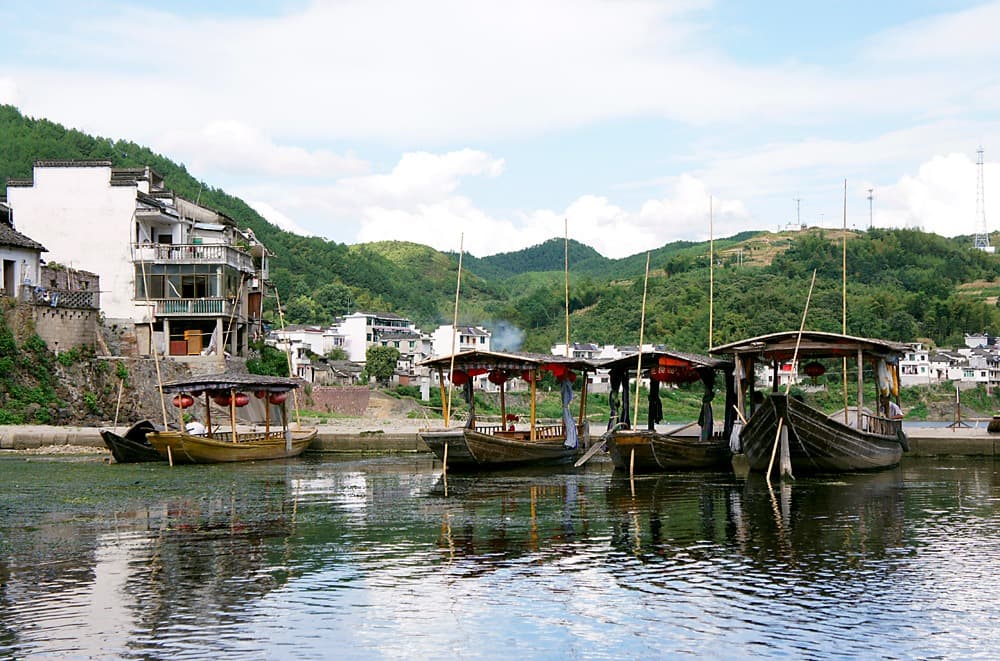
The atmosphere remains that of a living village rather than a museum site: doors open onto alleys, wooden sailing boats moored along the banks, daily comings and goings of residents.
History of the village and its weir
The origins of Yuliang's weir date back to the Sui Dynasty (581-619), when the local population undertook the first constructions intended to regulate the Lian River. The structure visible today, however, dates from the Ming Dynasty: a commemorative stone tablet sealed in the stone bears a date around 1603, attesting to its reconstruction.
For centuries, Yuliang was far more than an agricultural village. Its port controlled commercial access to Huangzhou and constituted, at the time, the only gateway to the outside world from this portion of the Xin'an basin. Old trading stations dedicated to wood, salt, and tea bordered the river. This logistical function explains the importance placed on the weir, which regulated navigation, irrigation, and riverbank defense.
What to see
The stone weir
The heart of the site, the weir measures 138 meters long, 27 meters wide, and 4 meters high. It is built from large stone blocks carefully fitted together without mortar, which has allowed it to endure through the centuries. Often presented as the only ancient stone weir so well preserved in Chine, it is nicknamed the "Dujian Weir" of southern Anhui, by analogy with the famous traditional Chinese irrigation system whose functional design is similar to that of Dujiangyan in Sichuan.
The weir connects two landscape landmarks: Longjinshan Mountain to the south and the village's old street to the north. Below, the water remains clear and fish are frequently visible.
The old cobbled street
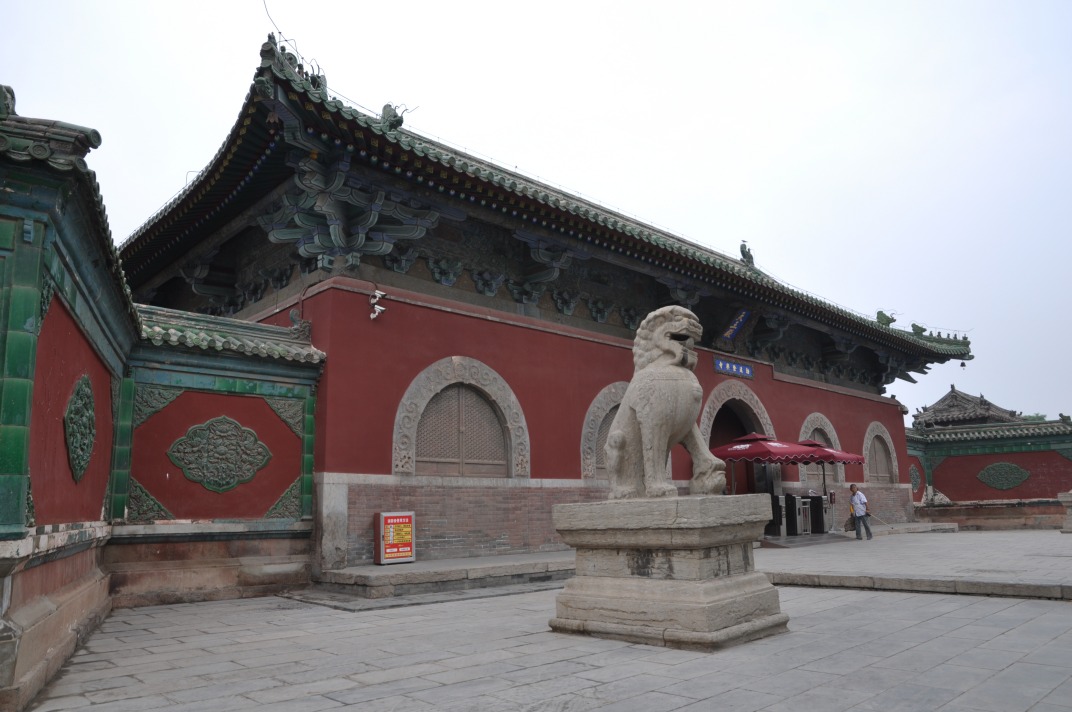
Parallel to the river, the main street winds for approximately 1,000 meters. It is lined with traditional houses and small shops in the characteristic Huizhou architectural style: white walls with stepped gables, gray tiles, carved wood and stone decorations at the frames. This is the natural axis for understanding the village.
The riverside landscape
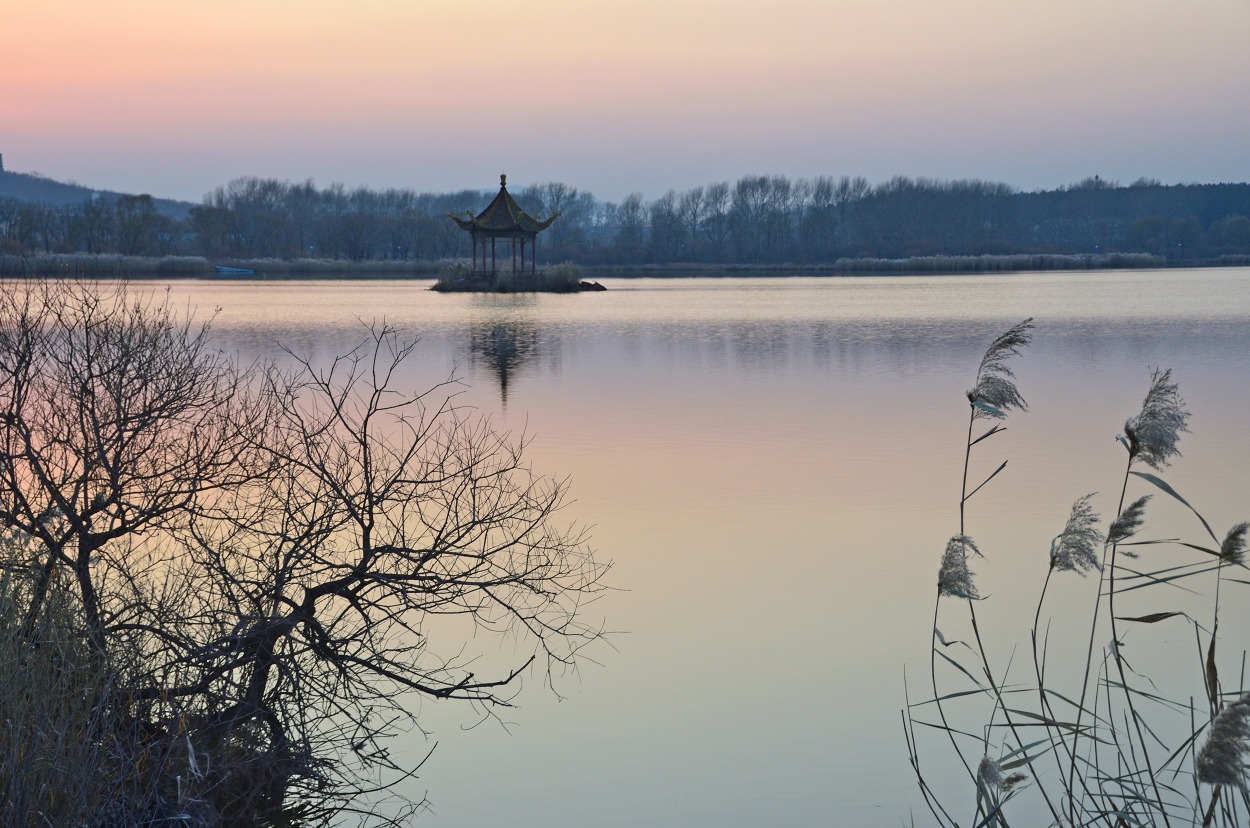
From the path along the river, the view opens onto Ziyang Mountain, covered in vegetation, and the arched Ziyang Bridge spanning the water on the west side. Local fishermen still maneuver their wooden sailing boats, a direct legacy of the village's fishing heritage.
Practical information
- Duration of visit: allow 2 to 3 hours to explore the weir, old street, and riverbanks.
- Admission fee: moderate entrance fee, subject to change; inquire on site or at the Shexian tourism office.
- Visiting comfort: flat shoes recommended (irregular paving), little shade on the weir in summer heat.
When to go
Spring (April-May) and autumn (October-November) offer the best conditions: mild temperatures, soft light on the river, and morning mists that enhance Huizhou rooflines. Summer is hot and humid, winter cooler but bright. Avoid major Chinese school holidays (Golden Week in October, Lunar New Year) if you seek tranquility.
How to get there
Yuliang is reached from Shexian County, itself accessible by bus from Huangshan's bus station. Regular connections operate throughout the day. Once in Shexian, the village is a short distance away: local taxis and rickshaws allow you to cover the final kilometers to the site entrance.
For those combining the region with other stops, Huangshan has a high-speed railway station and an airport, making it the most practical logistics hub.
To see in the region
Southern Anhui is full of Huizhou villages listed as world heritage sites (Hongcun, Xidi) and emblematic mountain landscapes. If you explore Chine more widely, several other sites deserve a detour:
Planning your trip
Yuliang fits naturally into an itinerary devoted to southern Anhui and Huizhou culture. To build a custom journey including this village and other sites in the region, consult our Chine travel ideas.
Interested in this visit?
We can include it in your personalised itinerary.