Kashgar
Kashgar
A millennia-old crossroads of the Silk Road at the foot of the Tian Shan mountains, Kashgar unveils its legendary bazaar, its old Uyghur town, and the gateway to the Karakoram Highway.
Name: Kashgar
Chinese name: 喀什
Province: Xinjiang
Status: Prefecture
Population: 400,225 inhabitants in 2010
Area: 162,000 square kilometers
The city of Kashgar is an oasis situated at the intersection of the northern and southern routes skirting the Taklamakan Desert, nestled at the foot of the Tian Shan mountains.
Kashgar is renowned for its location on routes leading to Islamabad in Pakistan, Torugart and Ikeshtam in Kyrgyzstan. Thus, the city benefits from diverse cultures drawn from these neighboring countries. The city is predominantly populated by Uyghurs, making Kashgar a Muslim city.
History
According to historical records, the city fell under the control of General Ban Chao's armies during the Han dynasty. During this period—from around the 2nd century until Islam's arrival in the 9th century—Kashgar and the entire Xinjiang region were dominated by Buddhism. Islam then gradually pushed back Chinese dominance before establishing itself in the city.
Under the Tang dynasty, the Chinese took control of the city and stationed their armies there. The city then became a battlefield for numerous conflicts.
Beginning in 635 CE, Christianity started to enter Kashgar. A diocese from the 14th century can still be found here. In the 13th century, Genghis Khan and his descendants took control of the region and sparked many conflicts against Islam. The Chinese Empire ultimately came to rule Kashgar and its region from the 18th century onward.
Taking advantage of the religious wars that continuously ravaged Kashgar, Russia also conquered the region in the 19th century before Chinese armed forces under General Tso Tsung T'ang reclaimed the city and clashed with Yakoub Beg's Russian army.
Today
Kashgar is nowadays governed as an administrative unit of the Xinjiang Autonomous Region of the People's Republic of China. The city has become a major administrative center for the autonomous region. This ancient oasis city has become a destination much favored by travelers. Despite Islam's strong influence, a striking statue of Mao still stands in the city center.
You will easily notice a rich linguistic and cultural blend in Kashgar. Indeed, when inhabitants negotiate sales, for example, you will frequently hear the Uyghur dialect mixed with Turkic languages, Arabic, and even Persian. Still living according to ancient traditions, the city's residents regularly wear traditional clothing featuring a small embroidered cap called a Doppa for men and the traditional veil for women.
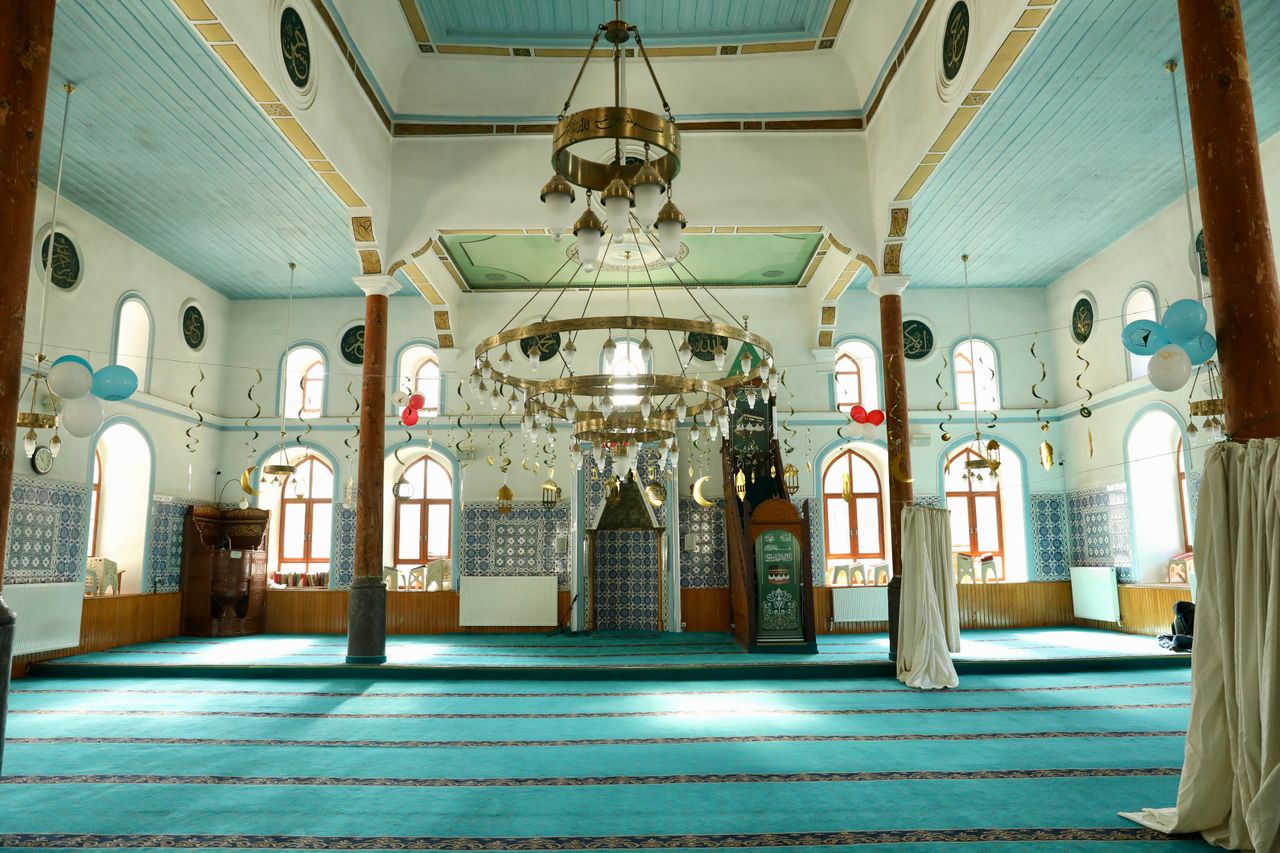
Islam is the dominant religion in the city and is prominently displayed through the grand Id Kah Mosque. Erected in 1442, it is considered the city's defining symbol. Near this mosque lie several shops of cutlers, hat makers, jewelers, and carpet merchants.
Your exploration of the city will next lead you to the Grand Sunday Bazaar of Kashgar, ranked among the liveliest markets of all of Central Asia. Several species of animals are sold in this bazaar—you can see sheep, cattle, and goats of all kinds parading through the market. You can also stop before the makeshift shearing workshops, butcher stalls, and purchase and taste flatbreads and rice with lamb.
As night falls, the streets come alive with small night markets where you can sample street food spread across the stalls. You will find plenty of lamb, goat, or mutton kebabs. For the more adventurous, boiled goat heads and feet as well as lungs stuffed with flour can also be tasted. The atmosphere of the streets is lively and nourished by a rich blend of folk cultures. You will not fail to sense this step back in time and this surprising sense of medieval life in our modern era.
Kashgar's beauty is marked by scenes of everyday life as well as by its various monuments of great historical value. Notable among these are the Abakh Khoja Mausoleum, the Tomb of Yusup Hazi Yajup, the Caves of the Three Immortals, the Ruins of Ha-Noi, and Lake Karakul, among others.
Climate
Kashgar has a continental desert climate. Summers are extremely hot and winters very cold. Autumn and spring are relatively short seasons. Temperatures fluctuate significantly between day and night. The average monthly temperature ranges from 5.3°C in January to 25.6°C in July. Kashgar is among the driest cities with annual precipitation of only 64 millimeters.
Air
Kashgar Airport is located approximately 10 kilometers north of the city center. It handles both inbound and outbound flights to domestic and international destinations, including Urumqi, Hotan, Kuqa, Aksu, Kyrgyzstan, Islamabad, Osh, Andijan, and even Uzbekistan.
Train
Kashgar Railway Station is approximately 5 kilometers from the city center, with daily trains arriving from Urumqi.
Bus
The city is accessible by long-distance buses from other cities in the region.
To explore the city of Kashgar, taxis are the most commonly used mode of transport. Travelers can negotiate with the driver to tour the city for a half-day or full day. A tour typically costs around 150 RMB.
Alternatively, traveling by bus is another option to better experience the local culture and interact with residents.
What to Do in Kashgar?
- Shop at the Kashgar Bazaar and immerse yourself in the local atmosphere.
- Visit the Id Kah Mosque, Kashgar's largest mosque, which can accommodate up to 10,000 worshippers.
- Discover the Tomb of Yusup Hazi Yajup, a famous 11th-century Uyghur poet and philosopher.
- Visit the Abakh Khoja Mausoleum, also known as the tomb of the "fragrant concubine" of Emperor Qianlong.
- Explore the Caves of the Three Immortals, ancient Buddhist caves dating back to the 2nd century.
- See the Ruins of Ha-Noi, which was once a city of the Tang dynasty.
- Finally, visit Karakul Lake and its stunning beauty, nestled at the foot of Mount Maztagata.
Attractions in Kashgar
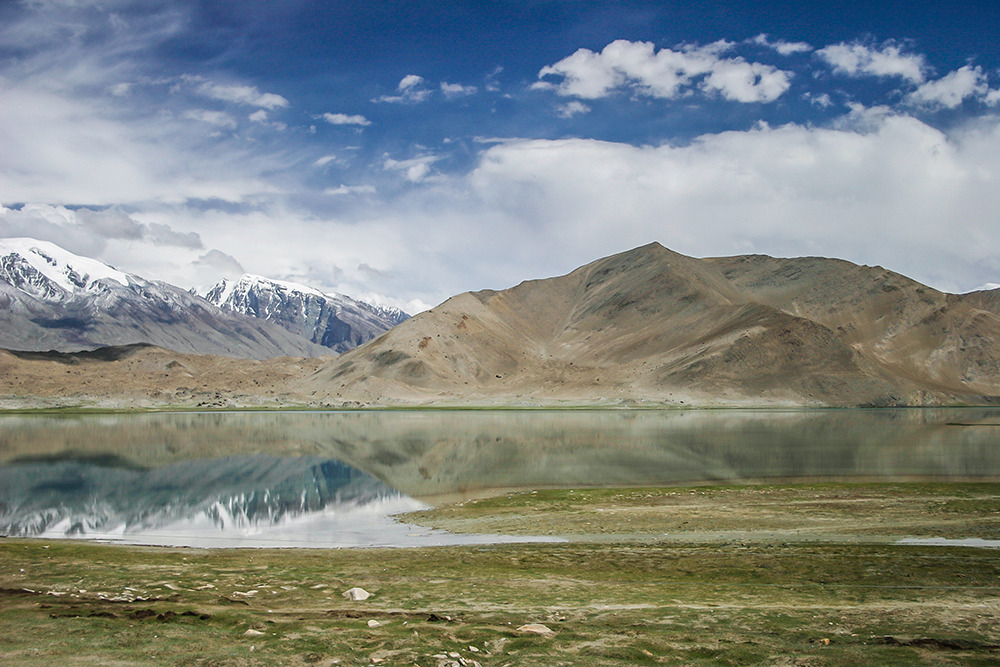
Lac Karakul
À 3 600 m d'altitude au pied du Muztagh Ata, le lac Karakul est une étape phare de la route du Karakorum, à 196 km de Kashgar.
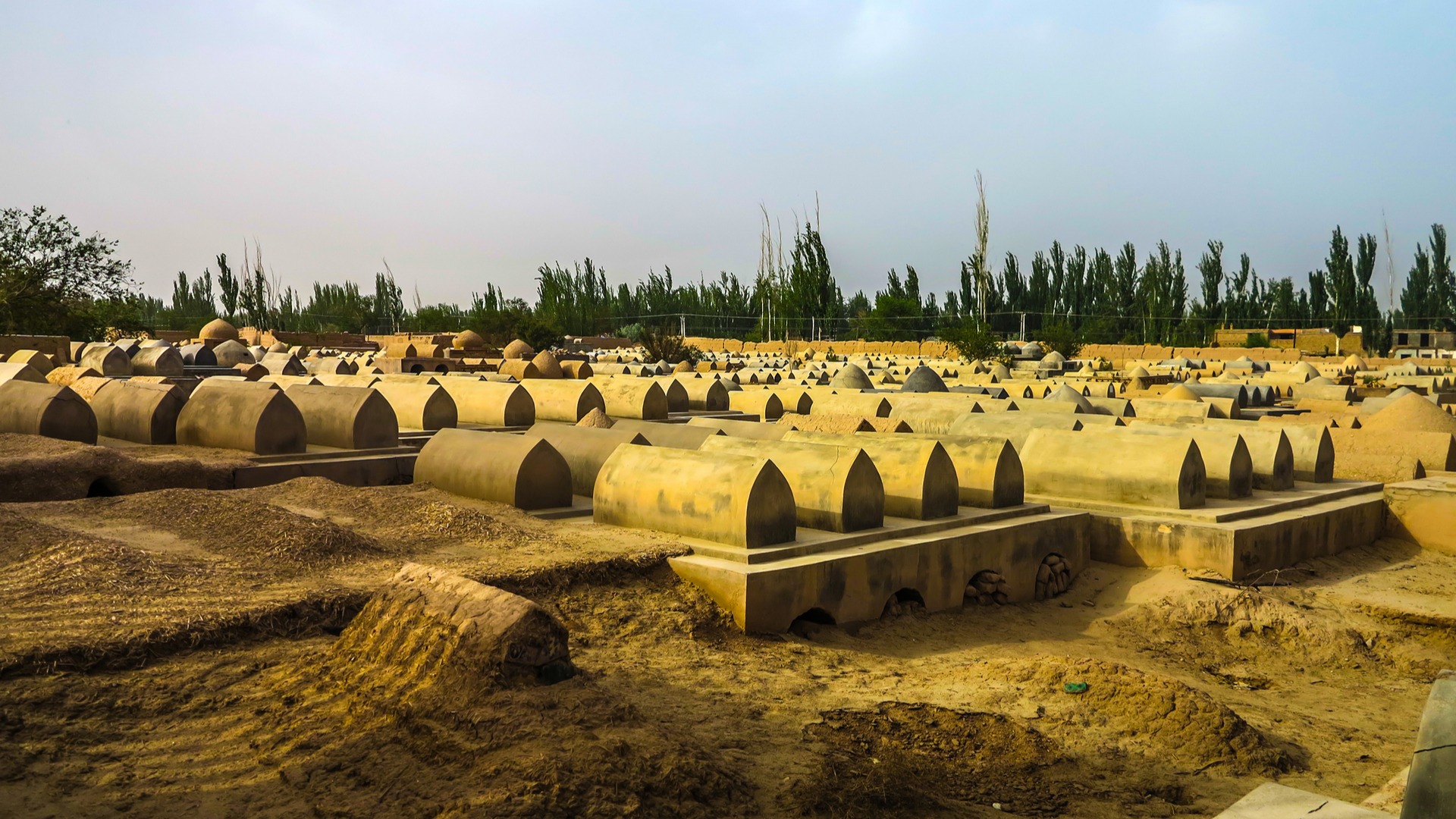
Mausolée Afaq Khoja (Xiangfei Mu)
Monument islamique majeur du Xinjiang, le mausolée Afaq Khoja abrite cinq générations de la famille Khoja sous une coupole turquoise vernissée. Un site à la fois historique et lieu de pèlerinage vivant, à 5 km du centre de Kashgar.
Mosquée Id Kah
La mosquée Id Kah, avec sa façade jaune ocre et ses minarets, est le centre de la vie religieuse ouïghoure à Kashgar depuis le XVe siècle. Un site majeur de la vieille ville.
Want to discover this destination?
Our local advisors design your tailor-made trip.