Qingcheng Mountains
A historic cradle of Taoism and UNESCO World Heritage site in Sichuan, Mount Qingcheng blends ancient temples, bamboo forests and hiking trails 65 km north-west of Chengdu.
Mount Qingcheng rises in Sichuan Province, some sixty kilometers north-west of Chengdu. The historic birthplace of Taoism in China, it has been inscribed on the UNESCO World Heritage list since 2000, jointly with the Dujiangyan irrigation system. Its dense forests, millennia-old temples and stone-paved trails make it both a spiritual and natural site, frequented equally by pilgrims and hikers.
Practical information at a glance
- Entrance: paid admission (separate tickets for the front and rear sections)
- Access: high-speed train from Chengdu to Qingchengshan station, then local bus or taxi
- Recommended duration: a full day for the front section; two days to combine front and rear
- Clothing: hiking shoes essential, modest dress recommended in temples
- Cable car: available in the front section to avoid the uphill walk
What to see
Mount Qingcheng is divided into two distinct zones. The front section (Qingcheng Qianshan) concentrates the main historic Taoist temples, connected by paved walkways beneath a dense canopy. The rear section (Qingcheng Houshan) offers a wilder landscape: waterfalls, gorges and less-frequented trails, ideal for immersive hiking.
History and context
Mount Qingcheng is considered one of the cradles of organized Taoism. Zhang Daoling, founder of the Taoist school of the Celestial Masters, is said to have established his practice here in the 2nd century CE. The temples dotting the mountain have been built, destroyed and rebuilt through the dynasties. Some current buildings date from the Ming and Qing dynasties, but the foundations of several sites reach back much further.
Highlights of the visit
Jianfu Temple (Jianfu Gong)
Located at the base of the front section, this active Taoist temple houses resident monks. Its austere architecture, interior courtyards and calligraphic inscriptions set the spiritual tone for the ascent.
Tianshi Temple (Tianshi Dong)
Perched mid-slope, this temple is dedicated to Zhang Daoling. It is one of the most venerated sites on the mountain, with a statue of the founder and active worship halls.
Yuecheng Lake
At the entrance to the front section, this artificial lake framed by bamboos and pines offers a serene first glimpse of the site. Small boats allow you to cross it to reach the beginning of the trails.
Rear section and waterfalls
Less visited, the rear section rewards your effort with gorge landscapes, suspension bridges and several waterfalls. The atmosphere here is markedly more forested and serene.
Etiquette and visiting rules
- In active temples, adopt calm and respectful behavior.
- Do not touch statues or ritual objects.
- Some worship areas may be closed to non-practitioners during ceremonies.
- Incense offerings are common; follow the example of the faithful if you wish to participate.
Photography tips
Morning light filters through the bamboos and pines in the first hours after opening: this is the best time to photograph the walkways and tiled roofs. On days with light mist, common in spring and autumn, the temples take on a particularly dense atmosphere. Photography is generally allowed in outdoor spaces; inside worship halls, check for prohibition signs before shooting.
Location and access
Mount Qingcheng is located in Dujiangyan District, approximately 65 km north-west of Chengdu. The high-speed rail connection from Chengdu Xibu station is fast and direct; Qingchengshan station is just a few minutes by taxi or bus from the site. The front section is accessible by cable car for people with reduced mobility over part of the route, but the stone trails remain generally poorly adapted for wheelchairs.
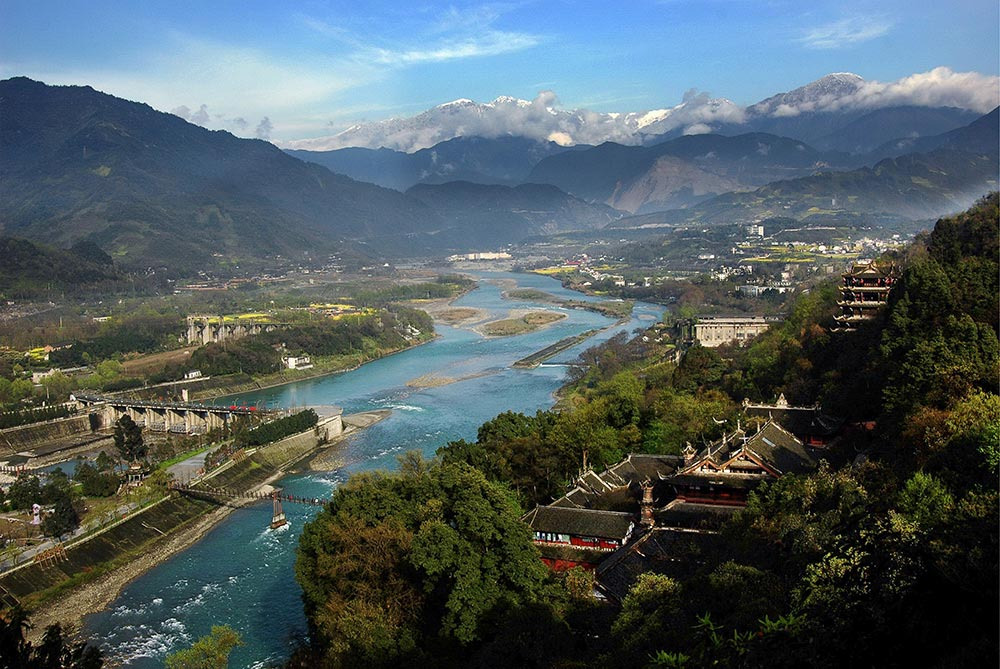
The site is often combined with a visit to the Dujiangyan irrigation system, designated UNESCO World Heritage jointly, located about twenty kilometers away.
Nearby attractions
- Dujiangyan Irrigation System — hydraulic masterpiece over 2,000 years old, UNESCO-listed alongside Mount Qingcheng.
- Chengdu — capital of Sichuan Province, the natural starting point for exploring the region.
- Chengdu Giant Panda Research Base — essential conservation center to observe giant pandas in semi-natural habitat.
Frequently asked questions
Spring (March-May) and autumn (September-November) offer pleasant temperatures and lush vegetation. Summer is hot and humid, but morning mist creates a special atmosphere. In winter, the site is less crowded and sometimes snow-covered.
The front section concentrates historic temples and suits a day visit. The rear section is wilder, with waterfalls and gorges, and better suits hikers wanting to escape crowds. Both require separate tickets.
It's possible but ambitious. It's better to spend half a day at each site, or allow two days to enjoy both without rushing.
No. The uphill walk along the paved trails is manageable for a good hiker and is part of the experience. The cable car is a convenient option to save time or energy.
Yes, in outdoor spaces. Inside worship halls, signs indicate areas where photography is forbidden. Respect these notices, especially during ceremonies.
Hiking shoes with non-slip soles are essential on the stone trails, which can be slippery. Modest clothing is recommended for entering active temples.
Interested in this visit?
We can include it in your personalised itinerary.