Guozijian (Imperial College of Beijing)
Guozijian (Imperial College of Beijing)
Guozijian is the imperial academy that trained China's highest officials for six centuries. Its serene courtyards, pavilion spanning a canal, and inscribed stelae make it a major historical site in Beijing.
Guozijian is China's ancient imperial academy, founded under the Yuan dynasty and developed under the Ming and Qing. Located in Beijing's Dongcheng district, it trained the empire's top officials for six centuries. Today a museum, it preserves its pavilions, stelae, and scholarly atmosphere, just steps away from the Temple of Confucius to which it is historically linked.
Quick Facts
- Admission: paid entry (combined ticket with Temple of Confucius available)
- Recommended duration: 1 to 1.5 hours, longer if visiting the adjacent Temple of Confucius as well
- Access: Metro Line 2, Yonghegong-Lama Temple station, then a few minutes' walk west
- Dress code: no special requirements
- Accessibility: partial access; main courtyards are level, some pavilions have steps
What to See
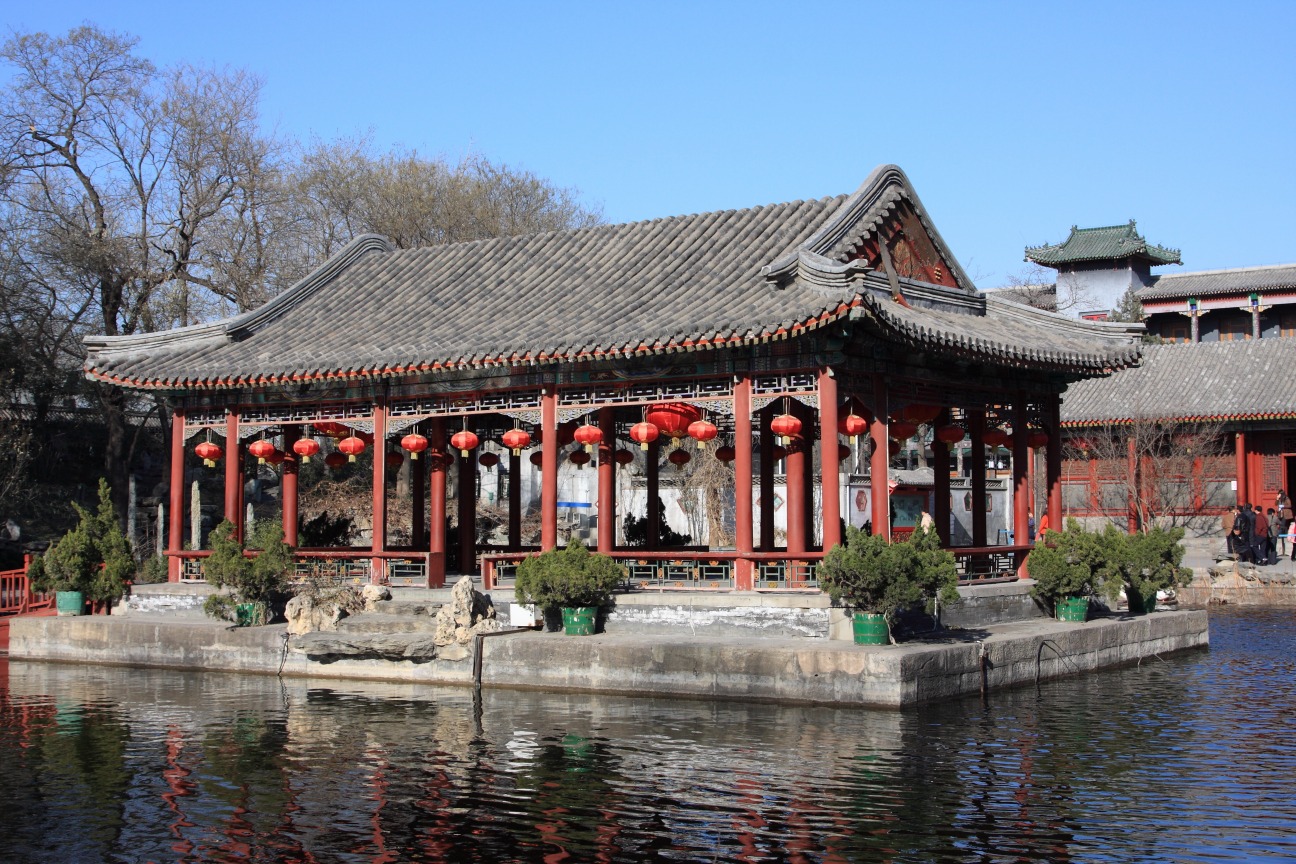
The site is organized around a succession of courtyards and porticos. The Biyong Pavilion, surrounded by a circular canal and marble bridge, is the central architectural feature: the emperor would symbolically teach here. The side galleries house the 189 stelae of the Thirteen Classics, carved under the Qing, representing over 630,000 characters of Confucian texts.
History and Context
Founded in 1306 under Kublai Khan, Guozijian became the empire's highest educational institution under the Ming. Candidates for the imperial examinations studied Confucian classics here. At its height, it welcomed students from Korea, Japan, and Vietnam. After the fall of the Qing in 1912, it lost its educational function and was gradually converted into a museum.
Highlights of Your Visit
The Biyong Pavilion
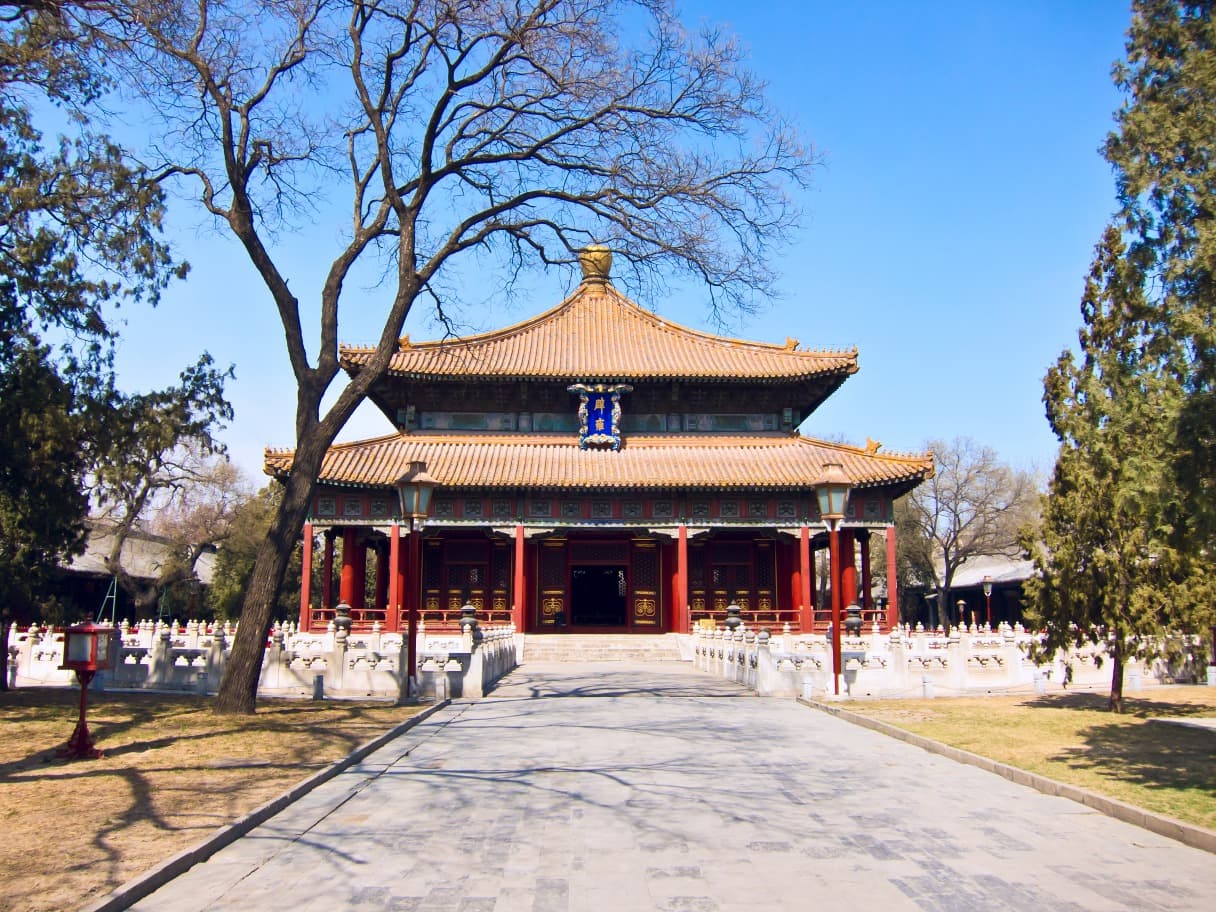
This octagonal double-roofed pavilion, set on an artificial island ringed with water, is Guozijian's iconic image. The architecture embodies Confucian cosmology: the water circle represents heaven, the square courtyard represents earth.
The Stelae of the Thirteen Classics
Lined beneath covered galleries, these 189 stone stelae carved between 1791 and 1794 form a library of stone. They reproduce the complete canonical texts of Confucianism and remain a major philological reference.
The Jixian Gate and Interior Courtyards
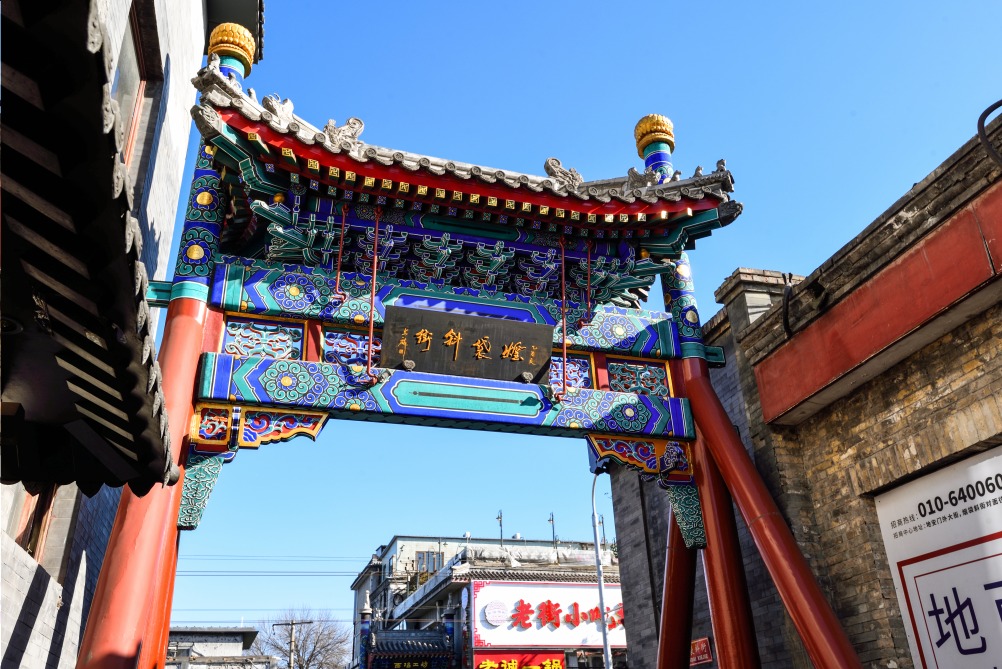
The main entrance, flanked by paifang (commemorative arches), sets a solemn tone for the place. The interior courtyards, shaded by century-old cypresses, offer rare tranquility in Beijing.
Photography Tips
Morning light is ideal for photographing the Biyong Pavilion and its reflection in the canal. The cypresses create interesting shadow play at midday. No notable photography restrictions in outdoor areas; check rules at entrances to interior exhibition halls.
Location and Access
Guozijian is located on Guozijian Street in Beijing's Dongcheng district, in the north. The nearest metro station is Yonghegong-Lama Temple (Line 2). The Yonghe Gong Lama Temple is less than ten minutes' walk to the east. The Confucius Temple of Beijing is directly adjacent, accessible through an interior gate.
Nearby Attractions
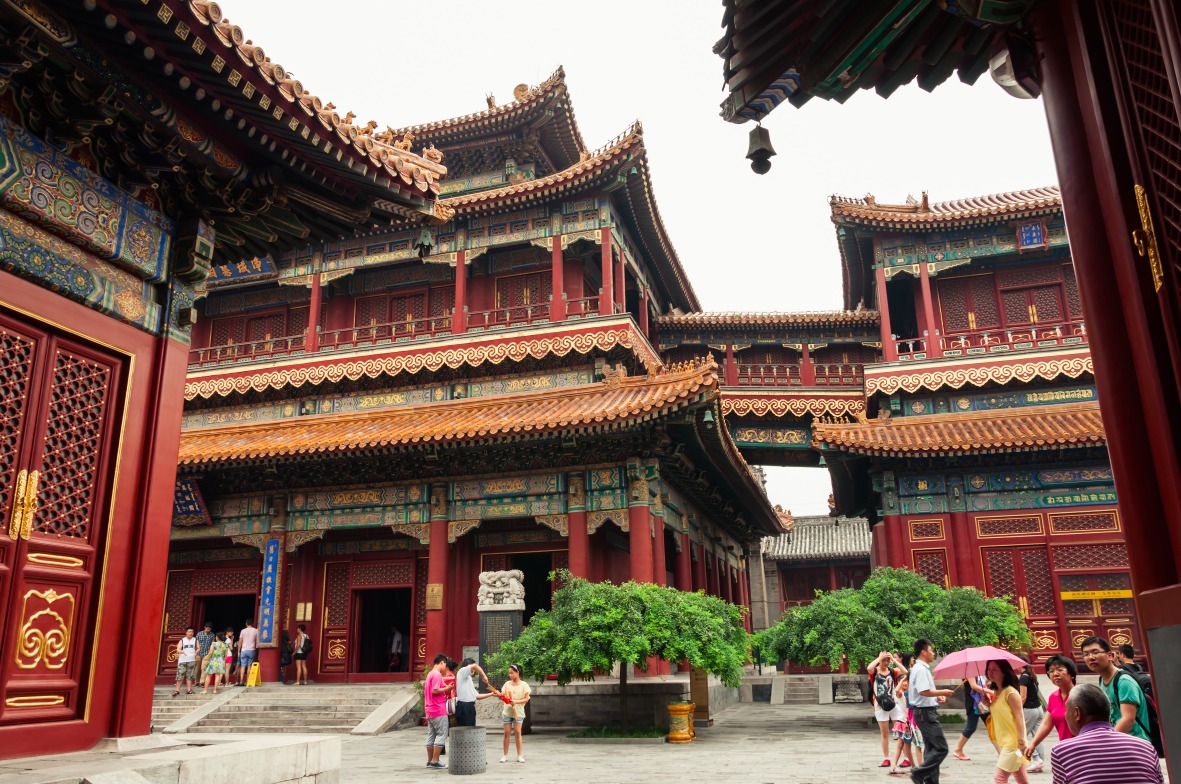
- Lama Temple (Yonghe Gong) — a major Tibetan Buddhist monastery, one of Beijing's most active, a few minutes' walk away.
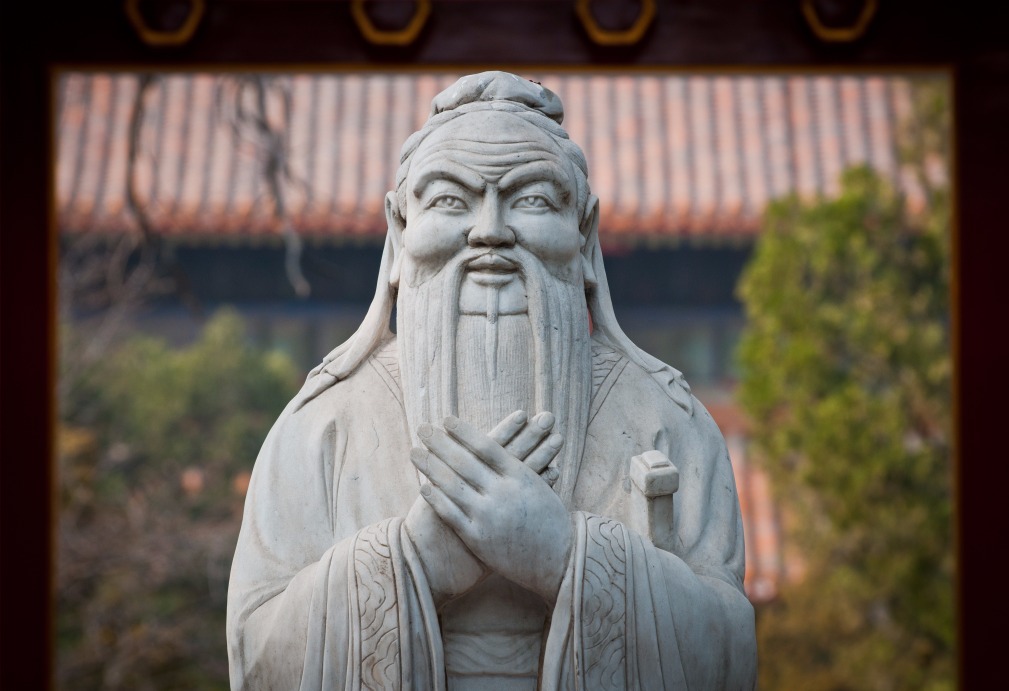
- Confucius Temple of Beijing — China's second-largest Confucian temple, directly adjacent to Guozijian.
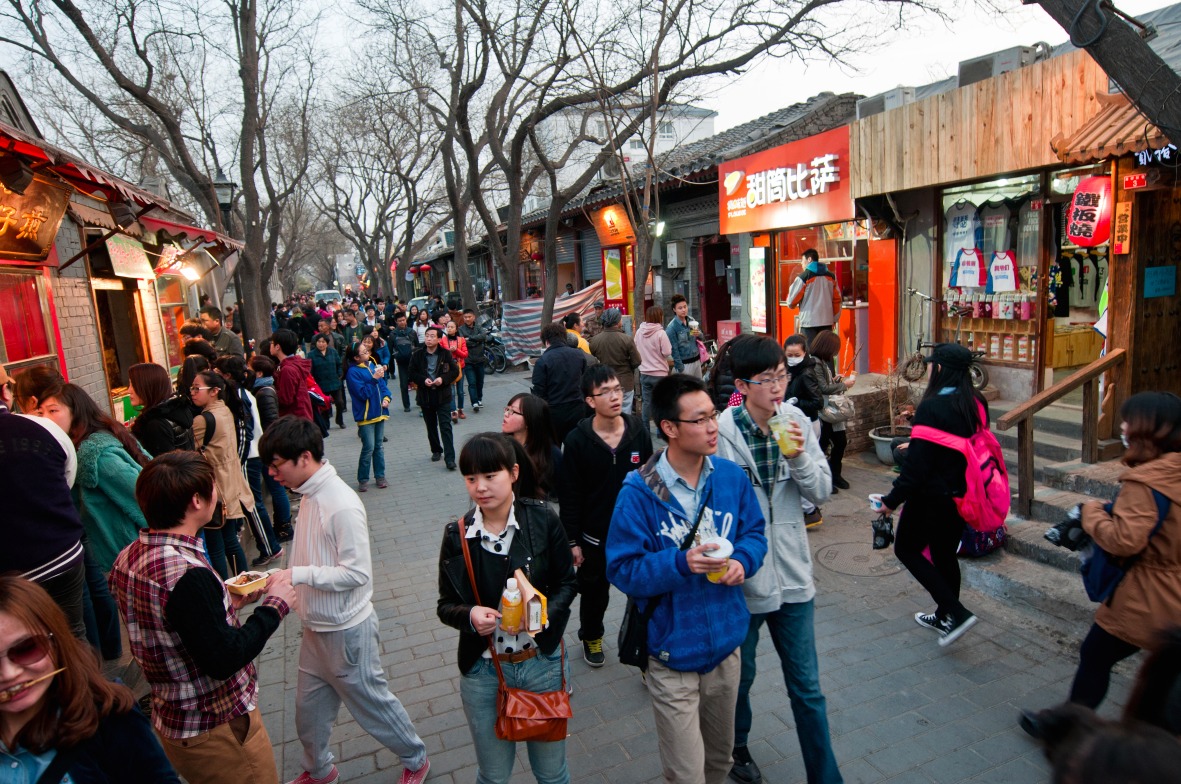
- Hutongs of Dongcheng — traditional alleyways to explore on foot or by rickshaw, in the same district.
- Drum Tower and Bell Tower — iconic Ming monuments, reachable in about twenty minutes' walk to the west.
Frequently asked questions
Yes. The two sites are directly connected by an interior gate and offer a combined ticket. Allow two to three hours total for both.
Spring (April-May) and autumn (September-October) offer the most pleasant temperatures. In autumn, the site's cypresses and ginkgos take on particularly photogenic golden hues.
The spacious courtyards and canal around the Biyong Pavilion appeal to children. The historical content and stelae will interest older children and adults curious about history.
Audioguides are generally available at the entrance. For an in-depth tour, your local Nomadays agency can arrange an English-speaking guide on site.
Photography is allowed in outdoor spaces. Some interior exhibition halls may have restrictions; check signs at the entrance to each hall.
Photos
Nearby
Interested in this visit?
We can include it in your personalised itinerary.