Hengshan (Shanxi)
Hengshan (Shanxi)
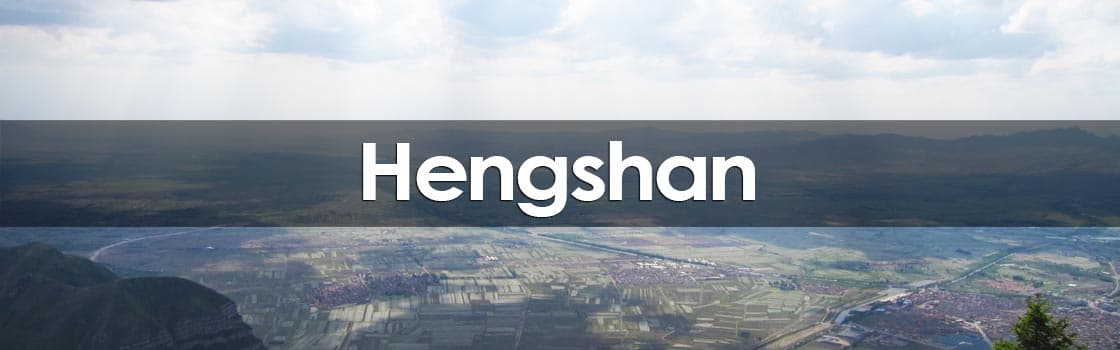
Northern peak of Chine's five sacred mountains, Hengshan is home to the Xuankong Si hanging monastery and several Ming temples, 60 km from Datong.
Hengshan in Shanxi, also known as Mount Beiheng or the Sacred Mountain of the North, ranks among Chine's five sacred mountains. Located approximately 60 km from Datong, in northern Shanxi province, this mountain range stretches 150 km and peaks at 2,017 meters at the Celestial Summit (Tianfeng Ling). The massif features 108 peaks dotted with Buddhist, Taoist, and Confucian temples.
Why visit Hengshan
Hengshan combines three rarely found qualities on a single site: spiritual significance (the northern peak of Chine's sacred mountains), exceptional architectural heritage with the Xuankong Si hanging monastery, and a pristine natural setting suited to hiking. Unlike the more frequented southern sacred mountains, the northern peak remains relatively removed from major tourist flows, making for a more contemplative experience.
An old Chinese saying captures the density of built heritage: "a pagoda every meter, a pine tree at each level, three monasteries, four ancestral halls, seven pavilions, nine palaces, eight caves, and fifteen temples." Nearly twenty sites classified as Hengshan's historical and cultural heritage remain visitable today.
History of Mount Heng
Hengshan long served as a natural barrier protecting Beijing and the central plains situated north of the Yellow River. A strategic pass toward the Mongolian plateau, the massif was a recurring military theater in Chinese imperial history. The Golden Dragon Pass and Golden Dragon Gorge, barely 10 meters wide between sheer cliffs, illustrate this defensive role.
In parallel, the mountain became a religious center. Buddhists and Taoists built temples dedicated to teaching and practice, with some buildings incorporating Confucian elements as well. This layering of traditions characterizes the site to this day.
What to see on site
The Xuankong Si hanging monastery
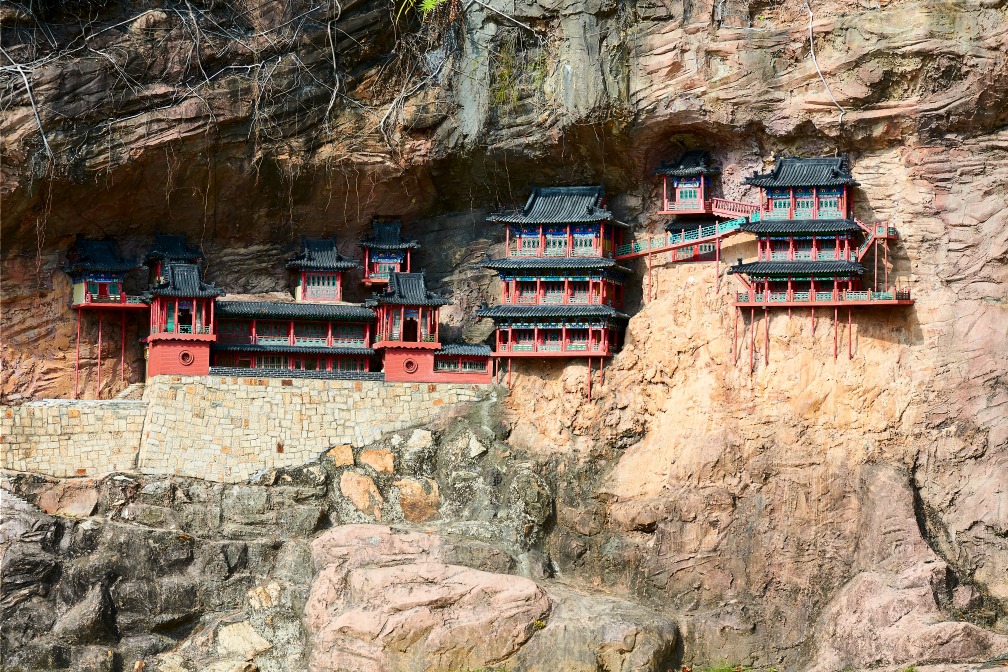
Clinging to the western cliff face at the level of the Golden Dragon Pass, Xuankong Si is Hengshan's iconic image. Its wooden structure supports three stories and around forty rooms connected by bridges and walkways. The monastery's distinctive feature is its reuniting of Buddhism, Taoism, and Confucianism within a single complex—a unique case in Chine—confirmed by its murals and sculptures. Plan 1 to 2 hours to explore the walkways.
The Beiyue Miao temple
Also called the Temple of the Northern Mountain, Beiyue Miao spreads south of the Celestial Summit. Built in 1501 under the Ming dynasty, it has undergone several cycles of destruction and reconstruction while preserving some original structures: the Imperial Fragrance Pavilion, the Soaring Gate, the Flying Stone Hall, and the Dening Hall. Inside, a tablet bears an inscription from Emperor Kangxi (Qing dynasty), and a statue of the Great Sacred Mountain of the North stands in the main courtyard.
The flying stones cave
This natural cavern, roughly 200 m² in area, set into the cliff face and closed on three sides by stone walls, houses two structures: the Northern Mountain Hall and the Hengzong Hall. Its size and integration into the landscape make it a notable stop during the ascent.
Peaks and panoramas
The Celestial Summit (Tianfeng Ling), nicknamed "Peak Standing Between Heaven and Earth in the North," faces the Green Screen Peak. The two summits are connected by the Golden Dragon Pass, an ancient strategic pass. Trails traverse gorges, pine forests, singularly shaped rock formations, and caves.
When to visit
Northern Shanxi's climate is continental and pronounced. Spring (April-May) and autumn (September-October) offer the most comfortable conditions for hiking, with moderate temperatures and good visibility. Summer remains viable but can be hot during the day and prone to afternoon storms. In winter, snow and ice make access to the hanging monastery's walkways difficult; some sections may close.
Practical information
- Duration of visit: plan a half-day for the hanging monastery alone, a full day if you combine Xuankong Si, Beiyue Miao, and a partial ascent of the massif.
- Tickets: site entry and access to the main temples require separate tickets; rates are moderate.
- Cable car: a cable car allows quick access to the summit for visitors with limited time or who prefer not to hike.
- What to bring: hiking shoes, water, windbreaker (the Xuankong Si walkways are exposed).
How to get there
Datong is the logical base for visiting Hengshan. Daily buses and taxis connect the city to the site, typically combined with the hanging monastery during a day excursion. From Beijing, organized tour buses also make the trip, taking approximately 5 to 6 hours depending on traffic. Datong's train station is moreover connected to Beijing and Taiyuan by high-speed rail.
Nearby attractions
A visit to Hengshan naturally fits into an itinerary around Datong, which brings together several major sites in northern Shanxi: the Yungang Buddhist caves, Datong's old town, and surroundings. Itineraries in Chine often combine this detour with other heritage highlights, such as the Leshan Grand Buddha or the Great Goose Pagoda in Xi'an.
Frequently asked questions
Frequently asked questions
No. Two of Chine's sacred mountains bear the name Hengshan: the one in Shanxi (the northern peak, covered here) and the one in Hunan (the southern peak). "Mount Beiheng" often designates the Shanxi mountain specifically.
A half-day is sufficient for the hanging monastery. Allow a full day if you wish to add Beiyue Miao temple and part of the massif via cable car.
Yes, partially. A cable car allows summit access without physical effort. The hanging monastery is visited via narrow walkways, which can nevertheless be daunting for those prone to vertigo.
Spring (April-May) and autumn (September-October) are the most pleasant periods. In winter, snow and ice can complicate access to the walkways.
Hengshan remains less crowded than other sacred mountains in Chine, especially those in the south. The hanging monastery does attract groups during peak season; an early morning visit is recommended.
To incorporate Hengshan into a broader itinerary, consult our suggestions for Chine travel packages.
Interested in this visit?
We can include it in your personalised itinerary.