Feilai Feng (Peak of the Flying Rock)
Feilai Feng (Peak of the Flying Rock)
Feilai Feng is a limestone massif covered with over 300 Buddhist rock sculptures dating from the Song and Yuan dynasties, nestled against Lingyin Temple in western Hangzhou.
Feilai Feng — literally "the peak that flew here" — is a limestone massif carved with Buddhist sculptures etched directly into the rock face, set against Lingyin Temple in western Hangzhou. Its cliffs and caves shelter more than 300 statues dating from the Five Dynasties, Song, and Yuan periods. It stands as one of the best-preserved Buddhist rock carving sites in southern Chine.
Quick Facts
- Access: public buses from central Hangzhou to the Lingyin stop; the site is a short walk from Lingyin Temple.
- Suggested duration: 1.5 to 2 hours to explore the caves and trails.
- Dress code: no strict requirements, though respectful attire is appreciated near the temple.
- Accessibility: main pathways are manageable, though some caves and rocky passages remain challenging for wheelchair users.
What You'll See
The site comprises a network of natural caves and limestone walls entirely sculpted with figures. The reliefs depict buddhas, bodhisattvas, arhats, and celestial guardians. The most celebrated sculpture is a Laughing Buddha (Milefo) from the Yuan era, carved in bas-relief on an exterior wall: his broad smile and prominent belly make it the iconic image of the site.
The main caves — Qinglin, Yuru, and Longhong — concentrate the finest sculptures. Lush vegetation growing between the rocks creates a striking contrast against the grey stone.
History and Context
According to legend, an Indian monk named Huili arrived in Hangzhou in the 4th century and recognized this limestone rock as a sacred peak from India that had "flown" to Chine — hence the name. The earliest rock carvings date back to the Five Dynasties period (907–960). Carving activity reached its height during the Southern Song dynasty (1127–1279), when Hangzhou served as the imperial capital. The Yuan dynasty added works showing Tibetan-Nepalese stylistic influences, visible in the rounder features and elaborate headdresses of certain statues.
Highlights of Your Visit
The Yuan Laughing Buddha
Carved directly into the cliff face, this Milefo measures several meters in height. Its style distinctly differs from neighboring Song works: marked Tibetan influences, heavier drapery. It is the most photographed statue on the site.
Qinglin Cave
The largest of the caves, it houses a dense concentration of carved niches on its interior walls. Natural light filtering through the openings illuminates the reliefs differently depending on the time of day.
Pathways Between the Rocks
Walkways and staircases hewn from the rock allow you to navigate between the limestone formations. Certain narrow passages lead to isolated sculptures, less frequently visited by tour groups.
Photography Tips
Morning light is most favorable: it directly illuminates east-facing walls and minimizes harsh shadows within the caves. By midday, contrasts become challenging to manage. A wide-angle lens is useful in the caves to capture entire carved walls. Photography is permitted throughout the site; check for any restrictions within the adjacent Lingyin Temple.
Location and Access
Feilai Feng is located in the Xihu (West Lake) District, in western Hangzhou, immediately at the entrance to the Lingyin Temple complex. From downtown, several bus lines serve the Lingyin stop. The site is also accessible from West Lake by bicycle or taxi. Lingyin Temple, one of the largest Buddhist temples in Chine, is adjacent to the site and makes for a natural combined visit.
Nearby Attractions
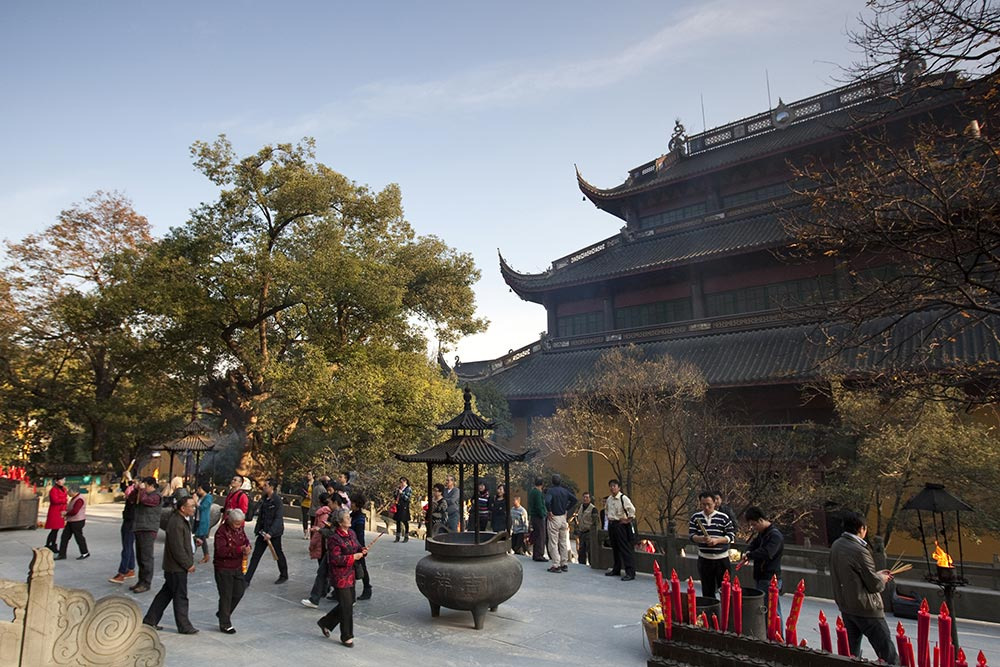
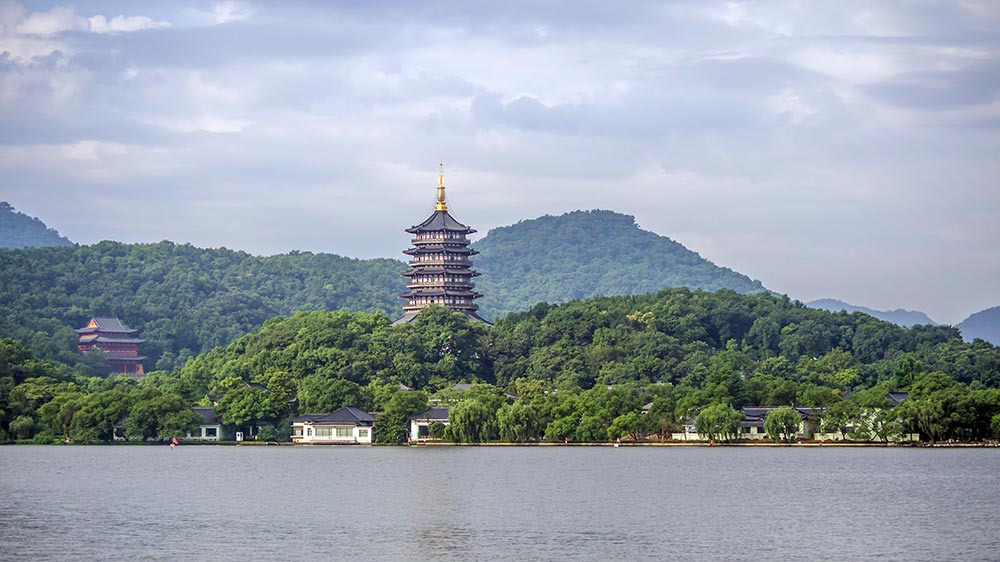
- Lingyin Temple — major Buddhist complex directly adjacent, with its grand halls and monumental statues.
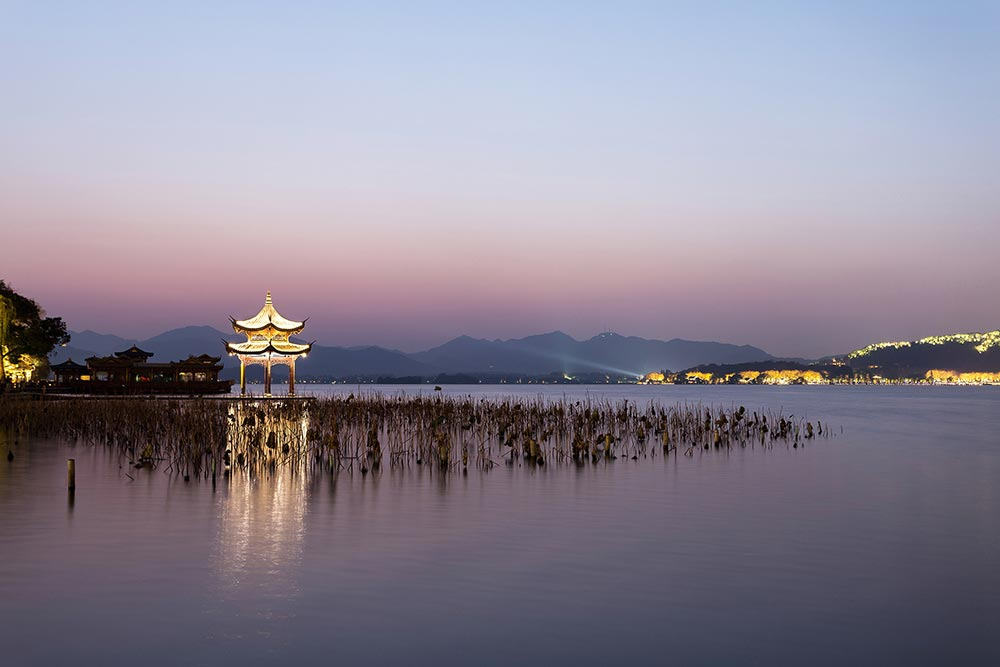
- West Lake (Xi Hu) — UNESCO-listed lake a few kilometers to the east, with its causeways, pavilions, and gardens.
- Longjing Tea Village — Dragon Well tea plantations in the nearby hills, ideal for a late morning stop.
- Huanglong Park — scenic park with a limestone spring and pagoda, in the same western sector of Hangzhou.
Frequently asked questions
No, they are two distinct but adjacent sites. Feilai Feng refers to the rocky massif and its rock carvings; Lingyin Temple is the adjacent monastic complex. They share a common entrance and are typically visited together.
Spring (March–April) and autumn (October–November) offer pleasant temperatures and lush vegetation around the rocks. Summer is hot and humid; winter remains mild in Hangzhou but daylight hours are shorter.
Both sites typically share a combined entrance ticket. Ask at the ticket window upon arrival to learn about available options.
Photography is generally allowed throughout the Feilai Feng site. Restrictions may apply in certain halls of Lingyin Temple; signs indicate this on-site.
Plan 1.5 to 2 hours for Feilai Feng alone. Combined with Lingyin Temple, allow a full half-day.
Main pathways are manageable, but the caves and certain passages between rocks feature stairs and uneven surfaces that may be difficult for wheelchair users.
Photos
Nearby
Interested in this visit?
We can include it in your personalised itinerary.